DbcultAccessing Vault...
Cult Review
Senior Film Conservator
Stepping back into the annals of early cinematic history often feels like unearthing a hidden treasure, and ‘Maid to Order’ (1921) is precisely that – a sparkling, if somewhat overlooked, gem from the silent era. Penned by the prolific Scott Darling, this film plunges viewers into a world brimming with farcical misunderstandings, societal pressures, and the enduring comedic power of a well-executed disguise. At its heart lies a narrative that, despite its century-long vintage, retains a surprising freshness and an undeniable charm, speaking to universal themes of ambition, family loyalty, and the lengths one might go to maintain appearances. It’s a testament to the ingenuity of early filmmakers that such intricate comedic mechanisms could be crafted with such delightful precision, relying solely on visual storytelling and the expressive capabilities of its cast.
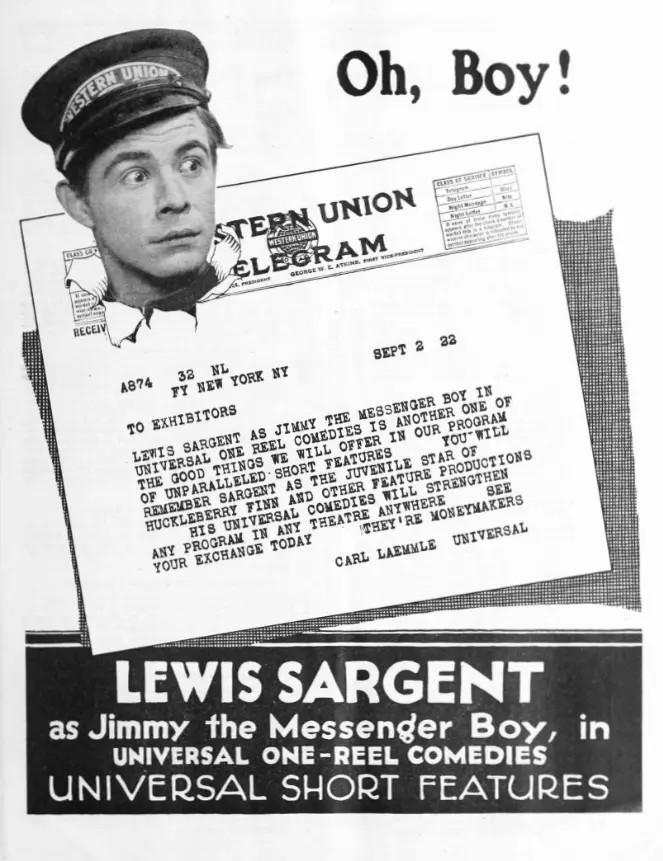
The film’s central conceit revolves around young Jimmy, portrayed with remarkable agility and conviction by Lewis Sargent. Facing the imminent arrival of a wealthy, spiritualist uncle whose good opinion is crucial for his mother’s financial security, Jimmy finds himself in a pickle. His family, it turns out, is not quite as affluent as they need to appear. The solution? An audacious scheme involving borrowed finery, a lavishly appointed home, and the ultimate act of dramatic transformation: Jimmy himself assumes the role of a demure maid. This premise, while seemingly straightforward, quickly unravels into a tapestry of escalating comical situations, each more absurd and engaging than the last. Sargent’s commitment to his dual role is commendable, navigating the physical comedy inherent in cross-dressing with a nuanced performance that transcends mere caricature.
Lewis Sargent, though perhaps not a household name today, was a significant talent of his time. His portrayal of Jimmy, and subsequently, the 'maid,' is a masterclass in silent film acting. Sargent doesn't just put on a dress; he embodies the persona, adopting the gait, mannerisms, and subtle expressions of a young woman in service. This isn't just about physical comedy; it’s about the vulnerability and determination that flicker beneath the surface of his disguise. The humor arises not just from the visual incongruity, but from Sargent’s ability to convey Jimmy’s constant internal struggle to maintain the charade, a tightrope walk between masculine instincts and feminine artifice. His wide, expressive eyes communicate volumes, shifting from panic to cunning, from exasperation to triumph, often within the same frame. It’s a performance that anchors the entire film, providing both its comedic propulsion and its emotional core, reminiscent of the dedication found in performances like those of the leads in ‘Oranges and Lemons’, where physical comedy is elevated by genuine character investment.
The cross-dressing trope, a staple of comedy across various eras and cultures, finds a particularly fertile ground in ‘Maid to Order’. In silent cinema, where dialogue was absent, visual gags and physical transformations were paramount. The visual humor of a male actor in feminine attire, particularly when the disguise is almost, but not quite, perfect, was a guaranteed laugh-getter. However, Darling’s script and Sargent’s performance elevate this beyond simple slapstick. There's a subtle commentary on gender roles and societal expectations embedded within the farce. Jimmy isn't just trying to fool his uncle; he's navigating a world where presentation dictates perception, where the veneer of wealth and appropriate gender conduct are crucial for social acceptance. The film subtly plays with the audience's awareness of the deception, drawing us into Jimmy's predicament and making us complicit in his elaborate scheme. This kind of sophisticated comedic structure is a hallmark of the period’s best writers, showcasing how deeply they understood the mechanics of audience engagement.
Adding another layer of delightful absurdity to the narrative is the uncle’s spiritualist bent. Spiritualism was a fascinating cultural phenomenon in the early 20th century, with séances and mediums enjoying considerable popularity. For a film to incorporate this element, not as a serious exploration, but as a springboard for comedic chaos, was a stroke of genius. When the uncle decides to hold a séance, Jimmy, still in his maid’s uniform, sees an unparalleled opportunity. He doesn't just serve tea; he becomes the ethereal manifestation, the 'spirit' himself. This sequence is where Sargent truly shines, transforming his maid persona into a mischievous, spectral presence, causing objects to move, voices to echo, and the entire household to descend into a state of bewildered excitement. The humor here is multi-layered: the uncle’s earnest credulity, the family’s terrified reactions, and Jimmy’s desperate, yet brilliant, improvisations. It's a fantastic subversion of a serious cultural trend, turning the mysterious into the mirthful. One might compare this comedic take on the supernatural to the more serious, almost chilling explorations of the unknown found in films like ‘The Source’ or ‘Satan's Private Door’, highlighting the vast tonal range with which early cinema approached similar themes.
Scott Darling’s screenplay is a masterclass in comedic construction. The pacing is impeccable, building tension and anticipation with each new complication. Darling understands that true farce isn't just about individual gags; it's about the snowball effect, where one lie necessitates another, leading to an increasingly precarious situation for the protagonist. The narrative threads are woven together with remarkable dexterity, ensuring that every element—from the borrowed furniture to the spiritualist uncle—serves the overarching comedic purpose. The intertitles, crucial in silent films for conveying dialogue and exposition, are witty and concise, propelling the story forward without bogging down the visual flow. Darling’s ability to craft engaging characters, even within the confines of a comedic genre, is evident. Jimmy is not merely a pawn in a plot; he’s a resourceful, albeit desperate, young man motivated by genuine familial love. This grounding in relatable emotion elevates the film beyond mere slapstick, providing a resonant core beneath the laughter.
Beyond the immediate laughs, ‘Maid to Order’ offers subtle commentary on the societal anxieties of its time. The desperate need to appear wealthy, the emphasis on social standing, and the pressure to conform to certain expectations are all themes that resonate even today. Jimmy’s elaborate deception is born out of a very real fear of social and financial ruin for his mother. The film cleverly uses humor to critique these societal pressures, exposing the superficiality of appearances and the often-absurd lengths people go to maintain them. This thematic depth, while never overshadowing the comedic intent, gives the film a lasting relevance, much like the social observations found in films such as ‘Thirty a Week’, which also explored the economic struggles and aspirations of its characters, albeit with a more dramatic lens. The interplay between illusion and reality forms the film’s philosophical backbone, prompting viewers to consider the facades we all construct in our daily lives.
The visual storytelling, even without a credited director, is remarkably effective. The staging of scenes, the blocking of actors, and the use of camera angles all contribute to the comedic effect. Close-ups are employed to emphasize Sargent’s expressions of panic or cunning, while wider shots capture the chaotic energy of the household during the séance. The film’s production design, though perhaps modest by today’s standards, effectively creates the illusion of a wealthy home, crucial for the plot’s believability. The costumes, particularly Jimmy’s maid outfit, are central to the visual gags. The overall aesthetic is clean and functional, allowing the performances and the narrative to take center stage. This meticulous attention to detail, even in films from a nascent industry, highlights the dedication to craft that defined the silent era. The reliance on visual cues to convey complex emotions and plot points is a testament to the universal language of cinema before sound took over.
Considering its age, ‘Maid to Order’ stands as a vibrant example of early 20th-century comedic filmmaking. It encapsulates the spirit of an era that was rapidly defining the grammar of cinema, experimenting with narrative structures and character archetypes that would influence generations of filmmakers. The film’s ability to elicit genuine laughter and evoke empathy for its protagonist, even a century later, speaks volumes about its timeless appeal. It’s a delightful reminder of the enduring power of simple, well-told stories and the magnetic charisma of performers like Lewis Sargent. In an age dominated by special effects and complex narratives, there’s a refreshing honesty in the straightforward, yet ingeniously constructed, humor of this silent classic. It reminds us that sometimes, the most effective storytelling doesn't require elaborate dialogue or cutting-edge technology, but rather a clever premise and a dedicated cast.
Ultimately, ‘Maid to Order’ is more than just a historical curiosity; it’s a fully formed, engaging comedy that deserves to be rediscovered by modern audiences. Its blend of mistaken identity, cross-dressing antics, and spiritualist satire creates a unique flavor of humor that is both specific to its time and universally enjoyable. For anyone with an appreciation for the artistry of silent cinema, or simply a love for a good, old-fashioned farce, this film offers a thoroughly rewarding experience. It’s a testament to Scott Darling’s sharp wit and Lewis Sargent’s exceptional talent, leaving an indelible impression as a truly charming and cleverly executed piece of cinematic history. The film’s legacy might be quiet, but its laughter echoes brightly across the decades, proving that genuine comedic brilliance knows no temporal bounds. Its enduring appeal is a testament to the fundamental human delight in seeing well-intentioned chaos unfold, a theme explored in many farcical comedies, perhaps even echoing some of the delightful madness found in films like ‘Lunatics in Politics’, where the absurdity of human endeavor takes center stage.
IMDb —
1936
Community
Log in to comment.