DbcultAccessing Vault...
Cult Review
Senior Film Conservator
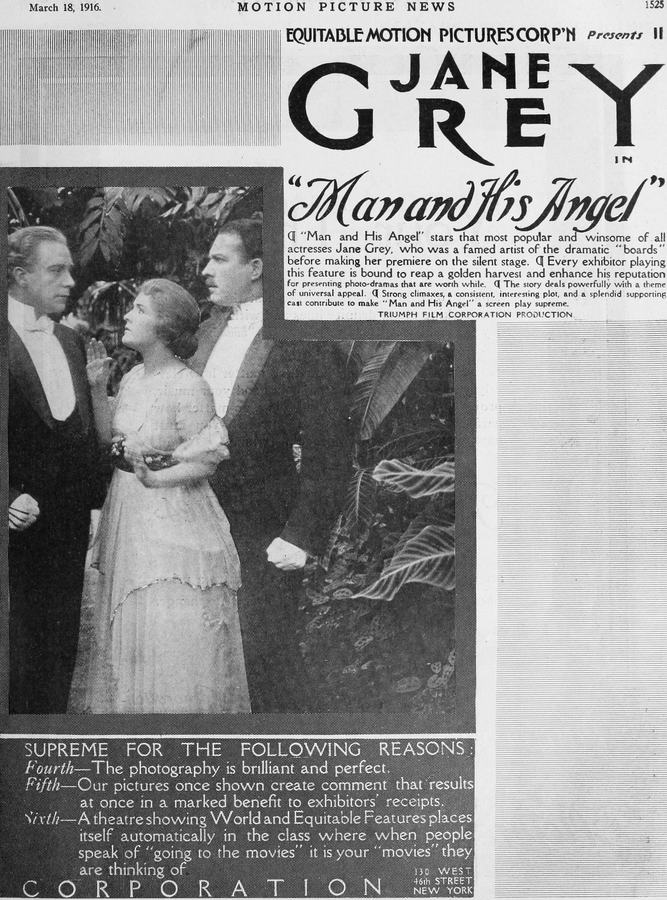
The cinematic landscape of the early 20th century was rife with melodramas that explored the intricate dance between fate, identity, and the relentless machinations of the human heart. Among these, "Man and His Angel" emerges as a particularly poignant and complex narrative, a tapestry woven with threads of hidden nobility, treacherous deception, and the consuming fire of both pure love and toxic obsession. Directed with a keen eye for psychological drama, this film delves into the life of Sonia Demitri, a character whose journey from the quiet solitude of a bookseller to the dazzling heights of operatic fame is fraught with peril, much of it orchestrated by the very individual she extends a hand of compassion to.
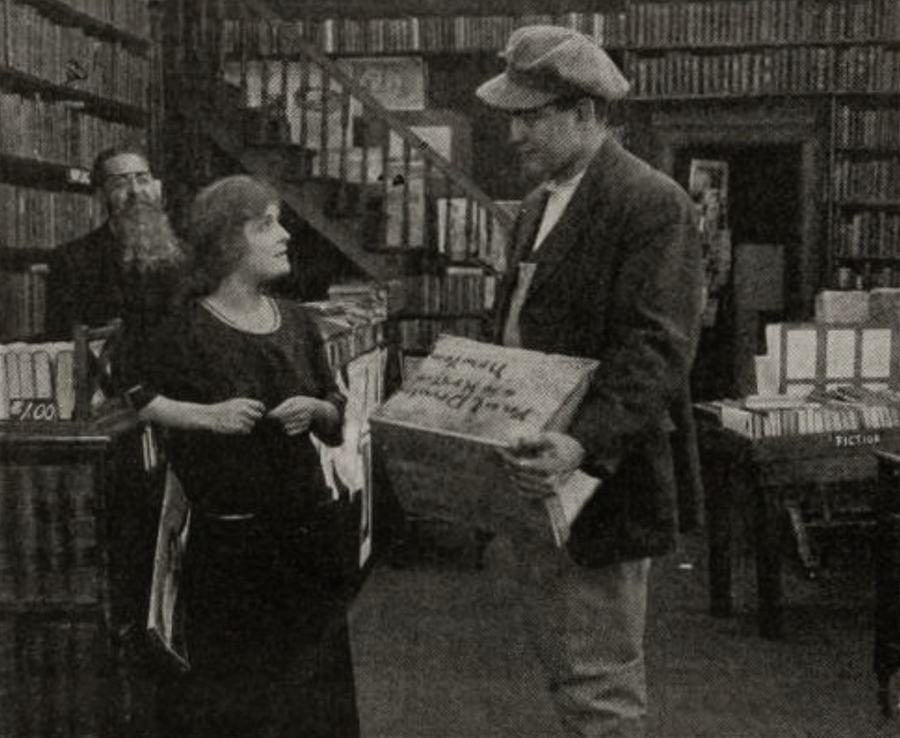
At its core, "Man and His Angel" is a profound exploration of character, particularly the duality of human nature. Sonia Demitri, portrayed with an understated grace by Jane Grey, is a woman of inherent dignity, her spirit unblemished by the hardships of exile. Her father, an exiled Russian nobleman, has instilled in her a love for books, leading her to open a small second-hand bookstore. This seemingly humble existence belies a grander truth: Sonia is unaware of her noble birth, a secret carefully guarded within the pages of an old family Bible, containing documents that would secure her claim to vast estates. This narrative device, a hidden inheritance, is a classic trope, yet here it is imbued with a fresh urgency, becoming a ticking time bomb whose detonation is tragically linked to the film's antagonist.
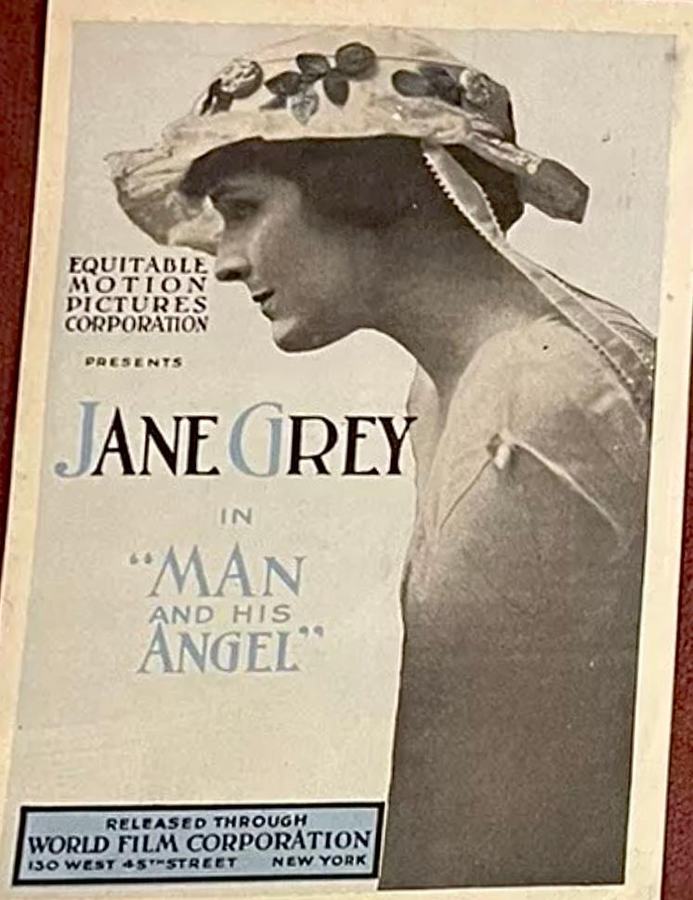
Enter David Tryne, brought to life with chilling intensity by Robert Lee Hill. Tryne is a character of profound contradictions: physically deformed, his mind is a labyrinth of twisted brilliance. He possesses an extraordinary talent for penmanship, a skill he initially perverts for ill gain, forging a letter that leads to the unjust accusation of another man. This act of deceit, a mere precursor to his later, more devastating machinations, ultimately forces him to seek refuge in Sonia's bookstore. It is here that the film's central tragedy begins to unfold. Sonia, embodying a rare compassion, pities Tryne's deformities and offers him solace, an act of kindness that, unbeknownst to her, will ignite an all-consuming, pathological adoration within him.
The relationship between Sonia and Tryne is the beating heart of the film's dramatic tension. Her pity is misconstrued as affection, fueling his obsessive devotion. This dynamic, where an act of genuine human kindness is twisted into a catalyst for malevolent obsession, offers a fascinating psychological study. Tryne's actions are not born of pure evil, but of a desperate, warped desire for acceptance and love, a desire that manifests in destructive jealousy when he perceives a threat to his claim on Sonia's affections. One might draw a parallel to the complex, often disturbing psychological portraits found in films like Alone with the Devil, where the antagonist's inner turmoil drives the narrative forward with a palpable sense of dread.
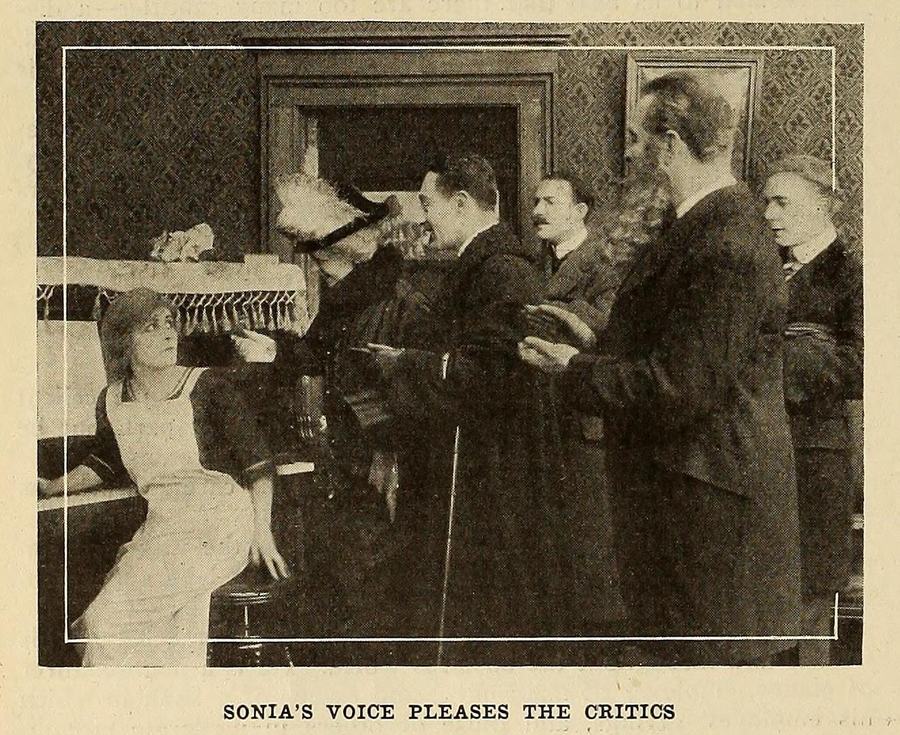
As Sonia's life begins to ascend, her extraordinary singing voice attracting the attention of society figures like Sutton (Edward MacKay) and the impresario, her world expands beyond the dusty confines of her bookstore. This newfound exposure brings her into contact with Schuyler (Willard Dashiell), a society man who falls deeply in love with her. Sonia's burgeoning success and the blossoming romance with Schuyler are depicted with a hopeful luminescence, a stark contrast to the dark currents of Tryne's growing jealousy. The film masterfully builds this contrast, making Sonia's moments of triumph all the more precarious, knowing the lurking shadow that Tryne casts over her.
The death of Sonia's father, Demitri (Henri Bergman), marks a critical turning point. It is Tryne, who has been attending to Demitri, who discovers the documents within the old Bible, revealing Sonia's high birth. This moment is pregnant with possibility: Tryne could have been her protector, her confidante, the one to deliver her rightful heritage. Instead, his twisted mind succumbs to the venom of jealousy. The thought of Sonia marrying Schuyler, a man of standing, drives him to commit his most heinous act of forgery: creating a note, purportedly from Demitri, declaring Sonia the daughter of a disreputable woman. He then cunningly places this forged document within the very Bible that holds the truth, entrusting it to Sutton to deliver to Sonia, under the guise of having found it in an old bookshop.
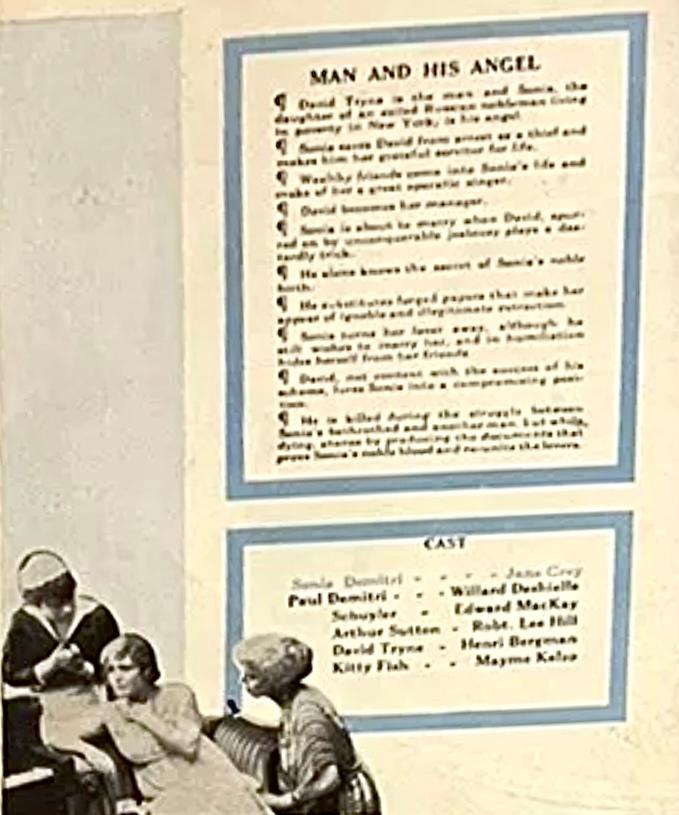
This act of calculated malice is the film's central dramatic engine, designed to dismantle Sonia's reputation and sever her connection to Schuyler. The impact is immediate and devastating. Schuyler's mother, concerned about her son's prospective bride, initiates inquiries into Sonia's ancestry. The arrival of the forged note, delivered under such seemingly innocuous circumstances, casts a dark cloud over Sonia's future. The narrative then plunges into a series of misunderstandings and near-catastrophes, typical of the era's melodramatic conventions but executed with an emotional weight that transcends mere contrivance. One might consider the intricate web of deceit and societal pressure a thematic cousin to films like The Daughter of the People, where social standing and hidden pasts play crucial roles in a protagonist's fate.
The climax of Tryne's scheme unfolds with a gripping tension. Sutton, on his way to Sonia, sprains his ankle, prompting him to send for her to retrieve the book. Tryne, ever watchful, intercepts this information and sends a deceptive note to Schuyler, implying an illicit rendezvous. Schuyler's subsequent arrival at Sutton's, finding Sonia there, creates a moment of profound vulnerability and misunderstanding. Despite Schuyler's declaration of trust, Sonia, believing her birth to be irrevocably stained by the forgery, feels she cannot marry him. Her decision to sacrifice her love and aspirations, retreating into a solitary existence with Tryne as her only companion, is a testament to her profound sense of honor, however misguided by Tryne's lies. This self-imposed exile, a form of living death, is a powerful depiction of despair, reminiscent of the tragic renunciations seen in films like Sold for Marriage where societal pressures or perceived dishonor lead characters to make heartbreaking choices.
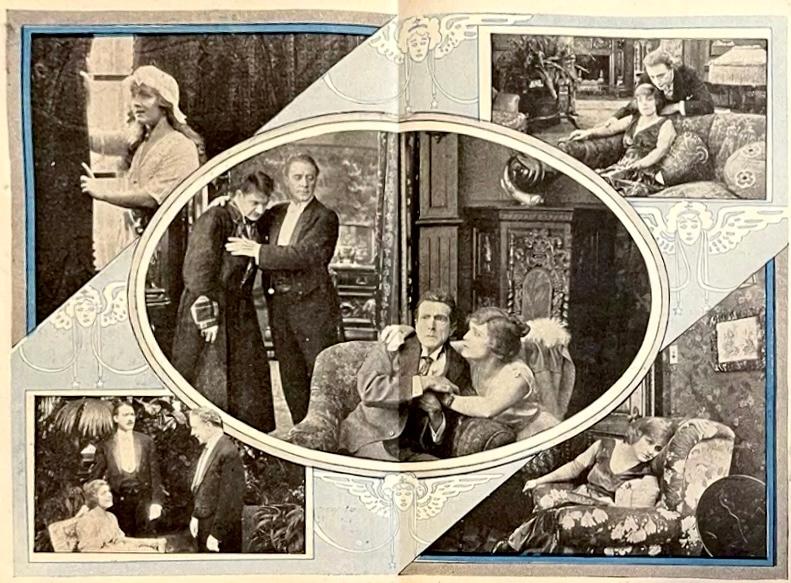
The film's resolution, however, offers a beacon of hope, a testament to the enduring power of truth. Kitty Fish, a character who initially appears to be a mere society acquaintance, proves to be a loyal friend, sensing Sonia's despair and sending for Schuyler. On the very day Schuyler is to visit, a twist of fate intervenes: Sonia discovers the genuine documents of her birth, which had inadvertently fallen from Tryne's coat pocket. This moment of revelation is expertly crafted, a sudden burst of light piercing through the prolonged darkness. Tryne, witnessing Sonia holding the papers, makes a desperate lunge to reclaim them, but she holds him with her gaze, her eyes reflecting newfound strength and understanding. As Schuyler enters the room, Tryne, realizing his elaborate scheme has unraveled, quietly slips away, his reign of manipulative terror finally at an end.
The performances in "Man and His Angel" are crucial to its enduring appeal. Jane Grey imbues Sonia with a quiet resilience, her internal struggles palpable even in the absence of spoken dialogue, a hallmark of powerful silent film acting. Robert Lee Hill's portrayal of Tryne is a tour de force of villainy, complex and disturbing, making him more than just a stock antagonist. He embodies the psychological depth of a man consumed by his own demons. Willard Dashiell, as Schuyler, provides the necessary contrast of earnest, unwavering love, grounding the melodrama with a sense of genuine romantic devotion. The supporting cast, including Henri Bergman as Demitri and Edward MacKay as Sutton, effectively propel the narrative and add texture to Sonia's social world.
Stanley Dark's writing is particularly noteworthy for its intricate plotting and character development. The narrative avoids simplistic good-versus-evil dichotomies, instead delving into the psychological nuances that drive its characters. The use of forgery as a central plot device is not merely a gimmick but a powerful metaphor for the fabrication of identity and the fragility of truth. The film's pacing, while deliberate, allows for a deep immersion into Sonia's emotional journey, building suspense and pathos in equal measure. While specific directorial choices for this era often remain uncredited or are attributed broadly, the overall execution suggests a masterful hand in guiding the performances and shaping the visual storytelling to maximize dramatic impact.
Thematic resonance is a strong suit of "Man and His Angel." It explores the enduring power of identity and heritage, questioning whether one's true self is defined by birthright or by actions. Sonia's journey from a humble bookseller to a celebrated singer and then to a woman of confirmed nobility highlights the fluidity of social standing and the arbitrary nature of societal judgment. The film also delves deeply into the destructive nature of obsession and jealousy, contrasting Tryne's warped affection with Schuyler's pure, trusting love. This juxtaposition serves to underscore the moral choices characters face and the profound consequences of those choices. Furthermore, the film is a powerful testament to the eventual triumph of truth over deception, even when the lies seem insurmountable. The slow, arduous process of uncovering the truth, often through serendipitous events, reinforces a sense of cosmic justice at play.
In comparing "Man and His Angel" to its contemporaries, one can see its place within a broader cinematic tradition. Its intricate plot, involving hidden documents and a protagonist's struggle against a manipulative force, shares narrative DNA with melodramas such as Under the Gaslight, where characters frequently find themselves ensnared in webs of deceit and dramatic revelations. The theme of a woman rising from obscurity to prominence, often against societal odds or personal tragedy, is a recurring motif in films like A Child of the Paris Streets or even Purity, albeit with different specific circumstances. However, "Man and His Angel" distinguishes itself through the psychological depth of its antagonist and the moral quandaries faced by its heroine.
Ultimately, "Man and His Angel" is more than just a period melodrama; it is a timeless narrative about the human spirit's capacity for both great good and profound evil. It explores the delicate balance between compassion and its unintended consequences, the corrosive power of envy, and the unyielding strength required to reclaim one's identity and destiny. The film's enduring appeal lies in its compelling characters, its intricate plot, and its ultimate message that even in the darkest moments, truth will find a way to emerge, allowing love and justice to prevail. It stands as a powerful example of early cinema's ability to craft intricate psychological dramas that resonate with audiences long after the credits roll, a testament to the universal themes it so eloquently explores.
IMDb —
1916
Community
Log in to comment.