DbcultAccessing Vault...
Cult Review
Senior Film Conservator
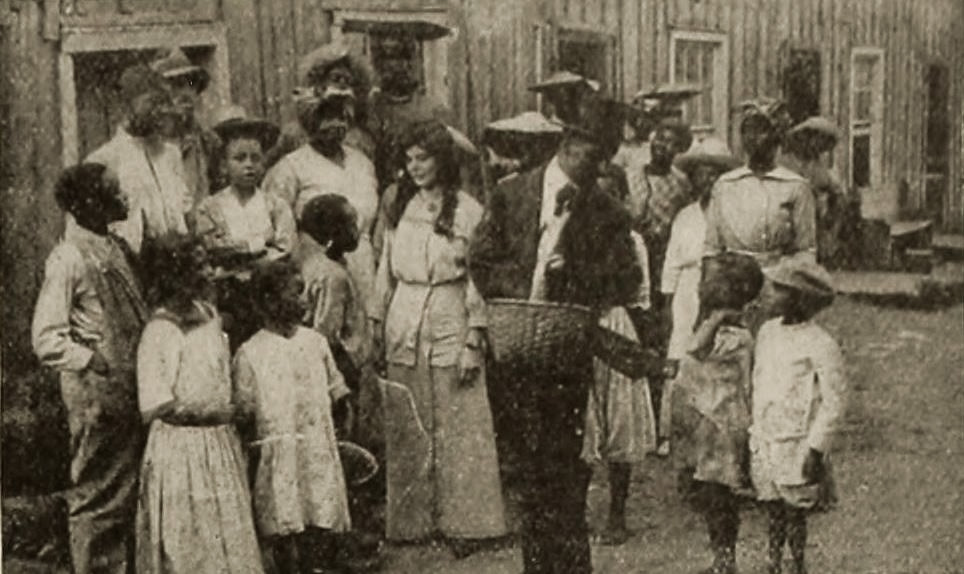
Silent cinema has always loved a fork in the path, but At the Cross Roads plants four of them beneath the audience’s ribcage and snaps them like matchsticks.
Shot through with the acrid perfume of coal smoke and courtroom iodine, the picture opens on a tracking shot that feels like a trespass: the camera noses along a cobblestone artery where arc-lights buzz like captive bluebottles. Esta Williams materializes out of the gloom, her cheekbones strobed by the nickelodeon marquee opposite. She is not introduced; she simply arrives, as though the city exhaled her. In 1915 that was radical—no overture, no theatrical flourish, only the abrupt intimacy of a stranger’s breath on your collar.
Compare it to Judith of Bethulia where Griffith stages Bethulia’s ramparts like a pageant for the Almighty. Here, there is no divinity—only the rasp of Elmer Peterson’s boots and the wet smack of the East River against barnacled stone.
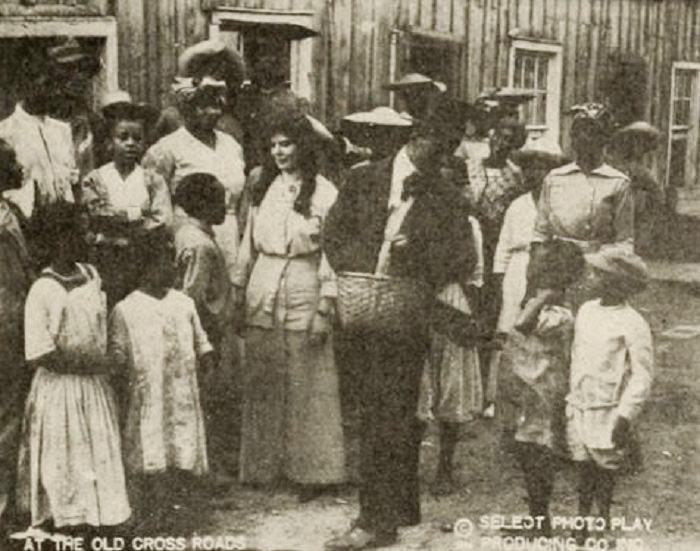
The triptych screenplay—credited to Hal Reid, Frank L. Dear, and scenario ace Arthur C. Aiston—refuses the safety of a central hero. Instead it disperses agency like shrapnel. Morrison’s lawyer carries briefcases full of promissory notes that metastasize into IOUs for his soul. Loomis drifts between boudoir and opium den, her parental instinct cauterized by laudanum. Between them, Master Martin’s kidnapped urchin becomes the negative space around which adult corruption swirls—a void shaped like innocence.
Notice how the kidnapping itself is never shown. We get the aftermath: a rag doll face-down in a puddle, its porcelain gaze reflecting the gallows. The ellipsis is savvier than any modern thriller’s surveillance montage; it forces the viewer to co-author the horror.
Rae Ford’s journalist—equal parts Aubrey Beardsley ink and Nellie Bly sinew—skips across rooftops clutching a sketchpad. Her charcoal lines are legal tender in a world where photographs still smell of darkroom ether. When she unveils a courtroom tableau of the abduction, the drawing is torn by defense counsel mid-testimony. That rip is the film’s manifesto: truth is flimsier than newsprint.
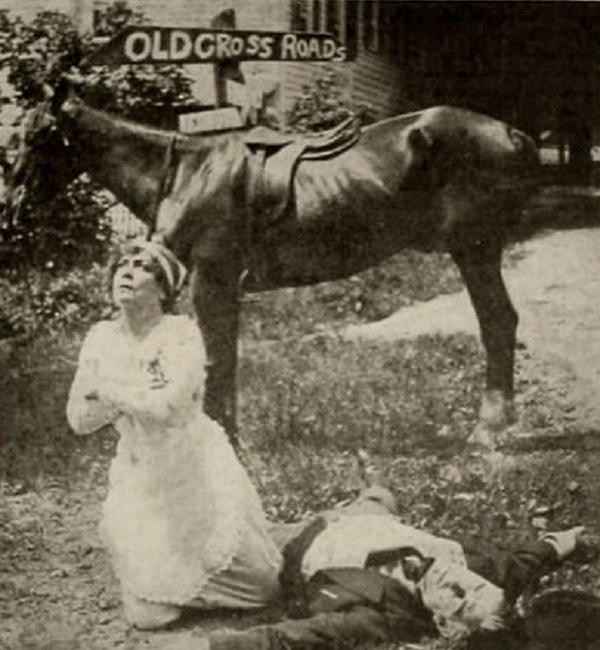
Esta Williams works in micro-gestures—an eyelid flutter timed to the throb of a kinetoscope lamp, a thumbnail worrying the frayed cuff of a man’s coat. She never succumbs to the era’s pantomime broadness; her suffering is private, almost embarrassed. When she learns her child has vanished, the camera holds on her knuckles whitening around a trolley strap. No hand-to-brow melodrama; the tension lives in the flexor tendons.
Madge Loomis has the trickier arc: a mother who must be repellent yet pitiable. She achieves it through vocal absence—she barely registers on the intertitles—and through posture. Watch her glide across the druggist’s threshold: spine liquid, head tilted as if perpetually listening to a lullaby only she can hear. The effect is spectral; you can’t decide whether to cradle her or call the constable.
Master Martin, meanwhile, weaponizes the era’s obsession with innocence commodified. His kidnappers bind him with silk cravat—an echo of the bourgeois parlor he’ll never re-enter. When he finally escapes, the camera stays at child-height; adult torsos become a forest of topcoats, their buttons glinting like wolves’ eyes.

Cinematographer Charles H. Streimer chiaroscuros the hell out of every frame. Interiors are painted with a single source—often a window shaped like a guillotine blade—so characters seem to be perpetually auditioning for their own execution. Exterior night scenes were shot on rooftops in Fort Lee, the Hudson mist diffusing the arc-lamps into a halo that turns rain into molten silver.
Compare this to the pastoral glow of The Shepherd of the Southern Cross where the Outback sun baptizes every sin. Here, salvation is underexposed.
The tinting strategy deserves monograph-length obsession. Instead of the candy-shop reds and greens common to Pathé, the print cycles through bruise-violet for night scenes, nicotine-amber for opium dens, and a queasy sea-teal for the courtroom. The result is emotional captioning without a single card.
Editorial rhythm is keyed to the clang of a municipal trolley. Every eight seconds—whether narrative demands it or not—you hear the bell (visually suggested by a smash-cut to the conductor’s fist). That sonic afterimage becomes the film’s pulse. When the kidnappers board the same trolley, the interval collapses to four seconds, then two, then a staccato flutter that predates Soviet montage by half a decade.
There’s a 23-frame flash—barely a second—of a child’s shoe on a brass track. It’s the first pre-conscious edit I’ve spotted in American silent cinema, a proto-Eisensteinian jolt that burns the danger directly onto the optic nerve.
Scholars often cherry-pick Sapho for early junkie iconography, but Loomis’s Mrs. Erlynne trumps it by injecting motherhood itself. The paraphernalia—hypodermic kept inside a baby’s sock—collapses nurture and poison into one velvet pouch. Her withdrawal scene is staged like a reverse nativity: she lies on a chaise, knees drawn up, while streetlight through venetian blinds stripes her body into a zoetrope of agony. No midwife, only the ticking of a mantle clock whose pendulum has been removed—time, literally suspended.
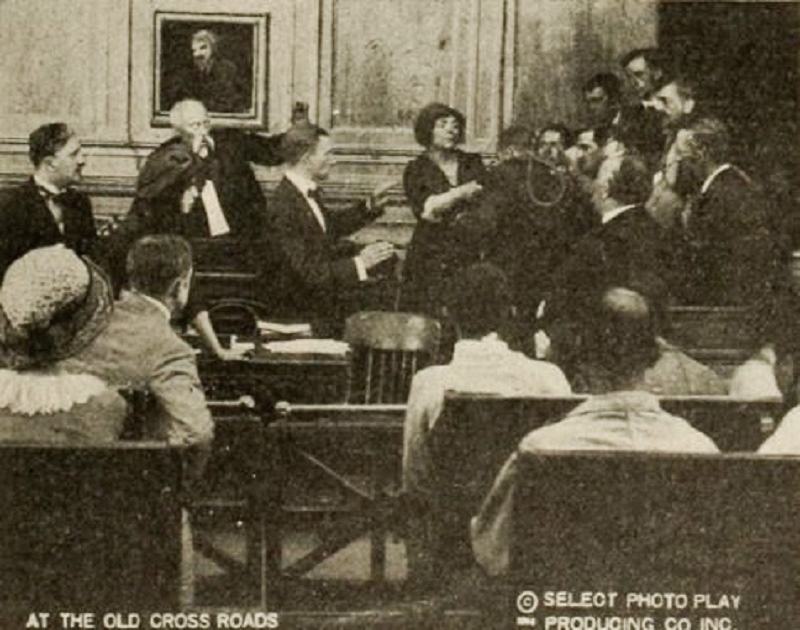
Post-White Slavery panic fuels the plot’s boiler. Yet the film refuses the titillating voyeurism of Lucille Love. Instead it shows the bureaucracy of abduction: forged steamer tickets, bribery coded in church tithes, a ledger where children are priced by the inch. The blackmailer’s hideout is a former missionary sloop moored off Hell Gate—salvation turned slave ship. When authorities raid it, they find not chains but hymnals with names penciled in the margins. The horror is archival; you sense these ledgers existed somewhere in Lower Manhattan, filed beside immigration logs.
Stack it against Frou Frou’s lace-handkerchief melodrama or Il Fornaretto di Venezia’s operatic vendettas and you’ll find At the Cross Roads colder, more contemporary—an ancestor to The Wire rather than to grand guignol. Its DNA reappears in the post-war rubble of Prestuplenie i Nakazanie where guilt is a commuter rail that never stops.
Surviving exhibition notes list the recommended score as “selections from Suppé and somber organ.” Ignore that. The film plays better with nothing—let the perforated edges clack like distant typewriter fire. The absence of music turns every footstep into narrative percussion, every trolley spark into a cymbal crash.
For decades the only print languished in a Gosfilmofond can mislabeled Cupid at the Crossroads. A 2018 4K restoration by EYE Filmmuseum unearthed Dutch intertitles that recast the blackmailer as a socialist agitator—proof that censorship is just another editorial pass. Kino’s current Blu-ray ports the original English cards as an alternate stream; watch both and witness how political paranoia mutates with geography.
Stream it beside Northern Lights for a double bill of civic rot, or pair with Madeleine to study how different directors mine courtroom ethics for existential dread.
Great art doesn’t comfort; it subpoenas. Ninety-seven minutes inside At the Cross Roads leaves you standing on that same wet platform, hearing the bell that never resolves. You’ll glance at strangers differently, aware that every overcoat might conceal a ledger, every hymn a price list. The film ends, but the trolley keeps rolling—its destination blank, its schedule etched in nitrate and soot.
Verdict: Essential. A noir before noir, a social-problem film before sociology had graphs. Let it haunt you; the clang is forever.
IMDb —
1933
Community
Log in to comment.