DbcultAccessing Vault...
Cult Review
Senior Film Conservator
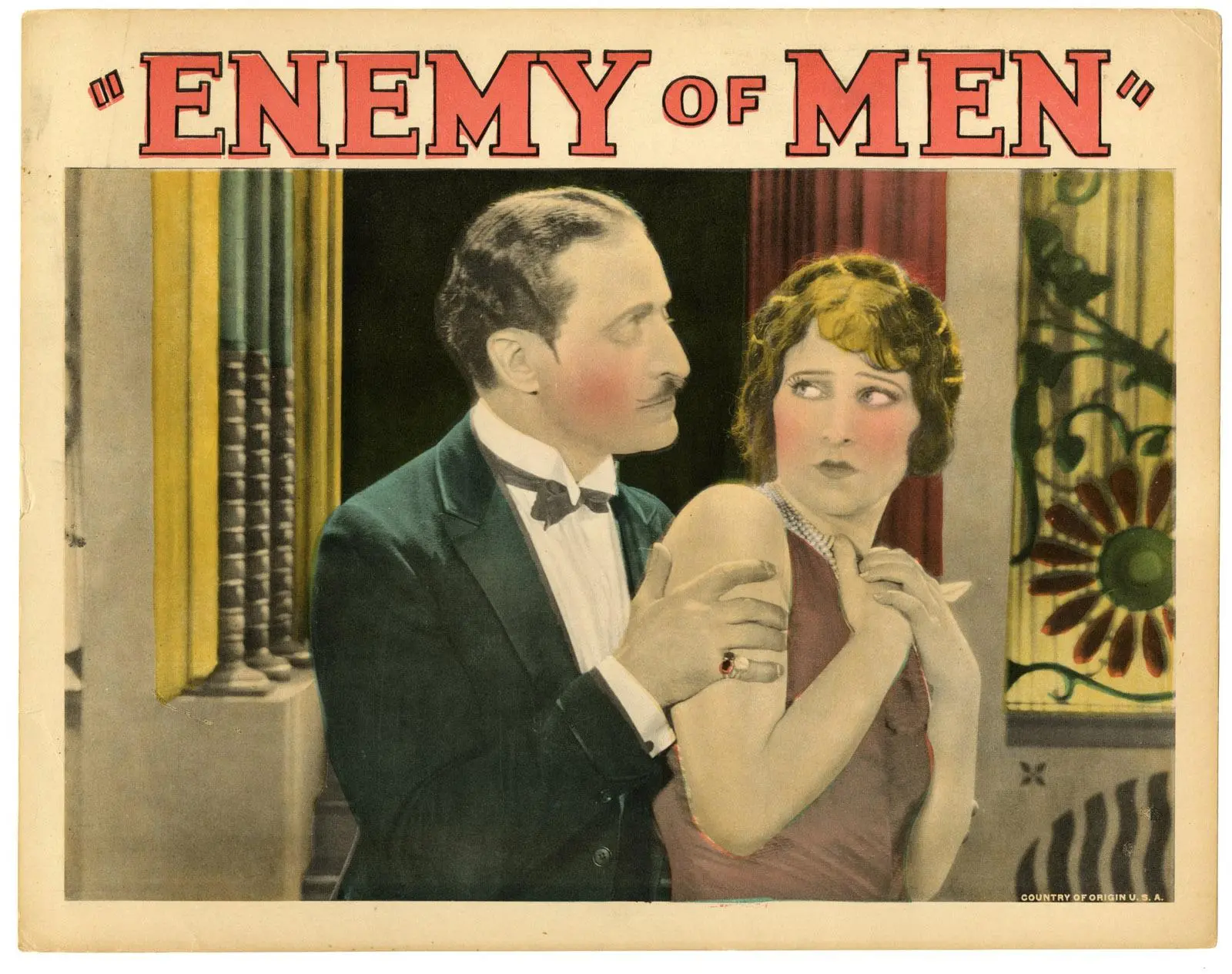
In the annals of silent cinema, where grand gestures and stark moral quandaries often reigned supreme, certain films emerge from the shadows of obscurity with a profound resonance that transcends their era. Douglas Bronston's 1925 melodrama, An Enemy of Men, is precisely one such forgotten gem, a potent exploration of grief, vengeance, and the arduous path to reconciliation. It's a narrative that, despite its century-old vintage, continues to prick at contemporary sensibilities regarding justice, gender dynamics, and the corrosive nature of unaddressed pain. This isn't merely a historical artifact; it's a raw, emotionally charged drama that demands a fresh viewing, offering a startlingly complex portrayal of a woman pushed to the brink.
The film's emotional core is anchored in the devastating tragedy that befalls Norma Bennett, portrayed with searing intensity by Dorothy Revier. Her younger sister, Janet (Barbara Luddy), a figure of fragile innocence, becomes a casualty of patriarchal callousness, deserted by her husband and succumbing to the harsh realities of childbirth in an unforgiving world. This isn't just a personal loss for Norma; it's a seismic rupture, a betrayal that shatters her world and crystallizes into an unshakeable conviction: all men are inherently treacherous, deserving of suffering. The film meticulously builds this foundation of despair, allowing the audience to witness the raw, visceral agony that transforms a loving sister into an avenging angel. Luddy’s brief but impactful performance as Janet is crucial here, painting a vivid picture of the vulnerability that fuels Norma’s subsequent crusade. Her plight is emblematic of countless women in a society that often offered little recourse or compassion for those deemed 'fallen' or abandoned.
The screenplay, penned by Douglas Bronston, masterfully avoids simplistic villainy. Norma’s transformation isn't born of inherent wickedness but from an overwhelming sense of injustice and profound, unmitigated grief. Her decision to target men isn't a random act of malice; it’s a desperate attempt to reclaim agency, to administer a kind of poetic, if misguided, justice for the grievous wrong inflicted upon her sister. This deep-seated motivation lends a tragic grandeur to her actions, making her not merely a villain, but a damaged protagonist whose moral compass has been irrevocably skewed by trauma. The film invites us to understand, if not condone, her path, highlighting the societal pressures and lack of support systems that could drive an individual to such extreme measures. It’s a stark reminder that vengeance, while often portrayed as a simple evil, frequently springs from a profound wound.
Dorothy Revier's portrayal of Norma Bennett is nothing short of captivating. In an era where performances often leaned towards the theatrical, Revier delivers a nuanced, compelling study of a woman consumed by a singular purpose. Her expressive eyes, the subtle shifts in her posture, and the controlled intensity of her gestures convey a complex inner world of pain, resolve, and simmering fury, all without uttering a single spoken word. She doesn't just act the part; she inhabits Norma, allowing us to feel the weight of her sorrow and the steely determination of her vengeance. The film relies heavily on Revier's ability to communicate Norma's emotional landscape, and she rises to the occasion spectacularly. One can sense the meticulous craft in her every movement, a testament to the power of silent acting when executed by a true master. Her performance elevates the material, transforming a potentially one-note character into a multifaceted exploration of human endurance and brokenness. Her scenes alone are worth the price of admission, showcasing a talent that deserved even greater recognition.
Norma's campaign is not one of physical violence, but a more insidious, psychological warfare. She targets a succession of men, leveraging their weaknesses, their vanity, or their ambitions, to bring about their downfall. While the specifics of each encounter are broadly sketched in the plot synopsis, the film implies a series of calculated maneuvers designed to inflict emotional and social suffering, mirroring the profound pain her sister endured. These men, perhaps represented in part by supporting players like Charles Clary or Leo White, are not necessarily evil in the grand scheme, but rather fallible, often self-serving individuals whose flaws Norma expertly exploits. Her methods are chilling precisely because they are so methodical, so devoid of personal malice towards the individual, yet so steeped in a generalized animosity. It’s a fascinating exploration of how trauma can warp an individual's sense of justice, transforming them into an instrument of suffering rather than healing.
The morality of Norma’s actions is intentionally ambiguous, a testament to Bronston’s thoughtful writing. While we understand her impetus, the audience is simultaneously compelled to question the ethics of her widespread retribution. Does making others suffer truly alleviate her own pain, or does it merely perpetuate a cycle of bitterness? The film doesn't offer easy answers, instead inviting contemplation on the nature of forgiveness and the destructive power of holding onto grievances. The societal backdrop of the 1920s, a period of immense social change yet still rigid gender expectations, further amplifies the film's thematic depth. Norma's actions, while extreme, can be seen as a distorted reflection of a woman’s limited avenues for redress in an often-unjust world. Cesare Gravina, in a more peripheral role, might represent the older generation's perspective, perhaps witnessing Norma's actions with a mixture of concern and understanding, adding another layer to the film's social commentary.
Norma’s carefully constructed world of retribution begins to unravel with the arrival of Dr. Phil, portrayed by Cullen Landis. Landis brings a quiet integrity and genuine compassion to the role, presenting a stark contrast to the 'men' Norma has so vehemently targeted. Dr. Phil is not a caricature of masculine villainy; he is a man of inherent decency, dedicated to healing and understanding. His presence introduces a profound challenge to Norma's entrenched worldview, forcing her to confront the possibility that not all men are deserving of her wrath, and that genuine human connection might still be possible. The dynamic between Revier and Landis is palpable, a delicate dance between hardened cynicism and tender empathy. It’s in these interactions that the film truly shines, exploring the arduous process of breaking down emotional barriers built over years of pain and resentment.
Cullen Landis's performance is understated yet powerful. He doesn't attempt to overpower Revier's Norma, but rather offers a gentle, unwavering counterpoint to her intensity. His kindness is not weakness; it is a profound strength that slowly, inexorably, begins to chip away at Norma’s defenses. The evolving relationship between them becomes the film’s central dramatic tension, shifting the narrative from one of pure vengeance to a more complex exploration of forgiveness and the possibility of a new beginning. The film suggests that true healing doesn't come from inflicting pain on others, but from finding the courage to open oneself up to empathy and understanding. While Margaret Landis and Virginia Marshall's roles are less central, their presence likely serves to flesh out the social fabric around Norma and Dr. Phil, perhaps as friends, colleagues, or patients, further illustrating the diverse human landscape that Norma has chosen to condemn en masse.
Douglas Bronston's screenplay for An Enemy of Men is a testament to the sophistication often found in silent film narratives. He constructs a story that, while melodramatic in its premise, delves into remarkably complex moral territory. Bronston doesn't shy away from the darker aspects of human nature, yet he also champions the potential for redemption. The pacing is deliberate, allowing the emotional arcs of the characters to unfold organically, drawing the audience deeper into Norma's internal struggle. The narrative avoids simplistic resolutions, instead opting for a more nuanced exploration of healing and the long shadow of past trauma. It’s a script that understands the power of suggestion and visual storytelling, relying on strong character motivations and clear emotional stakes to drive the plot forward.
Bronston’s ability to craft a story that resonates on multiple levels—as a revenge drama, a character study, and a social commentary—is truly commendable. The film’s thematic depth, particularly its exploration of gender roles and societal expectations, speaks volumes about the writer's keen observation of human behavior. He presents a world where the consequences of actions, both personal and societal, ripple outwards, affecting lives in profound ways. His work here underscores the idea that early cinema was far from simplistic, often tackling weighty subjects with considerable intelligence and emotional candor. The narrative's strength lies in its refusal to paint characters in purely black and white, instead embracing the shades of gray that define human experience. This makes An Enemy of Men a compelling piece of dramatic storytelling that transcends its era.
When considering An Enemy of Men within the broader context of silent era cinema, its thematic courage and emotional intensity stand out. While not as overtly scandalous as some contemporary melodramas like The Reckless Sex, which often focused on explicit moral transgressions, An Enemy of Men nevertheless delves into the profound societal pressures and their devastating personal consequences that often fueled such narratives. It shares a certain kinship with films that explore the moral quandaries faced by individuals pushed to their limits, where personal ethics clash with external circumstances. The film's exploration of a woman grappling with deeply ingrained resentment and the allure of retribution finds a thematic cousin in the moral dilemmas presented in a picture such as A Soul for Sale, both grappling with the cost of one's principles and the difficult choices made under duress. These films, while distinct in their specific plots, collectively illustrate the silent era's fascination with the intricate workings of human morality and the enduring struggle between good and evil, or perhaps more accurately, between trauma and healing.
The film also subtly echoes the grand, sweeping emotional arcs found in many early dramas, focusing on the individual's battle against overwhelming odds. Unlike the more experimental, vérité style of something like Kino-Pravda No. 18, which aimed for documentary realism, An Enemy of Men embraces the heightened reality of melodrama to explore its psychological themes. It’s a narrative that understands the power of archetypes – the wronged woman, the compassionate healer – and uses them to construct a universally relatable story of pain and potential redemption. Its place in film history is significant not just for its compelling narrative, but for its quiet defiance in portraying a female character whose journey, while extreme, is deeply rooted in a desire for justice in a world that often denied it to women. It stands as a testament to the rich storytelling capabilities of its time, proving that even without sound, cinema could convey profound human truths.
Even a century after its initial release, An Enemy of Men retains a remarkable power to engage and provoke thought. Its central themes—the devastating impact of abandonment, the corrosive nature of vengeance, and the transformative potential of empathy—are timeless. In an age grappling with renewed discussions about gender equality, accountability, and the long-term effects of trauma, Norma Bennett's story feels surprisingly pertinent. The film serves as a potent reminder that while societal norms evolve, the fundamental human experiences of love, loss, betrayal, and the quest for justice remain constant. The raw, unfiltered emotion conveyed by the silent performers, particularly Dorothy Revier, speaks directly to the soul, bypassing the need for dialogue to communicate profound truths.
The craft of filmmaking in this era, with its reliance on visual storytelling, expressive acting, and evocative cinematography, is also beautifully showcased here. The film’s ability to build tension, convey character depth, and navigate complex moral questions without the benefit of spoken words is a masterclass in cinematic artistry. It encourages active viewing, inviting the audience to interpret subtle cues and immerse themselves fully in the emotional landscape of the characters. For those willing to delve into the treasures of silent cinema, An Enemy of Men offers a rewarding experience, a poignant and powerful drama that resonates far beyond its historical context. It is a film that challenges us to consider the origins of hatred and the profound courage required to choose a path towards healing and understanding, a message as vital today as it was in 1925.
A powerful, thought-provoking journey into the human heart, An Enemy of Men is a must-see for devotees of classic cinema and anyone intrigued by the enduring power of dramatic storytelling.
IMDb 6
1929
Community
Log in to comment.