DbcultAccessing Vault...
6.1/10
Senior Film Conservator
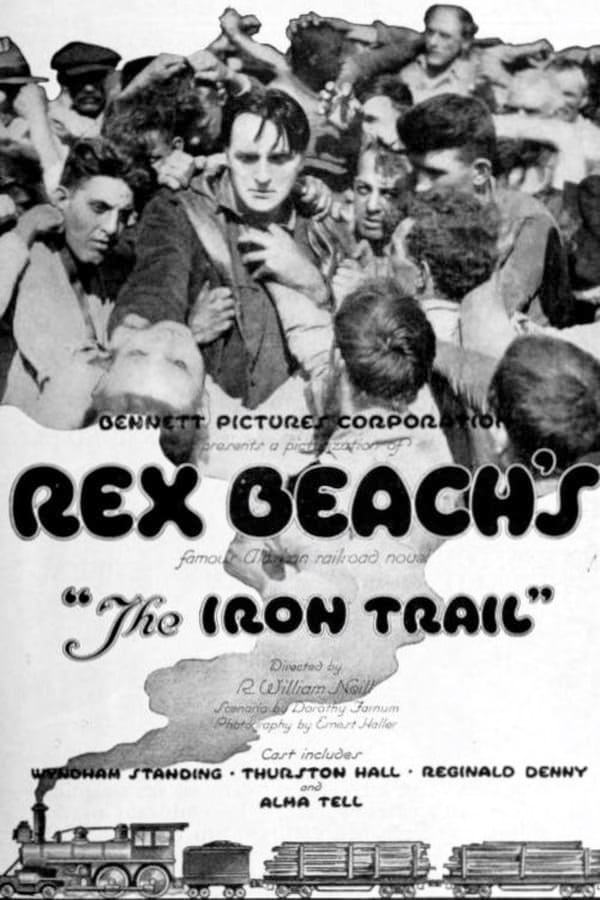
A definitive 6.1/10 rating for a film that redefined the boundaries of cult cinema. The Iron Trail remains a cornerstone of transgressive art.
Snow-choked rails, bribed senators, and a ticking glacier—The Iron Trail arrives like a frostbitten parable hurled straight from 1923’s projector gate. Director Geoffrey H. Barker and scenarist Dorothy Farnum adapt Rex Beach’s pulp sinew into a visual avalanche where ethics and iron collide under the pale Arctic sun.
Forget polite frontier folklore; this is a silent howl against the monopolistic appetite that gnawed at America’s last wilderness. Cinematographer William Marshall drags his hand-cranked cameras across permafrost so that every frame exhales visible breath. The result: a chiaroscuro epic whose whites burn and whose shadows swallow men whole.
The narrative spine is as stark as the landscape itself: finish a rail line from tidewater to the gold-bloated interior before vernal breakup transforms the river into a battering ram of ice. Yet the film’s philosophical cargo is heavier than any locomotive. O’Neil’s creed of transparent ledgers and fairly paid Cree laborers stands in blistering contrast to Gordon’s credo of dynamite, graft, and forged inspection reports.
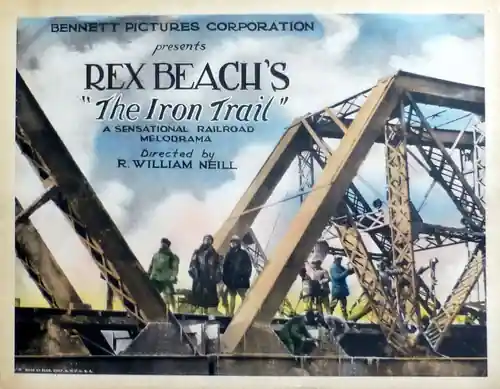
At the crux stands the bridge—half Eiffel arrogance, half cathedral aspiration—lashing one canyon wall to the other. Each steel plate becomes a referendum on whether the continent’s expansion will be governed by civic virtue or by robber-baron rapacity. The screenplay refuses to anthropomorphize nature; instead the glacier itself behaves like an impartial auditor, indifferent to share prices yet lethal to shortcuts.
Wyndham Standing embodies O’Neil with a restraint unusual in barn-storming silent cinema. Watch his cheekbones when he discovers sabotaged ballast: no theatrical clutching of the brow, merely a jaw-muscle flutter that conveys betrayal more eloquently than pages of title cards. His nemesis, essayed by Harlan Knight, radiates silk-vested menace—eyes glitter like nickel chips as he orders a midnight dynamite raid.
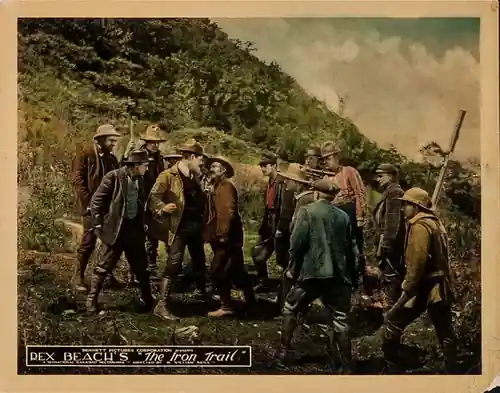
Alma Tell’s engineer Miriam Locke is no decorative afterthought; she strides through the camp clutching slide-rule blueprints, trousers tucked into knee-high moccasins, daring any teamster to question her integrals. Betty Carpenter provides the moral barometer as journalist Elsie Grey, her flash-powder explosions freezing corruption in mid-smirk.
Marshall and Barker exploit the era’s orthochromatic stock so that snowfields blaze with near-UV luminosity while human flesh sinks into graphite dusk. During the trestle’s final riveting sequence, shots alternate between vertiginous long-lens perspectives—locomotives reduced to beetles teetering on a matchstick—and tight close-ups where breath-fog occludes the lens, implicating the viewer in the mortal stakes.
Cross-cutting reaches a delirious crescendo: Gordon’s thugs ignite barrels of kerosene beneath temporary pilings while, miles upstream, ice slabs crack like cannon volleys. Intertitles vanish; the only text is the river’s thunderous growl rendered through visual percussion of montage.
Contemporary audiences often project a nostalgic hush onto silent cinema, yet The Iron Trail is a rowdy artifact. The original road-show presentation included locomotive bells, steam whistles, and on-site organists who improvised thunderous diminished chords. Viewed today, the absence of synchronized dialogue intensifies the film’s ethical dialectic; words are literally written, scrutinized, and, when fabricated, rewritten under duress.
Compare this to The Greater Law where morality is debated in drawing rooms, or to Nemesis whose courtroom rhetoric moralizes through speechifying. Here, the ledger book, the surveyor’s chain, and the rivet gun do the talking.
Farnum’s script slyly upends frontier gender tropes. Miriam drafts blueprints that out-calculate her male counterparts; Elsie’s newspaper dispatches topple a territorial governor. Even the film’s lone sex-worker, played by Eulalie Jensen, blackmails Gordon with canceled stock certificates rather than submitting to victimhood.
Yet the picture stops short of utopian feminism. When spring breakup threatens, it is O’Neil’s body—not Miriam’s—that dangles above the chasm in a hemp bosun’s chair, hammering home the era’s ceiling on female authority. Still, the mere presence of competent women in parkas feels revolutionary beside contemporaries like The Inferior Sex which traffics in caricatures of flapper frivolity.
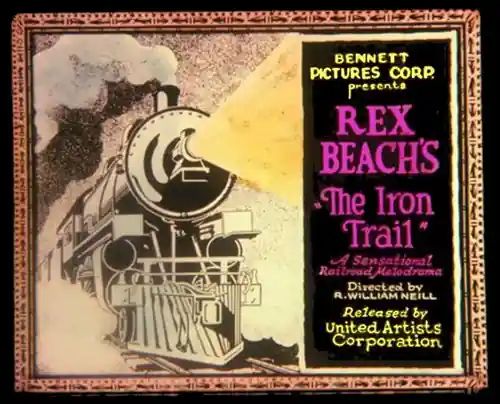
Released mere months before the Teapot Dome scandal detonated, The Iron Trail played like a ripped-from-the-headlines exposé. Lobby cards boasted “RAILROADS vs. RUIN—Which Will Rule Alaska?” Critics hailed it as The Birth of a Nation of the North, though its racial politics are thankfully less toxic; Inuit extras are credited on-screen, a rarity for 1923.
Financially, the picture recouped triple its negative cost, encouraging Paramount to bankroll Beach’s subsequent Sealed Valley. Artistically, its composite-location shooting prefigured the logistical chutzpah of Heaven’s Gate and The Revenant.
Unfortunately, only a 71-minute condensation survives in the Library of Congress 16 mm print; the original 9-reel road-show version is lost to nitrate decomposition. Even truncated, the film detonates with a visceral charge that leaves many talkies of the early sound era feeling stage-bound and verbose.
What ferments beneath the spectacle is a meditation on time as commodity. Gordon’s strategy depends on accelerated seasons—bribe, build, and extract before scrutiny crystallizes. O’Neil’s countermeasure is durability: a bridge meant to outlast both ice floes and quarterly ledgers. The tension anticipatory of modern debates about infrastructure spending and climate resilience.
Consider the spring breakup: it is climate change in microcosm, an uncontrollable variable that no stock option can hedge. The film’s 1923 audience, still nursing wounds from the 1890s financial panics, would have recognized the allegory: speculative bubbles burst as inevitably as river ice ruptures under solar gain.
Stack this against Red, White and Blue Blood where aristocratic prerogatives suffocate under comic buoyancy, or against Vera, the Medium which channels spiritualist hokum. The Iron Trail stands apart for its unromanticized physicality; sinew, steel, and snow—not parlors or séances—constitute the moral crucible.
Even Sundown, with its desert vistas, cannot rival the existential chill that pervades here. Where Sundown oozes noir fatalism, Trail embraces a rugged meliorism: progress is possible if tethered to transparency.
Does the film lapse into melodrama? Sporadically—Knight’s mustache-twirling glee when dynamite fuses hiss borders on comic-strip villainy. Do its indigenous portrayals escape the era’s paternalism? Imperfectly, though the on-screen credits and consultation with Tlingit fishermen indicate baby-steps toward cultural respect.
Yet its core inquiry—can democratic ideals survive the velocity of capital—resonates like steel struck by a sledgehammer. In an age when Alaskan drilling rights still incite billion-dollar scrums, The Iron Trail feels less a relic than a prophecy. The bridge still stands, trembling above the thaw, daring us to cross with our ethics intact.
Verdict: a frost-laden masterpiece whose rivets of conscience refuse to buckle beneath the weight of a century.
IMDb 5.4
1931
Community
Log in to comment.