DbcultAccessing Vault...
6.1/10
Senior Film Conservator
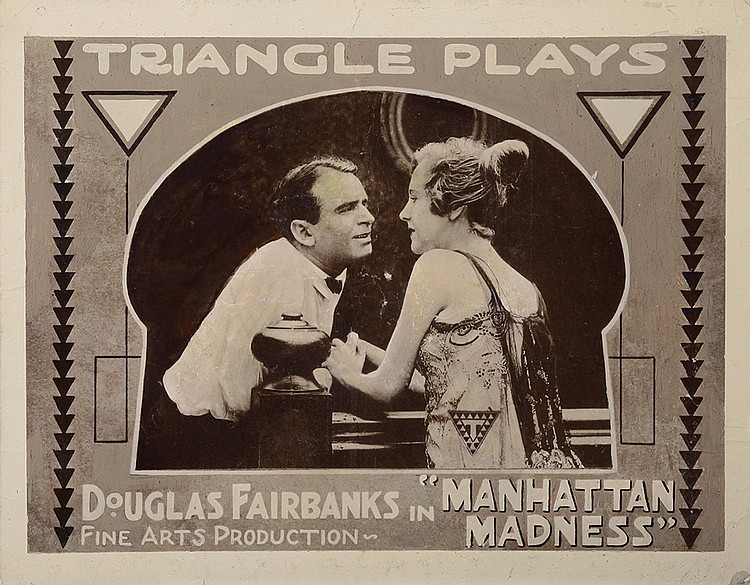
A definitive 6.1/10 rating for a film that redefined the boundaries of cult cinema. Manhattan Madness remains a cornerstone of transgressive art.
In the nascent years of the American cinematic apparatus, few figures radiated the sheer, unadulterated kineticism of Douglas Fairbanks. Manhattan Madness (1916) serves not merely as a vehicle for his legendary athleticism but as a sophisticated commentary on the performative nature of the 'thrill' in an increasingly urbanized society. While contemporary audiences might view silent cinema through a lens of flickering antiquity, this film vibrates with a restless, modern energy that predates the self-referential irony of the late 20th century. It is a work that interrogates the friction between the rugged individualism of the West and the sophisticated deceits of the East, wrapped in a package of breathless stunts and comedic timing.
The narrative impetus—a wealthy rancher’s ennui-driven bet—might seem quaint, yet it functions as a profound catalyst for exploring the psychology of the spectator. Steve O’Dare is a man for whom the skyline of New York is a static, lifeless backdrop. Unlike the protagonists in The Warning, who often grapple with moral obsolescence, O’Dare is a man of action trapped in a world of sedentary luxury. His dismissal of Manhattan’s 'pleasures' is a critique of a society that has traded genuine experience for curated spectacle. When he accepts the $5,000 wager, he is essentially challenging the city to manifest a reality that can rival the visceral stakes of his Nevada life.
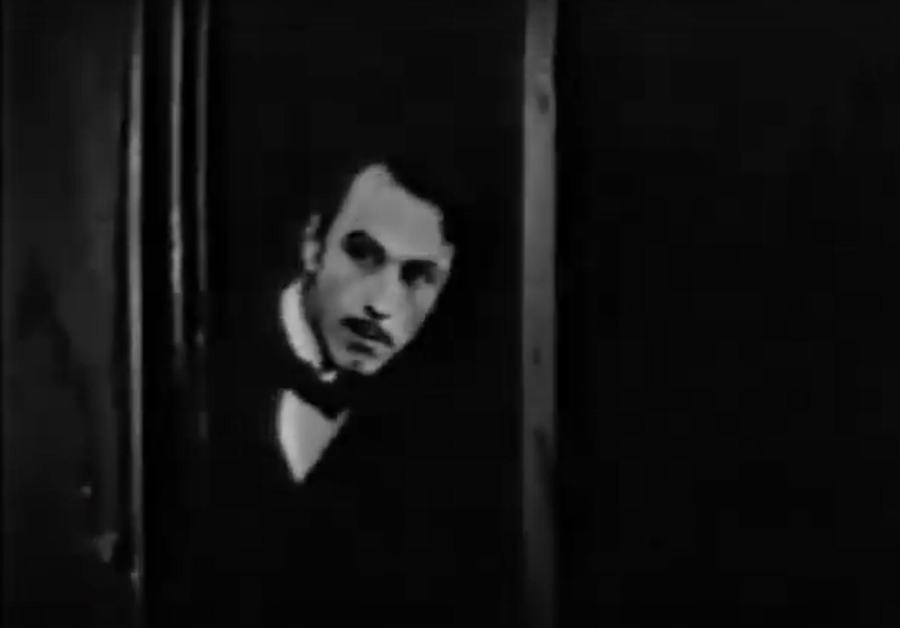
The introduction of the Marinoffs and their ward, played with a haunting, wide-eyed intensity by Jewel Carmen, shifts the film from a social comedy into the realm of the conspiratorial thriller. The visual grammar here changes; the bright, open spaces of the country club give way to the chiaroscuro of the Marinoff estate. The use of shadow and depth in these interior scenes creates a sense of claustrophobia that mirrors O’Dare’s increasing entrapment. It is here that Fairbanks’ physicality begins to bleed into the environment. He is no longer just a man walking through rooms; he becomes a force of nature navigating an obstacle course of trap doors and secret panels.
Fairbanks was the first actor to truly understand that the camera loves movement more than it loves dialogue. In Manhattan Madness, his performance is a masterclass in spatial awareness. When he is bound and gagged, the tension arises not from the threat of violence—which, in the context of a Fairbanks film, always feels slightly heightened and theatrical—but from the temporary cessation of his movement. His subsequent escape and the ascent to the roof are choreographed with a precision that rivals the best of modern action cinema. Unlike the melodramatic posturing found in The Unknown, Fairbanks relies on the sheer joy of exertion.
"The roof fight sequence remains a seminal moment in silent film history, where the verticality of the city becomes a playground for the hero's prowess, effectively turning the urban landscape into a sprawling frontier."
The battle with the Count’s henchmen is not merely a struggle for survival; it is a reclamation of the self. O’Dare is at his most 'alive' when he is in peril. This reflects a broader cultural anxiety of the time—the fear that the 'softness' of city life was eroding the American character. By bringing the athleticism of the rancher to the rooftops of New York, O’Dare (and Fairbanks) asserts the dominance of the frontier spirit over the artifice of the metropolis. This theme is echoed in other contemporary works like Blue Grass, though rarely with such infectious optimism.
The brilliance of Manhattan Madness lies in its third-act subversion. The revelation that the entire ordeal was an elaborate hoax—a 'thrill' manufactured by his friends using professional actors—is a stunning narrative pivot. It transforms the film into a meta-commentary on the nature of cinema itself. The audience, much like O’Dare, has been complicit in the deception. We have cheered for a hero who was never in real danger, within a story that was literally a play-within-a-movie. This level of self-awareness was revolutionary for 1916. While films like The Black Chancellor relied on straightforward intrigue, Manhattan Madness invites the viewer to question the authenticity of the cinematic experience.
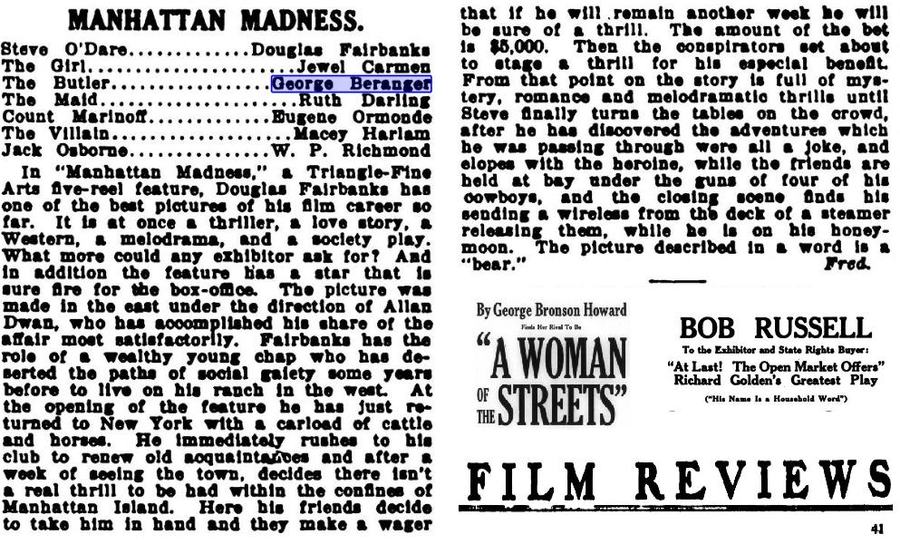
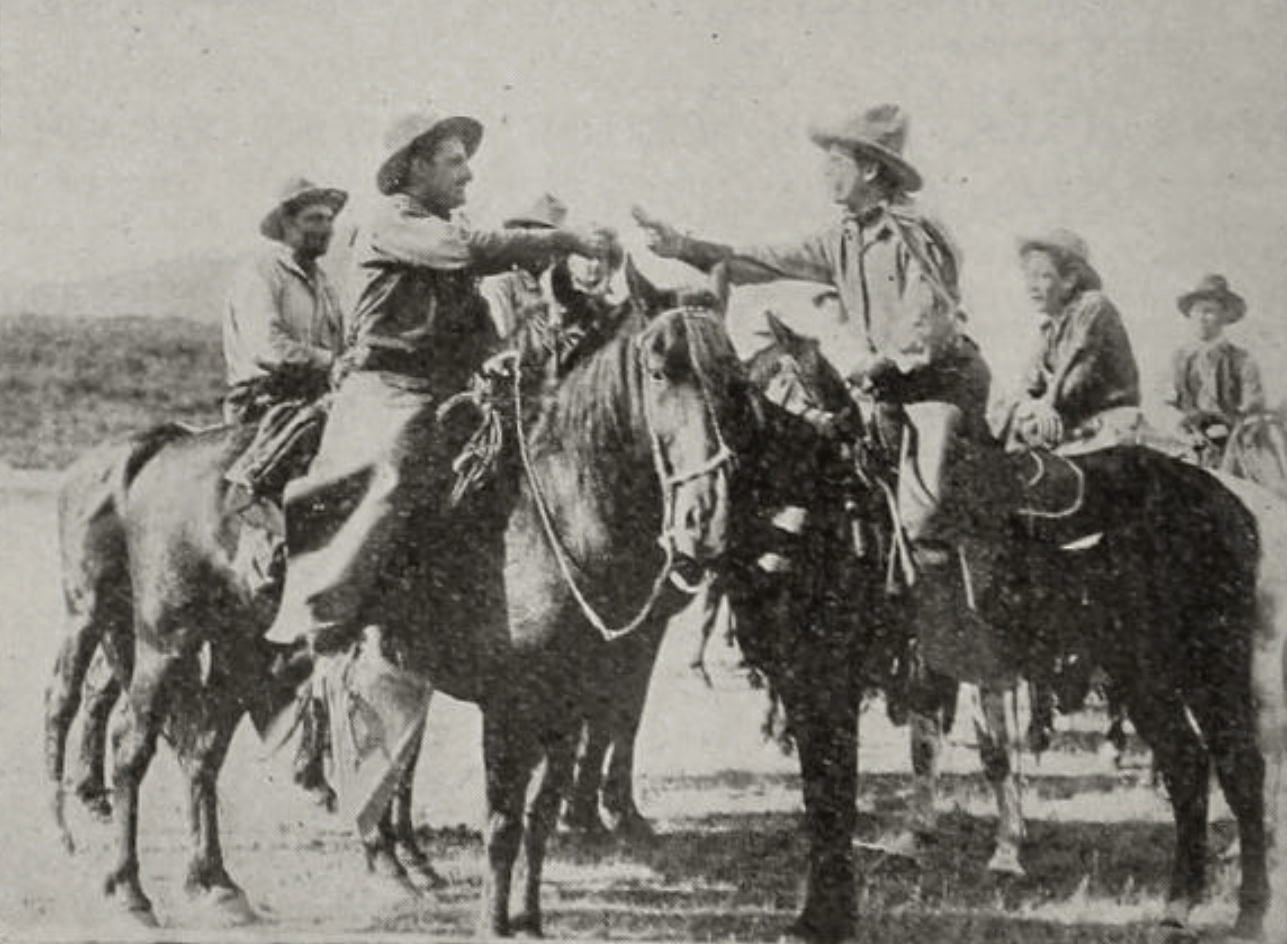
However, O’Dare’s reaction to this revelation is what defines the film’s lasting appeal. Rather than accepting the joke with a sheepish grin, he executes a counter-hoax. The arrival of his four cowboys is the ultimate 'deus ex machina'—but one that is grounded in the character’s established background. The sight of these rugged Westerners holding the New York elite at gunpoint is a delicious role reversal. It suggests that while the city can simulate danger, the West provides the genuine article. The distinction between the theatrical 'villains' and the real 'cowboys' creates a comedic friction that Fairbanks exploits to the fullest.
To understand the impact of Manhattan Madness, one must consider the era of its release. The United States was on the cusp of entering the Great War, and the tension between traditional values and rapid industrialization was palpable. The film acts as a pressure valve for these anxieties. It offers a vision of a man who can navigate both worlds—the tuxedoed gentleman and the rough-riding rancher. This duality was the cornerstone of Fairbanks' appeal. He represented a synthesis of old-world charm and new-world vigor, a theme also explored in a more somber tone in The Coward.
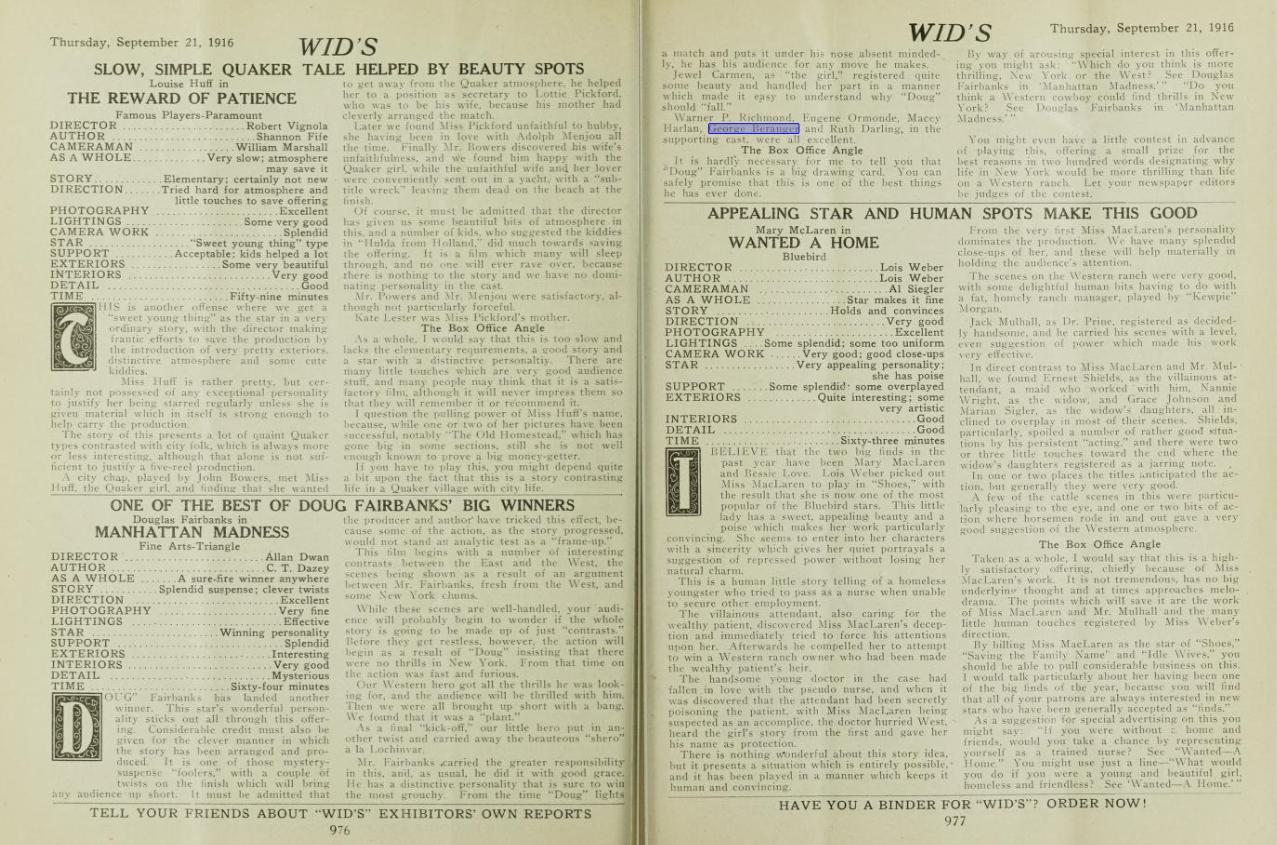
Furthermore, the film’s portrayal of the 'theatrical profession' as a tool for deception provides a fascinating glimpse into how the early film industry viewed its own power. The actors hired by the clubmen are masters of manipulation, capable of convincing a seasoned man of the world that he is in a life-and-death struggle. This highlights the growing influence of mass media and entertainment in shaping public perception. In a way, Manhattan Madness is an early ancestor of films like The Game or The Truman Show, albeit with a much more sunnier disposition.
Allan Dwan’s direction (though the script is credited to the Dazeys and Durling) is remarkably fluid. The camera is rarely static, often panning or tracking to keep up with Fairbanks’ mercurial movements. The editing, too, is surprisingly brisk for the period. The sequence where O’Dare falls through the trap door is cut with a rhythmic precision that enhances the shock of the moment. The film avoids the stagey, proscenium-arch compositions that plagued many early silent features, opting instead for a more immersive, cinematic approach. This visual sophistication is what allows the film to maintain its breakneck pace, a stark contrast to the more deliberate pacing of Barbara Frietchie.
The use of the 'wireless' message at the end of the film is a final nod to modernity. It serves as a bridge between the archaic world of the prank and the technological future. O’Dare’s victory is not just physical or romantic; it is a triumph of communication. He has the last word, delivered via the latest technology, confirming that he has found the ultimate thrill: a marriage born out of a whirlwind of chaos. This ending reinforces the idea that life, when lived with sufficient audacity, is the greatest spectacle of all.
Manhattan Madness remains a quintessential example of the Fairbanks 'formula' before it became codified in his later swashbuckling epics. It is leaner, faster, and perhaps more intellectually playful than his later work. The film captures a specific moment in time when the American identity was being forged in the crucible of the city, yet still yearning for the freedom of the plains. For the modern viewer, it offers a window into a world where the 'thrill' was something to be hunted, captured, and ultimately shared.
In comparison to other films of the era, such as Little Pal or The Quest, Manhattan Madness stands out for its lack of sentimentality. It is a film of sharp edges and quick wits. It doesn't ask for your pity; it demands your attention. The performances, particularly from Adolphe Menjou in an early role, are nuanced enough to withstand the scrutiny of a modern lens. While some of the supporting characters lean into the histrionic tropes of the day, Fairbanks remains an anchor of charismatic realism.
Ultimately, the film is a celebration of the 'unwilling captive'—the idea that we are all, in some way, prisoners of our own expectations until a moment of madness sets us free. Steve O’Dare didn't just win a bet; he rediscovered the capacity for wonder in a world that had grown too small. Whether you are a scholar of silent cinema or merely a seeker of cinematic joy, Manhattan Madness is a journey worth taking. It reminds us that the best stories are the ones where we don't just watch the hero—we feel the wind in our hair as we ride away with them into the unknown.
Rating: 9.2/10 - A Kinetic Masterpiece of Early Meta-Cinema
IMDb 6.8
1933
Community
Log in to comment.