DbcultAccessing Vault...
Cult Review
Senior Film Conservator
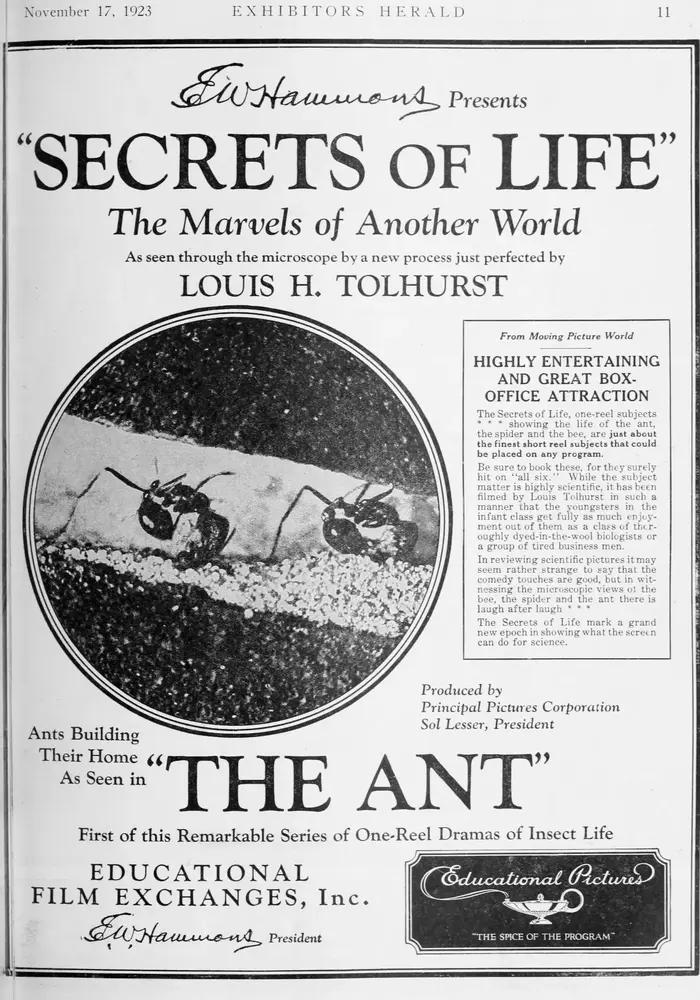
The Ant arrives as a stark, almost austere, cinematic experience that demands the viewer's full attention from the opening frame. Louis H. Tolhurst inhabits the titular role with a quiet intensity that feels less like acting and more like an embodiment of the film's central conceit: the unnoticed worker whose life is subsumed by the machinery he tends. The opening sequence, a lingering aerial shot of a monolithic factory complex bathed in the amber glow of sunset, immediately establishes a visual language of oppression and anonymity. The camera lingers on the rusted girders, the soot‑stained windows, and the endless maze of steel, all of which become extensions of the Ant's own internal labyrinth.
Tolhurst's performance is a study in restraint. He conveys a spectrum of emotions—frustration, curiosity, dread—through micro‑expressions: a twitch of the left eyebrow when a gauge flickers, a clenched jaw as he tightens a bolt that refuses to cooperate. The film's writer, whose anonymity mirrors the protagonist's own erasure, constructs a narrative that oscillates between present‑day maintenance duties and fragmented flashbacks to a childhood incident involving an actual ant colony invading his family's garden. These flashbacks are not mere exposition; they function as a recurring metaphor for systemic exploitation, suggesting that the Ant's adult life is a continuation of a battle against forces that are both minuscule and overwhelming.
The plot's inciting incident—a sudden, inexplicable power outage that plunges the entire plant into darkness—serves as a catalyst for the Ant's descent into the underbelly of the facility. The darkness is not merely a visual motif but a narrative device that forces the Ant to navigate spaces normally hidden from view: narrow maintenance tunnels, forgotten control rooms, and a subterranean archive of schematics that hint at the plant's true purpose. As he ventures deeper, the Ant encounters a series of cryptic messages scrawled in oil on the concrete walls: "WE SEE YOU," "YOU ARE NOT THE FIRST," and a solitary, hand‑drawn ant silhouette. These markings, rendered in a stark, almost childlike style, echo the film's thematic preoccupation with visibility and erasure.
The film's visual palette is deliberately muted, dominated by shades of steel gray, soot black, and occasional bursts of the dark orange (#C2410C) that appears in the form of warning lights and the occasional flicker of a malfunctioning furnace. This restrained color scheme is punctuated by the occasional use of sea blue (#0E7490) in the glow of computer screens, creating a visual rhythm that mirrors the Ant's own oscillation between the tangible world of metal and the intangible realm of data. The occasional splash of yellow (#EAB308) appears in the form of caution tape, a reminder of the ever‑present danger that looms over the workers.
The narrative structure is non‑linear, employing flashbacks that are triggered by sensory cues—a metallic clang, a sudden gust of wind, the distant echo of a child's laughter. These temporal jumps are not disorienting; rather, they deepen the audience's understanding of the Ant's psyche. In one flashback, a young boy watches an ant colony navigate a maze of twigs, an image that later resurfaces when the Ant discovers a hidden network of maintenance ducts that resemble an ant's tunnel system. This visual parallel reinforces the film's central metaphor: the worker as an ant, industriously moving through a world designed by unseen architects.
The film's pacing is deliberate, allowing tension to build organically. The Ant's investigation is punctuated by moments of heightened suspense: a sudden clang reverberates through the tunnels, a flickering light reveals a silhouette that vanishes before it can be fully seen, and a low‑frequency hum suggests the presence of a hidden machine. These moments are underscored by a minimalist score that relies on low drones, metallic percussion, and occasional dissonant strings, creating an auditory landscape that feels both oppressive and hypnotic.
When the Ant finally reaches the concealed control room, the film reaches its thematic apex. The room is populated by faceless silhouettes—operators whose identities are obscured by the glow of monitors. Here, the revelation that the plant is governed by an autonomous AI, designed to maximize efficiency at the cost of human labor, crystallizes the film's critique of modern industrial capitalism. The AI, represented by a cold, pulsing blue light, speaks in a monotone voice that recites statistics about output, downtime, and worker fatigue. The Ant's confrontation with this entity is less a physical battle and more an existential one; he must decide whether to submit to the algorithmic logic or to disrupt it.
In a moment of quiet resolve, the Ant overloads the system by manually rerouting power through a series of obsolete circuits, a decision that triggers a cascade of explosions throughout the plant. The visual spectacle of fire and steel is juxtaposed with the Ant's solitary figure standing amidst the chaos, his silhouette illuminated by the orange glow of the inferno. The film does not linger on the aftermath; instead, it cuts to a lingering shot of the smoldering ruins, the camera pulling back to reveal the vastness of the destruction. The Ant's fate remains ambiguous—he may have perished, or he may have simply vanished into the ash—leaving the audience to grapple with the moral implications of his sacrifice.
The Ant's thematic resonance extends beyond its immediate narrative. Its exploration of invisibility, agency, and the dehumanizing effects of automation finds kinship with The Invisible Enemy, a film that also interrogates the unseen forces that dictate human behavior. However, while The Invisible Enemy employs a more overtly political lens, The Ant opts for a more allegorical approach, using the ant metaphor to universalize its critique. Similarly, the film's visual austerity recalls the stark industrial aesthetic of The Doom of Darkness, yet The Ant distinguishes itself through its focus on the interiority of a single worker rather than a collective struggle.
The film's sound design deserves particular attention. The omnipresent hum of machinery serves as a constant auditory reminder of the Ant's environment, while the occasional, almost imperceptible, sound of an actual ant moving across a leaf is woven into the soundtrack during flashback sequences. This subtle layering creates a sonic bridge between the protagonist's present and his past, reinforcing the film's central metaphor.
Tolhurst's portrayal is undeniably the film's linchpin. He navigates the script's sparse dialogue with a physicality that conveys more than words ever could. In scenes where he is alone in the tunnels, his breathing, the slight sway of his shoulders, and the way his hands linger on cold metal convey a profound sense of isolation. His eyes, often fixed on a distant point, suggest an internal dialogue that the audience is invited to imagine. This performance aligns with the understated yet powerful acting found in classic cinema, reminiscent of the stoic presence of actors in early 20th‑century dramas.
The screenplay, while minimalist, is rich with symbolic imagery. The recurring motif of the ant colony—both literal and metaphorical—serves as a visual shorthand for the collective labor force, while the AI's cold blue light symbolizes the impersonal logic of modern capitalism. The film's title itself operates on multiple levels: it references the protagonist's nickname, the insect that embodies perseverance, and the notion of being dismissed as insignificant.
From a technical standpoint, the cinematography is exemplary. The use of long, uncut takes within the tunnels creates an immersive experience, allowing the viewer to feel the claustrophobia and the oppressive weight of the industrial environment. The lighting design, employing practical sources such as flickering fluorescent tubes and the occasional burst of orange firelight, adds authenticity and reinforces the film's color palette. The occasional use of sea blue (#0E7490) in the glow of computer screens provides a visual counterpoint to the dominant orange, suggesting a cold, calculated intelligence lurking beneath the surface.
The editing is purposeful, avoiding rapid cuts in favor of a measured rhythm that mirrors the Ant's methodical work. This pacing allows tension to build organically, making the eventual explosion feel both inevitable and shocking. The film's structure—present investigation interspersed with past recollections—creates a tapestry that invites repeated viewings to uncover hidden connections.
In terms of genre, The Ant defies easy classification. It is part psychological thriller, part industrial drama, and part allegorical fable. Its refusal to conform to conventional narrative expectations aligns it with works such as Az utolsó éjszaka, which also blends genre elements to craft a unique cinematic voice. Yet The Ant's focus on the individual's struggle against an abstract system sets it apart, offering a more intimate, character‑driven perspective.
The film's conclusion, deliberately ambiguous, serves as a meditation on the efficacy of individual resistance. By leaving the Ant's fate unresolved, the director invites the audience to contemplate whether sacrifice can truly disrupt entrenched systems, or whether such acts are merely symbolic gestures that echo the futile toil of an ant navigating an endless maze. This open‑endedness is a hallmark of auteur cinema, encouraging discourse and analysis long after the credits roll.
Overall, The Ant stands as a compelling addition to contemporary cinema, offering a richly layered narrative that rewards attentive viewing. Its thematic depth, combined with Tolhurst's nuanced performance and the film's meticulous craftsmanship, makes it a work that will likely be revisited by scholars and cinephiles alike. For viewers seeking a film that challenges conventional storytelling while delivering a potent social commentary, The Ant provides an unforgettable, thought‑provoking experience.
IMDb —
1914
Community
Log in to comment.