DbcultAccessing Vault...
6.3/10
Senior Film Conservator
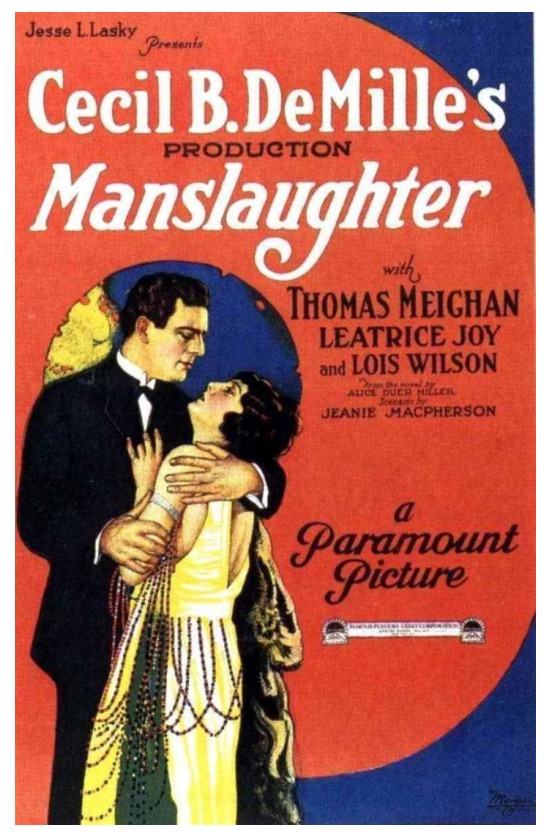
A definitive 6.3/10 rating for a film that redefined the boundaries of cult cinema. Manslaughter remains a cornerstone of transgressive art.
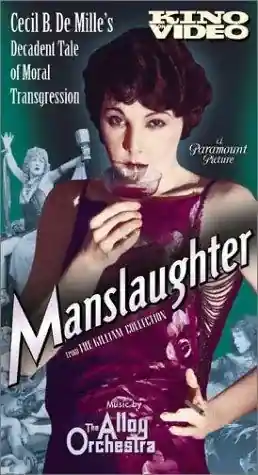
Cecil B. DeMille’s Manslaughter doesn’t tiptoe into moral chaos—it pirouettes in a rhinestone dress, knocks back a sidecar, and leaves tire-treads across the audience’s conscience.
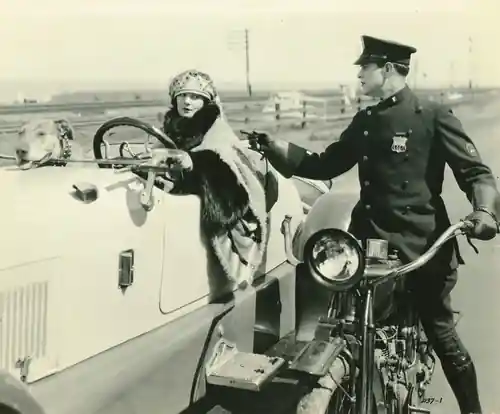
In the dizzying first act, Leatrice Joy’s Lydia strikes flint against the night city: confetti snowstorms, confessions whispered over roulette felt, a police siren strangled by the roar of her Hispano-Suiza. The fatal collision is staged like an altar sacrifice—headlamns flare, the officer’s bike somersaults, chrome screams against asphalt. DeMille intercuts giddy confetti close-ups with the cop’s blood-slick badge; capitalism’s glitter and mortality’s gore fused by montage.
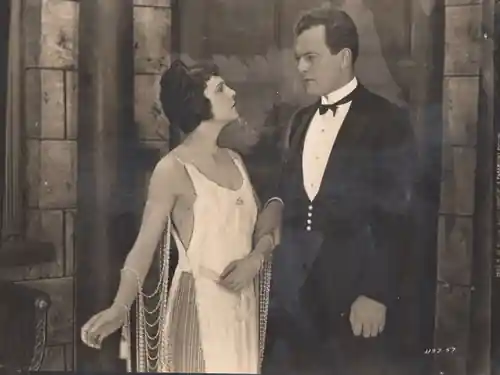
Enter Daniel, played by Thomas Meighan—square-jawed, ivy-league, and paradoxically in love with the very velocity he indicts. His courtroom monologue, scripted by the acid-witted Alice Duer Miller, compares Lydia to Messalina and America to late-Republic Rome, while tinting every frame an infernal crimson. The camera dollies-in until the judge’s bench morphs into an imperial rostrum; columns of smoke suggest a civilization smoldering. The verdict—manslaughter—lands like a lion’s bite, and Lydia’s dragged into a cell that DeMille films like a Caravaggio cave: chiaroscuro stripes, echoing footfalls, a single shaft of light crucifying her against the stone.
Reformation arrives not via sermon but through montage fatigue: pick-axe clink, laundry steam, the hollow stare of fellow inmates. Meanwhile Daniel, laurel-crowned by the jury, discovers that victory tastes of ash. Montage detonates again—toppled goblet, neon bar signs, a spiral of newspaper headlines charting his spiral into speakeasy squalor. The symmetry is ruthless: Lydia’s shackles become Daniel’s tumbler; her prison yard, his gutter.
Leatrice Joy toggles between flapper insouciance and penitential gauntness so fluidly you can practically hear the clink of shackles replace the rustle of pearls. In the bacchanal sequence she rides a chandelier like a Valkyrie on a sugar high, yet her later close-ups—eyes swollen with sleepless guilt—evoke Falconetti austerity. It’s a performance pitched at the octave where slapstick meets scripture.
Thomas Meighan counterbalances with granite gravitas until alcohol liquefies his certainty; watch his shoulders cave forward as though the toga of civic virtue were slipping off. When he finally begs Lydia’s forgiveness across a prison visiting table, his whisper corrodes the soundtrack—no dialogue needed, only the mechanical clank of unseen gates.
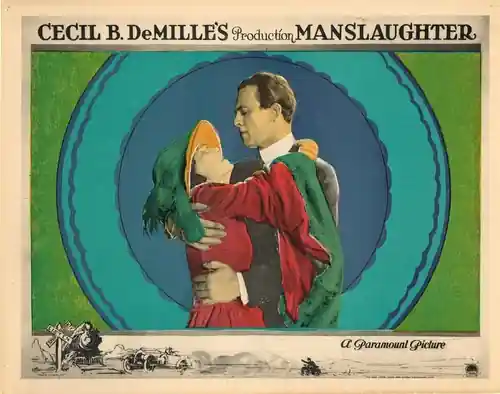
DeMille was often branded vulgar for his jewel-crusted orgies, yet Manslaughter weaponizes that opulence: every champagne spurt presages blood, each confetti flake resembles subpoena paper. The director’s signature half-moon lighting caresses cleavage and cathedral alike, implying commerce between cathedral and cabaret. Compare this to the ascetic gloom of Die Lieblingsfrau des Maharadscha or the pastoral fatalism of Kvarnen; DeMille’s universe is louder, faster, and—paradoxically—more guilt-soaked.
Alvin Wyckoff’s cinematography deserves a shrine. During Lydia’s nightmare the camera pirouettes 360°, fusing Roman legions with flappers in a danse macabre of double exposures. The prison courtyard, shot at high noon, becomes a white-hot purgatory; shadows stab like accusations. Tinting alternates between infernal red for the nightclub, cadaverous blue for the jail, and jaundiced amber for Daniel’s alcoholic twilight, turning the celluloid itself into a mood ring.
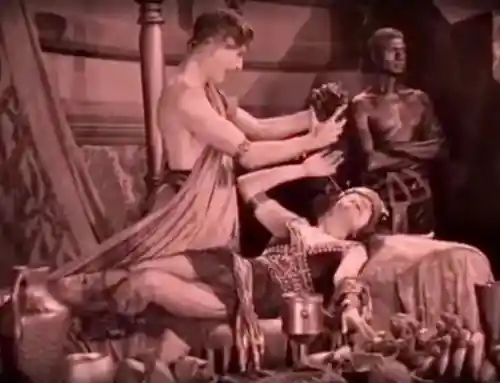
Alice Duer Miller and Jeanie Macpherson lace the intertitles with Latin epigrams, yet the film’s true language is montage. Roman candles ignite over footage of chariot races; headlines of Wall Street booms smash-cut to the fallen officer’s funeral. The implication: empire repeats itself, first as farce, then as speeding motorcar. When Daniel thunders that “the luxury of today is the lava that buried Pompeii,” the line lands less like moralizing than meteorological forecast.
Gender politics glitter with equal poison. Lydia’s punishment feels ferocious because she transgressed two commandments: she killed, and she enjoyed life while female. Daniel’s parallel descent, though, suggests male authority curdles into impotence without a woman to govern. Their final reconciliation is staged off-center, half in silhouette—DeMille refuses a tidy catharsis, implying the cycle of decadence and chastisement is, like Rome itself, eternal.
Though technically mute, the film weaponizes sonic suggestion. The motorcycle cop’s crash is followed by a visualized “silence”—a frozen frame, no intertitle—so deafening it vibrates the mind. Conversely, the prison band’s brass rendition of Nearer, My God, to Thee is implied only by inmates’ rigid posture and a single tear rolling down Lydia’s cheek; viewers swear they heard trumpets.
This aural ghosting contrasts with the deliberate cacophony of Telephones and Troubles, where pratfall clang dominates. DeMille trusts negative auditory space to amplify guilt, proving silence can be louder than slapstick.
Released months before the first Teapot Dome revelations, Manslaughter pre-emptively indicted elite excess; audiences recognized the champagne-slicked co-conspirators in their own newspapers. Critics howled about DeMille’s “moral depravity,” yet box-office tallies rose like bread in an oven—proof that prohibition America loved nothing more than a sermon wrapped in sequins.
The film’s template—sin, spectacle, salvation—became DeMille’s brand DNA, later recycled in epics like The Ten Commandments. But here the grandeur is flecked with noir corrosion, presaging the cynicism of post-war cinema two decades early.
Stacked beside Virtuous Husbands or Runnin’ Straight, both of which treat crime as regional flavor, Manslaughter universalizes culpability; its characters are archetypes on a tectonic plate of guilt. Only One Touch of Nature matches its fatalistic gravitas, but lacks DeMille’s baroque swing between orgy and penitentiary.
Fans hunting pristine prints should seek the 2014 Photoplay restoration—4K scans from the last surviving tinted nitrate reels, with a commissioned score that channels Kurt Weill. Beware muddy public-domain dupes that bleach the crimson orgy into rosewater; half the film’s bite lies in those saturated reds.
A century on, Manslaughter remains a delirious fusion of sermon and sideshow, where sociology is spray-painted in lurid three-strip tinting. Its engines—moral panic, voyeuristic thrill—are forever revving. Watch it for the flapper chandelier swing; re-watch it for the chill that follows when you realize the real collision is America’s, and the siren is still wailing.
IMDb 4.8
1924
Community
Log in to comment.