DbcultAccessing Vault...
Cult Review
Senior Film Conservator
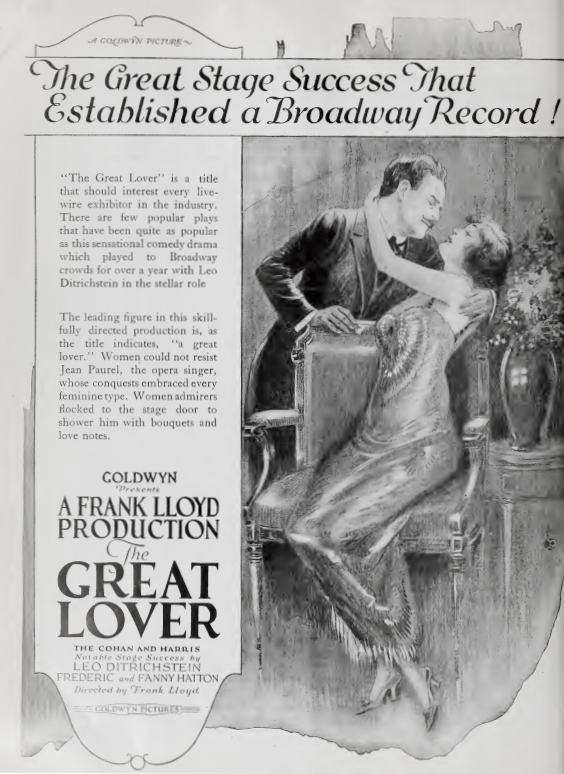
The 1920 screen seldom sang this loudly. In The Great Lover, the opera becomes both cathedral and coliseum, a place where high C’s collide with low desires and every aria is a potential swan song. Director Frank Lloyd—already honing the cosmopolitan sophistication that would later win him an Oscar—treats the Metropolitan as an organism: fly-loft pulleys resemble ribs, the gasping tenor a fibrillating heart. We enter this anatomy not through exposition but through Ethel Warren’s gloved hand brushing a velvet curtain, an image that whispers initiation louder than any title card.
Silent cinema’s Achilles heel is its inability to deliver the human voice, yet The Great Lover weaponizes that absence. When Paurel clutches his throat mid-aria, the lack of emitted sound paradoxically amplifies catastrophe; we hear with our eyes the snap of vocal cords, the popping of dreams. It’s a masterstroke of negative audio, a technique modern filmmakers like Guillermo del Toro still echo when they hide the monster off-frame.
Production design drips with Belle Époque excess: staircases swirl like cream, balconies bloom with ostrich-plumed matrons, and every footlight is a cataract of molten gold. Yet the camera never lingers in simple admiration. Cinematographer Georges Benoît—fresh from shooting Cleopatra’s sinuous barges—glides through corridors in long, unbroken takes that foreshadow Max Ophüls’s later labyrinthine tracking shots. The effect is of a jeweled music-box whose lid refuses to shut.
Claire Adams’s Ethal walks the razor’s edge between porcelain innocence and carnal awakening. In early scenes her eyes are wide saucers; by the time she hurls the engagement announcement, those same eyes have calcified into flint. Watch her hands—they flutter like trapped sparrows during Paurel’s hospital bedside confession, then settle into a resigned stillness that foretells her eventual acceptance of Carlo. It’s a clinic in the micro-gestural art that silent actors needed to survive.
If Adams supplies the film’s tremulous heartbeat, John St. Polis provides its gravel-throated soul. His Paurel is no mustache-twirling stage satyr but a man addicted to worship, terrified of silence. In the liminal moment when he realizes he will never sing again, the camera pushes to an intimate close-up—rare for 1920—and the baritone’s pupils quiver as if the lens itself were a high C he cannot reach. The performance anticipates Emil Jannings’s tragic projectionist in Redemption, another tale of public genius undone by private collapse.
Meanwhile Richard Tucker’s Carlo is all kinetic anxiety, a coiled spring who finally unlooses in the second-act substitution scene. The joy of his triumph is tempered by guilt—note how he keeps glancing toward the wings where his biological father stands mute. Tucker’s body language oscillates between heroic posture and a subtle forward stoop, as if ambition itself were a yoke.
What elevates the film above routine melodrama is the way librettists Fanny & Frederic Hatton—with supple adaptation by Leo Ditrichstein—entwine professional ruin with romantic rivalry. Paurel’s muteness is not merely a plot device; it’s the worm in the apple of every character’s desire. Carlo’s ascension literally relies on the rupture of another man’s larynx, a Faustian bargain made flesh without a single contract signed.
Compare this to The Path Forbidden, where ambition is punished through exotic curses; here the punishment is physiological, intimate, and irrevocably linked to the gift that once defined the victim. The film suggests that art is a zero-sum stage: one voice soars only by plucking feathers from another’s wings.
Often dismissed as ancillary vamps, Alice Hollister’s Sabotini and Rose Dione’s Bianca function as the narrative’s furies of consequence. Sabotini’s jealousy—vividly externalized through her jade cigarette holder jabbing the air like a conductor’s baton—fuels the backstage fracas that accelerates the engagement. Yet the script denies her the cliché of unalloyed villainy; in a brief shot she caresses a fading playbill from her own prime, hinting that her vitriol springs from the terror of being replaced.
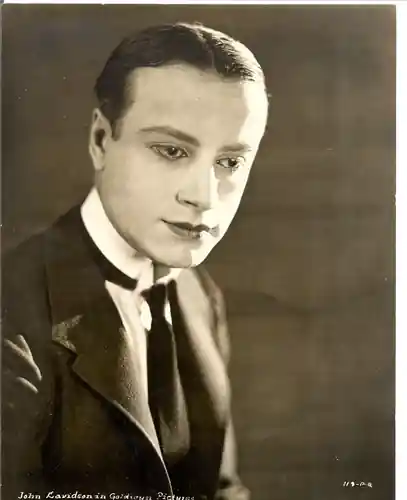
Bianca’s entrance, draped in black lace that seems spun from mourning itself, reconfigures the moral axis. Her disclosure to Paurel is shot through a frosted pane, voices unheard, turning the audience into eavesdroppers on a primal confession. The staging prefigures the famous door-framed secrets of Nicholas Ray’s When Doctors Disagree, though Lloyd accomplishes it two decades earlier.
Though technically black-and-white, the picture communicates color through associative tinting: amber for stage spectacles, cerulean for nocturnal remorse, vermilion for the moment Paurel coughs blood onto a white handkerchief—an insert that feels like a slash across the screen. These chromatic cues, coupled with expressionistic intertitles whose fonts swell or shrink to mirror emotional crescendos, render the absence of actual hue irrelevant.
Editor J. Edwin Robbins toggles between lingering medium shots that let gestures breathe and percussive cuts timed to curtain drops. The transition from act-one ovation to Paurel’s dressing-room collapse employs a match-action cut on a raised champagne glass, creating a visual hiccup that jars the viewer into dread. It’s a flourish that wouldn’t look out of place in Scorsese’s modern operas of excess.
Original exhibitors received a cue sheet brimming with Verdi, Puccini, and original motifs. Contemporary restorations occasionally commission new scores; if you’re lucky enough to catch a 16 mm print with live accompaniment, you’ll discover how the film weaponizes absence. When Paurel’s voice fails, orchestras traditionally sustain a pregnant fermata, letting the void vibrate until viewers squirm in their seats—a communal act of imagined listening that only silent cinema can demand.
Viewers fresh from the tropics of The Jungle Trail might find the drawing-room stakes comparatively petite. Yet tension here is no less savage for being costumed in tuxedos. Where A Tropical Eggs-pedition externalizes conflict through crocodiles and typhoons, The Great Lover interiorizes it into vocal cords, marriage contracts, and parental guilt—proving that the most lethal predators wear cologne, not scales.
For decades the film slumbered in archival limbo, a single nitrate print rumored to have perished in the 1965 MGM vault fire. Miraculously, a 35 mm duplicate surfaced in the Cinémathèque royale de Belgique, scanned at 4 K in 2022. Grain alchemy reveals textures hitherto unseen: the gossamer weave of Ethel’s debut gown, the razor-thin scar on Paurel’s throat where a surgeon’s hope expired. Streaming platforms such as Kanopy and MUBI cycle the restoration during themed retrospectives; physical media aficionados can snag a region-free Blu-ray from Re:Vival imprint, complete with a newly commissioned piano score that accentuates the film’s proto-noir undertones.
While Barrymore’s Don Juan and Valentino’s sheik dominated public imagination, St. Polis’s Paurel sketched the template for the tortured vocal virtuoso later echoed in José Ferrer’s Toulouse-Lautrec and Jeremy Irons’s doomed Claus von Bülow. The film whispers a perennial truth: audiences will forgive genius any transgression except the loss of its gift.
Does the ending satisfy? In relinquishing Ethel, Paurel enacts a self-annihilation more romantic than any death scene. There is no curtain call, no sweeping requiem—only a man exiting a stage door into snowfall, the city’s gaslights humming like distant applause he’ll never again receive. Carlo and Ethel’s eventual embrace is filmed in long shot, their silhouettes dissolving into the urban throng, as if the film itself exhales and concedes that love, like opera, is sometimes most honest when it acknowledges the finale’s artifice.
Verdict: A rapturous aria of shadows and silence, The Great Lover endures because it understands that the most devastating note an artist can lose is not high B or C, but the heartbeat of empathy. Seek it out, let the orchestra of your imagination tune, and when the lights rise you may find yourself quieter, as if some vital throat inside your own chest has been cauterized—and strangely, exquisitely set free.
IMDb 6.6
1927
Community
Log in to comment.