DbcultAccessing Vault...
6.9/10
Senior Film Conservator
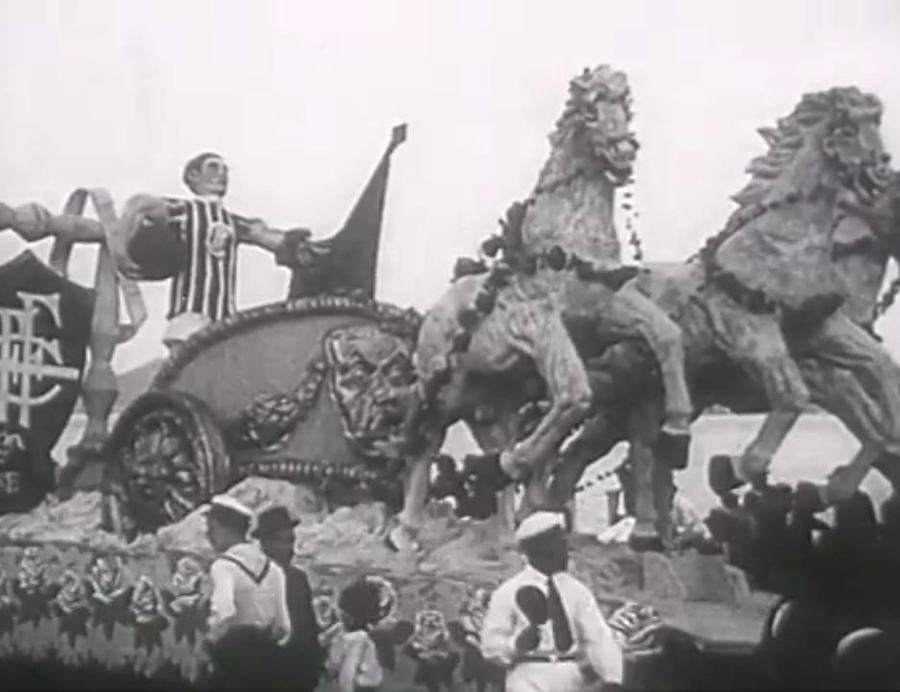
A definitive 6.9/10 rating for a film that redefined the boundaries of cult cinema. O Que Foi O Carnaval de 1920! remains a cornerstone of transgressive art.
A nitrate phoenix rising from the ashes of a forgotten vault, O Que Foi O Carnaval de 1920! is less documentary than ecstatic séance—an 8-minute tremor that rewrites what we thought we knew about Brazilian modernity before Bossa Nova, before Glauber Rocha, before the monochrome pessimism of Virtuous Wives. Shot on 35-mm stock so flammable it could double as carnival firecracker, Botelho’s film is the missing link between Lumière actuality and the tropical delirium of The Splendid Sinner.
There is no voice-over, no didactic placard—just the rattle of a hand-crank growing faster whenever the beat of the bateria swells. The result feels like stepping into a daguerreotype that suddenly remembers how to breathe. One instant we’re surveying Avenida Central gilded like a belle-époque pastry; the next, a half-naked porta-estandarte twirls her 40-pound silk banner inches from the lens, the fabric’s crimson dye bleeding into the emulsion itself. The tinting was done in Botelho’s own bathtub, according to restoration notes, conjuring hallucinations of scarlet that predate the acid-trip palette of The Flame of Hellgate by half a century.
What separates this carnival from the sugar-coated travelogues of With Our King and Queen Through India is its refusal to sand off the rough edges of empire. Botelho’s gaze is both participant and archeologist: he captures the Portuguese naval cadets goose-stepping in white spats while, on the adjacent curb, Afro-Brazilian cuíca players drum on previously confiscated police batons. The montage is silent yet deafening—colonial pageantry and subversive rhythm sutured by the same strip of celluloid.
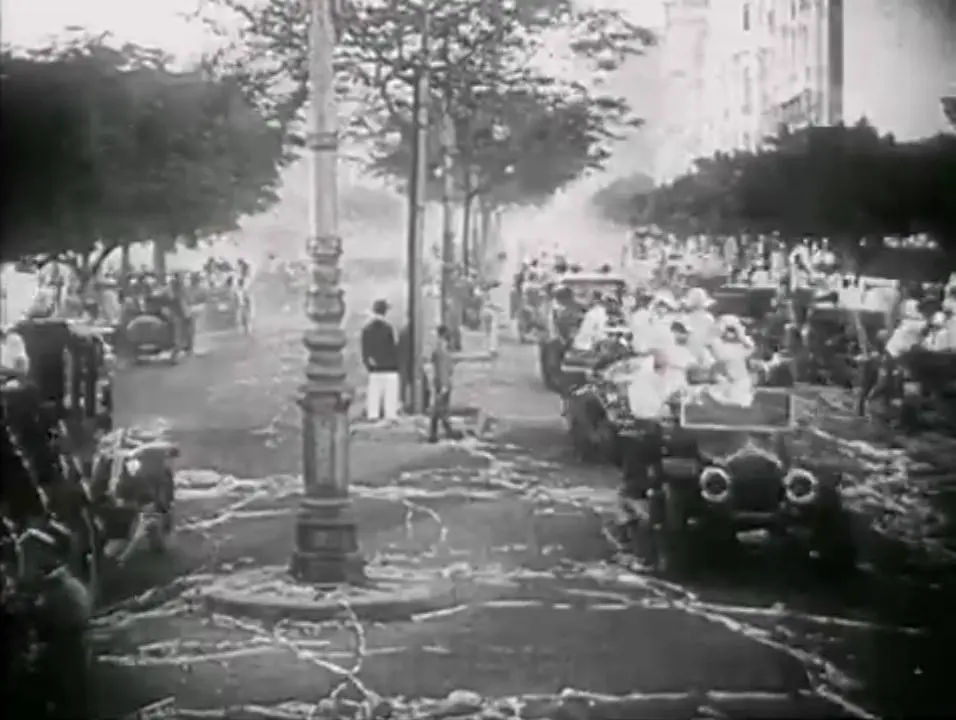
Scholars still quarrel over Botelho’s politics. Was he a tenentista sympathizer smuggling anti-government critique beneath confetti? Or merely a bon-vivant dilettante intoxicated by chanteuses in feathered headdresses? I lean toward the former, citing the pointed shot of a champagne bottle shattering against the marble base of President Epitácio Pessoa’s portrait—an image that feels as incendiary as any strike sequence in Over the Top.
The film’s most transgressive sequence arrives when Botelho abandons the sanctioned parade route and descends into the morro’s shadow. There, a circle of sambistas performs what looks suspiciously like a batuque—a drum rhythm outlawed in 1890 for its “incendiary” potential. Women lead the chant, torsos gleaming with cane-sugar sweat, hips drawing figure-eights in dust thick as cocoa powder. The camera doesn’t ogle; it reveres. Compare that with the pneumatic objectification on display in All Woman, and you realize Botelho stumbled onto a proto-feminist manifesto decades before the term hit Rio’s academia.
Yet sensuality here is also mortality. A brief, chilling insert shows a child’s corpse laid beneath a makeshift sidewalk altar—victim of a tram accident earlier that morning—while revelers step around the body, some crossing themselves, others simply dancing on. Death and carnival share the gutter, and Botelho’s lens refuses to grant the viewer moral sanctuary.
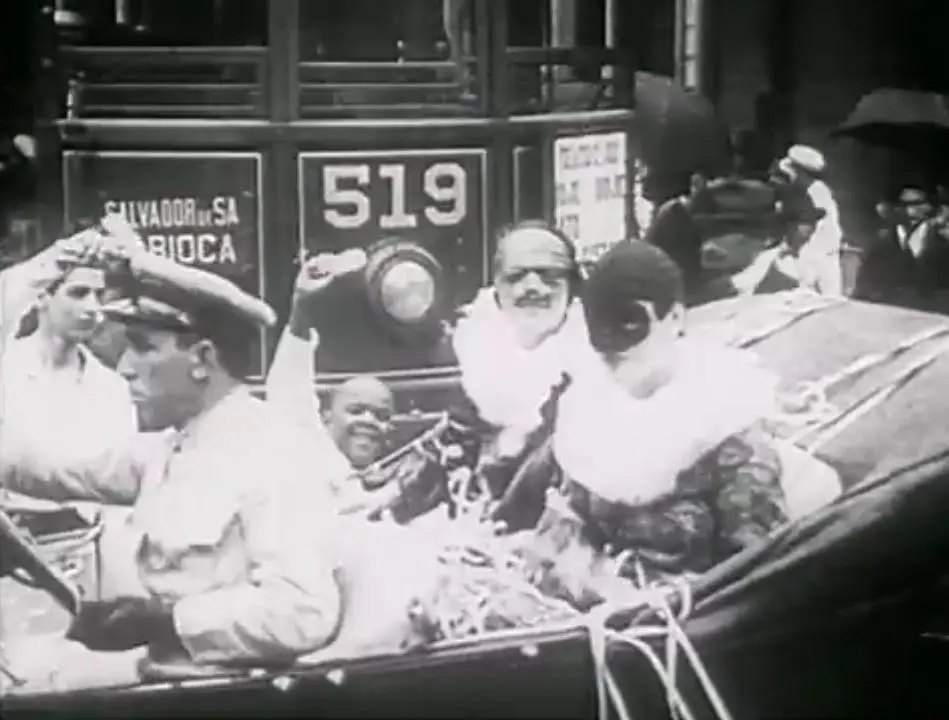
Modern spectators, conditioned by drone panoramas and 4K slow-motion, might smirk at the herky-jerky cadence of 16 fps. Resist that smugness. When Botelho’s shutter slips out of sync, the image smears into a ghostly trail—each confetti fleck becoming a comet. Far from a flaw, this temporal hiccup anticipates the glitch aesthetics of twenty-first-century VJ sets. One could splice a 10-second loop of this footage into a Boiler Room livestream and no one would suspect its centenarian pedigree.
Color-wise, the restoration team followed the Desmet method, yielding amber skin tones and teal shadows that flirt with the palette of The Wax Model. But Rio’s sky refuses to stay pinned to any monochrome logic; it oscillates between bruised violet and radioactive peach, as though the universe itself had joined the costume ball.
Archivists screened the film last month at the Cinemateca do Mato Grosso with a new score—berimbau, agogô, analog synth—performed live by the trio Tremor de Luz. The fusion shouldn’t work, yet it does: the synths extrapolate Botelho’s visual stutters into dub echoes, while the Afro-Brazilic percussion anchors us to the soil that carnival temporarily anesthetizes. I’ve heard silent purists moan, but honestly, would you deny Nosferatu a Hans Erdmann score? Silence is not history’s default; it’s merely one frequency among many.
For home viewing, I recommend syncing the film with Cartola’s 1974 album Mundo Melhor. Start both simultaneously; by the third track, the parade floats seem to sway exactly to Cartola’s minor-key modinhas. Coincidence? Perhaps. Yet such serendipity is the secret currency of cinephilia—why else would we haunt dusty archives if not to chase these temporal mirages?
While Rio’s bourgeoisie was perfecting the ranchos’ choreographed sobriety, Hollywood busily erected the cathedral of continuity editing. Compare this film to Social Ambition or The Disciple: both American productions chase seamless storytelling, every match-on-action designed to hide the splice. Botelho flaunts his splices. Jump-cuts dismember parade floats; eyeline matches collapse when a tipsy harlequin winks straight at us. The effect is Brechtian before Brecht, Godardian before Godard—a cinematic middle-finger to classical cohesion.
Economically, Brazil’s First Republic was wheezing under the coffee-valorization scheme, a racket that would implode the following year. Botelho’s images of confetti-strewn avenues therefore double as a funeral pyre for an export-driven oligarchy. Watch how he frames a banker’s silk hat floating abandoned in a puddle—an omen of the coming default. Hollywood in 1920, flush with post-war receipts, could afford utopian backlots; Rio’s carnival had to manufacture utopia on streets that reeked of guano and diesel.
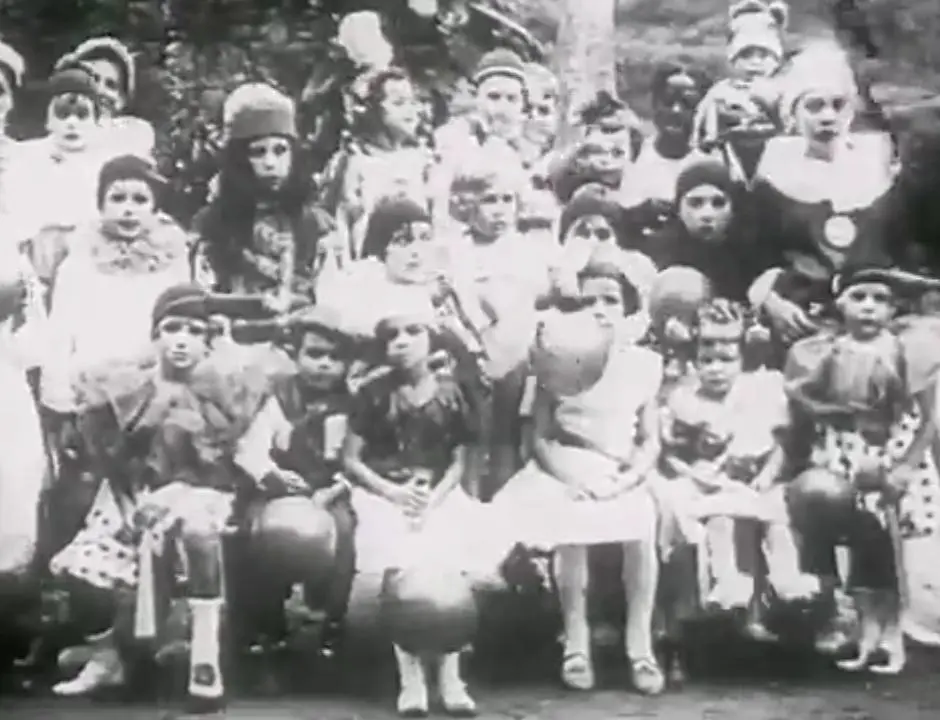
Cross-dressing here is not comic relief; it is insurgent. A stout bricklayer dons a crinoline so wide it clogs the entire tram line. Rather than chastise him, onlookers applaud, and Botelho lingers on his calloused hands adjusting the lace bodice. The moment queers the rigid gender binary that underpinned Brazilian penal code article 399 (decriminalized only in 1830 but socially policed well into the 20th century). Contrast this with the suffocating femininity on parade in Tempest and Sunshine, and you’ll grasp how carnivalesque transgression seeps into the political domain.
Also revelatory: Botelho’s inclusion of working girls stitching costumes till dawn. Their fingers bleed onto sequins, yet they hum chorinhos with the gusto of a studio orchestra. These shots anticipate the feminist discourse of Oh, the Women! by nearly a decade, predating even the polemics of Bertha Lutz.
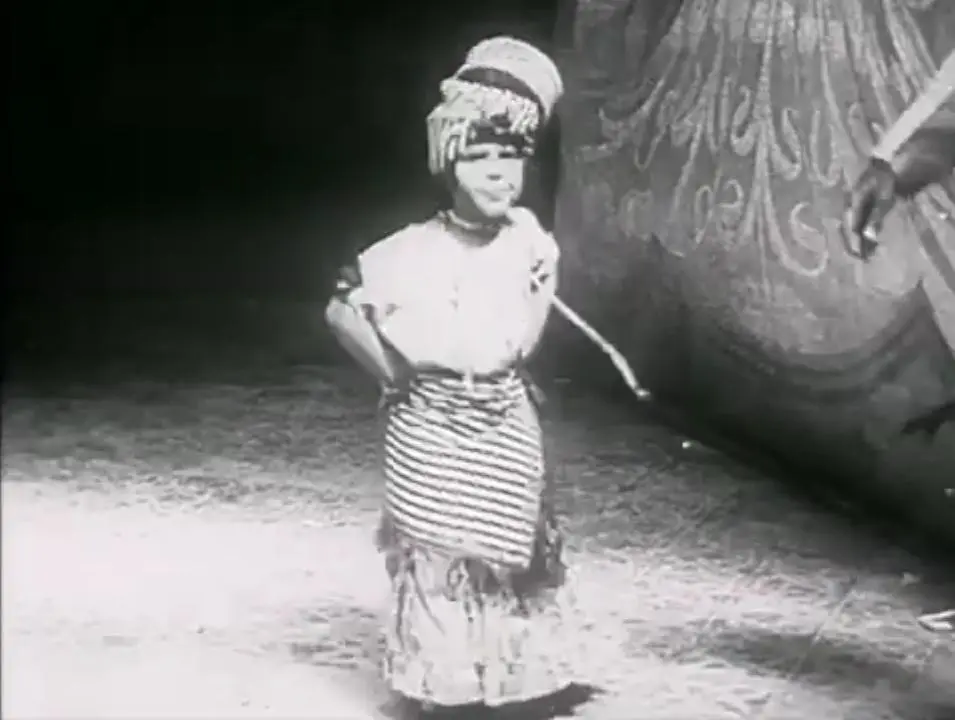
Some critics dismiss carnival as escapist pageantry—Brazil’s safety-valve for social steam. Yet Botelho’s final image torpedoes that thesis. After the king is crowned, confetti drifts like dirty snow over the Praça Onze plaza. From the gutter, a Black child scoops a handful and blows it toward the camera. The confetti disperses, some flecks sticking to the lens itself, refusing to vanish. The frame irises shut on this smear, leaving us with the uncomfortable sensation that history is not behind us but lodged in our optic nerve. Escapism? Hardly. It is confrontation wearing a clown-nose.
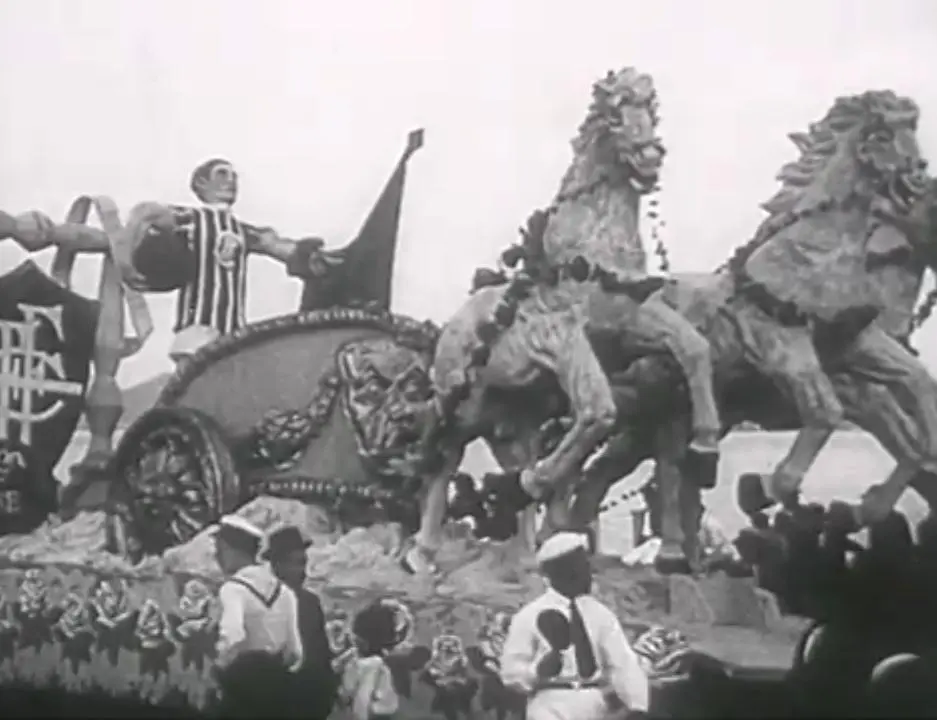
Compare that to the imperial nostalgia of With Our King and Queen Through India, where every elephant procession reasserts the Raj’s dominion. Botelho’s carnival, by contrast, stages a fleeting republic of equals whose very ephemerality indicts the permanence of inequality outside the ballroom.
The negative, rediscovered in a Petrópolis attic beneath a stack of Estado do Rio broadsheets, was vinegar-syndrome incarnate: shrunken, bubbled, reeking of acetic acid. The lab at Arquivo Nacional froze the reels, then employed ultrasonic film-cleaning—technology borrowed from microchip fabrication. The result? Grain like nutmeg, scratches transformed into meteor showers. Purists lament digital overreach, yet without 4K wet-gate scanning, we’d have nothing but dust.
Color grading proved polemical. Botelho’s original annotations mention “céu cor de anil” (indigo sky), but indigo dye faded first. Restorers had to triangulate between chemical analysis and historical postcards, finally settling on a twilight palette that drifts between cobalt and bruised mauve—an uncertainty principle made visible.
Today, snippets circulate on TikTok, overlaid with funk carioca beats. Is this desecration or democratic resurrection? I’d argue the latter. Carnival, after all, belongs to the crowd. Still, ethical spectatorship demands we credit the source, acknowledge the archival labor, and resist flattening historical specificity into algorithmic meme-mush. Tag @ArquivoNacional, cite the fund, pay the samba-school musicians whose ancestors drummed for Botelho. Otherwise we replicate the colonial extraction we claim to critique.
O Que Foi O Carnaval de 1920! is not a relic; it is a time-machine with a cracked mirror, a celluloid oracle that foretells the contradictions of modern Brazil—its racial democracy myth, its class stratification, its irrepressible urge to samba through structural collapse. See it on the largest screen possible. Let the emulsion burn your retinas, let the cuícas rattle your ribcage. Then walk outside: the confetti is still falling.
10/10 — A nitrate miracle that dances on the volcano of history.
IMDb —
1916
Community
Log in to comment.