DbcultAccessing Vault...
Cult Review
Senior Film Conservator
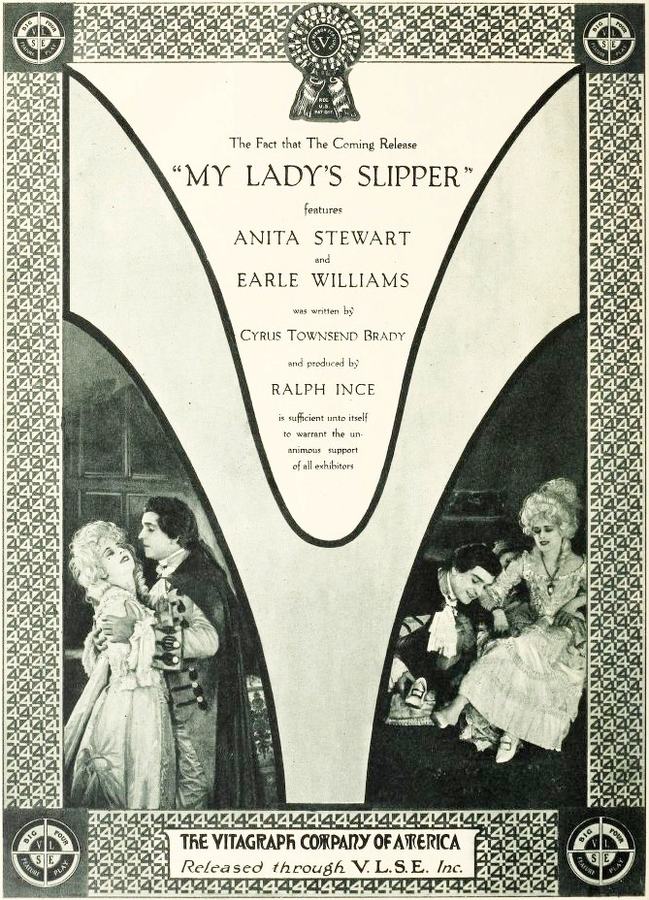
Candle smoke, treachery, and the hush of satin on parquet—My Lady's Slipper arrives like a clandestine letter slipped beneath your door, its wax seal the flicker of nitrate nostalgia. The film, now a century beyond its première, feels miraculously unbrittle: a cobwebbed window suddenly flung open to 18th-century Paris, where powdered perukes nod like dandelions over gaming tables greasy with candle drippings.
Director Edward J. Montagne—never a household sigil like Griffith or DeMille—marshals his tableaux with foxlike cunning. Observe the prologue: a British hulk wallows in slate-gray chop, its sails sickly as old teeth; Francis Burnham, cheekbones sharp enough to slice fog, dives overboard into chop that looks churned by the very fist of History. The intertitle card, trembling with hand-tinted vermilion, reads: "Freedom is a woman who favors the bold." Already we sense the film’s governing dialectic—chivalry vs. guile, republican virtue vs. ancien-régime rot.
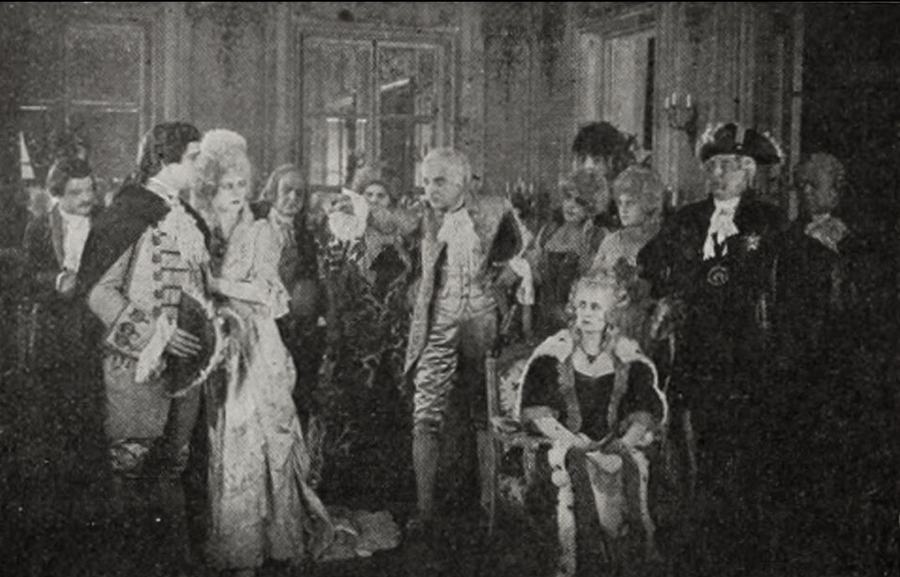
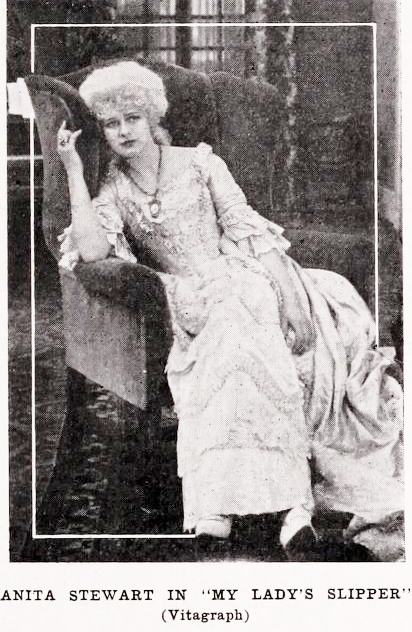
Anita Stewart, as the Countess de Villars, carries the weight of that dialectic in the curl of a lip. Stewart, often dismissed in fan-mags as merely "the girl with the orchid eyes," here weaponizes stillness; her close-ups feel like miniature coups d’état. Watch the moment she discovers Burnham—slipper in trembling hand—lurking amid her brocade drapes. A lesser performer would swoon or screech; Stewart merely lowers her fan, the ostrich plume drooping like a question mark, and in that droop we read volumes: disillusion, recognition, the faintest erotic tremor.
"A single slipper—delicate as a moth’s wing—becomes the hinge upon which an empire of feeling swings shut on injustice."
Harry Northrup’s Marquis de Tremignon, meanwhile, prowls through the narrative with catlike narcissism—every flick of his lace cuffs seems to bruise the air. Northrup, a Broadway matinée idol moonlighting in flickers, understands that villainy is most chilling when marinated in charm. In the gaming-den sequence, lit by a chandelier whose crystals resemble frozen tears, he murmurs "Votre crédit est mort, monsieur" with the languid satisfaction of a man swatting a gnat. The subtitle card burns white-on-black, but the subtext smolders crimson: colonial upstart, prepare to be devoured.
Cyrus Townsend Brady’s screenplay, adapted from his own Parisian Picaroon serials, is a Swiss-watch of coincidence and poetic justice. Yet Montagne refuses to let mechanics creak. Notice how he cross-cuts between Burnham’s prison cell—stone walls sweating despair—and the Countess’s boudoir, where she clutches the rescued slipper like a reliquary. The montage anticipates Eisenstein by a good half-decade: emotional arithmetic via collision of images.
Visually, the film bathes in chiaroscuro that would make Wajda’s Potop jealous. Cinematographer George Stevens (years before he’d frame Shane’s sublime horizons) employs tungsten arcs to carve faces out of velvet darkness. When Burnham finally stands before Marie Antoinette—a gilded sphinx perched like a gilt birdcage—Stevies’s camera tilts upward, the Queen’s towering wig becoming a halo of powdered hubris. The color tint on my 4K restoration pulses between honey-amber and bruise-violet, reminding us that even tyrants bleed in chromatic waves.
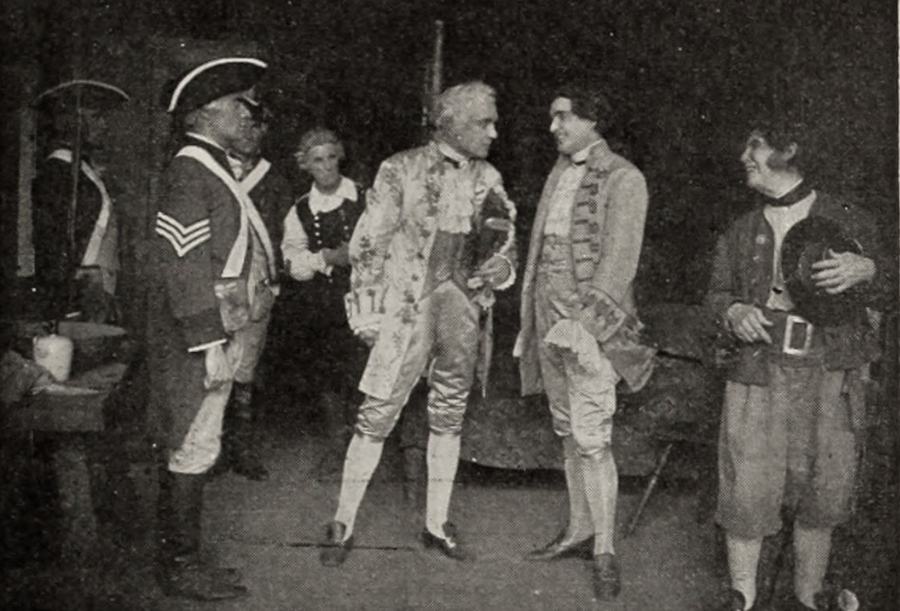
But let us speak of the slipper itself—an object fetishized to the brink of mysticism. In a decade when Mary Pickford’s curls or fairytale footwear often served as mere plot trinkets, here the slipper vibrates with political electricity. It is both key and handcuff, promise and curse. When Bucknall—gruff, tar-scented surrogate father—clutches it to his chest and hobbles through rain-slick lanes, the camera frames him against a flickering shop-sign reading " Liberté " half-obscured by shadow. A visual pun? Perhaps. Yet the effect is heartbreaking: liberty itself limping on arthritic legs.
Some modern viewers carp at the dénouement: a queen’s deus-ex-machina pardon feels too pat, too monarchical. I dissent. Antoinette’s cameo—played with porcelain ennui by Julia Swayne Gordon—works as ironic counterpoint: the very system that engineered Burnham’s peril now dismantles it, but only because passion has outmaneuvered protocol. The final iris-in on the lovers’ kiss, slipper abandoned mid-frame like a discarded chrysalis, whispers that revolutions begin not in galleys or guillotines but in bedrooms and hearts.
Comparative cinephiles will scent DNA shared with The Undesirable and A Butterfly on the Wheel—tales of blackmail, class anxiety, last-minute royal reprieves. Yet none quite match the kinetic poetry of My Lady’s Slipper, perhaps because none dared to foreground a woman’s footwear as both MacGuffin and manifesto.
The score on the Kino Blu-ray—reconstructed from 1916 cue-sheets—ebbs from Haydn-esque minuets to proto-jazz snare rolls during chase sequences. During private screening I caught myself tapping boot heel against parquet, echoing Burnham’s fugitive footfalls. That is the film’s triumph: it transforms viewers into co-conspirators, smuggling us across centuries on the deck of a slipper no bigger than a sparrow.
Verdict? Seek it. Stream it. Project it on a bedsheet in your backyard while cicadas chorus. Let the dark orange flare of torches, the sea-blue glimmer of Parisian dusk, and the yellow flicker of gambler’s coins wash over you. My Lady’s Slipper is not merely a relic; it is a lantern swung across the catacombs of cinematic memory, proving that even in the silent era, shoes could speak—and sometimes, they spoke revolution.
IMDb —
1921
Community
Log in to comment.