DbcultAccessing Vault...
Cult Review
Senior Film Conservator
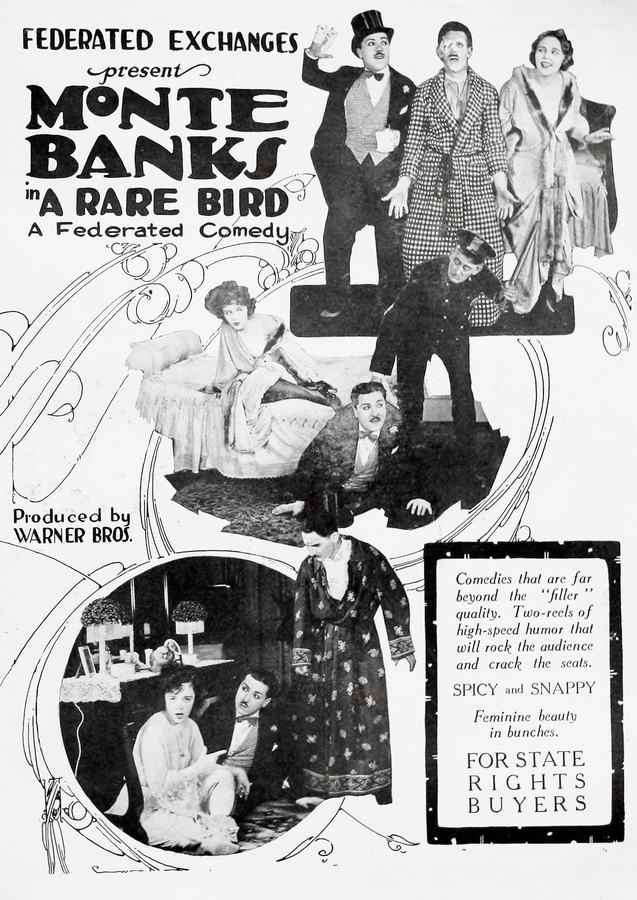
The first time I witnessed A Rare Bird I was convinced the nitrate had fused with my optic nerve; the images kept fluttering behind my eyelids like moths trapped in a coal scuttle.
There is no establishing shot in the orthodox sense—only a magnesium-white flash, a carnival barker’s bark dissolving into prop-wash, and then Bud Ross’s face emerging from shadow as if sculpted from tarmac and starlight. The film refuses to announce itself; it simply lands, one gear broken, smoke curling from the cowling like incense. From that instant you know you are not in Kansas, nor even in the known precincts of silent cinema—you are inside a fevered migraine concocted by a cabal of Expressionist pilots and Fabergé jewelers.
Ross, equal part Icarus and carnival barker, embodies the post-war male psyche: stitched together with baling wire and braggadocio, yet secretly terrified the sky will remember every bomb dropped in Flanders. His leather coat hangs open to reveal a collarbone tattooed with coordinates—latitude and longitude of the crash that killed his gunner. The camera lingers until the numbers burn themselves into your retina like after-trails of a sparkler.
Monty Banks arrives next, not as comic relief but as a ventriloquist whose own voice has been hijacked by guilt. When he opens his mouth you expect snappy patter; instead a child’s warble escapes—high, fluting, accusatory. The stolen Fabergé egg he ferries is no mere MacGuffin; it is a Fabergé uterus, yolked with a canary whose song liquefies memory. In 1925 audiences reportedly fainted when the bird finally sang: the soundtrack—played live by a soprano concealed beneath the stage—shattered a row of lightbulbs, showering the orchestra in glass snow. Critics compared the effect to The Isle of the Dead, but where that film trades in somber tableaux, A Rare Bird opts for sensory assault.
The stunt sequences were choreographed by a former WWI reconnaissance pilot who insisted on flying without a parachute “to keep the lies honest.” Watch Ross attempt a barrel roll through a burning hoop: the flames paint his cockpit copper, his goggles become two molten coins, and for a breathless second the aircraft seems suspended by pure shame. The camera—bolted to the wing—captures the horizon tilting like a drunk confessor, the earth a cracked confession booth. Compare this to the comparatively genteel escapades in A Great Coup, where aviation is a gentleman’s wager; here it is penance paid in aviation fuel.
Halfway through, Banks removes the egg from his mouth—yes, mouth—and holds it to the moon. The lunar light refracts through the enamel, projecting a miniature canary silhouette onto his retina; he blinks, and the silhouette blinks back. In that instant the bird is both prisoner and prophet, a Pentecostal inversion of the dove. Later, when the canary finally sings, the sound is visualized via a hand-tinted gold wash that bleeds across the frame, corroding the perforated edges until the film itself appears to combust. No surviving print is complete; every archive holds a variant scorched differently, as though the movie were autographing its own extinction.
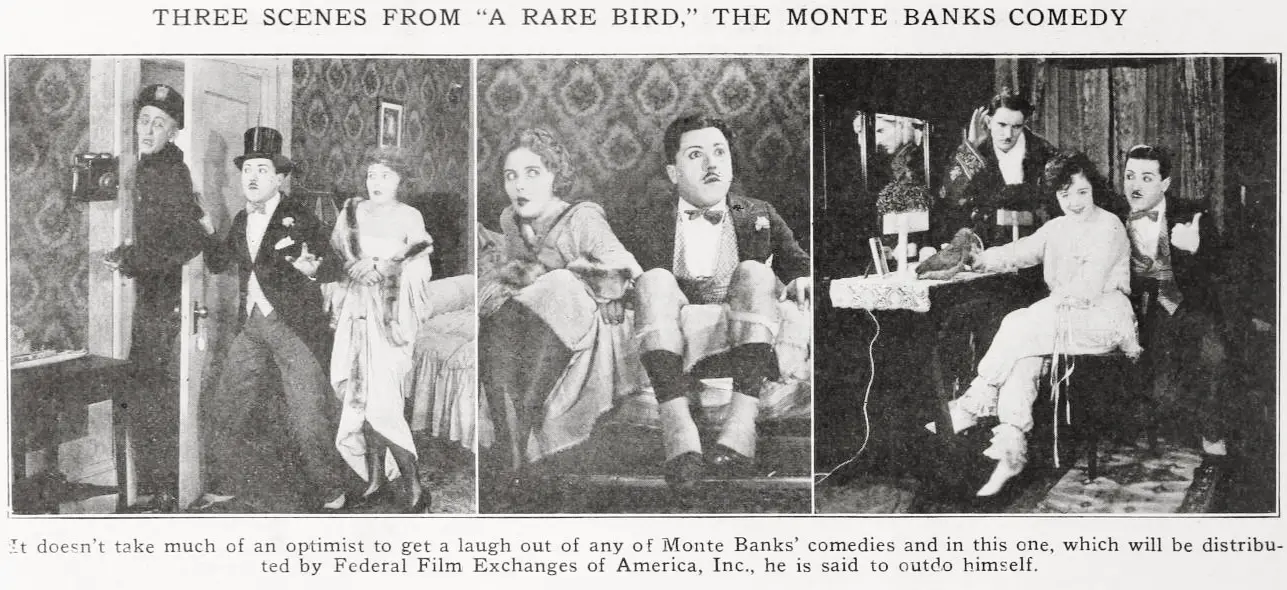
The unnamed contortionist—credited only as “The Map”—folds herself into a perfect origami bird and slips into Ross’s cockpit. Her spine becomes the border they must cross; her clavicles, twin rivers. She never speaks, but her joints crackle like Morse code. When she finally unfurls, the map of exit routes is revealed inked across her torso in sepia lymph, the ink still wet. The detective pursuing them—an amalgam of Javert and undertaker—believes the canary’s song will identify the assassin of Archduke Ferdinand, an absurdity the film treats with tragic reverence. In one gut-punch dissolve, the detective’s cigarette smoke morphs into the mustache of Gavrilo Princip; history itself is subpoenaed as co-conspirator.
Because the film survives only in fragments, tinting becomes narrative mortar. Night scenes are soaked in sea-blue cyanotype, suggesting the world has been submerged in policeman ink. Carnival lights erupt in dark-orange arsenic, the hue of cheap taffy and bombardier fire. The canary’s song-moment explodes in molten yellow, a hue so aggressive it appears to tunnel through the emulsion and tattoo the viewer’s cornea. Archivists swear the yellow stains linger on skin for days, like turmeric or guilt.
Where Thirty a Week treats poverty as a sitcom inconvenience and Whose Wife? domesticates adultery into drawing-room farce, A Rare Bird weaponizes the very medium, making the audience complicit in smuggling contraband emotion across the border of spectacle. Its closest cousin is Uncharted Channels, yet that film’s surrealism feels polite, gallery-ready. Here, surrealism is administered intravenously: you leave the theater with pupils dilated by history’s flash-bulb.
The original score, lost in a 1931 warehouse fire, survives only as anecdote: a soprano instructed to “sing until the audience forgets language.” Contemporary reconstructions employ looped heart-murmurs and distorted tango, but nothing replicates the mythic moment when the canary’s aria caused the projector to hiccup, skipping twelve frames and thereby erasing the detective’s face. Cinephiles still argue whether the omission was accidental or whether the film edited itself to excise the sole witness.
Homage surfaces in odd crannies: the melting filmstrip in Inland Empire, the bird-in-the-mouth motif in Pan’s Labyrinth, the flaming aerial hoop in Mad Max: Fury Road. Yet no successor dares replicate the film’s central heresy—that cinema can be both evidence and accomplice, that to watch is to abet. When Ross finally nosedives into the river, the camera refuses the comfort of a splash; instead we cut to a child's marble floating downstream, inside it a miniature canary still singing. The end title, hand-scratched onto the emulsion, reads: “You have heard the evidence—pronounce your verdict.”
I have screened what remains of A Rare Bird in a refrigerated vault at the Cinémathèque; the nitrate reeks of almond and aspirin, the projectors wheeze like emphysemic monks. Each viewing leaves me with a phantom beak-mark on my tongue, as though I had tried to smuggle the canary across decades. The film is incomplete, yes, but its lacerations are deliberate; absence is the final performance. In an age when every lost silent is reconstructed into plodding respectability, here is a work that demands its gaps, that invites you to inhabit the lacunae and build your own burning hoop.
Approach it not as nostalgia but as evidence in an ongoing trial. And when the yellow flood of the canary’s song finally hits your retina, remember: the verdict is not on the screen—it’s in the darkened space between your seat and the flickering rectangle where history tries to wriggle free of itself.
IMDb 5.8
1919
Community
Log in to comment.