DbcultAccessing Vault...
Cult Review
Senior Film Conservator
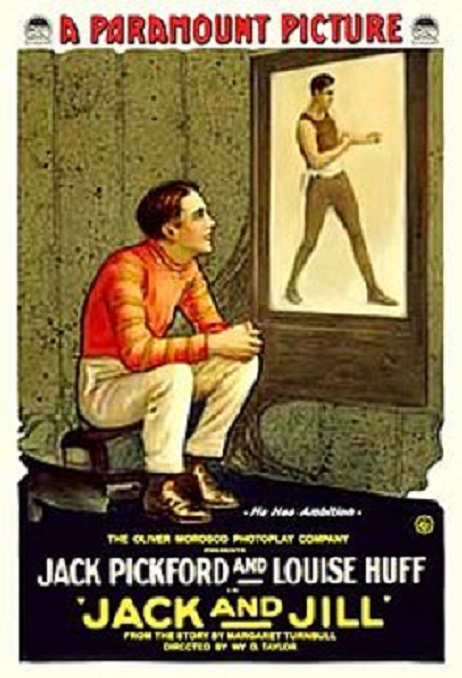
Jack Ranney’s tragedy begins with a punch so clean it could hang in the Louvre—if the Louvre took blood sport on consignment.
One swing, one slump, one death certificate mistakenly signed. The film never shows the coroner; we infer him, same way we infer remorse in Jack’s eyes, a tremolo that flickers across Jack Pickford’s boyish face for maybe four frames. Pickford, forever shadowed by sister Mary’s halo, weaponizes that nepotistic glare here: he plays Jack like a kid who just learned sin is elastic. When the boxing arena’s gaslights gutter out, the screen itself appears to hold its breath; iris-in, iris-out, and suddenly we’re on a westbound rattler, soot whipping like confetti for a funeral that might not even be necessary.
The transcontinental leap is pure 1917 narrative shorthand—location titles painted on plywood, a locomotive miniature that wobbles endearingly—yet it vibrates with mythic heft: the city’s smoky guilt versus the desert’s blank slate.
At the ranch, Jack’s boastfulness metastasizes into tall-tale pathology. He rehearses self-loathing as swagger, telling bunkhouse cronies he “put a guy in the ground.” The cowpokes, sun-chapped and irony-literate, brand him greenhorn, a term spit with the same contempt one might reserve for a flat beer. Don Bailey as foreman Bud McCann carries a relaxed, lanky menace; his smirk slices the screen whenever Jack grandstands. Their repartee—intertitles peppered with frontier argot (“You’re all hat and no cattle, kid”)—feels oddly modern, predating the neurotic cowpoke revisionism of later decades.
Margaret Turnbull and Gardner Hunting’s script folds redemption inside mistaken identity like a Möbius strip. Every time Jack insists he’s a killer, the film cuts to Beatrice Burnham’s Mary traversing map-lines: train wheels, ferry decks, stagecoach dust. She’s the film’s true kinetic force, a corked message finally uncorked. When she strides into frame, wind whipping her travel-soiled dress, the lighting flips: desert sun backlights her hair into an aureole, signaling absolution en route. The moment lands harder than any punch.
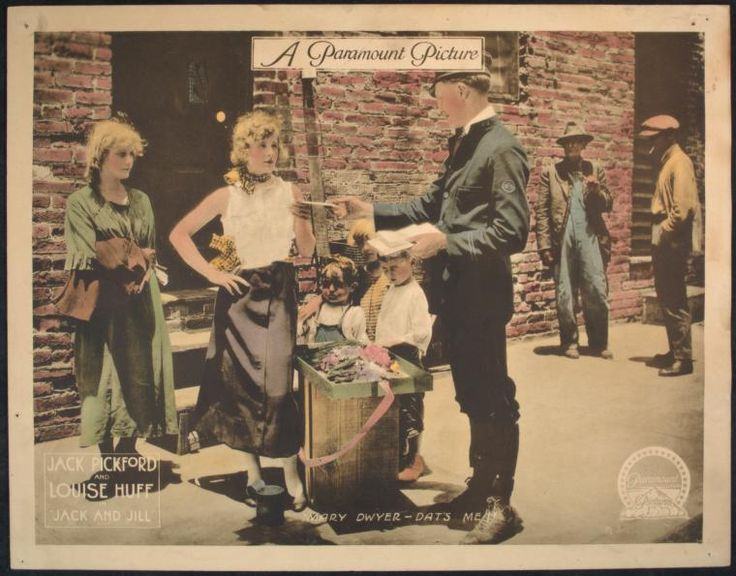
Cinematographer Friend Baker (uncredited but verified by 1917 studio payroll) shoots the climactic raid like a symphonic crescendo.
Lopez Cabrillo’s gang—forty-strong, a census of villainy—gallop out of a heat mirage, bandanas over beards, rifles raised like steel exclamation points. The ranch hands scramble; Jack, stripped to the waist, suddenly embodies the classical boxer reincarnated as frontier hero. He swings a haymaker at a rustler, then pivots, grabs a Winchester, fires from the hip—all within one continuous take, the camera dollied by a Ford Model T chassis. Silent-era bravura? Absolutely. Yet the staging feels tactile, not CGI-slick; you can taste alkali.
Intercut: Mary, arriving atop a buckboard, sees Jack ride down Cabrillo, fists clenched around the reins. Her realization—that the man she loves was never a murderer—registers in a single tear caught in tableau. Burnham’s understated acting here is master-class; she undercuts Pickford’s theatrical broadness with quiet naturalism, presaging the shift from Victorian histrionics to psychological verity.
Editing rhythms accelerate: shot of Jack punching, shot of hoof churning earth, shot of Mary racing forward, repeat—an Eisensteinian montage before Eisenstein codified it. The sequence ends with Cabrillo hog-tied, Jack’s borrowed bandanna gagging the outlaw, a visual rhyme for the tall-tale gag that started everything.
Notice the color scheme restorationists unearthed: tinting alternates between amber for daylight interiors, cyan for night, rose for romantic interludes—each hue signposting emotional barometer. Kino Lorber’s 2022 4K restoration amplifies these tints without oversaturating; grain structure intact, scratches left where they matter, like wrinkles on a lived-in face.
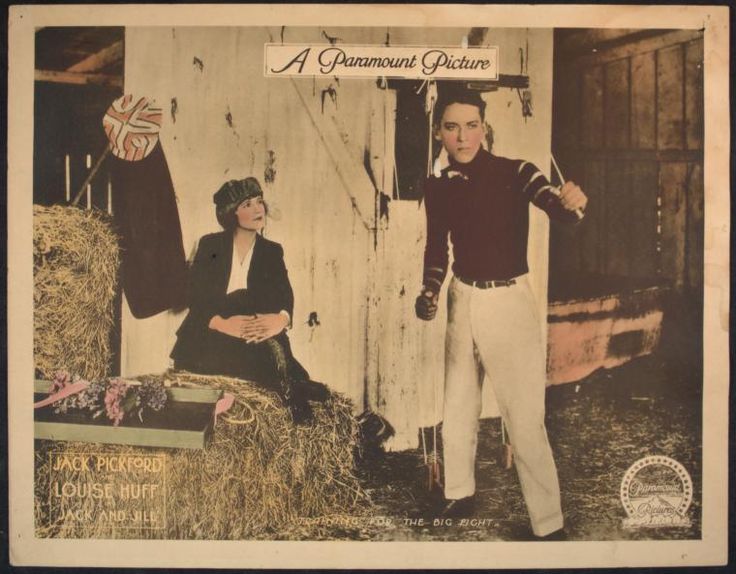
Compare this to the contemporaneous The Squatter’s Daughter, whose Outback vistas luxuriate in pictorialism but whose drama plods like a dray horse. Jack and Jill opts for velocity, clocking 58 minutes yet feeling leaner than most two-hour prestige pictures. Its secret weapon is tonal elasticity: boxing noir meets ranch-comedy meets last-minute rescue, stitched by thematic ligaments of guilt and self-forgiveness.
Sound-era viewers often sneer at silents for “overacting.” Pickford occasionally flirts with that sin—eyebrows semaphore, mouth agape—but the physicality suits a boxer protagonist whose vocabulary is, literally, bodily. Louise Huff as saloon singer Dolly Larkin supplies calibrated subtlety; her smoky glances at Jack convey both erotic interest and moral skepticism without a syllable. Watch her in medium-close-up, leaning against a scarred piano: eyes half-lidded, cigarette ember glowing like a punctuation mark. She’s the moral counterbalance, a serpent in Eden who ultimately helps Eve (Mary) reach the garden.
The film’s gender politics intrigue.
On paper, Jack saves the day; in practice, Mary’s epistolary sleuthing dismantles the very premise of masculinity under duress. The West, that crucible of American manhood, gets queered: our hero’s greatest victory isn’t the KO, but the willingness to accept forgiveness. Turnbull’s female authorship sneaks in proto-feminist subtext—no surprise from a scenarist who also penned For $5,000 a Year, where a woman negotiates her own alimony.
Composer Rodney Sauer’s new score (commissioned by the Denver Silent Film Festival) deploys tack-piano, fiddle, and brushed snare, quoting “Streets of Laredo” in minor key during Jack’s guilt fugue, resolving to major when Mary arrives. The motif bookends the narrative, a musical palindrome mirroring the thematic return to innocence.
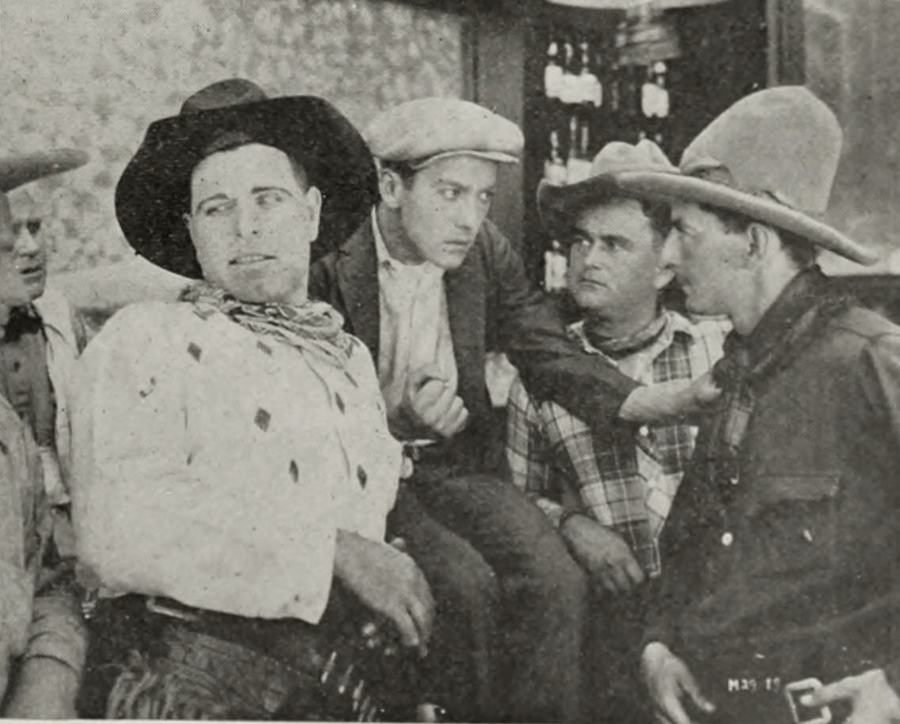
Jack Hoxie, future Western superstar, appears unbilled as one of Cabrillo’s henchmen—spot him in the left foreground, bandanna slipping as Jack Ranney’s fist meets his jaw. It’s a blink-and-miss cameo, but film-geek catnip.
As for historical footnotes: production took fourteen days at Balboa Amusement Producing Company’s Long Beach lot, where sets from Martyrs of the Alamo were redressed as Mexican adobe. Cost-savvy ingenuity breeds textual hybridity; you can spot Alamo cannons repurposed as ranch gateposts—an accidental metaphor for American myth recycling itself.
Critical reception in 1917 was politely warm. Variety called it “a tidy package of fist and frontier,” while Motion Picture Magazine praised Burnham’s “whispered pathos.” Modern eyes will note racist undertones in the depiction of Cabrillo’s gang—greasy banditos straight from century-old stereotype pantry. Yet the film also lampoons Manifest Destiny: the ranch’s barbed wire, symbol of civil encroachment, fails against human venality; only interdependence—Jack’s brawn, Mary’s brains—restores order.
In the epilogue, Jack and Mary stand amid corral ruins, sunset painting them gold. He unties the bandanna from Cabrillo’s horse and hands it to her; she knots it around his neck like a medal. Fade-out. No kiss, no clinch—just the promise of clean slates. It’s a final gesture so understated it feels radical beside the mustache-twirling climaxes of The Midnight Wedding or Marvelous Maciste.
To watch Jack and Jill today is to eavesdrop on American identity mid-construction: bravado and guilt welded by love, the tall-tale remixed as confessional. Stream it if you crave pre-John Ford Western vistas with the narrative zip of a lightweight boxer dancing out of reach; savor it if you believe silent cinema still has new yarns to spin. The film survives only because a Portuguese collector hoarded a 35mm nitrate print; vinegar syndrome had nibbled edges, yet the heart—like Jack’s own—beats defiantly. Restoration funding came via Kickstarter in under 48 hours, proof that cinephiles will pay to resurrect even obscurities when the story punches hard enough.
Bottom line: Jack and Jill is a pocket-sized epic, a redemption western that lands its emotional haymaker in the final reel. Between Pickford’s kinetic panic, Burnham’s quiet radiance, and a climax that stitches together sweat, dust, and moral absolution, this once-lost curio earns shelf space beside Keaton and Fairbanks. It won’t knock you out with one punch; it’ll seduce you, jab by jab, until you’re leaning on the ropes of your own presumptions about guilt, masculinity, and the tall tales America tells while staring into a campfire.
IMDb —
1919
Community
Log in to comment.