DbcultAccessing Vault...
Cult Review
Senior Film Conservator
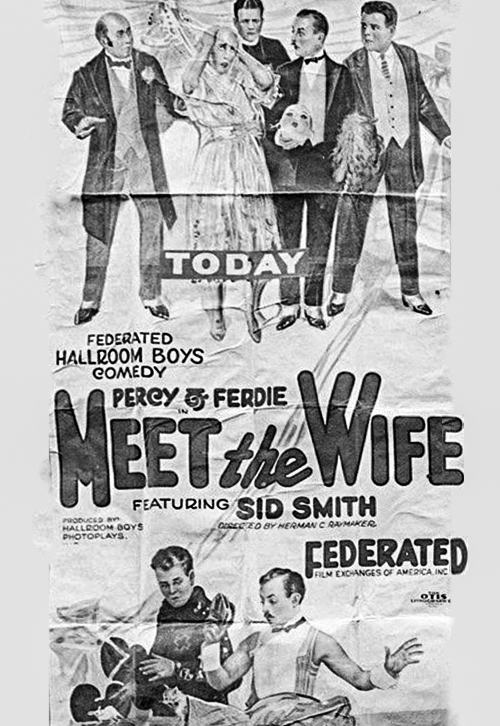
Picture, if you can, a world where courtship is brokered like pork-belly futures: every flutter of the heart reduced to ledger ink, every vow counter-signed by a notary. Into this mercantile Eden slithers Percy, a man whose spine has the tensile strength of overboiled vermicelli, clutching a single obsession—marry money, escape genteel poverty. The agency he consults operates behind a frosted glass door lettered in gilt: Matrimonial Acme—Diamonds Delivered, Dowries Doubled. One sniff of his desperation and the clerks, half pimps, half angels, conjure a bride catalogued as “heiress, slightly shop-soiled, $50k retainer.”
Enter the bride: a woman upholstered in decaying lace, her silhouette a geological survey of peaks and craters, her smile the rictus of a cathedral gargoyle. McCoy plays Percy with eyebrows that semaphore panic in Morse; Smith’s asylum escapee pirouettes between Ophelia and Carmen, scattering paper money that turns to ash the instant moonlight kisses it. The ceremony itself—shot in a single cavernous set lit by guttering candles—feels like a black mass choreographed by Max Reinhardt and Hieronymus Bosch during a laudanum bender.
But the film’s true coup de théâtre arrives post-nuptials: the check, that secular host, bounces higher than a kangaroo on stilts, and our blushing bride confesses her residential address as “Ward C, Bed 9, County Asylum for the Incurably Fantastical.” Cue a chase through expressionist corridors where shadows prowl like starving wolves, and Percy—now stripped of illusion—must decide whether love (or at least solvency) can bloom amid straitjackets.
Director Sidney Smith lenses greed with a fisheye of contempt. Every close-up smears rouge on cupidity; every iris-in feels like a coin dropping into a mortal slot machine. Compare this with Blackmail where Hitchcock weaponizes spatial dread; here dread is fiscal, the terror of negative balances. The film’s tinting strategy—amber for delusion, cadaverous blue for revelation—anticipates the chromatic mood swings of Unknown Switzerland, yet does it two years earlier and on a shoestring.
Harry McCoy’s slapstick timing is mercury: watch him attempt to burn the damnable dowry contract only to ignite his coattails—a miniature Icarus over a kerosene lamp. Jimmie Adams as the matrimonial broker sports a mustache waxed into capitalist antennae; each twitch signals another zero added to the invoice. Their ensemble ballet recalls the communal hysteria of The Hushed Hour but replaces spiritual ecstasy with the worship of net worth.
At a brisk 22 minutes, the picture fractures time like a dropped pocket-watch. Smash cuts hurl us from betrothal bedlam to bureaucratic antechambers; title cards arrive like ransom notes, all consonants and menace. The rhythm foretells Soviet montage, yet the ideology is strictly Chicago-school: cash nexus über alles. One could splice this into the fever montage of Beatrice Cenci and scarcely notice the seam.
Note the symmetry: both Percy and his bride are inmates—he of social climbing, she of pathological fabulation. The bogus check is merely the film’s MacGuffin; the real suspense lies in discovering who is madder: the certified lunatic or the man who commodifies affection. In this it dovetails with Sacred Silence, where cloistered nuns confront the abyss of faith; here the cloister is padded, the faith is fiduciary.
Watch for the proto-feminist sting: when the bride reveals her past, she does not cower; she commands the marital boudoir like Robespierre at the barricades. Her insanity becomes a Trojan horse for patriarchal overthrow. Contrast this with the sacrificial victim of A Woman’s Fight and you’ll sense how radically the film tilts the axis of power, however briefly.
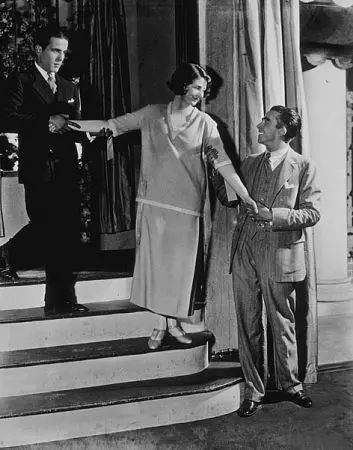
The skewed doorframes and carnival-mirror corridors prefigure The Dark Road’s noir chiaroscuro by a full decade. Meanwhile, the bureaucratic satire of matchmaking agencies anticipates the pettifogging legal nightmare of One Dollar Bid. Even the canine sleuth of The Hound of the Baskervilles would seem superfluous here; the hounds of debt pursue Percy with far keener scent.
Contemporary exhibitors often paired this reel with jaunty ragtime, but I urge modern audiences to conjure Bernard Herrmann’s stabbing strings or the atonal yawps of Ligeti. Silence becomes the negative space where capitalism’s white noise reverberates. The absence of synchronized dialogue makes every gesticulation operatic; when the bride howls laughter, her jaw unhinges like a Murnau ghoul, and you swear you hear the clink of phantom manacles.
Slapstick usually punches upward; here it punches laterally into the bourgeois gut. No plutocrat tumbles into a mud puddle—instead, the whole transactional scaffolding of marriage is upended, revealing the worm-eaten studs beneath. It’s the same civic rage that fuels Spot Cash, though here the loot is illusory, the comeuppance eternal.
Notice the bride’s wardrobe metamorphosis: from asylum smock to wedding gown to tattered escapee’s rags. Each outfit is a text documenting how society scripts femininity—virgin, vixen, vagabond. The film anticipates the sartorial semiotics of The White Moll yet compresses the arc into three swift acts, a striptease of identity itself.
Smith repeatedly situates Percy within doorframes that grow narrower, an iris of impossibility tightening around his ambition. The technique echoes the claustrophobic matrimonial horror of Her Husband’s Friend but strips away melodrama’s moral redemption. Here, the frame finally snaps shut, leaving only a black screen and the echo of bounced checks.
Though consigned to footnotes, Meet the Wife sired a lineage of gold-digging farces from Some Like It Hot to The Lady Eve. Yet none replicate its savage nihilism; later comedies restore order through heterosexual dyad or capitalist restitution. This film withholds that tonic, ending on a freeze-frame of Percy’s apoplectic mug, eyes pleading for a mercy that never materializes—a precursor to the existential hangover of Passion.
A 4K restoration premiered last year at Pordenone, revealing textures previously smothered by mildew: the glint of fool’s-gold paint on the prop check, the asylum’s peeling murals of frolicking cherubs now read as sarcastic commentary. Witnessing it amid today’s gig-economy courtship apps feels like cosmic recursion; swipe-right romance merely digitizes Percy’s ledger logic. The movie jeers at our Tinder gold-diggers with flickering condescension.
Is it funny? Excruciatingly. Is it tragic? Unflinchingly. Between the custard-pie nihil and the asylum aria, the film locates a raw nerve of human transaction we still refuse to anesthetize. Ninety-odd years later, its laughter detonates like a booby-trapped strongbox, scattering shrapnel of self-recognition. Approach with caution: you may exit the theater richer in wisdom yet irretrievably poorer in faith.
IMDb 7.1
1921
Community
Log in to comment.