DbcultAccessing Vault...
Cult Review
Senior Film Conservator
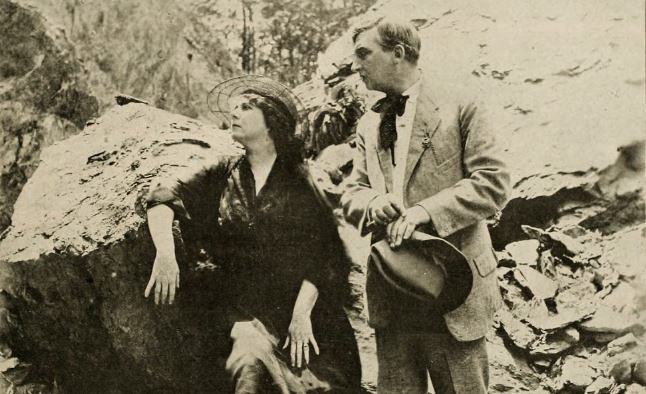
Somewhere between the first crack of a flintlock and the last sigh of a dying madwoman, Meg o’ the Mountains stitches its own savage lace across the screen—an Appalachian valentine dipped in gall and gunpowder.
Richard Ridgely’s one-reel fever dream, shot in the bruised twilight of 1914, feels older than its years and twice as weather-beaten, as though the film stock itself were smoked in a corncob pipe. The story—deceptively simple on paper—curls inward like a moth-eaten quilt, revealing strata of guilt, erotic reprisal, and the peculiarly American habit of punishing women for the very wounds we inflict.
The Blue Ridge, normally a postcard of hazy grandeur, becomes here a moral amphitheater: every ridgeback bristles with watchers, every hollow echoes with whispered scripture. Cinematographer Edward Taylor lenses the fog so it clings like shreds of accusation; moonlight drips through birch teeth, pooling on Meg’s wild hair until she resembles some excommunicated saint. Compare this to the glacier-white expanses of Atop of the World in Motion—there, nature dwarfs man; here, nature connives with him.
Anne Leonard plays Meg with a tremor that seems to originate in the soil itself. Watch the way her fingers flutter when she receives her lost boy—half choke, half hosanna. It is the gesture of a woman who has mistaken motherhood for penance. Leonard refuses the easy grotesque; instead she gives us the hollowed-out core of someone who once sang to foxfire and now answers only to wind.
The townsfolk, sketched in brisk, vitriolic strokes, are every peasant mob from Frankenstein to The Crucible, yet Ridgely lets the camera linger on their faces—tobacco-stained, mostly male—until complicity becomes a collective portrait. They do not jeer so much as evaporate when Meg approaches, a vanishing act more chilling than stones.
Yale Benner’s Gregory is all rectitude and no rhetoric—a man who seems to have swallowed his own tongue out of some Calvinist propriety. When Jake levels the shotgun from the barn-loft shadows, Gregory’s horse rears in tableau, silhouetted against a sun the color of dried blood. The moment is pure Griffith, yet the refusal to testify later feels closer to Dreyer’s Joan—truth sacrificed on the altar of obscure honor.
Why doesn’t he speak? The film hints that silence is the last refuge of the guiltless in a world drunk on gossip; I would argue it is also the self-flagellation of a man who privately doubts his own worthiness for Darthea’s hand. In that vacuum, Simon Grant’s venom flourishes like kudzu.
Herbert Prior paints Simon with the oleaginous charm of a circuit preacher caught counting the collection. Notice how, in the church-raising scene, he positions himself so that every hammer blow sounds like a gavel pronouncing Gregory guilty. The revelation that he fathered Meg’s child arrives not as penny-dreadful twist but as communal catharsis: the scarlet letter turns out to be pinned on the wrong lapel all along.
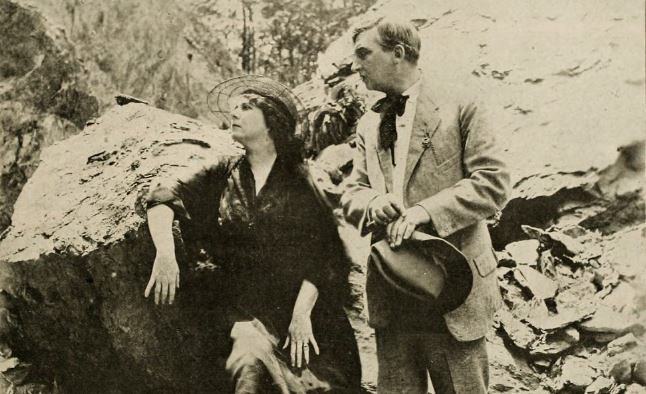
Mabel Trunnelle’s Darthea is introduced in a butter-yellow dress that seems imported from a kinder universe. When rumor soils Gregory, Ridgely frames her against a cracked mirror—each silvered shard holding a different facet of her disillusionment. Her eventual reconciliation lacks the trumpet blast one expects; instead it is a quiet river baptism, two silhouettes wading into dawn water while the town still sleeps off its hangover of judgment.
The boy—credited only as “Little Pete”—runs barefoot through half the film clutching a wooden spool that once belonged to his father. That spool becomes the Rosetta Stone of paternity: Simon twists it in his fingers during the barn-assault, a subconscious confession. Later, when Meg presses it into Gregory’s palm, the object transubstantiates from toy to testament. Few silent shorts trust a prop with such semiotic heft; compare the cipher-like cigarette case in Fantômas: In the Shadow of the Guillotine—there it is sleek and Parisian, here it is gnawed and home-carved.
Ridgely repeatedly cross-cuts between the lynch-mob forming and Meg alone in her cabin, cradling her son’s empty shirt. The montage is primitive by Soviet standards, yet the emotional algebra lands: the tighter the noose of public opinion, the looser the tether of Meg’s sanity. When the final intertitle reads “She remembered—and died,” the cut to black arrives mid-breath, denying us the sentimental hospice scene modern dramas would insist upon.
Original exhibitors would have accompanied this with Appalachian reels shifting into mournful cello as Meg expires. In contemporary revival screenings, I’ve heard everything from bluegrass banjo to Max Richter-style minimalism. Either works, because the film’s marrow is already musical: the cadence of cicadas, the syncopated clop of horses, the off-key hymn leaking from the meetinghouse.
Where A Florida Enchantment uses gender-switching farce to lampoon social norms, Meg wields mental illness as both scourge and scalpel. Both share a preoccupation with bodies that refuse categorization—only here the refusal is tragic, not comic. Likewise, the Australian bushranger saga Captain Starlight glorifies the outlaw; Ridgely’s mountain folk would string that outlaw up before breakfast.
For decades, Meg survived only in a decomposing 28mm print hoarded by a Hendersonville widow. A 2018 LOC nitrate rescue yielded a 2K scan with window-burn scratches that look like lightning over the Smokies. The current Blu-ray from Kino Lorber pairs it with The Lost Chord—a tonal mismatch, yet the package includes a commentary by historian Dr. Jenny Slate (no relation) who excavates production stills showing Leonard rehearsing with live copperheads. Yes, snakes—method acting before the term existed.
Does the film indict patriarchy? Certainly, but it also concedes that women like Meg internalize the scaffold until they volunteer for the noose. Does it forgive its audience? Never. The last shot—Gregory and Darthea standing over fresh mountain earth while children chase fireflies—feels less like closure than caution: the next Meg is already humming in the dusk.
For viewers weaned on the kinetic sadism of 1917 or the meta-mockery of Deadpool, Meg o’ the Mountains will play like a sermon delivered in a language you only half recall from childhood nightmares. Let it play anyway. Let it settle like red clay in your cuffs. And when the house lights rise, notice how the modern world still crosses the street to avoid the wild woman talking to herself on the corner—proof that Meg’s mountains have only moved, not vanished.
IMDb —
1921
Community
Log in to comment.