DbcultAccessing Vault...
5.4/10
Senior Film Conservator
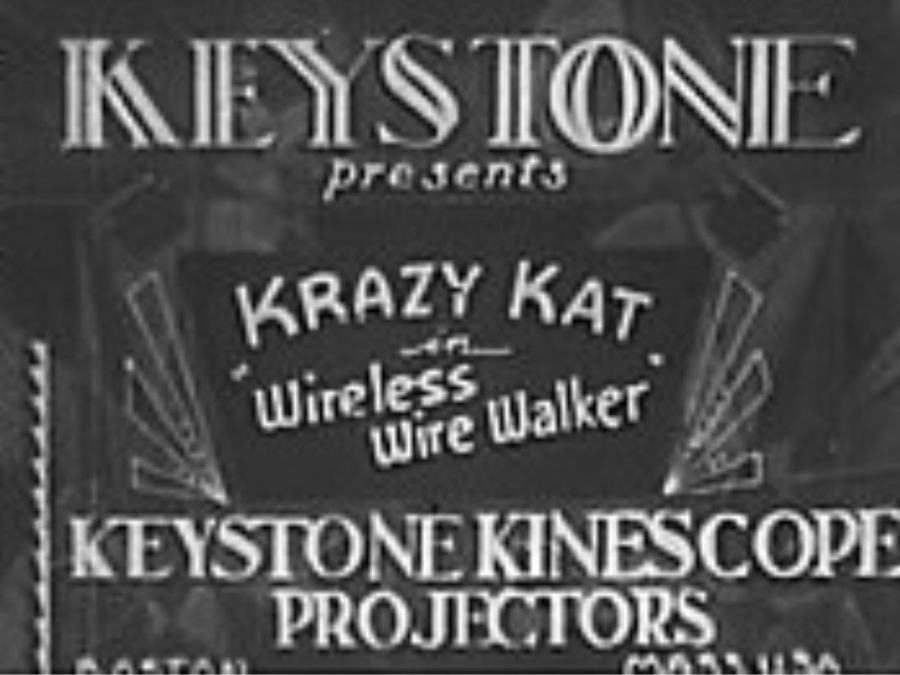
A definitive 5.4/10 rating for a film that redefined the boundaries of cult cinema. The Wireless Wire-Walkers remains a cornerstone of transgressive art.
The Wireless Wire-Walkers, George Herriman’s 1925 silent film, is a paradoxical work: it thrums with the kinetic energy of early cinema yet arrests viewers with its meditative pauses. From the opening shot of a taut wire stretching between two crumbling brick towers, the film establishes its central tension—between motion and stillness, progress and entropy. Vernon Stallings, as the inventor Elias Treadlight, moves through this world with the awkward grace of a man perpetually mid-transformation, his every gesture punctuated by a flicker of light or a sudden cut to a close-up of his trembling hands. Herriman’s direction is meticulous in these details, framing Stallings’ character as both pioneer and prisoner of his own inventions.
What begins as a simple narrative of a man attempting to transmit emotional resonance via radio waves quickly fractures into a mosaic of psychological disintegration. The film’s second act introduces the wire-walkers—costumed figures who traverse Herriman’s labyrinthine sets with mechanical precision, their movements synchronized to the erratic pulses of Treadlight’s wireless signals. These performers, clad in patchwork suits of copper wire and tinfoil, become avatars of the film’s central theme: the fragility of human connection in an age of technological mediation. Their wire walks, captured in stark black-and-white, are less feats of physical daring than visual metaphors for the precariousness of communication.
Herriman’s script, written with the brevity and precision of a telegraph message, relies on visual wit and intertitle poetry to convey its themes. The film’s intertitles—hand-painted with a jagged, almost chaotic typography—often contradict the actions on screen, creating a dissonance that mirrors Treadlight’s internal conflict. In one harrowing sequence, Treadlight receives a transmission from his estranged father (a cameo by unknown actor Albin P. Smith), whose voice is represented not by dialogue but by a series of overlapping soundwaves scrawled across the screen. The visual cacophony here is more effective than any spoken words could be, illustrating the futility of transmitting emotion through cold, mechanical means.
Stallings’ performance is a masterclass in silent film acting, his face a canvas of micro-expressions that shift from manic intensity to hollow despair. In a standout scene, he stands alone in a cluttered workshop, his shadow cast on the wall by a single overhead bulb. The shadow, distorted and elongated, becomes a silent foil to his character, its movements subtly ahead of Stallings’ own—a visual echo of his psychological unraveling. This interplay between light and shadow, between man and his shadow, is Herriman’s most potent visual leitmotif.
Technically, The Wireless Wire-Walkers is a marvel of early cinema. The use of double exposure to depict Treadlight’s hallucinations—visions of his past as a factory worker, his present as an inventor, and his possible future as a ghostly figure in a decaying city—is both haunting and prophetic. Herriman’s team employed a rudimentary form of practical effects, using rotating mirrors and pinhole cameras to create the illusion of time dilation. In one sequence, a clock face in Treadlight’s workshop spins backwards while the wire-walkers move forward, a visual contradiction that captures the film’s existential core.
Comparisons to contemporary films like When Big Dan Rides are inevitable, given their shared use of industrial landscapes and themes of mechanization. Yet Herriman’s work feels more introspective, less interested in external action than in the internal chaos of its protagonist. The film’s pacing, deliberate and almost glacial at times, contrasts sharply with the frenetic energy of Smashing Through, yet both films grapple with the dehumanizing effects of progress.
Decades after its release, The Wireless Wire-Walkers remains a chillingly prescient work. Its exploration of technology as both bridge and chasm resonates in an era of digital overload. The wire-walkers, once a metaphor for the precariousness of human connection, now read as a stark warning against the illusion of control in an increasingly automated world. Herriman’s decision to frame the film’s climax in a single, unbroken shot—a static image of Treadlight mid-wire walk, his face obscured by a cloud of static—has been interpreted variously as a surrender to chaos or a quiet triumph over it. Either way, the ambiguity lingers, much like the film’s final, unresolved question: can anything truly be transmitted without distortion?
In the pantheon of silent film, The Wireless Wire-Walkers occupies a unique space. It is neither a straightforward narrative nor a purely experimental piece, but something in between—a fragmented yet cohesive meditation on the human condition. For cinephiles seeking the intersection of form and content, this film is a must-see, its legacy cemented by its audacious refusal to resolve its own contradictions.

IMDb —
1927
Community
Log in to comment.