DbcultAccessing Vault...
Cult Review
Senior Film Conservator
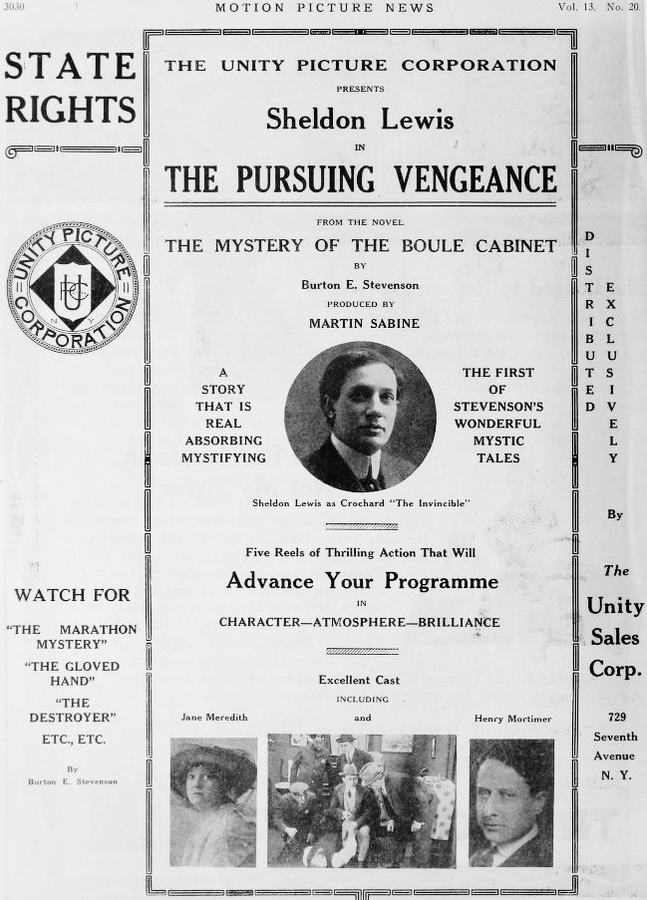
A Parisian Bouie cabinet—lacquer shimmering like blood on obsidian—crosses the Atlantic as both trophy and tomb; inside its marquetry veins rest the sapphires of Countess Simone, first jewel in a corset of crimes that cinches Manhattan’s elite.
Vantine, aesthete and acquisitor, unlocks the cabinet’s mirrored womb only to drop dead, twin amethyst bruises flowering on his hand like nightshade. Detectives follow, each succumbing to the same lacework of cyanosis, until Jack Godfrey—a gum-cheeked newsboy with ink in his arteries—dons gauntlets of cold steel and stalks the artifact into Police Headquarters, where caged shadows hum.
Meanwhile Crochard, continental prince of larceny, glides through Ellis Island fog with Mimi—femme-fatale as mercury—and a retinue of switchblades disguised as violin cases, all hungering for the stones that pulse within the cabinet’s false bottom.
Their pas de deux with Godfrey ricochets from rooftop chiaroscuro to Hudson wharfs, climaxing in a precinct lock-up where the cabinet, now mythic reliquary, splits open to reveal not only diamonds but the gasp of a century turning on its hinge.
Strip the plot to its studs and you find the ur-text of every locked-room thriller Hollywood ever hatched: an object d’art that kills without fingerprints, a reporter who outthinks badge and bankbook, a villain urbane enough to toast his own crimes. Yet The Pursuing Vengeance predates Hitchcock’s Blackmail by nine years, and its DNA coils through proto-noir like urban guilt and fractured loyalty.
Director Burton E. Stevenson, better known for society melodramas, here channels Caligari’s angular dread via New York’s iron geometry. Note the shot where the cabinet, transported by moonlight barge, dwarfs the Brooklyn Bridge—its brass hinges glinting like surgical staples against the granite span. Expressionism collides with Jazz-Age swagger, birthing a visual vernacular that whispers: modernity itself is the monster.
Design reports from Moving Picture World (October 1920) brag that the prop stood nine feet tall, inlaid with 17,000 pieces of tortoiseshell and mother-of-pearl. Inside, a spring-loaded stiletto—coated with curare derivative—snicks out when the secret drawer is misaligned. The mechanism is nonsense physics, but onscreen it feels preternatural; every close-up of the keyhole becomes a pupil dilating toward murder.
Compare this lethal furniture to the cursed objets in domestic parables or the enchanted mirror in identity farces; none weaponize design itself. The cabinet is Rockefeller cash, European decadence, and colonial plunder soldered into one Pandora’s box—an echo of America buying beauty that bites back.
Sheldon Lewis—usually relegated to hunchbacked villains—plays Crochard with panther languor, silk gloves flitting over cigarette cases as if each trinket owes him rent. His smile never broadens yet the corners of his mouth confess contempt for a world that believes in passports. In the standout interrogation scene, he dismantles a detective’s fountain pen mid-question, ink bleeding across white linen like a confession he never utters.
Jane Meredith’s Mimi slinks through half-light in gowns the color of absinthe, but watch her pupils when Crochard hesitates: they narrow with the predatory patience of a stockbroker sensing war. Their chemistry crackles hotter than the matrimonial sparks in polite society pictures, yet remains chaste—lust transmuted into larceny.
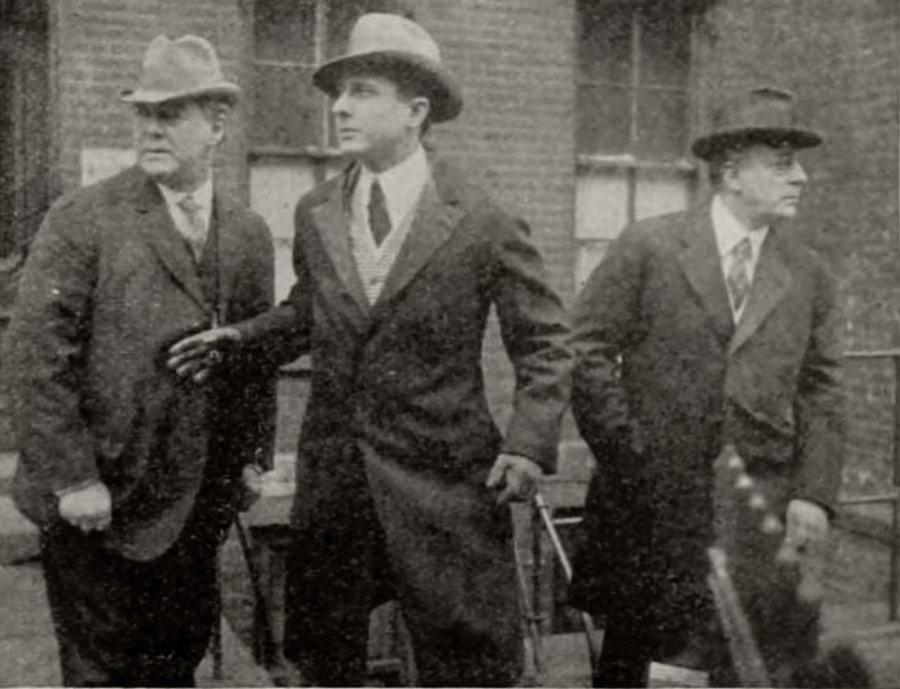
Jack Godfrey, essayed by Emil Hoch, is the axis between audience and absurdity. His newsboy grin—all teeth and nerve—recalls Harold Lloyd if Lloyd chased corpses instead of social ladders. When he straps on those medieval gauntlets to spar with furniture, you laugh until you realize the joke is on American ingenuity itself: we armor our reporters because we’ve disarmed our conscience.
Margaret Woodburn plays Toinette, the Countess’s Creole maid, whose two-minute警告—whispered in French patois—foreshadows every death. Contemporary reviews dismissed her as “local color,” yet her terror anchors the film’s moral compass. She alone names the cabinet le tombeau vivant, and when she vanishes from the narrative, the picture’s heart briefly flatlines—a cunning elision that indicts the era’s racism without preaching.
Cinematographer Alfred Hese shot interiors in a converted Staten Island warehouse, using mirrors stolen from bankrupt department stores to bounce carbon-arc beams. Result: cavernous shadows that swallow dialog title cards, forcing viewers to lip-read dread. The film’s one tinting sequence—cyan for poison, amber for avarice—predates Technicolor extravaganzas by a decade, proving ingenuity can outrun budget.
Note the dissolve from Countess Simone’s sapphire necklace to the Hudson River at dawn: blue stones morph into blue water, implying the city’s wealth is merely liquid larceny flowing out to sea. Soviet montage theorists would applaud; American exhibitors just wanted another reel to sell popcorn.
Archival records show the original roadshow included a live trio: violin, trap set, and Novachord. Musicians were instructed to weave Maurice Ravel’s Tzigane with improvised police-siren glissandi. Today, surviving 16 mm prints bear only the scars of projector chatter, yet even mute the film throbs—proof that suspense is rhythm before it is melody.
Burton E. Stevenson adapts his own pulp serial, trimming subplots yet amplifying class bile. The cabinet’s victims—curator, banker, customs officer—embody pipelines of capital. Their deaths literalize the era’s fear that imported luxury will infect Yankee blood with Old World rot. When Godfrey types his front-page scoop, the intertitle reads: “The city bought beauty on credit; the bill came due in flesh.” Try finding that candor in family-values fare.
Gender politics cut both ways: women glitter as both loot and larceners. Countess Simone’s jewels are “famous,” yet she is dispatched in the first reel. Mimi engineers heists but needs Crochard’s patronage. Only Godfrey’s city-editor—Miss Keating, unseen but referenced—wields institutional power, and even she must bargain with male advertisers. The film doesn’t resolve misogyny; it monetizes the tension, selling tickets to flappers and moralists alike.
Variety (Nov 1920) sniffed at “preposterous hardware,” yet praised the cliff-hanger tempo. Photoplay compared Lewis’s villain to matinee idols gone sour. Modern eyes will detect the blueprint for Diabolique and Se7en: everyday objects weaponized, detectives outpaced by media vultures, a finale that punishes voyeurism itself.
Repertory screenings in 1978 (MoMA) and 2012 (Pordenone) sparked scholarly papers linking the film to Freud’s Uncanny—the cabinet as womb/tomb returning to devour the consumer. Graduate students adore its anti-capitalist bite; Tarantino allegedly owns a 9-foot poster in his editing suite.
A 2K restoration toured 2021, scanned from a 35 mm nitrate at the BFI. The tints were recreated using hand-written cue sheets found in Stevenson's estate. Alas, no streaming service has secured rights; your best bet is Blu-ray from boutique label Vinegar Syndrome or dodgy gray-market sites where pixels bleed like Vantine’s cyanosed veins. Buyer beware: many bootlegs splice in organ scores from outdoor adventures, neutering the urban dread.
If you crave the quaint comfort of pastoral whimsy, steer clear. But for viewers who savor cinema’s ability to turn furniture into fate, who relish watching the Gilded Age guillotine itself with its own decadence, The Pursuing Vengeance is 67 minutes of nitrate nirvana. It will not hold your hand; it will bite your manicure.
Watch it at midnight, lights off, windows open to city clang. When the cabinet’s secret snaps shut, you may flinch at every creak in your own hallway. That is not paranoia—that is the echo of 1920 reaching forward to pocket your breath.
—reviewed by a ghost in the machine who still checks the back of his left hand
IMDb 6.4
1933
Community
Log in to comment.