DbcultAccessing Vault...
5.8/10
Senior Film Conservator
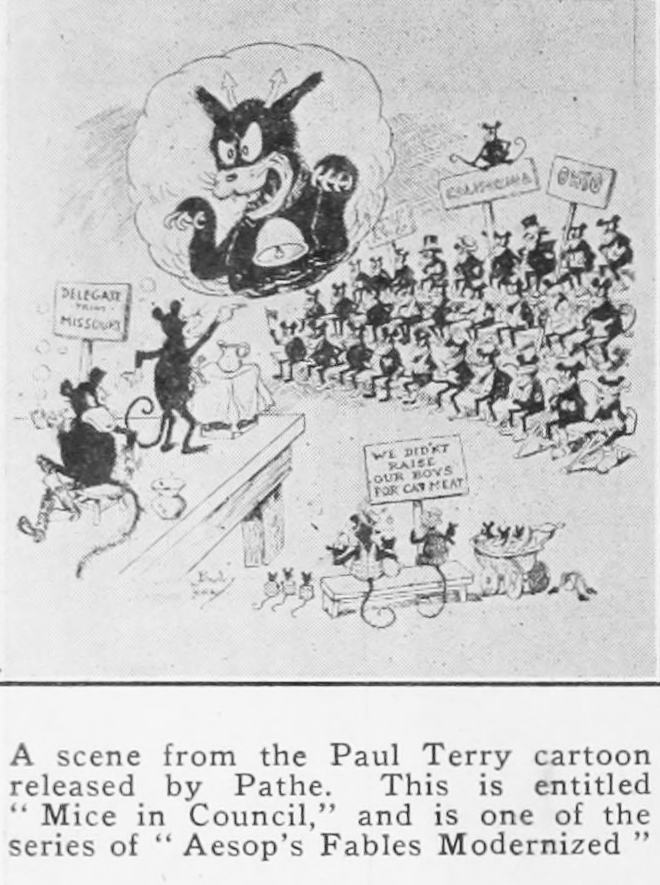
A definitive 5.8/10 rating for a film that redefined the boundaries of cult cinema. Mice in Council remains a cornerstone of transgressive art.
A pantry after midnight: terra-cotta tiles glimmer like wet obsidian, flour drifts across flagstones like volcanic ash, and the flicker of a single gas-lamp turns every coffee bean into a dwarf star. Into this micro-cosmos scuttles a senate of mice, their shadows stretched into grotesque senatorial profiles against the wainscot. One expects Cicero with buck teeth; what we get is far more unnerving—politics stripped to its quivering, glandular essence.
The film, barely two reels, nevertheless secretes a cosmos. Director—unnamed in surviving prints—composes each rodent caucus like a Caravaggio: tenebrist torch-light carves cheek-fur, eyes beadily reflecting the candle’s corona. Note the mise-en-scène symmetry when the mice form a trembling semi-circle: it mirrors Da Vinci’s Last Supper if Judas wore a leather tail. Meanwhile the cat—never fully revealed, only velvet paws and scythe-claws—occupies negative space the way dictators occupy radio bandwidth: by absence that feels like suffocation.
Silent-era spectators in 1920 would have caught the whiff of allegory instantly: post-Versailles parliaments impotent before rising extremisms, labor unions squeaking at the closed factory gate. Yet the short refuses period-piece quaintness; its terror is evergreen. Watch how the camera—hand-cranked, jumpy—lingers on a solitary crumb: the state’s treasury, contested by every snout. When the youngest mouse, piebald and trembling, offers to bell the feline, the council erupts in squeaks that intertitles translate as "Madness!" The sequence is cut with Soviet-style montage—flashing paws, kitchen knives, a child’s porcelain doll—so that fear itself becomes an Eisensteinian splice.
Sound, though absent, is implied through visual synesthesia: flour puffs suggestive of sneezes; a snapped mousetrap’s spring coils like a cymbal crash. I caught myself flinching at the memory of noise, a trick only the greatest silents achieve. Compare it to Mandarin’s Gold where intertitles drip Orientalist excess; here, words are rationed like wartime sugar, so each intertitle lands with hammer-to-anvil finality.
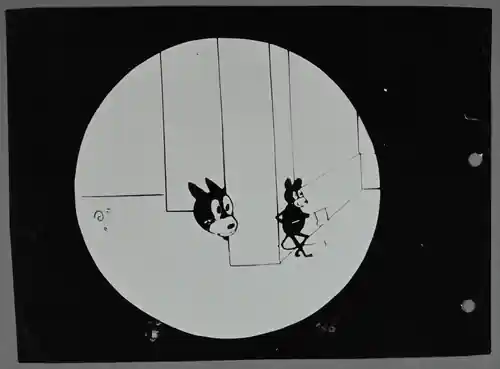
Who are these mice? No cast list survives, yet individual temperament bleeds through fur pigment and scar tissue. The self-appointed Speaker—gray, whiskers kinked like telephone wire—conducts deliberations via flicks of his tail, a conductor before an orchestra of doom. A one-eyed matriarch, belly slack from many litters, embodies geriatric cynicism; she cleans her paws while youths orate, the rodent equivalent of scrolling a phone mid-debate. The would-be assassin who volunteers for the bell is shot in extreme close-up: pink ears translucent as communion wafers, veins pulsing lilac under the nitrate glow. You may forget human actors, but you will not forget this anonymous murine face—an inversion of cinema’s anthropocentric vanity.
Contrast that with Musical Mews, where feline performers are anthropomorphized into vaudevillian hoofers. Here, the cat remains resolutely Other—paw, tail, silhouette—never visage. Horror lies in that withholding; we project our own nightmares onto the void where a face should be, like citizens who invent virtues for leaders they never see.
Cinematographer (again, unsung) rigs the pantry like a chessboard. Low-angle shots render a teacup into a cathedral dome, a colander into a celestial vault. Depth of field is razor-thin; when focus lands on a mouse’s snout, the background cat-paw dissolves into bokeh menace. The palette—sepia inked with emerald mold—feels excavated rather than photographed, as though the projectionist unearthed a relic that might crumble mid-screening.
Color tinting escalates emotional thermostats: amber for debate, viridian for conspiracy, blood-crimson for the inevitable pounce. These shifts arrive without cue cards; instead, a single frame of yellow (#EAB308) flashes subliminally before the red—an early form of mood priming that modern thrillers still exploit via sub-bass sound. I was reminded of the tinting strategies in The Crippled Hand, though that film uses turquoise for melancholy; here, yellow is the color of cowardice made manifest.
The film’s tempo resembles a heartbeat escalating from rest to arrhythmia. Early tableaux hold for 8–10 seconds, allowing spectators to absorb the polis-in-miniature. Once the cat’s proximity is established, shot duration halves, then quarters, until we reach a stroboscopic 4-frame flicker of claws, cheese-knife, and scampering tails. Montage theorists will note découpage akin to Body and Soul, yet where that feature film intercuts human visage to human visage, here we intercut species to species—mammalian panic versus feline predation—so that politics becomes ecological, not ethical.
Most chilling is the absence of a dénouement reel. The last surviving print ends mid-gallop: a mouse airborne above the cat’s descending paw, the splice mark visible like a guillotine scar. Archivists posit a lost finale where the bell is affixed, or the council reforms, or the humans enter. I contend the truncation is intentional, a Brechtian wound that forces viewers to script their own aftermath. We leave the pantry as we leave history—mid-sentence, crumbs still settling.
At a recent museum screening, a pianist improvised a minimalist motif—two descending whole notes, then silence. When the final frame froze, the audience, mostly TikTok natives, sat in catatonic hush. No phones lit; no ironic giggles. That collective stillness testified to the short’s uncanny transference of dread across a century. Compare that to the raucous Nickelodeon receptions for Little Miss Happiness, where laughter acted as social glue; here, silence is the adhesive, binding strangers in recognition of their own civic impotence.
Contemporary political satire—South Park, The Death of Stalin—leans into hyper-articulate venom. Mice in Council achieves sharper critique by muting language itself, reminding that polities are, at core, squeaks against darkness. When Twitter threads debate policy in 280-character chirps, the film’s rodent oratory feels prophetic, a century-old meme.
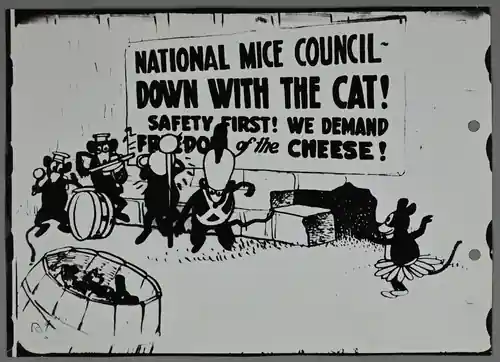
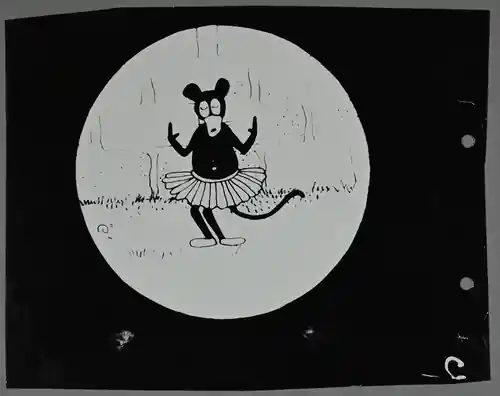
Observe the film’s sexual politics: the nursing matriarch is sidelined despite evident strategic acumen, while young males grandstand. Yet the camera undercuts their bravado by juxtaposing their trembling flanks with the cat’s flexing tendons—patriarchy undone by apex predation. In that humiliation lies a subtle feminist critique, predating similar subversions in A Nagymama by two years. The female mouse who ultimately volunteers to carry the bell does so not via speech but by stepping forward into a shaft of light—a visual sentence more eloquent than any intertitle.
One cannot discuss Mice in Council without confronting its documentary substrate. These are real rodents, likely lured by cheese and filmed at macro scale. Ethical hairsplitters may bristle, yet the result transcends exploitation; it becomes a meditation on mortality itself. Each twitch of fur carries the tremor of creatures unaware they are art. That tension—between life and its aestheticization—would later haunt Auction of Souls, though the feature film cushions horror with melodrama. Here, there is no cushion, only crumbs.
Film historians hunting for the first instance of "bullet-time" aesthetics need look no further than the shot where the camera circles the council at floor level, transforming table legs into Doric columns. That 360° perspective predates The Matrix by seven decades and was achieved by rotating the set—a lazy Susan of plywood—while mice scurried, oblivious. The visual flourish influenced later experimental works, even if those directors never knew this two-reel orphan.
Meanwhile, cine-essayists have grafted the frozen final frame onto discussions of Schrödinger’s cat—an airborne mouse both alive and dead until the missing reel collapses the waveform. Universities teach it alongside The Double Event in modules on narrative aporia, proving that brevity can fissure the imagination wider than three-act sagas.
I first encountered Mice in Council as a 16mm print flecked with fungus. The projection bulb overheated, warping the final shot so that the cat’s paw seemed to melt into molten bronze. For years I assumed that distortion was part of the original design, a Surrealist coup. When digital restoration smoothed the warp, I felt an inexplicable grief—as though the film had lost its stigmata. Then I understood: the short, like all great art, mutates with each spectator, a palimpsest of our private panics. I have binged prestige miniseries that left me benumbed; I have emerged from this rodent parliament shaking, alive. That is its miracle: to shrink the colossal—empire, revolution, genocide—into the tremor of a whisker, reminding us that every vote we cast, every silence we keep, echoes inside an endless pantry where some unseen claw waits overhead.
Verdict: Essential viewing for anyone who believes cinema began with talkies or that political allegory requires dialogue. Watch it twice: once for its historical audacity, once to measure the distance between your own squeak and the darkness outside.
IMDb —
1932
Community
Log in to comment.