DbcultAccessing Vault...
Cult Review
Senior Film Conservator
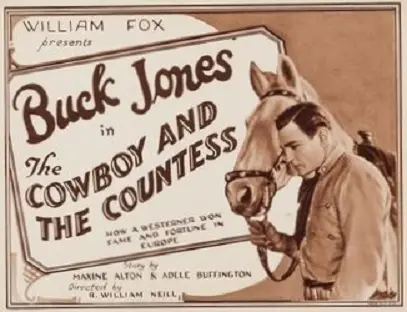
Is 'The Cowboy and the Countess' a relic best left to the archives, or does it offer a surprising charm for contemporary viewers? The short answer is: yes, but only for a very specific audience willing to embrace its antiquated sensibilities. This film is a delightful, if deeply flawed, journey for silent film aficionados, early Western enthusiasts, and those with a soft spot for historical melodrama, but it will likely test the patience of anyone accustomed to modern narrative pacing and nuanced character development.
'The Cowboy and the Countess' is, at its heart, a classic fish-out-of-water tale, flipped on its head and then back again. We begin in the rugged American West, a landscape as mythic in 1926 as it remains today, where Countess Justina of Belgravia, portrayed with a delicate poise by Diana Miller, finds herself in a decidedly un-regal predicament: a car accident. Her rescuer, Jerry Whipple, played by the effortlessly charismatic Jere Austin, is everything her European world is not: direct, unpolished, and brimming with a frontier spirit. This initial encounter sets the stage for a cultural collision that defines the film's most engaging moments.
The film's premise isn't just a simple romantic setup; it's a commentary, however unintentional, on the perceived allure of American individualism versus European aristocracy. Jerry isn't just a hero; he's the embodiment of a burgeoning American identity, a stark contrast to the stifling traditions Justina is bound by. It’s a narrative that speaks to the romantic ideal of escape, of finding freedom in an unexpected place, and with an unexpected person.
This film works because it fully commits to its melodramatic premise, offering a charming escape into a simpler, more overtly romanticized world. Its visual storytelling, while occasionally rudimentary, often captures the stark beauty of its settings.
This film fails because its plot, particularly in the latter half, devolves into a series of highly improbable contrivances that strain credulity even for a silent film, and its antagonist is a caricature rather than a character.
You should watch it if you appreciate the historical context of early cinema, enjoy silent Westerns or romantic comedies, and are willing to overlook significant narrative shortcomings for moments of genuine charm and adventure.
Jere Austin, as Jerry Whipple, carries much of the film’s appeal. His cowboy is less the stoic loner and more the charming rogue, a man of action with a twinkle in his eye. Austin’s physicality is key here; silent film acting relied heavily on exaggerated gestures and facial expressions, and Austin delivers a performance that is both broad and surprisingly engaging. One particular scene where he first encounters Justina’s wrecked automobile, his initial confusion quickly giving way to decisive action, perfectly encapsulates his character’s straightforward nature.
Diana Miller’s Countess Justina, on the other hand, is a study in restrained elegance. Her initial shock at the rough-and-tumble West slowly gives way to a quiet admiration for Jerry. Miller conveys a sense of inner conflict, particularly when she returns to Belgravia, through subtle shifts in her posture and the wistful glances she casts. It's a performance that, while less overtly dynamic than Austin's, provides a crucial anchor of emotional vulnerability. The film might have benefited from more scenes exploring her internal struggle, but within the confines of silent film storytelling, Miller makes the most of her role.
The supporting cast, while largely relegated to archetypal roles, does its job. Fletcher Norton as Duke de Milos is the quintessential silent film villain—all sneering glances and theatrical villainy. He’s less a nuanced antagonist and more a plot device, a necessary obstacle for our heroes to overcome. His secret life as a gang leader is revealed with a dramatic flourish that, while predictable, serves the film’s melodramatic intent. It's a performance that doesn't ask for much depth, and Norton doesn't try to provide it, focusing instead on clear, unambiguous evil.
The direction in 'The Cowboy and the Countess' is competent but rarely groundbreaking. The film’s strength lies in its ability to juxtapose two distinct visual worlds. The early scenes in the American West are shot with an eye for expansive landscapes, even if the film stock and camera technology of the era limit their grandeur. There’s a sense of freedom and openness that contrasts sharply with the later scenes set in Belgravia, which evoke a more confined, opulent, and ultimately suffocating atmosphere. The palace interiors, while not lavish by today's standards, convey a sense of formal grandeur that serves the narrative well.
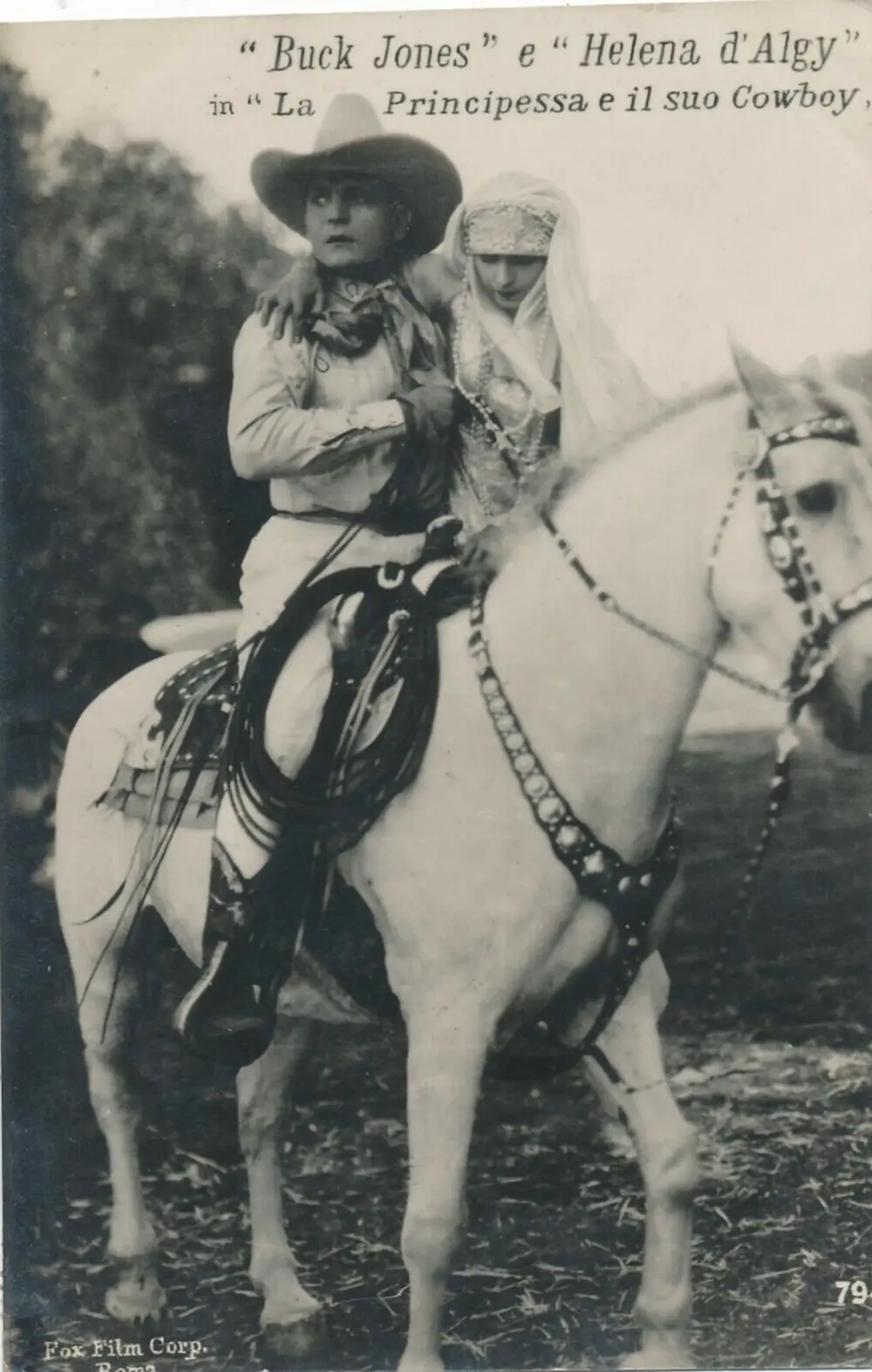
One particularly effective sequence is Jerry’s arrival in Belgravia with his Wild West show. The spectacle of cowboys and Native American performers parading through European streets provides a delightful visual absurdity. It’s a moment that perfectly crystallizes the film’s central theme of cultural collision. The director uses this contrast to highlight the exoticism of the American West in European eyes, and vice-versa. It works. But it’s flawed.
Pacing is typical for a silent film of this era, which means it can feel slow by modern standards. There are stretches of exposition delivered via intertitles, and action sequences, while present, are not edited with the rapid-fire intensity we've grown accustomed to. The film takes its time to establish the romance and the villainy, gradually building towards its climax. This deliberate pacing might be a hurdle for some viewers, but for those accustomed to silent cinema, it's a familiar rhythm.
The narrative, co-written by Charles Darnton, Adele Buffington, and Maxine Alton, is a fantastical blend of romance, adventure, and outright absurdity. The transition from a charming cross-cultural romance to a full-blown spy-thriller-esque plot involving a duke-turned-thief is abrupt, to say the least. Jerry’s discovery of Duke de Milos’s secret identity feels less like organic plot development and more like a convenient narrative shortcut to propel the story towards its dramatic conclusion. This sudden shift in tone is one of the film’s biggest weaknesses, demanding a significant suspension of disbelief.
However, it’s precisely this embrace of the outlandish that gives 'The Cowboy and the Countess' its unique flavor. The abduction scene, where Jerry literally sweeps Justina off her feet to save her from her forced marriage, is pure, unadulterated melodrama. It’s a moment that would feel ridiculous in a more grounded film, but here, it plays into the romanticized notion of the cowboy as a liberator, a force of nature disrupting rigid European traditions. It's a testament to the film's silent-era charm that such a scene, rather than collapsing under its own weight, manages to be genuinely thrilling in its own quaint way. One could argue that this very lack of realism is what makes it so compelling; it's a fantasy, pure and simple, unburdened by the constraints of the real world.
The final confrontation between Jerry and the Duke's gang is a testament to the film's Western roots, transplanting frontier action into a European setting. It’s a satisfying, if predictable, resolution that sees virtue triumph over villainy, culminating in the joyous union of the cowboy and the countess. While the plot stretches credulity, it never truly loses its heart, always circling back to the unlikely love story at its core.
For contemporary audiences, 'The Cowboy and the Countess' is a fascinating historical document and a charming piece of entertainment, provided you approach it with the right mindset. It’s not a film that will redefine your understanding of cinema, nor will it offer the kind of deep emotional resonance found in classics like Camille. Instead, it offers a glimpse into the popular entertainment of the 1920s, a time when simple narratives, clear heroes, and villains, and the romantic clash of cultures held immense appeal.
It’s a film that demands patience and an appreciation for the conventions of silent cinema. The intertitles, while sometimes lengthy, are essential for understanding the plot. The acting, while expressive, can feel over-the-top to modern sensibilities. Yet, beneath these surface-level differences, there’s a timeless story of love conquering obstacles, and of finding freedom in unexpected places.
If you are new to silent films, this might not be the ideal starting point, as its narrative quirks could be distracting. However, for those already familiar with the era, it offers a delightful, if somewhat frothy, experience. It's a film that’s best viewed as a lighthearted adventure, a historical curio that still manages to entertain with its earnest performances and charming premise. It certainly holds up better than some of its contemporaries, like Kinky, which often feel dated beyond repair.
'The Cowboy and the Countess' is a film that wears its heart on its sleeve, offering a romantic adventure that is both a product of its time and surprisingly enduring. It’s not a lost masterpiece, nor is it a film that will convert skeptics of silent cinema. What it is, however, is a genuinely charming and often thrilling piece of historical entertainment. Jere Austin and Diana Miller make a compelling pair, and the film’s central conceit of a cowboy disrupting royal etiquette is executed with admirable earnestness.
Despite its narrative shortcomings and reliance on classic melodramatic tropes, the film succeeds in transporting its audience to a simpler, more overtly romantic world. It’s a testament to the power of pure escapism. If you’re willing to suspend disbelief and embrace the conventions of 1920s cinema, 'The Cowboy and the Countess' offers a delightful, if somewhat frothy, journey. It’s a pleasant diversion, a reminder of cinema’s early capacity to dream big and deliver simple, heartfelt stories. It’s worth a watch for its historical context and its undeniable, if antiquated, charm.
IMDb —
1927
Community
Log in to comment.