DbcultAccessing Vault...
5.9/10
Senior Film Conservator
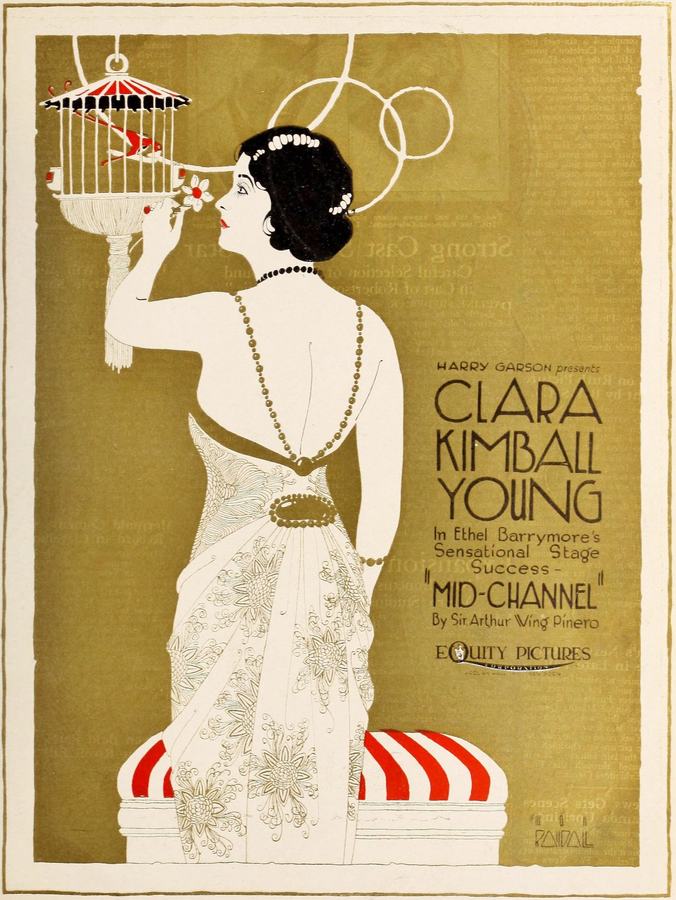
A definitive 5.9/10 rating for a film that redefined the boundaries of cult cinema. Mid-Channel remains a cornerstone of transgressive art.
Mid-Channel does not roar—it sighs, a slow exhalation of marital carbon-dioxide that hangs in the chandeliered gloom long after the title card fades. Pinero’s 1909 stage hit, transposed by George Ingleton to the flickering grayscale of 1920, arrives like a bruise under crêpe-de-Chine: delicate, painful, and unfashionably honest about what happens when two people discover that love’s bright currency has been debased by habit.
Clara Kimball Young, queen of the vitreous stare, plays Zoe with the irritable grandeur of a woman who has read all the wrong novels and married the right salary. Watch her in the early reel: she enters a drawing-room already thick with the ghost of quarrel, removes her gloves as though skinning a memory, and answers Theodore’s clipped greeting with a smile so brittle you could serve tea on it. The camera loves the triangular hollows beneath her cheekbones—shadows that double as predictive text for the bitterness to come.
Theodore, embodied by J. Frank Glendon with the rigid poise of a man who buttons his morality inside his waistcoat, believes in calendars, precedents, and the sacredness of dinner served at eight. His sin is not cruelty but anesthesia: he has forgotten that a wife is not furniture that appreciates with polish. Their arguments are master-classes in Edwardian passive-aggression—dialogue that circles overhead like cigar smoke before descending as indictment.
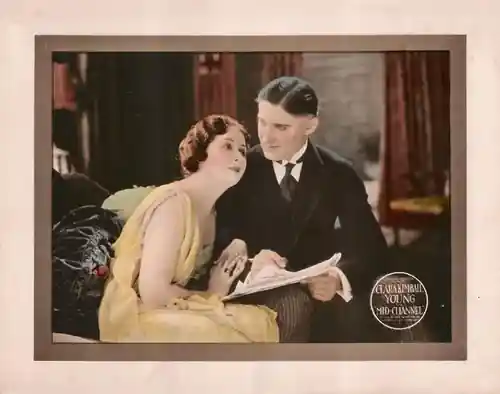
Enter Hon. Peter Mottram—Bertram Grassby supplying a lopsided charm that smells of tweed and compromised ideals. He is the film’s reluctant chorus, forever arranging peace treaties that collapse faster than a house of cards in a fan factory. In one delicious scene he presents Zoe with yellow roses bred to symbolize friendship; she pins one into her décolletage, then spends the remainder of the evening dancing with every man except the husband, petals drooping like embarrassed confessions.
When the rupture finally detonates, the film swaps London’s gas-haloed fogs for Italy’s bleached marble. Cinematographer James Van Trees saturates the Ligurian light until it feels almost indecent, as though the sun itself were complicit in adultery. Ferris—Jack Livingston channeling a predatory Rupert Brooke—pursues Zoe through terraced gardens where bougainvillea spills like gossip. He offers divorce, Paris, a future untainted by Theodore’s calendar fetish. Yet even here the film refuses melodrama; Zoe’s hesitation is filmed in a simple medium-close-up, wind whipping her veil across her mouth, silencing promises she already regrets.
Back home, Theodore’s counter-Eden is a cluttered flat smelling of Macassar oil and Mrs. Annerly’s violet talc. Eileen Robinson plays the widow as a woman who has learned to barter cheerfulness like currency; her laughter is a little too loud, her kindness stapled to survival. Their cohabitation is never lurid—director Henry Kolker keeps the camera discreetly outside the bedroom door—but the emotional acoustics are deafening: two people failing to exorcise loneliness through shared meals and awkward silences.
Meanwhile Ferris’s scheme sucks in Ethel Pierpont (Peggy Cartwright), a porcelain flirt whose mother, played by Katherine Griffith with magnificent vulture-like vigilance, stalks ballrooms calculating dowries with the cold efficiency of an adding machine. The subplot pirouettes through mistaken letters, intercepted telegrams, and a masked ball where identities swap faster than dance cards. It is here that Mid-Channel briefly winks at the screwball spirit that will flower a decade later, yet the levity is tinged with acid: every joke feels like a nervous cough before execution.
The reconciliation—because Pinero insists on one—unfolds not in moonlit gardens but aboard a channel steamer shuddering through slate-dark waters. Mottram shepherds the estranged couple onto the deck where spray salts their faces like penance. No declarations, only the mute recognition that life apart is merely existence segmented into unpaid bills and unanswered invitations. Theodore extends his hand; Zoe, hair unpinning in the wind, takes it. The camera cranes back to reveal the ship’s wake bisecting the sea—an incision healing itself with distance.
Historically, Mid-Channel arrives at the hinge between Victorian moral allegory and Jazz-Age cynicism. Released three months after women first voted in America, its sexual politics feel tugged in two directions: Zoe’s rebellion is validated yet ultimately folded back into marriage, as though the medium itself feared legitimizing female autonomy. Compare it to Tangled Hearts where the heroine escapes penalty, or What Every Woman Learns which punishes curiosity with destitution. Mid-Channel lands in the uneasy middle: forgiveness as compromise rather than absolution.
Performances oscillate between stylized gesture and proto-naturalistic minimalism. Young’s micro-expressions—eyebrow lifted a millimeter, lip corner twitched—carry more subtext than two pages of intertitles. Glendon counterbalances with a rigidity that gradually splinters; notice how his gloved fingers fret against a champagne flute stem, metal squealing against crystal, the only outward betrayal of inner corrosion. Among the supporting cast, Frank Coghlan Jr. as the Pierponts’ pageboy steals two comic beats by simply raising a tray at the wrong instant, reminding us that history is also the domain of servants who overhear.
Visually the film exploits high-contrast orthochromatic stock: white faces glow like porcelain against ink-black negative space. Interiors are crowded with potted palms, antimacassars, and looming portraits whose eyes seem to adjudicate adultery. Exterior night scenes rely on back-projection and miniature ships bobbing in studio tanks—effects creaky even for 1920, yet they invest the narrative with dreamlike fragility, as though the world itself were a paper theater threatened by rain.
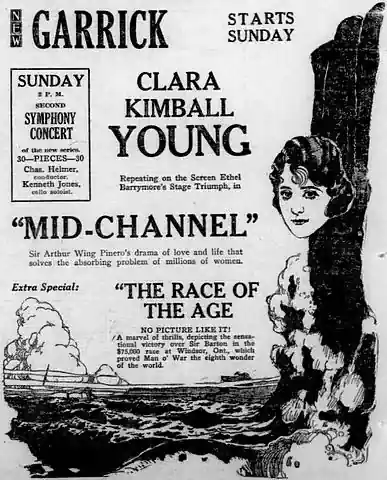
Musically, exhibitors in 1920 were advised by Moving Picture World to accompany the Italian sojourn with “Neapolitan folk airs, tender yet tinged with minor-key foreboding,” while the London sequences demanded Elgarian strings “heavy as velvet curtains.” Contemporary restorations often opt for minimalist piano, but I urge curators to resurrect the original cue sheet; the dissonance between sun-drenched mandolin and fog-soaked cello underscores the film’s obsession with emotional hemispheres that refuse alignment.
Legacy-wise, Mid-Channel survives only in a 63-minute re-issue negative discovered in the Gosfilmofond vaults, recut by distributors who trimmed subplots involving Zoe’s anarchist brother and a suffragette cousin. Even truncated, the film influenced later marital melodramas such as In the Balance and the Lubitsch-esque The Gilded Youth. Its DNA persists in the talkie era: the channel-crossing finale is replayed almost shot-for-shot in 1932’s One Way Passage, and Cukor’s The Marriage Circle borrows Mottram’s matchmaker archetype, trading nobility for sardonic wit.
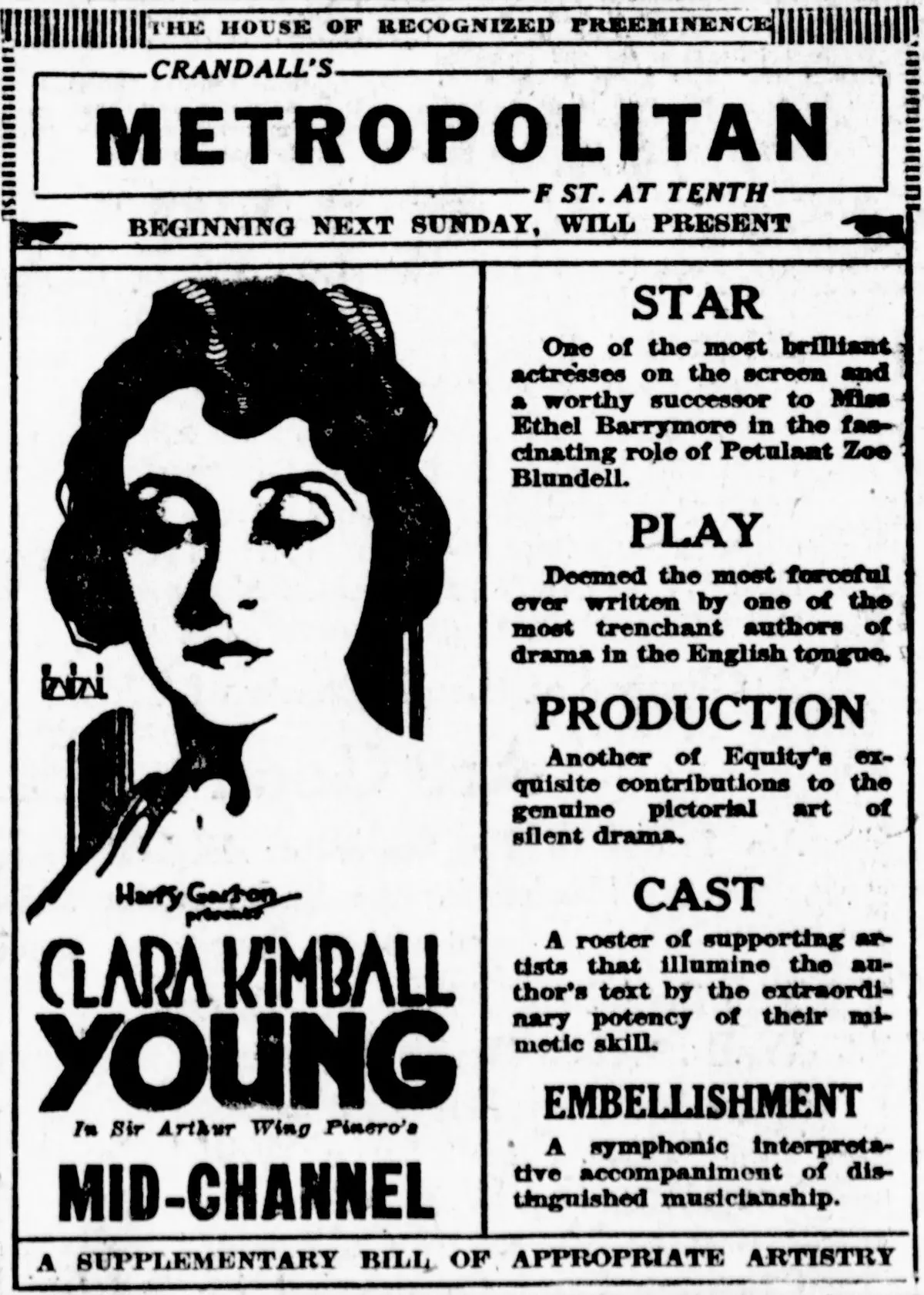
Critical discourse of the time was split. Variety praised Young’s “mordant luminosity” but dismissed the third act as “a sop to suburbia,” while Photoplay recommended the picture to “wives contemplating desertion, as deterrent or instruction manual.” Modern feminist readings reclaim Zoe’s petulance as proto-liberation, contrasting her with the sacrificial spouses of Hearts of Love. Yet to shoehorn the film into a single ideology is to miss its richer dialectic: the recognition that marriage is both prison and refuge, and sometimes escape is simply another corridor.
Available today on streaming platforms specializing in silent restorations, Mid-Channel rewards multiple viewings: first for plot, second for the hieroglyphics of gesture, third for the ghostly imprint of a cultural moment when cinema still negotiated Victorian residue with modernity’s electric glare. Watch it at night, lights off, headphones cradling a fragile piano track that threatens to fracture like the couple it shadows. You will emerge hearing your own heartbeat inside the conch shell of marital doubt, unsure whether the tide going out sounds like departure—or return.
IMDb 7.5
1935
Community
Log in to comment.