DbcultAccessing Vault...
Cult Review
Senior Film Conservator
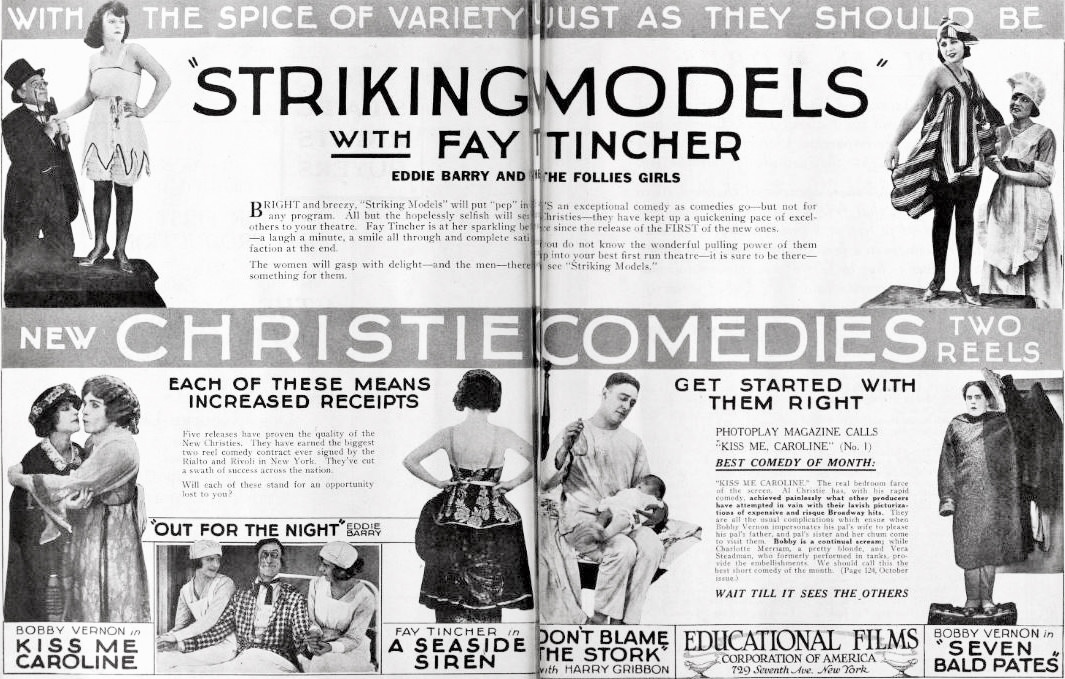
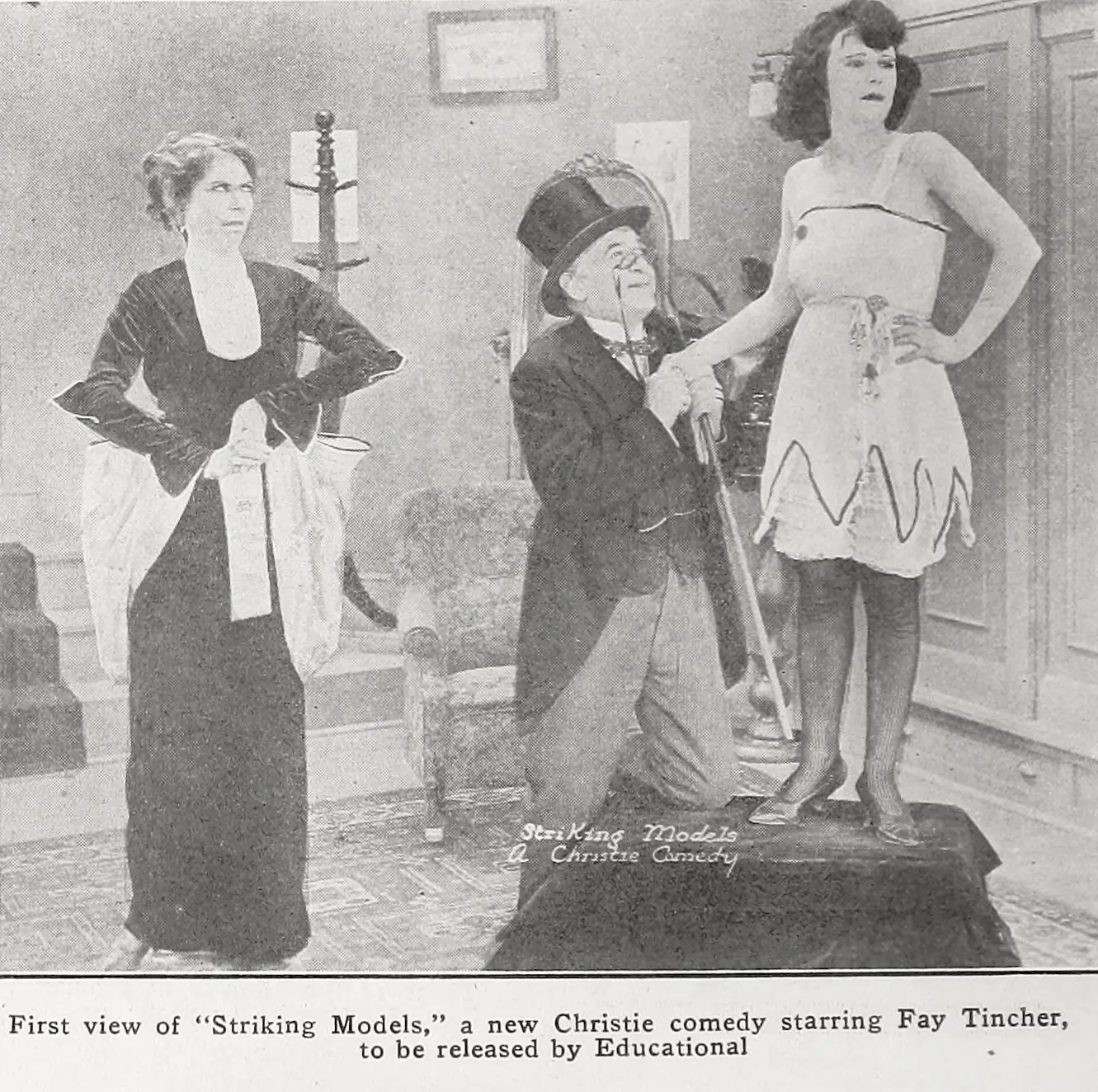
Picture this: a silent flick that crackles louder than a Tesla coil. Striking Models lands like a thrown brick through the plate-glass window of Jazz-Age complacency. Forget flapper clichés; here the fringe is made of ticker-tape, and every sequin is a dropped stitch in capitalism’s hem. Director-writer duo Jack Jevne and Frank Roland Conklin don’t hand us a story so much as they rewind a fever dream of sweatshop steam and magnesium flash.
Lola (Tincher) starts as living décor, posed beneath klieg lights in a satin chemise. When the store slashes wages, the window becomes a proscenium for revolt. She steps through the glass, leaving a cracked halo of her own reflection. From there the narrative fractures into shards: picket-line poetry clandestinely printed on dress patterns, a midnight raid where scissors double as sabers, and a final tableau that projects workers’ silhouettes across an entire city block—think The Great Circus Catastrophe but swapping sawdust for smokestacks.
Fay Tincher’s eyes perform their own close-ups even when the camera doesn’t. She plays Lola like a woman who’s memorized every reflection yet never seen herself. Watch her fingers tremble—half seizure, half semaphore—while she mouths the word “strike” to a newsreel cameraman. The silence amplifies the syllable until it detonates.
Margaret Cullington, largely forgotten outside archives, gifts Mabs a hunched grace reminiscent of Maria Falconetti on ration cards. Her hands—always stitching, always hiding contraband leaflets—deserve separate billing. There’s a shot where she threads a needle by moonlight; the thread gleams sea-blue (#0E7490) against her sepia skin, a visual haiku that outshines any intertitle.
William Sloan’s editor chews scenes like tobacco, spitting out moral ambiguity with every grin. One moment he’s photographing a debutante, next he’s selling rebellion to Hearst. His character arc bends toward damnation, but the film refuses to nail him to any cross—he’s both Judas and evangelist.
Cinematographer George Webber over-cranks during the picket-line charge so silk banners flow like molten lava, then under-cranks the cops’ baton swing, turning brutality into a staccato nightmare. The color palette—tinted amber for interiors, cyan for exteriors—mirrors the divide between showroom illusion and asphalt actuality. Compare this to the moral monochrome of The Double Standard and you’ll see why Striking Models feels decades newer.
Yes, it’s a silent, but listen harder: Jevne’s intertitles are switchblades. “She traded her shadow for a paycheck” appears over an empty dress form; the next card is blank white for three beats—time enough for the audience to scribble their own epitaph. In 2024, when union drives flare at Amazon warehouses, those empty beats feel prophetic.
The film prefigures Judith Butler by six decades: every outfit is performance. When Lola doffs her store-issued slip for a striker’s kerchief, the edit jump-cuts mid-button—cinema itself shedding skin. Meanwhile, Isabelle Keith’s columnist performs femininity as lethal cosplay; her cigarette holder doubles as conductor’s baton for gossip’s orchestra.
Stack it beside Adele’s corseted melodrama or The Woman Beneath’s subterranean femme fatale, and Striking Models feels like someone opened a fire escape in a locked parlor. Where The Hater of Men rants and Brothers Divided moralizes, this picture simply electrifies the seams.
Most prints were melted for WW2 scrap, but a 16-mm Russian émigré copy surfaced in 2019. The restoration team tinted blank frames to match the cyan/amber ledger discovered in Conklin’s estate. You can stream it on several boutique platforms; however, avoid the 61-minute cut—demand the 74-minute “ink-banner” version that preserves the rooftop finale.
Because fast fashion still kills. Because algorithmic bosses now assign shifts instead of floor managers. Because Tincher’s quivering jawline contains more revolution than three seasons of prestige TV. And because, sometimes, the most radical act is refusing to stay in the window.
The last frame freezes on Lola’s silhouette merged with the city skyline—an eclipse of glass and flesh. No fade-out, just a hard cut to black. The projector’s click-clack becomes the heartbeat you take home. Ninety-nine years on, Striking Models isn’t a museum relic; it’s a Molotov labeled “drink me” waiting for the next parched century.
IMDb 6.5
1937
Community
Log in to comment.