DbcultAccessing Vault...
Cult Review
Senior Film Conservator
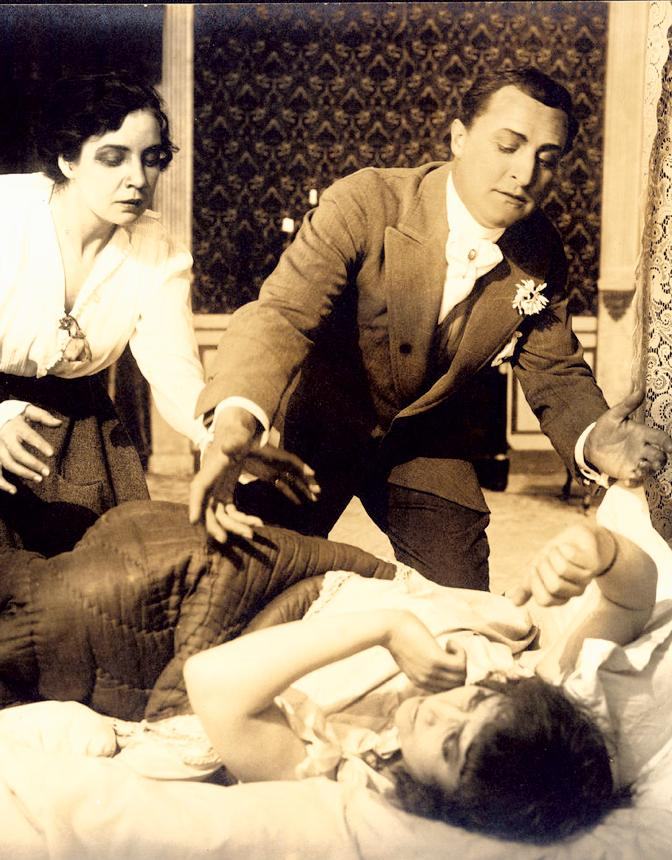
Stepping back into the annals of early cinematic artistry, one often encounters forgotten gems, films that, despite their age, possess an uncanny ability to speak to the enduring complexities of the human condition. "Midnatssjælen" (The Midnight Soul), a Danish silent drama from an era brimming with artistic innovation and societal upheaval, is precisely one such treasure. Penned by Irma Strakosch, this film transcends its period trappings to deliver a potent, unsettling narrative, a stark psychological study that remains remarkably resonant. It’s a work that demands attention, not merely as a historical artifact, but as a compelling exploration of power, manipulation, and the corrosive nature of unchecked entitlement.
At its core, "Midnatssjælen" meticulously dissects the suffocating atmosphere within the Marlow estate, a grand edifice that has, over time, become a gilded cage for its inhabitants. Franz Marlow, the estate's patriarch, portrayed with a palpable weariness by Peter Jørgensen, finds himself ensnared in a web of his own making. His daughter, Aline, brought to terrifying life by the formidable Ilse Morssing, is not merely spoiled; she is a force of nature, an embodiment of pure, unadulterated will. Her desires, no matter how capricious or cruel, manifest as immutable laws within the household. Every servant, every associate, and most tragically, her own father, bends to her command, their wills slowly eroded by her relentless demands. This isn't just a story about a difficult child; it's a chilling examination of how a lack of boundaries can breed a domestic tyrant, whose emotional dominion becomes absolute. The film doesn't merely present Aline's actions; it delves into the psychological landscape that allows such a character to flourish, highlighting the complicity of those around her, whether through fear, affection, or sheer exhaustion.
The narrative takes a particularly dark turn with the arrival of Dr. Bodo Marlow, Franz's cousin, exquisitely played by Anton de Verdier. Bodo, a man of apparent intellect and composure, initially seems a potential bulwark against Aline's tyranny. However, he quickly becomes her latest, and perhaps most devastating, victim. His professional detachment and rational mind are no match for Aline's manipulative charm and relentless psychological pressure. This shift in dynamic is where the film truly excels, showcasing the insidious nature of emotional abuse, where even the strongest wills can be bent and broken. The film doesn't resort to overt villainy but rather paints a nuanced picture of a woman who, perhaps without fully comprehending the extent of her own destructive power, systematically dismantles the autonomy of those in her orbit. It's a subtle dance of power, obsession, and submission, far more unsettling than any overt act of malice.
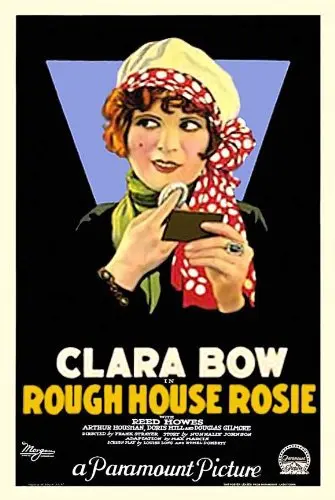
Ilse Morssing's portrayal of Aline is nothing short of masterful. In an era where silent film acting relied heavily on exaggerated gestures and facial expressions, Morssing manages to convey a complex inner world with remarkable subtlety. Her eyes, often glinting with a mix of childlike innocence and predatory calculation, tell a story far deeper than any intertitle could. Aline is not a one-dimensional antagonist; she is a product of her environment, a tragic figure in her own right, whose boundless privilege has stunted her emotional growth and warped her understanding of human relationships. Her actions, while destructive, stem from a profound lack of empathy, a void where genuine connection should reside. This character study is reminiscent of the complex female leads found in other silent era dramas, perhaps even echoing the intense psychological battles seen in films like "The Tigress" where powerful women navigate societal constraints through unconventional means. Yet, Aline's power is not against a patriarchal system, but within it, wielding her status as a weapon against all.
The supporting cast, particularly Agnes Andersen and Erik Holberg in their respective roles, contribute significantly to the film's oppressive atmosphere. Their subtle reactions, their averted gazes, and their palpable discomfort underscore the pervasive fear and resignation that grip the household. Clara Pontoppidan, a renowned figure in Danish cinema, also delivers a memorable performance, adding layers to the familial dynamics that often go unspoken in silent cinema. The ensemble acts as a Greek chorus, silently commenting on Aline's escalating control, their powerlessness a stark contrast to her burgeoning dominance.
Beyond the immediate drama, "Midnatssjælen" delves into profound thematic territory. It is, first and foremost, a searing critique of unchecked power and the corrupting influence of absolute control. Aline's character serves as a stark warning against the perils of enabling, illustrating how indulgence can transform into tyranny. The film subtly explores the moral compromises made by those who surround her, forcing viewers to confront uncomfortable questions about complicity and the limits of endurance. Franz's inability to rein in his daughter reflects a deeper societal malaise, where wealth and status often grant immunity from accountability.
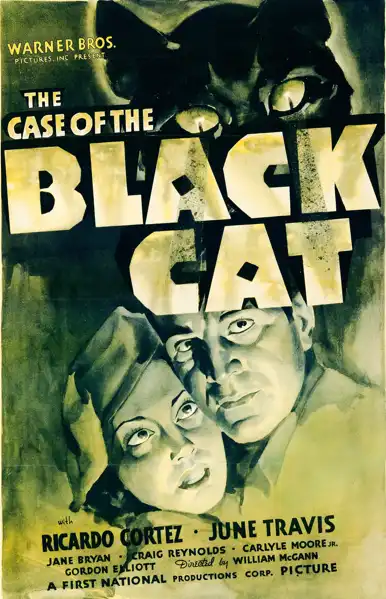
The psychological struggle between Bodo and Aline is particularly captivating. It's a battle of wills, intellect against instinct, where the veneer of civilized reason slowly cracks under the relentless assault of raw, untamed ego. This dynamic offers a fascinating parallel to the internal conflicts often explored in films like "The Awakening of Helena Ritchie", where characters grapple with their own moral compass and the forces that seek to derail it. However, while Helena Ritchie's struggle is often internal and redemptive, Bodo's journey in "Midnatssjælen" feels far more tragic, highlighting the destructive potential of external manipulation.
Furthermore, the film subtly critiques the societal structures that allow such pathologies to fester. The isolation of the estate, the lack of external checks on Aline's behavior, and the ingrained deference to wealth all contribute to the tragic unfolding of events. It's a microcosm of a larger world, where privilege can create a vacuum of accountability, leaving individuals vulnerable to the whims of the powerful. The film’s quiet commentary on these societal issues, without resorting to heavy-handed moralizing, is a testament to Irma Strakosch’s astute writing.
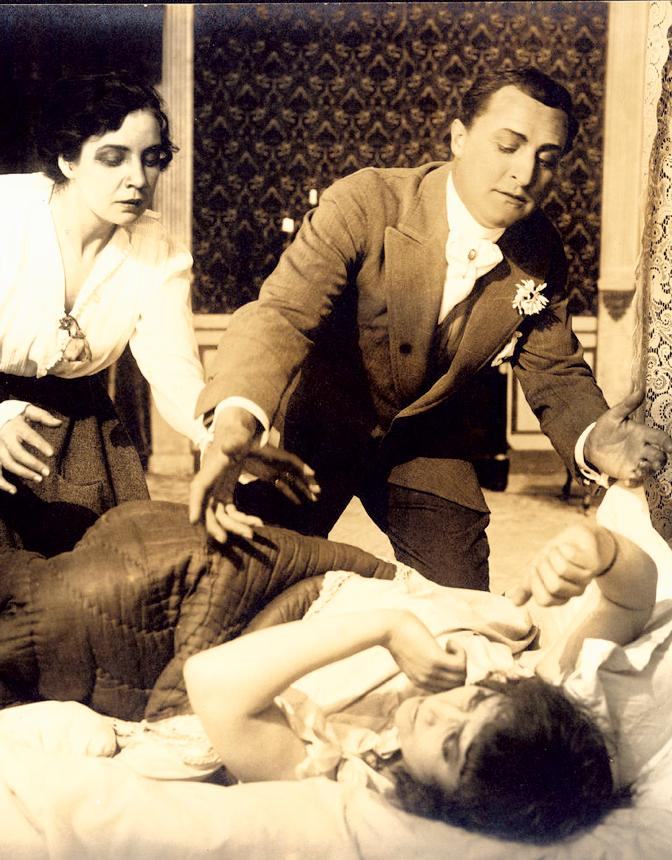
While specific directorial credits for early silent films can sometimes be murky, the visual storytelling in "Midnatssjælen" is undeniably sophisticated for its time. The use of close-ups to emphasize character emotions, the deliberate pacing that builds tension, and the atmospheric set design all contribute to the film's powerful impact. The cinematography, though black and white, expertly uses light and shadow to create mood, often casting Aline in a subtly ominous glow or highlighting the despair etched on Franz's face. The film's aesthetic aligns with the burgeoning artistic sensibilities of Danish cinema in the 1910s, a period known for its psychological depth and often dark, melodramatic themes.
The film's silent nature, far from being a limitation, enhances its psychological intensity. The absence of dialogue forces the audience to pay closer attention to visual cues, to the subtle shifts in expression, and to the unspoken power dynamics at play. This reliance on purely visual storytelling is a hallmark of the era and allows for a universal appeal, transcending language barriers. It invites a more active engagement from the viewer, who must interpret the characters' inner lives through their outward manifestations.
"Midnatssjælen" stands as a significant, if often overlooked, contribution to early psychological drama. Its portrayal of a destructive personality and the corrosive effect of unbridled privilege resonates with timeless truths about human nature and societal structures. It’s a film that, much like the best of its contemporaries, such as perhaps "The Eternal Strife" which grappled with deep moral quandaries, uses its narrative to probe the darker corners of the human psyche. The film's legacy lies not just in its historical significance, but in its continuing ability to provoke thought and discussion about the nature of control, the burden of inheritance, and the subtle ways in which individuals can be undone by the very people they are meant to love.
Watching "Midnatssjælen" today is a powerful reminder of the sophisticated storytelling that existed in the nascent years of cinema. It challenges modern audiences to engage with a different kind of narrative, one built on visual nuance and emotional intensity rather than rapid-fire dialogue or special effects. The performances, particularly Morssing’s, are compelling enough to hold contemporary attention, proving that true acting prowess transcends technological limitations. It’s a compelling argument for revisiting the silent era, not just for academic interest, but for genuine cinematic pleasure and profound insight. This film, alongside others from its period, like the intricate character studies found in "Idolators", demonstrates the silent film era's capacity for deep psychological exploration long before sound became an industry standard.
The subtle power dynamics, the unspoken tensions, and the dramatic irony woven throughout the narrative are masterfully handled. The film serves as a cautionary tale, illustrating how unchecked power, even within the confines of a family, can lead to devastating consequences. It's a dark mirror reflecting the potential for tyranny within the most intimate of relationships, a theme that remains perennially relevant. The slow, inexorable descent of Dr. Bodo Marlow under Aline's influence is particularly chilling, a testament to the film's ability to create genuine suspense and dread without resorting to overt horror tropes. It’s the horror of the everyday, the horror of being trapped by another’s will, that permeates every frame.
Ultimately, "Midnatssjælen" is more than just a period piece; it's a timeless exploration of human frailty and dominance. It invites viewers to ponder the origins of malevolence, the complicity of silence, and the resilience of the human spirit when confronted with overwhelming psychological pressure. For those who appreciate the artistry of early cinema and the depth of character-driven drama, this film is an essential viewing experience. Its quiet power lingers long after the final frame, a testament to its enduring thematic resonance and artistic integrity.
The film’s historical context also enriches its viewing. Emerging from a period of significant social change and artistic experimentation in Europe, Danish cinema, in particular, was carving out its own niche with sophisticated narratives and often stark realism. "Midnatssjælen" fits perfectly within this tradition, showcasing a willingness to tackle complex psychological themes that might have been considered taboo or too nuanced for mainstream audiences elsewhere. It’s a testament to the forward-thinking nature of its creators and the burgeoning understanding of cinema as a powerful medium for social commentary and psychological introspection.
The meticulous attention to detail in the set design and costuming further immerses the audience in Aline’s world. The opulence of the Marlow estate, while outwardly impressive, comes to feel increasingly claustrophobic, mirroring the characters' emotional entrapment. This visual metaphor is subtly yet effectively employed, enhancing the film’s overall sense of dread and inevitability. Every element, from the grand staircases to the ornate furniture, seems to contribute to the weight of tradition and expectation that bears down on the characters, particularly Franz and Bodo, as they struggle against Aline's overwhelming influence. The contrast between the beauty of their surroundings and the ugliness of the human dynamics at play is a powerful visual statement.
In conclusion, "Midnatssjælen" stands as a compelling example of early cinematic psychological drama. Its exploration of a spoiled heiress's tyrannical grip over her family and the tragic consequences of unchecked indulgence is as relevant today as it was over a century ago. The performances, especially Ilse Morssing’s, are captivating, drawing the viewer into a world where power corrupts absolutely. It’s a film that deserves to be rediscovered and appreciated for its timeless themes, its masterful storytelling, and its profound insights into the darker aspects of human nature. This isn't just a film; it's an experience, a journey into the heart of a "midnight soul" that casts a long, chilling shadow.
IMDb —
1924
Community
Log in to comment.