DbcultAccessing Vault...
6/10
Senior Film Conservator
A definitive 6/10 rating for a film that redefined the boundaries of cult cinema. John Redmond, the Evangelist remains a cornerstone of transgressive art.
Holger-Madsen’s John Redmond, the Evangelist arrives like a frost-bitten tract smuggled out of early Danish cinema’s conscience: a 1914 one-reeler that distills public shaming, jurisprudential fallibility, and the fragile hinge between perdition and grace. Shot when Northern Europe still exhaled the lingering smoke of Victorian morality, the film brandishes its didacticism like a storm lantern against encroaching modernity. Yet for all its pulpit intentions, the picture vibrates with an emotional candor that sidesteps preachy anemia. You feel the chill of stone corridors, taste the metallic tang of gunpowder regret, sense the quiver in a reformed gangster’s exhale.
Cinematographer Marius Christensen (often eclipsed by his peer Axel Graatkjær) compresses Nordic noir atmosphere into a narrow orthochromatic spectrum. Faces bloom under reflector glare while asphalt courtyards recede into granular abyss. Watch how Redmond’s first post-prison steps are framed: low-angle, urban horizon swallowing his silhouette—an instant visual shorthand for societal erasure. Moments later, the camera tilts slightly heavenward when he decides to preach, as though the lens itself petitions for transcendence. Intertitles—white on charcoal, minimal—never over-explain; instead they punctuate emotional staccatos, allowing eyes and gesture to shoulder narrative freight.

Johannes Ring delivers Redmond with the stoic combustion Nordic audiences prized: cheekbones sharp enough to cut guilt, gaze a haunted lagoon. His physical vocabulary is economical—no theatrical swoons—yet micro-tremors at the corners of his mouth telegraph entire universes of remorse. Compare this to Wilton Lackaye’s florid menace in Trilby or Valdemar Psilander’s urbane eroticism elsewhere; Ring opts for penitential hush, and the film’s moral authority pools in that restraint.
Women in this universe rarely occupy center stage, yet their absence/presence steers plot tectonics. Else Frölich as the ill-fated sweetheart appears only in flashback tableau—eyes upturned, mouth forming an O of surprise at the instant lead rewrites destiny. She is less character than catalytic memory, a ghost photographed in soft vignette so the surrounding frame dims, mimicking blood loss. Alma Hinding’s Nellie, by contrast, embodies post-transfiguration hope. Her final close-up—tears pooling but never dropping—mirrors the audience’s cathartic relief without slipping into maudlin excess. It’s a masterclass in silent-film moderation.
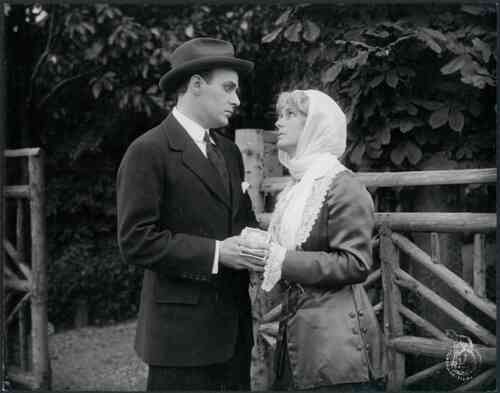
Note the spatial irony: the saloon—cathedral of dissolution—becomes the nexus of salvation. Holger-Madsen orchestrates a visual counterpoint: mahogany bar, glittering bottles, gaming chips cavorting like pagan idols; then Redmond’s gaunt frame intrudes, an angular prophet. His expulsion by mockers foreshadows the biblical trope of prophets dishonored in their homeland, yet seeds of repentance sprout in one thug’s heart. If you seek a precursor to American “social conscience” melodramas such as Volunteer Organist or Who Pays?, here lies its Nordic ancestor—less sentimental, more granite.
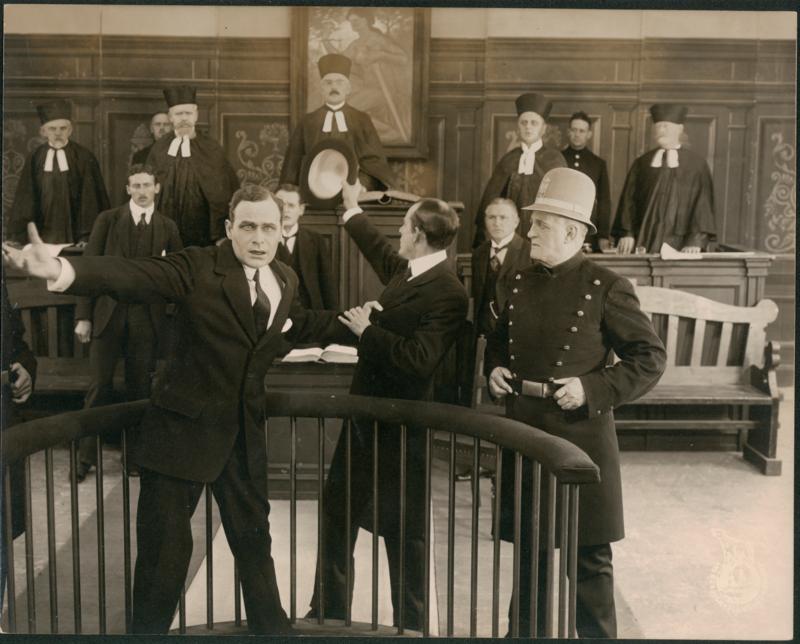
The mid-film retrial sequence, though economically staged, functions like a resurrection parable. The chaplain’s intervention feels divinely subcontracted, but the film refuses to wallow in miracle. Instead it focuses on Redmond’s stunned blink upon release—sunlight too bright, air too voluminous—reminding viewers that freedom can traumatize as surely as incarceration. Compare this with the documentary bluntness of Life in a Western Penitentiary; Holger-Madsen swaps sociological catalog for existential vertigo.
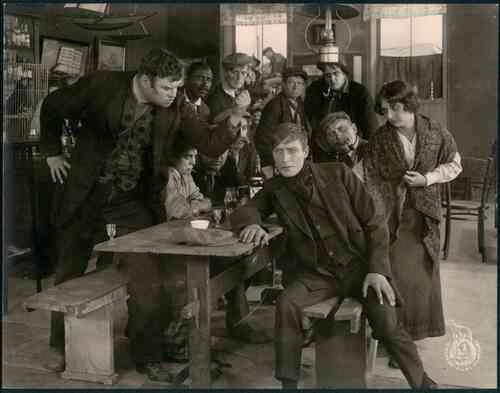
Production designer Axel Boesen renders interiors as moral barometers: cramped garret where Redmond finds his mother’s corpse—furniture skeletal, wallpaper peeled back like old scabs—contrasted with the bustling town square bathed in diffused northern light, suggesting communal possibility. Costuming likewise encodes virtue: Redmond’s threadbare coat grows darker each reel, absorbing street grime and symbolic guilt, while the reformed gangster’s final white shirt—unmistakably bleached—signals baptismal rebirth.
Editorial tempo oscillates between languid contemplation and staccato urgency. Cross-cut during the saloon burglary planning—cigarette smoke, shuffled cards, whispered coordinates—builds suspense that rivals The Burglar and the Lady. But once Redmond enters, pacing decelerates to liturgical procession, permitting moral stakes to breathe. The strategy anticipates Montage-Soviet principles though predates them; tension resides in collision of temporalities—sin’s frantic pulse vs. redemption’s solemn heartbeat.
Cinephiles tracking penitential arcs will hear echoes of The Redemption of White Hawk and The Ticket-of-Leave Man. Yet Redmond distinguishes itself through Lutheran austerity—no frontier exoticism, no sentimentalized outlaws—only the chill of North Sea winds slicing across cheekbones of conscience. Financially, the picture lacks the budgetary sprawl of Chûshingura or Evangeline, but compensates via philosophical density.
While original exhibition notes suggest live accompaniment of hymn variations, modern silent-film festivals often score it with sparse organ, allowing dialogue intertitles to resonate like psalms. The absence of leitmotif for evil—no sinister violins—underscores the film’s conviction that villainy and virtue coexist within shared social fabric, not segregated musical spheres.
For decades the negative languished in Copenhagen’s vaults, misfiled under church-budget documentaries. A 2018 2K restoration by the Danish Film Institute resuscitated tonal gradations once flattened by time, revealing cigarette haze and snowflake granularity. Streaming platforms specializing in early Nordic cinema (OliveSilentNordic, KinoScandi) now host the 46-minute print; Blu-ray paired with Das Modell issued by Grålysgaard includes a scholarly commentary that situates Redmond within Danish Golden Age ethics.
The film ends not on a triumphant chord but on an ellipsis: Redmond strides into swirling snow, another sermon ahead, converts and critics flanking his path. No orchestral swell, no iris fade on kissing lovers—Holger-Madsen denies easy catharsis. Viewers exit with frosted breath, pondering whether society can ever absolve itself of its false verdicts. A century later, when algorithms, not judges, sentence reputations, John Redmond, the Evangelist feels less antiquated relic than prophetic whisper—reminding us that clemency, like cinema itself, is a fragile strip of celluloid threading through the sprockets of time, demanding light to give it meaning.

IMDb 7.3
1935
Community
Log in to comment.