DbcultAccessing Vault...
Cult Review
Senior Film Conservator
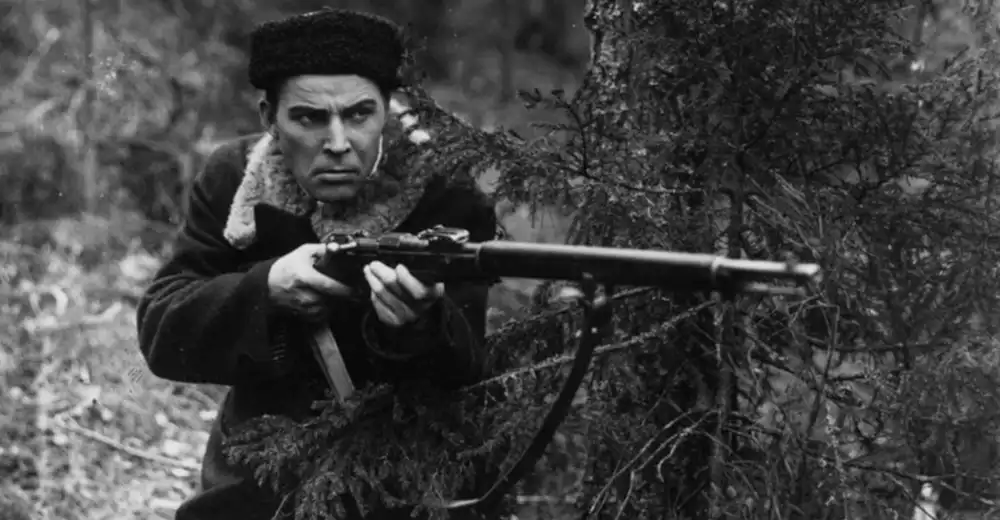
Okay, so Miekan terällä — that’s ‘On the Edge of the Sword’ if you’re translating — is definitely not for everyone. If you’re really into those old, early films, especially from Finland, and you’ve got a real soft spot for historical drama, then yeah, give this a look. But if you need snappy dialogue or explosions, or just anything that moves faster than a molasses drip, you’re probably gonna be checking your watch. A lot. 😬
The story itself has a classic feel: artist Halli, played by Eero Leväluoma, is caught up in a wartime love triangle. He’s after Varpu Tanhua (Elsa Turakainen), but so is the much richer Rustinolli Ristiniemi (Hannes Närhi).
It’s a setup that immediately pulls you in, this personal drama against a national backdrop. You feel Varpu’s predicament, caught between these two very different men, even through the decades separating us from the film.
Halli’s decision to head off to Germany to learn about war, for Finland, it feels like a grand gesture. Almost a bit much, maybe. He wants to be an 'icebreaker,' which is a pretty bold claim for an artist, isn't it?
When he comes back, the mood shifts. The combat situation in his village just… escalates. It’s less about big battles and more about the creeping tension, the everyday fear.
There’s this one shot of a village square, and it’s just so quiet. You can almost feel the wind. It’s moments like that, the quiet ones, where the film actually gets to you. They hint at the larger tragedy without shouting it.
Elsa Turakainen as Varpu, she does a lot with just her expressions. You see the conflict in her eyes, the weight of her choices. It’s pretty understated but effective acting for the time.
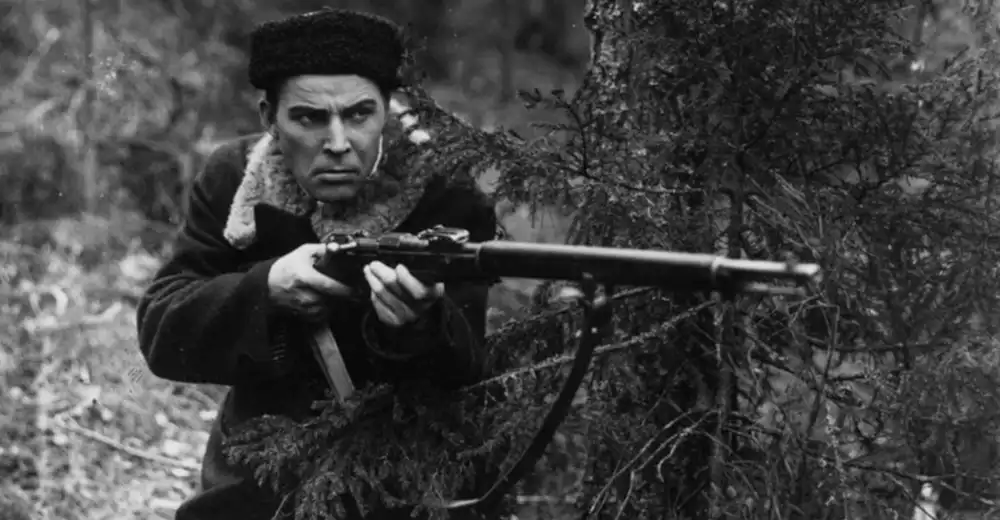
Halli, when he’s back from Germany, he’s got this newfound seriousness. It’s not a huge transformation in terms of screen time, but you get the idea he’s seen some things. The movie doesn't dwell on his training, just that he *did* it.
The film’s pacing is definitely a product of its era. It takes its sweet time setting scenes, letting moments breathe. Sometimes it feels contemplative, sometimes it just feels… long. 🐌
You can tell the filmmakers really cared about this period of history. The way they frame the villagers, their faces, it’s not just extras. They feel like people caught in something much bigger than themselves.
Rustinolli, the rival, Hannes Närhi gives him this sort of slick, entitled air. Not overtly evil, just someone who thinks he should get what he wants. It adds a nice, human layer to the 'villain' role.
The conflict isn’t always about bullets and bombs. It’s about loyalties, about what people are willing to do for their beliefs, or for love. It makes you think about how personal war really is.
Sometimes the film feels like it’s trying a bit too hard to be grand, especially with Halli’s 'icebreaker' persona. But then it settles back down into the human drama, and that’s where it really shines.
It’s not a perfect film, by any stretch. There are moments where the acting feels a bit stagey, or a scene lingers just a touch too long. But that’s part of its charm, honestly. It feels *real* in its imperfections.
For those interested in the Finnish Civil War, or just early European cinema, Miekan terällä offers a unique window. It’s a slow burn, but it earns its quiet power. Don’t go in expecting Hollywood, and you might find something quite moving. ✨
IMDb 6.6
1934
Community
Log in to comment.