DbcultAccessing Vault...
Cult Review
Senior Film Conservator
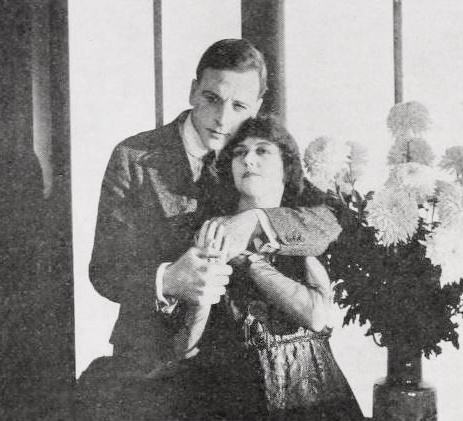
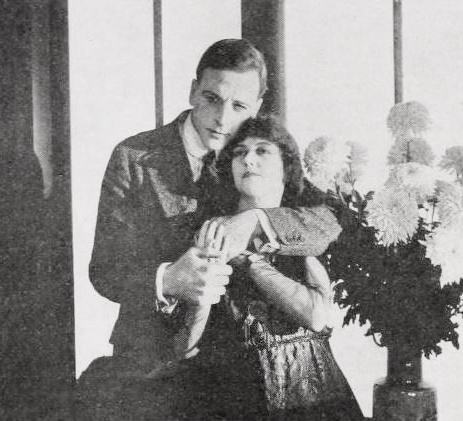
When The Other Woman unfurls its narrative, it does so with the precision of a Renaissance painting—each frame meticulously composed to interrogate the moral calculus of desire. The film’s opening sequence, a stark black-and-white tableau of Eleanor Gates (Peggy Hyland) sketching in a New York loft, immediately establishes her as an artist both consumed by and alienated from her craft. Her charcoal strokes, jagged and restless, mirror the internal turbulence of a woman balancing precariously between artistic ambition and emotional entanglement. This duality—of creator and creation—is central to the film’s thesis: that art becomes a currency in the transactional economy of love.
The introduction of Mr. Harrington (Milton Sills), a broker whose financial acumen masks a spiritual atrophy, is rendered with a dispassionate elegance. His interactions with Eleanor are punctuated by glances that linger too long, his investments in her art serving as a metaphor for his investment in her personhood. When their affair emerges from the shadows into the half-light of the Harringtons’ crumbling marriage, the film adopts a clinical tone. The death of their child—a narrative pivot point—is not merely a tragedy but a catalyst, accelerating the emotional entropy that had already begun to erode the marriage. The directors, Philip Bartholomae and Frederic Arnold Kummer, frame this sequence with a detached objectivity, the camera lingering on the hollow space where the infant’s crib once stood.
Anna Lehr’s Mrs. Harrington is a study in repression. Her dialogue, terse and clipped, underscores a woman whose emotional lexicon has been systematically stripped away by years of neglect. In her confrontation with Eleanor—a scene that crackles with subtext—the latter’s moral superiority is laid bare. Eleanor, the artist, positions herself as a redemptive force, yet her hypocrisy is palpable; she who claims to transcend materialism is, in fact, complicit in the same transactional dynamics she condemns. This tension—between idealism and pragmatism—is the film’s most compelling thread, weaving through scenes where the art world’s glittering salons clash with the Harringtons’ domestic squalor.
Positioning The Other Woman within the broader spectrum of early American cinema reveals its unique tonal palette. In contrast to *A Sister to Carmen* (1929), where passion is rendered with operatic intensity, *The Other Woman* adopts a more cerebral approach. Where *A Sister to Carmen* drowns its characters in romantic fervor, this film dissects them with a scalpel. Similarly, the marital dynamics here diverge from the overt melodrama of *The Keys to Happiness* (1928), where redemption is often a foregone conclusion. Instead, *The Other Woman* presents a bleaker, more ambiguous resolution, its characters forever altered but never truly healed.
The film’s visual language further distinguishes it. The use of chiaroscuro in the Greenwich Village scenes evokes the chiaroscuro of German Expressionism, yet without the genre’s theatricality. Eleanor’s studio, bathed in the cold light of a northern exposure, becomes a metaphor for her emotional state—illuminated yet incomplete. These technical choices, subtle yet deliberate, position the film as a precursor to the psychological realism that would later define 1930s cinema.
Peggy Hyland’s performance is a masterclass in controlled volatility. Her Eleanor is not the archetypal femme fatale but a woman whose artistry masks a vulnerability that surfaces in fleeting moments—a faltering brushstroke, a glance averted too quickly. In contrast, Anna Lehr’s Mrs. Harrington is a study in stillness; her despair is not overt but inferred through micro-expressions—how her fingers fidget with a lace collar, or how she avoids eye contact with her husband. These performances, understated yet piercing, elevate the film beyond its schematic plot.
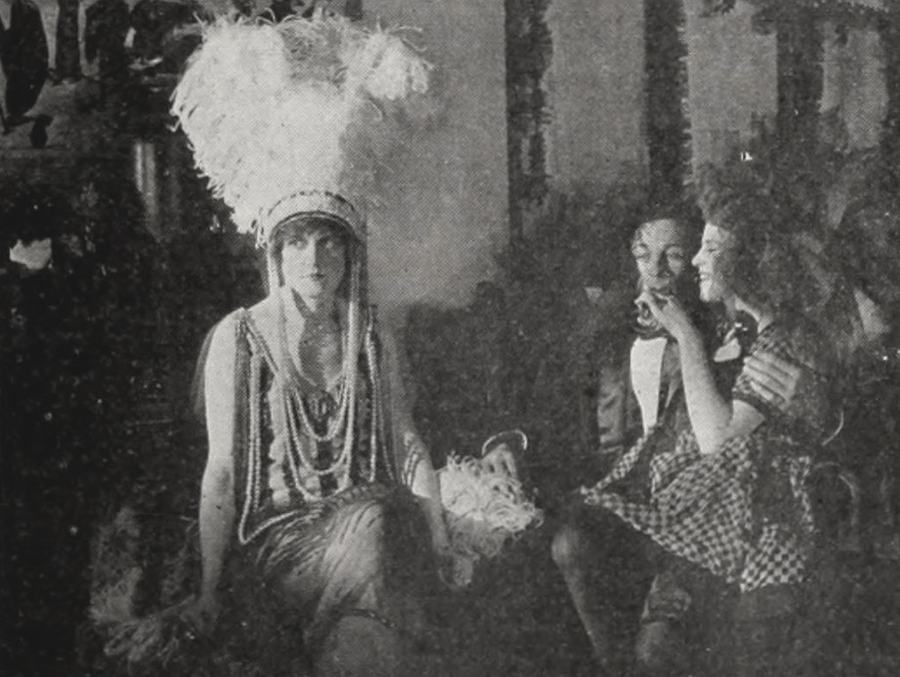
Milton Sills’ Mr. Harrington, meanwhile, is a cipher. His character lacks the depth of Eleanor or his wife, yet this very flatness is intentional. He is the film’s emotional vacuum, a man who mistakes financial security for emotional stability. This choice, perhaps, is the most prescient aspect of the film: in an era of shifting gender roles, the male lead is not the hero but the catalyst for destruction.
Released in 1927, The Other Woman occupies a liminal space in film history. Its dialogue scenes, though crisp and naturalistic, retain the stagey cadence of silent film, while its visual storytelling anticipates the coming of sound. This duality is most evident in the art gallery sequences, where the interplay of light and shadow suggests a preoccupation with visual storytelling that would soon be overshadowed by the demands of synchronized sound. The film’s score, minimal yet evocative, underscores this tension—its absence in certain key moments (such as the child’s death) amplifies the emotional rawness.
When compared to contemporaneous works like *The Keys to Happiness*, the influence of *The Other Woman* becomes apparent. Both films grapple with marital dysfunction, but where *The Keys to Happiness* offers catharsis, *The Other Woman* leaves its characters in a state of unresolved tension. This narrative ambivalence, coupled with its aesthetic experimentation, positions it as a transitional work—neither fully rooted in the conventions of silent cinema nor fully embracing the possibilities of sound.
To label The Other Woman as a cautionary tale would be reductive. It is, instead, a meditation on the paradox of human connection—how love and art can both uplift and destroy. The film’s conclusion, where Eleanor abandons her affair and returns to her rural sweetheart, is not a triumph but a retreat. It is a reminder that redemption, in this world, is not a destination but a process. The final shot, of Eleanor sketching again, is ambiguous: is she reborn, or merely resetting? The film offers no answers, a deliberate provocation in an era increasingly fixated on moral clarity.
Ultimately, *The Other Woman* endures not for its plot but for its emotional fidelity. It is a film that dares to suggest that human relationships are not binary, that love and betrayal coexist in uneasy truce. In this light, it remains a vital artifact—a mirror held to the contradictions of its time, and ours.
IMDb —
1928
Community
Log in to comment.