DbcultAccessing Vault...
Cult Review
Senior Film Conservator

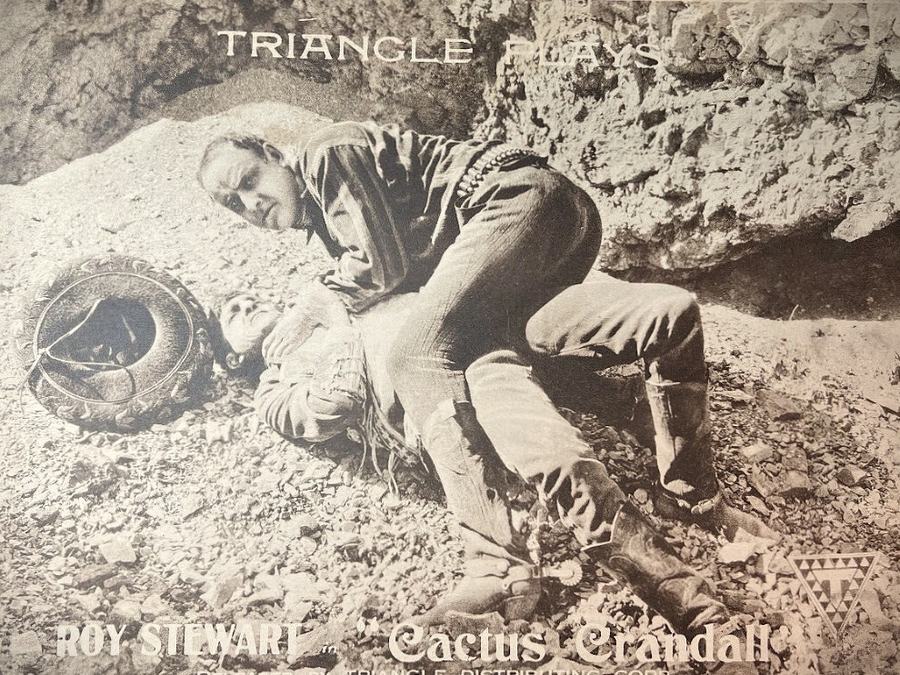
Sun-scorched nitrate tells a primal campfire tale: man loses herd, man finds woman, man reclaims honor—yet within that skeletal yarn, Cactus Crandall stitches a hallucinogenic quilt of borderland myth, masculine dread, and chase-cinema adrenaline that predates Ford’s thundering Stagecoaches by a decade.
Roy Stewart—squint carved from granite, shoulders hinged like a barn door—embodies the frontier archetype as both actor and co-writer. His Cactus Bob is not the chatty cowboy of pulp weeklies; he is economy incarnate, a monosyllabic force who lets the landscape speak treachery while his gloved fists answer. Stewart’s script (shared with pulp maestro George Elwood Jenks) trims exposition like a barber shearing overgrown mane: every intertitle is a haiku of peril, every iris-in a heartbeat skipped.
Pete Morrison’s Carter supplies the film’s leavening grin, a sunburnt trickster whose banter—delivered via ornate title cards—feels like bourbon splashed on parched earth. Together, the duo gallop through mesquite shadows and silver nitrate moonlight, pursued by Joe Rickson’s Mendoza, a villain whose charcoal mustache curls with decadent menace. Rickson plays him half-Shakespeare, half-satyr: he strokes a gold-trimmed rosary while promising Helen Ware (a luminous Marion Marvin) that her father will see sunrise only if she consents to a forced altar vow. The subtext—border politics, Yankee entitlement, sexual ransom—bubbles under the action like desert water beneath crusted salt.
Director Roy Stewart (pulling double duty) orchestrates set-pieces with Eisensteinian montage before Eisenstein was fashionable: quick-cut hooves, wagons toppling, vaqueros somersaulting from exploding rooftops. The 1923 camera—hand-cranked, temperamental—shivers with documentary immediacy during the stampede rescue, dust clouds so thick you can almost taste alkali. Yet Stewart also leans into chiaroscuro tableaux: Helen framed by candle-flame, bars striped across her face like prison venetian blinds; Mendoza’s silhouette swallowing the entire doorway before he seizes her for the final abduction. Expressionism sneaks into the sagebrush.
Unlike contemporaneous oaters that treat Mexico as mere colorful backdrop, Cactus Crandall acknowledges the border as wound and wound-healer alike. The river crossing sequence—shot on location near Laredo—captures both countries in a single wideshot, water glinting like unsutured scar. Cactus hesitates before fording; the intertitle reads: "Two lands, one lawlessness." In 1923, such a line plays like whispered revolution.
One cannot discuss the picture without genuflecting to its stunt DNA. The climactic cliff-top grapple between hero and villain required Stewart and Rickson to dangle from a hemp rope over the Pecos River gorge—no rear projection, no safety net beneath. The camera, anchored to a boulder, rolled as clouds bruised into twilight. Marvin recalled in a 1964 Western Clippings interview: "Roy’s knuckles were bleeding, Joe’s lip split, yet they kept hoisting each other higher for the perfect silhouette. That’s how silent cinema earned its bruises."
Composer-conductors in 1923 would have accompanied Cactus Crandall with a patchwork of Mendelssohn, folk reels, and improvisation. Today’s Kino Blu-ray offers a new score by the Tex-Mex collective Los Chiles: bowed vihuela, bowed banjo, distant ocarina. The effect is narcotic—like stepping into a border-town cantina where ghosts drink mescal and whisper about vanished cattle.
The film’s gender politics complicate easy readings. Helen initially appears damsel-bound, yet she engineers her own first escape by decoding Mendoza’s ledger and fashioning a lock-pick from hairpin and cactus spine. Marvin plays these beats with feral intelligence; her eyes—bright as struck matches—track every guard rotation. When Cactus finally storms the hacienda, she has already loosened her shackles; his bullets merely finish the symphony. Proto-feminist? Perhaps. Or simply frontier adaptation: survive first, narrate later.
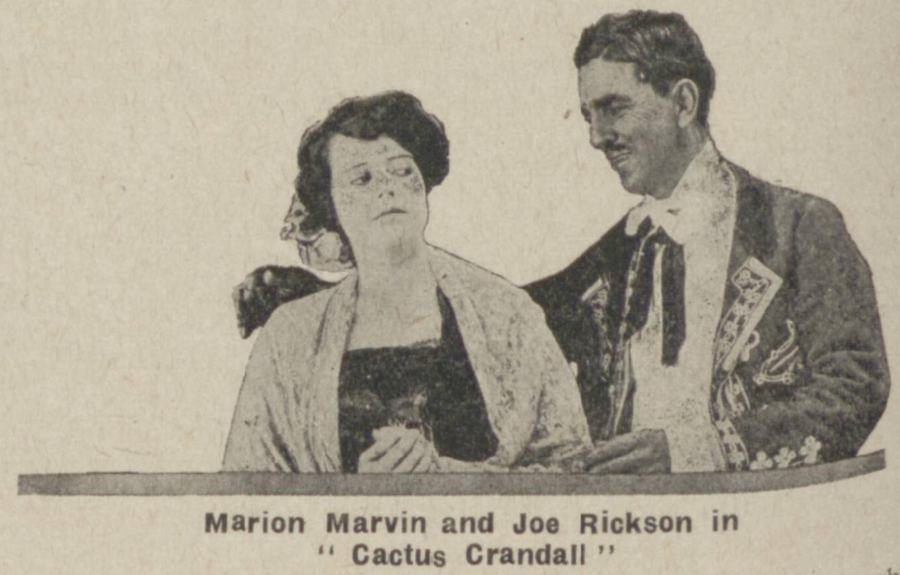
Comparative lens: stack Cactus Crandall beside The Regeneration (1915) and you’ll notice both trade in redemption arcs, yet Walsh’s urban jungle lacks Stewart’s desert fatalism. Against Fifty-Fifty (1916), the romance here is leaner, more transactional—kisses are promises sealed by survival odds, not moonlit serenades. And while Bar Kochba mythologizes national struggle, Cactus localizes myth to one man’s corral.
Print history: the original 35 mm negative—stored in a Dallas warehouse—succumbed to nitrate rot in 1958. What circulates today is a 16 mm show-at-home dupe struck for Southwest theaters in 1929, discovered in a Weatherford attic beside a stack of Lone Ranger decals. Restoration by the University of Oklahoma yields scratches like lightning forks, emulsion bubbles like ant bites, yet the poetry survives. The 4K scan preserves grain so tactile you could saddle it.
Performances graded on silent-era curve: Stewart 9/10—granite minimalism; Marvin 8.5—feral luminosity; Rickson 8—operatic menace; Morrison 7—comic relief, occasionally over-boiled. William Ellingford as Helen’s father supplies scholarly stoicism reminiscent of The Eyes of Julia Deep’s paternal gravitas, though his screen time equals a sneeze.
Themes to excavate: ecological anxiety (cattle = capital, land = identity), border fluidity (the river as moral hyphen), performative masculinity (gunfire as grammar), and the trope of the return—herd, lover, foreman—all arriving late, as if destiny itself obeys ranch-hand payroll.
Final campfire verdict: Cactus Crandall is a sun-blistered aria of pursuit and reclamation, a 59-minute adrenaline hymn that punches far above its Poverty Row purse. It does not transcend its era; it distills it—like desert flora hoarding every dew droplet. Watch it for the stunt bravery, stay for the borderland lyricism, rewatch to marvel how silence can scream louder than six-shooter.
Rating: 8.7/10—essential for Western genealogists, silent-cinema zealots, and anyone who believes a cactus spine can double as skeleton key.
IMDb —
1917
Community
Log in to comment.