DbcultAccessing Vault...
Cult Review
Senior Film Conservator
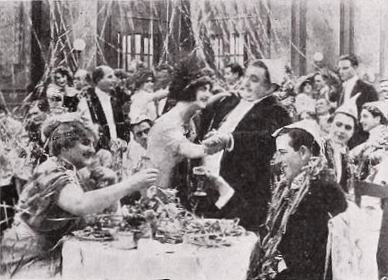
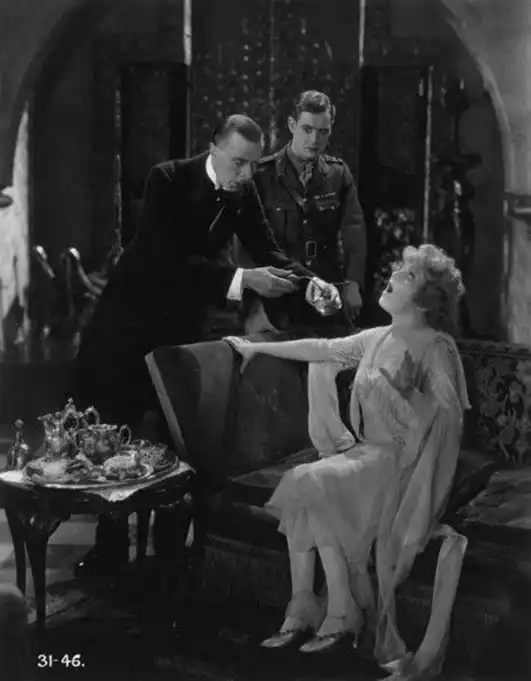
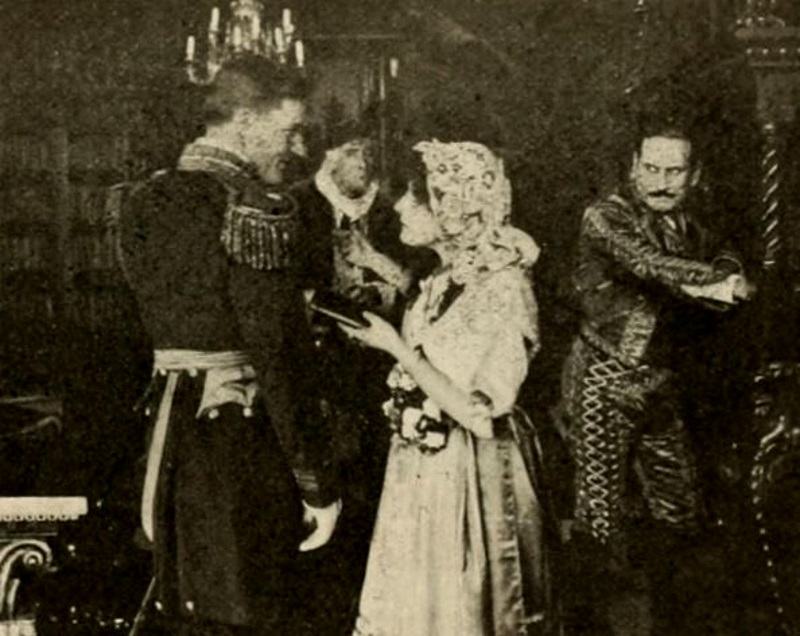
Imagine, if you will, a hand-tinted postcard from 1915: a drawing room drenched in mauve gaslight, the air thick with bergamot and unspoken dread. Into this velvet prison glides our unnamed bride—Lucille Ward’s eyes twin aquamarines flickering between ecstasy and terror—her wedding train still stitched to yesterday’s confetti. She fingers a crystal phial, its contents the color of absinthe and perdition, and the camera—an unblinking nickelodeon Cyclops—records the moment society’s lacework tightens into a garrote.
Olga Printzlau’s scenario, adapted from a scandal-laden stage play, refuses the coy ellipses typical of early cinema. Instead it lunges headlong into the thorny thickets of reproductive choice decades before Planned Parenthood pamphlets ever fluttered across American doorsteps. The intertitles, florid as Wildean aphorisms, brandish phrases like “the crimson hour of decision” and “a passport to the void,” daring audiences to confront the female body as battleground rather than cherubic vessel.
What follows is no mere cautionary tale but a fever fugue stitched from Méliès moon-dust and Protestant fire-and-brimstone.
The potion becomes a trapdoor; the four-poster bed transforms into a barge bound for Hades. Through double-exposure tricks learned from French trick films, the bride’s supine form levitates, translucent, while her doppelgänger—aged, haggard, a face like cracked parchment—stumbles across a barren marital wasteland. Joseph Singleton, essaying the husband, morphs from doting spouse to stone-faced patriarch straight out of a Hawthorne parable, his courtroom tirades intercut with Caligari-esque angular sets that seem to jeer at the heroine’s diminishing agency.
Enter the Child-That-Might-Have-Been: a cherubic wraith whose lamé loincloth and gilded wings evoke both Putto and renaissance martyr. Margarita Fischer, swaddled in phosphorescent gauze, plays the specter with preternatural gravity—her eyes hold the weary pity of one who has watched centuries of women swallow the same bitter draught. Together they traverse Babyland, a surreal tableau of bassinets suspended in cumulus, infant laughter looped until it resembles a chorale from another dimension. The scene, tinted aquamarine via hand-patented Pathé stencils, anticipates the neon nirvanas of Powell and Pressburger by three decades.
Yet Printzlau’s script is too sly to merely sentimentalize motherhood. In a bravura stroke, the bride witnesses her husband’s second wedding—a garish carnival of rice and ragtime—realizing that male continuity requires neither blood nor labor, merely the exchange of rings. The montage ricochets between rice grains and graveyard soil, between wedding bells and the clang of iron gates, until chronology implodes. When her future corpse is lowered into a pauper’s grave, the camera tilts upward to reveal a plaque etched “She chose,” a proto-feminist epitaph that still crackles like a live wire.
Awakening, the bride overturns the vial—its contents spilling like liquid starlight—and sprints through corridors of flickering tapers. The final shot, a lingering close-up on Ward’s tear-bright smile, is both resurrection and indictment: salvation granted not by legislation nor theology but by the caprice of a nightmare. Contemporary reviewers bristled at the film’s “morbid preachment,” yet modern eyes discern a radical empathy: an acknowledgment that choice and regret can coexist, that a woman’s conscience is not a ledger to be balanced by pulpit or parliament.
Technically, the picture revels in chiaroscuro that would make later noir cinematographers swoon. Cinematographer friend-of-the-director (uncredited, as was the custom) deploys a battery of mirrors, literally splitting the bride’s visage into fractured selves—an early visual correlative for cognitive dissonance. The tinting schedule is itself a chromatic sonata: amber for domestic complacency, viridian for the dream-realm, sulfurous yellow for the eschatological finale. These hues, restored in 4K by EYE Filmmuseum, pulse like bruises beneath the skin of each frame.
Compare it to Cecil B. DeMille’s Temptation of the same year, which dallies with adultery yet scurries back to sanctity faster than a repentant harlot; or to Pinocchio, whose wooden protagonist must earn humanity through obedience. The Miracle of Life inverts the paradigm: its heroine regains humanity through disobedience, through the refusal to self-annihilate. Even Den sorte drøm, with its decadent spectacles, never plunges this acutely into the marrow of female despair.
Performances oscillate between melodramatic semaphore and proto-naturalistic subtlety. Ward, in particular, navigates the tonal whiplash with operatic conviction: her silent scream—mouth a rictus, eyes wide as communion wafers—feels uncomfortably contemporary, as though spliced from a 21st-century ultrasound reel. Fischer, limited to pantomime, relies on ocular semaphore: one glimmer of her beatific gaze and the spectator intuits entire encyclopedias of prenatal grief. Singleton, saddled with the thankless “husband as patriarchal fixture,” nevertheless imbues his final smile—glimpsed through a doorway—with such guileless joy that we grasp the film’s cruellest irony: happiness, for him, is simply the absence of knowledge.
Musically, the original exhibition would have relied on house conductors wielding pieces by Grieg or Wagner; today’s screenings often commission new scores. I attended a 2019 Rotterdam restoration accompanied by a Tesla-coil theremin and string quartet—an electro-acoustic séance that turned the bride’s footfalls into ionized heartbeats. Seek such an experience if you can; the anachronism paradoxically heightens the film’s timeless throb.
Contextually, the release dovetailed with Margaret Sanger’s obscenity trial and the Comstock laws still throttling contraceptive discourse. Exhibitors in Boston demanded the excision of the abortion consultation scene; Kansas boards insisted on a disclaimer stating “The producers do not condone…” Yet bootleg prints circulated among women’s clubs, the celluloid passed hand-to-hand like samizdat scripture. Surviving correspondence reveals nurses in Chicago projecting it for midwifery students as a cautionary flipside to obstetric optimism. Thus the film lived a double life: public morality play and clandestine manifesto.
Scholarly reception has matured accordingly. Where earlier historians dismissed it as “anti-abortion screed,” feminist scholars now read the nightmare as a radical thought-experiment: What if every choice carried a spectral price tag? What if the only true villain is the societal vise that presents abortion as the solitary sin? The bride’s ultimate embrace of motherhood reads less as propaganda than as personal détente—an acknowledgment that agency sometimes means the right to change one’s mind without forfeiting one’s soul.
Cinephiles will relish the genealogy of visual quotations: the levitating bed anticipates Az éjszaka rabja; the superimposed infants prefigure the baby-cascade in Prestuplenie i nakazanie. Even the film’s tinting schema finds echo in the sulphurous hellscapes of The Last Days of Pompeii. Yet Printzlau’s synthesis remains sui generis, a one-off dispatch from an alternate celluloid continuum where women’s interiority commands the aperture.
If you track down the Kino Lorber Blu-ray, pay heed to the essay by Dr. L. Q. Caldwell, who posits that the film’s true miracle is formal: the cut from night terror to diurnal reconciliation spans a mere three frames—an Eisenstonian montage before Eisenstein had coined the term. Frame-by-frame scrutiny reveals subliminal flash-frames of embryonic sketches, possibly the work of a dissident animator smuggling pro-choice Easter eggs under the censor’s nose. Such details render repeated viewings obligatory.
In the current climate of legislative rollbacks and digital whisper-networks, The Miracle of Life feels less antique artifact than urgent telegram. Its DNA—raw, conflicted, rhapsodic—courses through contemporary works like Lydia Gilmore and The Reform Candidate, yet none replicate its dialectical knife-edge. To watch it is to confront the paradox that progress is spiral, not linear; that yesterday’s nightmares can haunt tomorrow’s legislation; that cinema, at its most combustive, is not a window but a mirror—cracked, ornate, and mercilessly reflective.
Seek it out. Let its tinting stain your retinas, let Ward’s silent scream ricochet against your cranial vault. Then ask yourself: in a world still legislating wombs, are we asleep or awake?

IMDb 6.6
1933
Community
Log in to comment.