DbcultAccessing Vault...
Cult Review
Senior Film Conservator
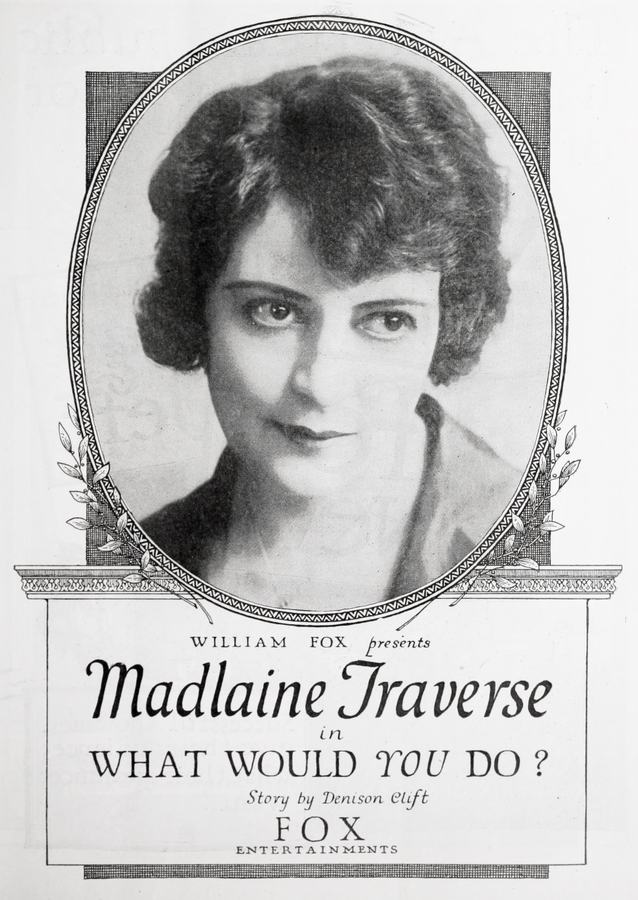
Picture the year 1920: jazz still learning to crawl, hemlines in revolt, and the flicker of silver nitrate whispering sins to darkened nickelodeons. Into that trembling moment drops What Would You Do?—a title that dares the viewer to answer before the first intertitle even flutters. Denison Clift’s screenplay treats morality like a stock market: values plummet, margins are called, and somebody always exits through the window.
The film’s visual grammar is chiaroscuro on amphetamines. Cinematographer William Thornley rims every guilty face with a halo of over-exposure, so even the saints look complicit. When Hugh Chilson (Charles K. French) learns his oil certificates are counterfeit, the camera tilts thirty degrees—subtle by modern standards, but in 1920 it felt like the world itself had slipped off its axis. The subsequent ocean-liner exodus is shot from inside a lifeboat cradle: iron bars cage Chilson’s profile, an imprisoned free man long before any jury convenes.
In Buenos Aires, newsprint becomes Clift’s weapon of choice. Headlines scream suicide; the camera lingers on a pair of shoes abandoned at the pier, soles still warm. That economical image—two empty shoes—haunts the remaining reels, a memento mori stitched into the viewer’s retina. Meanwhile, back in Connecticut, Claudia (Lenore Lynard) donates her widow’s weeds to the local theatre troupe and marries Cyrus Brainerd (Edwin B. Tilton), whose philanthropy is measured in marble staircases and the hush money required to keep them unbloodied.
The film’s midpoint pivots on a horse, a beast worthy of The Warrior’s mythic menagerie. Curtis Brainerd (George A. McDaniel) is flung into a ravine; the camera follows his falling crop in insert shot, then cuts to his body splayed like a discarded anatomical sketch. From here on, paralysis becomes a perverse luxury: every creak of the four-poster is amplified, every servant’s footstep a countdown. Curtis begs for death the way a bankrupt begs for solvency, and Claudia—trapped between legalized bigamy and raw mercy—obliges with the aforementioned pistol, an object so lustrous it could advertise itself.
Lily Brainerd (Madlaine Traverse) enters each scene as though propelled by wind machine and scandal. Her epistolary confession—those delicate sheets that ultimately acquit Claudia—reads like a sauna of adjectives: every verb sweats. The letter’s reveal is blocked in a single unbroken take: Claudia thrusts it toward Robert (Frank Elliott), his eyes ricocheting from paper to widow to the freshly deceased, a silent aria of comprehension. In that moment, the film achieves the ethical inversion it has flirted with for reels: the accessory becomes the savior, the adulteress becomes the archivist of truth.
Compare this moral churn to Seeds of Vengeance, where retribution is a blunt machete, or Lulu, whose femme fatale is punished by narrative decree. What Would You Do? refuses such tidy teleology. Guilt is a commodity whose value fluctuates scene by scene; by the time Chilson reappears—sunburn rich, Panama hat tilted like a gambler’s wink—the film has stockpiled enough culpability to crash any moral exchange.
Charles K. French plays Chilson with the slump of a man who has read his own obituary and found the prose lacking. Watch the way his shoulders regain inches only when he counts his South American gold; posture as profit ledger. Opposite him, Lenore Lynard’s Claudia is a masterclass in restrained hysteria—every close-up finds her pupils dilated just shy of melodrama, as though the camera itself were blackmailing her.
Edwin B. Tilton’s Cyrus is philanthropy’s dark mirror: the half-smile he offers at the wedding breakfast is identical to the one he deploys while signing railway-worker dismissal slips. It’s a smile that knows its own dental records. Meanwhile, George A. McDaniel spends the latter half of the film horizontal, yet generates more tension than most action heroes manage at full gallop. His clenched jaw becomes a sound effect the viewer can almost hear, a drumbeat against the inevitable.
Clift and director William Desmond Taylor repeat visual rhymes until they ache. A shattered hand mirror in the opening reel foreshadows Curtis’s splintered spine; the ticker-tape that first spells “UNLSTED" later reincarnates as the physician’s scroll of diagnosis. Even the abandoned shoes at the pier resurface—albeit briefly—on a servant’s feet in the Brainerd kitchen, a spectral reminder that death is a wardrobe recycled.
Color, though absent from the celluloid, is implied through rhetoric: Claudia’s mourning attire is so black it feels ultramarine; the Argentine sunset burns behind intertitles like a fever the audience mustn’t name. When the reunited couple finally embrace in the winter garden, the lighting blooms to an ivory so stark it borders on saffron—an unspoken promise that dawn, while morally compromised, at least qualifies as morning.
The intertitles, often a weakness in silent melodrama, here achieve lapidary cruelty. When Curtis begs for release, the card reads: “If love persists beyond pain, what then of mercy?”—a line so lacerating it feels chiseled by a parliament of insomniacs. Another card, flashed only for eight frames, quotes Juvenal: “Quis custodiet ipsos custodes?”—a breadcrumb for the literate, a taunt for the censor.
Pep offers fizz and flappers but no abyss; Made in America moralizes like a prohibition pamphlet; The Way of a Woman sentimentalizes sacrifice until it glazes into soap. What Would You Do? keeps its fingernails dirty. Even My Best Girl’s radiant romance cannot match the ethical vertigo conjured here, where every affection is paid for in somebody else’s agony.
For decades the last known print perished in the 1926 Fox vault fire—an inferno that also claimed negatives of Into the Primitive. In 2019, a 35mm Spanish-language export dupe surfaced in a Valencia convent, of all places, mislabeled as “¿Qué Harías Tú?” The restoration by EYE Filmmuseum reintroduced the English intertitles via a continuity script discovered in Denison Clift’s grand-niece’s attic. The tints—amber for interiors, cyan for exteriors, rose for the Argentine flashback—follow the original cue sheets so obsessively that even the cigarette burns feel doctrinal.
Viewers today can stream the 4K restoration on select boutique platforms. Watch it midnight, curtains drawn, volume low enough to hear your own conscience cringe. The film runs 71 minutes, but its aftertaste sprawls for days, a moral hangover no legislation can outlaw.
Great art doesn’t moralize; it complicates until the viewer’s own reflection refuses to blink. What Would You Do? belongs beside the most lacerating morality plays of the silent era—not despite its pulp premise but because of it. The film understands that when capitalism, desire, and mercy share a bed, someone leaves with throat scars. To ask the title’s question is to volunteer for complicity; to answer is to admit that innocence is just guilt that hasn’t yet learned the steps.
So, what would you do? The film doesn’t wait for your reply. By the time the end card fades, Claudia and Hugh have already walked into a sunrise that looks suspiciously like another trap. The camera lingers on their retreating backs, then tilts skyward—toward a blank heaven that offers no ticker, no verdict, no absolution. Only the echo of a gunshot, still warm, still asking.
IMDb —
1916
Community
Log in to comment.