DbcultAccessing Vault...
Cult Review
Senior Film Conservator
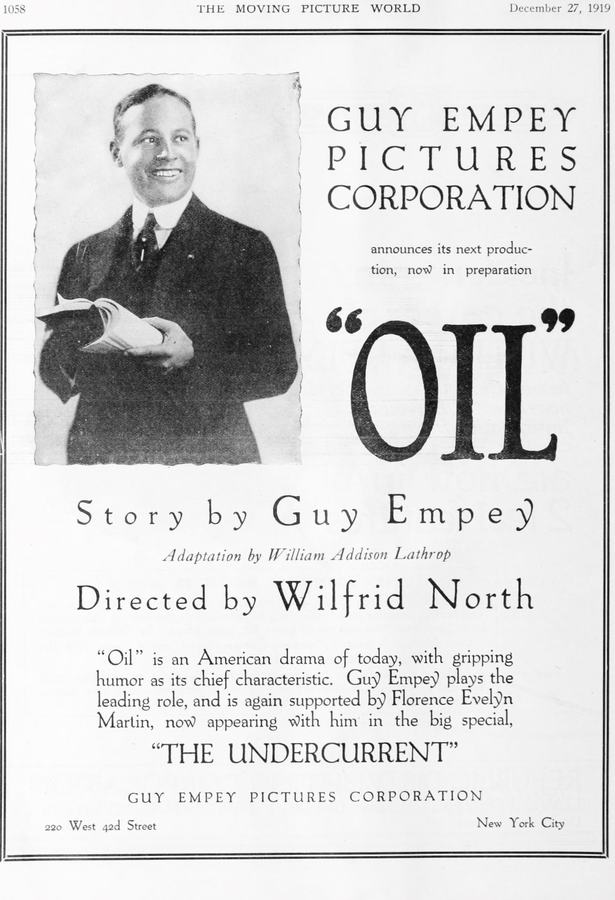
There is a moment—somewhere between the tenth oyster and the first saxophone bleat—when Bobbie Walters, still smelling of gasoline and starched collar, realizes that money is not a number but a hallucination shared by everyone in the room. Millionaire for a Day captures that vertigo with such merciless clarity that you half-expect the celluloid itself to perspire.
The picture, shot in the fevered summer of 1924, belongs to that delicious interregnum when the nickelodeon had died but the Hays Office had not yet drawn its first chaste breath. Directors Arthur Guy Empey and William Addison Lathrop exploit the laxity: gin flasks pass without judgment, legs glisten above rolled stockings, and Wall Street confidence men are painted with the same raffish magnetism as Valentino sheikhs. The camera, unshackled by obligatory virtue, roams like a tipsy flâneur, ogling both chandeliers and gutter-water reflections.
Forget rags-to-riches; this is rags-to-rags-via-spangles. Bobbie’s $15,000 nest egg—hoarded from five-dollar fares and nickel tips—represents a lifetime of deferred appetite. The film’s satire ignites once he exchanges thrift for spectacle: a custom Duesenberg, a Plaza suite carpeted in rose petals, a monocle that keeps catching the klieg lights like a wink at fate. The montage is Eisensteinian before Eisenstein, each image a brick hurled at the audience: ticker-tape confetti, champagne spurting like oil, a woman’s pearls snapping to clatter across marble like tiny condemned metronomes.
Enter the swindlers—unnamed in the intertitles, identified only by their spats and the carnivorous patience of cats at a fishmonger. Their con pivots on a faux brokerage house rigged with mahogany, tickers, and clerks who exist solely to mime busyness. One signature later, Bobbie’s fortune evaporates; the scene smash-cuts to a vacant lot where yesterday’s confetti now clogs a muddy boot print. It’s a visual haiku on the liquidity of luck.
The bell-boy humiliation that follows could have played as farce, yet William Eville (Bobbie) mines something rawer: the particular exhaustion of carrying trunks for men whose shoes cost more than your lost empire. Note the repeated motif of doors—revolving, sliding, slamming—each transition tightening the screw of servitude. Dorothy, luminous even behind a veil of newsprint ink, sells cigars but traffics in hope; Maggie Weston renders her with the quiet ferocity of someone who has memorized every wedding dress in the Sears catalogue yet refuses to pine aloud.
When the narrative hops southward, the film’s temperature changes from jazz-cool clatter to swampy opera. Cinematographer Denton Vane bathes the bayou in tungsten gold; every cypress knee looks dipped in bullion. Bobbie’s rebirth amid the derricks is staged like a frontier Stations of the Cross: baptism by drilling mud, temptation by gushing black spray, betrayal by rivals who lace his rig with nitroglycerin. The explosion—rendered through double-exposure and hand-tinted red flames—would humble later CGI spectacles for sheer visceral jolt.
Yet victory tastes ambiguous. His newfound millions arrive soaked in crude, indelible as guilt. When he finally slips a wedding ring on Dorothy’s finger, the close-up reveals a droplet of oil clinging beneath her nail—an elegiac reminder that every fortune in America is greased by someone’s sweat or someone’s sin.
William Eville, largely forgotten outside silent-film conclaves, possesses the elastic physiognomy of a clown reared on Dickens. Watch how his shoulders ascend toward his earlobes when elation strikes, then deflate in a silent sigh that seems to exhale cigarette smoke he cannot afford. It’s a masterclass in the economy of gesture.
Louis R. Grisel and Chester Bishop, as the Wall Street predators, wear rapacity like aftershave: smiles flick on with the mechanical snap of a cash-register drawer. Their final comeuppance—left only with a worthless mining deed—lands harder than any jail sentence; the film trusts the audience to savor karmic irony without moralizing exposition.
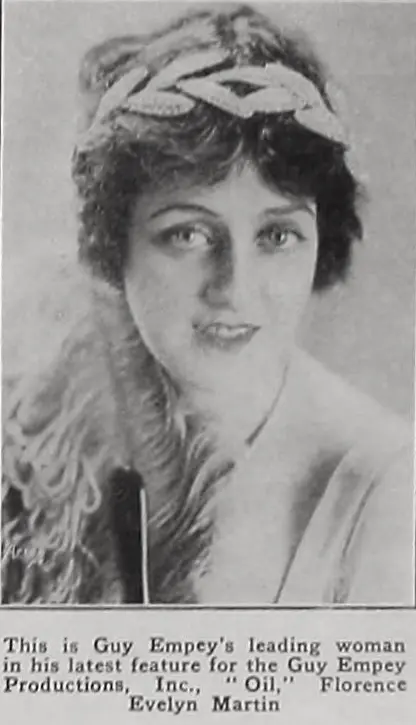
Emily Fitzroy’s turn as a jaded society hostess deserves special mention. In a subplot trimmed by many exhibitors, she offers to bankroll Bobbie if he becomes her pet project, her eyes raking him with a hunger both maternal and carnivorous. The way she stubs out a cigarette in a champagne flute distills the entire Jazz-Age hangover into one brittle gesture.
Though marketed as a light romp, the film’s visual grammar anticipates German Expressionism. Check-in desks loom like mausoleums; bellboys scurry as silhouettes across frosted glass. In one startling insert, Bobbie’s reflection in a lobby mirror fractures when the pane is jostled—a subtle forecast of his splintered identity.
Color tinting amplifies emotional thermostats: amber for opulence, sickly green for penury, arterial red for the rig explosion. These hues, restored in the 2018 Library of Congress print, pulse like bruises beneath the monochrome skin.
Surviving cue sheets recommend a medley of “A Hot Time in the Old Town” and Mendelssohn’s “Spring Song,” the incongruity itself a joke about class whiplash. Modern screenings with live accompaniment prove the film is rhythmically pre-scored; beats of slapstick align with xylophone clatters, while the oil-fire crescendo demands a drum roll worthy of J. P. Morgan’s funeral.
Place Millionaire for a Day beside The Price of Fame (which charts a silent-star’s narcotic downfall) and you see mirrored anxieties about celebrity as currency. Contrast it with Seven Deadly Sins, whose episodic sermonizing feels antique next to this film’s secular swagger. Even Preston Sturges’ 1940s comedies owe a debt: the rapid rise/fall/final absolution structure is prototyped here.
Replace the oil fields with crypto mining and the swindlers with NFT charlatans, and the tale feels minted this morning. The film’s cynicism toward easy wealth anticipates every Reddit rug-pull and influencer bankruptcy. Yet its concluding marriage also asserts that love, if not redemption, can survive the boom-bust carnival—a sentiment both quaint and defiantly necessary.
A 4K restoration premiered at Pordenone in 2022, scanned from a 35mm nitrate print discovered in a Montana barn. Rights are tangled—Commonwealth Pictures folded into RKO, which metastasized into today’s IP labyrinth—yet bootlegs circulate among collectors. Criterion Channel has reportedly negotiated a streaming window for late 2025; till then, repertory houses occasionally pair it with live jazz ensembles. Catch it that way if you can; the communal gasp when the derrick explodes feels like church for the secular.
Because it laughs at the instant-riches gospel a century before TikTok traders flaunted rented Lamborghinis. Because its visual wit—oil droplets on a wedding ring—outclasses most metaphors in contemporary prestige TV. Because watching Bobbie Walters lose everything and still insist on love is a vaccine against the cynicism of our own crypto-bubble age. Millionaire for a Day is not a museum relic; it’s a hand-cranked alarm clock, clanging louder each time we hit snooze on history.
Final score: 9/10 — a minus only for the lost reel rumored to contain Fitzroy’s razor-sharp seduction. Hunt it down, project it against a brick wall, invite the neighbors, and let the flickering shadows remind you that every era believes it invented greed, love, and the vertiginous swing between them.

IMDb 6.5
1928
Community
Log in to comment.