DbcultAccessing Vault...
6.3/10
Senior Film Conservator
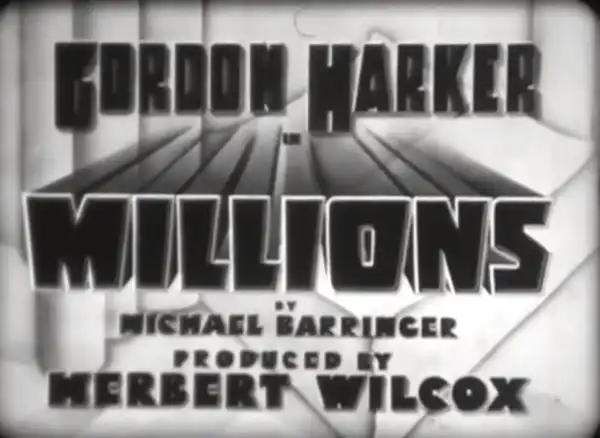
A definitive 6.3/10 rating for a film that redefined the boundaries of cult cinema. Millions remains a cornerstone of transgressive art.
“Millions” is one of those old-school flicks that feels like a pleasant, slightly dusty surprise. If you’re into those gentle, almost theatrical comedies from a bygone era, you might really dig this. Anyone expecting big laughs or rapid-fire plot twists will probably find themselves checking their watch. It’s certainly not for everyone today, but it has a certain charm if you give it a chance. 🧐
The story is simple enough: rich guy Otto Forbes, played by Frank Pettingell, has this son, Jimmy, who's a bit of a dud. Otto wants to cut Jimmy out of the will, which, fair enough, Jimmy seems pretty useless. What follows is Jimmy’s harebrained scheme to pass off some other poor sap's music as his own.
Richard Hearne as Jimmy really leans into the “feckless” part. He just sort of waddles through life, you know? There's this aspiring composer, and Jimmy sees dollar signs. It’s not exactly a complex plan, but it provides enough scaffolding for some mild shenanigans.
I kept thinking about the sets. They feel very much like a stage play. Not in a bad way, just very contained. You don't get sprawling vistas here. It's mostly drawing rooms and offices. Even the street scenes have that controlled, almost studio-bound feel.
One moment, Jimmy is trying to impress his dad with these “new” compositions. He's all puffed up, trying to look important. But you can see his dad, Otto, just knowing something’s off. Pettingell does this subtle eye-roll thing, almost imperceptible, but it sells it. It's a small detail but makes the whole dynamic click.
The pacing is definitely a slow burn. Things don't rush. You get a lot of polite conversations and reactions. Sometimes the camera just sits there, watching two people talk for a while. It’s a different rhythm than we're used to.
There's a scene where Jimmy is trying to flirt, I think? With Jane Carr's character. It's so awkward. He stumbles over his words, and she just looks at him with this polite, almost pitying expression. It’s not laugh-out-loud funny, but it’s charming in a quaint way. You can feel the slight embarrassment.
And the music! It's supposed to be the big deal in the plot, but it's just... there. It serves its purpose to move the story along. No grand, memorable tunes. Which, I suppose, makes sense for a “stolen” composition. It's not trying to blow you away.
I remember this one shot of Alexander Field, who plays... well, I forget his character's name, but he's one of the secondary figures. He has this worried frown throughout much of the film. It's not a major plot point, but it stuck with me. Like, whatever tiny thing is happening, he's just perpetually concerned. It’s endearing.
The dialogue is very proper, very British. Lots of "I say" and "jolly good." It feels authentic to its time. You won't find any modern slang here, obviously. It’s almost like listening to a play from the era.
It’s not a film that tries to be profound. It's just a little story about a silly man trying to get some money. There’s no big message. It just... unfolds. And then it ends.
I wouldn’t call it a hidden gem, not exactly. More like a perfectly decent little piece of cinema history. A gentle ripple, not a crashing wave. If you’re looking for something calm to put on, something that doesn't demand too much of you, this could be it. It’s like a quiet afternoon tea with some slightly eccentric relatives. ☕️
Didja notice?
IMDb 7.7
1928
Community
Log in to comment.