DbcultAccessing Vault...
6.7/10
Senior Film Conservator

A definitive 6.7/10 rating for a film that redefined the boundaries of cult cinema. Flunky, Work Hard! remains a cornerstone of transgressive art.
If you have thirty minutes and want to see a movie that feels like a heavy sigh, then yes. It is perfect for anyone who has ever felt overworked and underpaid.
You will probably hate it if you need a fast plot or a hero who actually wins. This is more of a 'life sucks and then you keep going' kind of deal.
So, we have Okumura. He is played by Isamu Yamaguchi, who has these eyes that look like they haven't seen a good night's sleep since the Meiji era.
He is an insurance salesman. Even back in 1931, that was clearly a miserable way to make a living.
He spends most of the movie bowing. He bows to his boss, he bows to potential clients, he probably bows to his own reflection just out of habit.
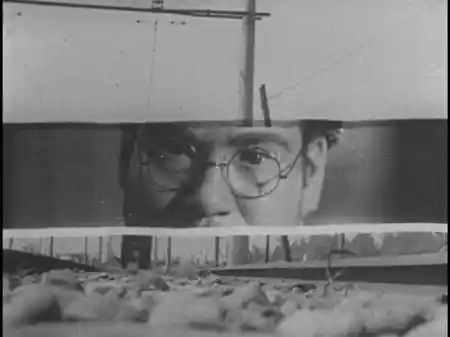
The movie starts with him getting chewed out by his boss. The boss is this loud, physically imposing guy who seems to exist just to make Okumura feel small.
It reminds me a bit of the domestic frustration in Isn't Life Terrible?. But this feels more grounded in real-world dirt.
Then there is the kid. Hideo Sugawara plays the son, and he is a total brat, but you can't really blame him.
He wants a toy airplane because the neighborhood rich kid has one. It is that classic childhood thing where your whole world depends on one piece of plastic or wood.
There is this great, messy scene where the kids are all fighting in a vacant lot. The camera stays low, right in the weeds and the dust with them.

You can see the patches on their clothes. It doesn't look like a movie set; it looks like a place where people actually live and struggle.
The editing in this film is weirdly fast for the 1930s. Mikio Naruse, the director, was clearly experimenting with how to show a character's internal panic.
When Okumura is stressed, the cuts get shorter. We see a face, a hand, a street sign, a bicycle wheel spinning—all in a few seconds.
It makes the movie feel modern in a way that some silent films don't. It doesn't just sit there and stare at the actors.
There is a sequence where Okumura tries to sell insurance to a wealthy woman. He is trying so hard to be polite while his kid is outside causing a literal riot.
The way he keeps looking at the door while trying to maintain a professional smile is painful to watch. We have all been there, trying to keep it together while our personal life is exploding in the background.
I noticed a strange thing during the dinner scene. They are eating something that looks like plain rice and maybe a bit of radish.
The wife, played by Tomoko Naniwa, looks so tired she can barely hold her chopsticks. She doesn't have many lines (intertitles), but her face says everything about their bank account.
It is way less glamorous than the stuff you see in The Love Thrill. There is no romance here, just survival.
The kid eventually gets his airplane, but it leads to more trouble. The neighborhood bully is this bigger kid who just takes what he wants.
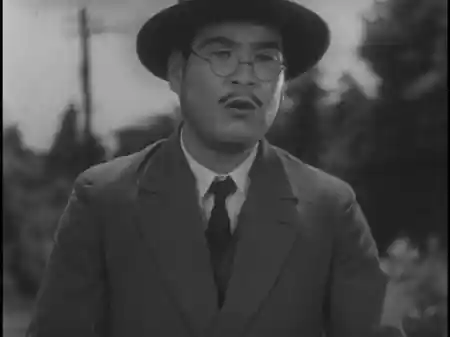
There is a moment where Okumura has to decide if he's going to stand up for his son or stay in the good graces of the bully's father, who is a client.
It’s a small conflict, but for a guy with no money, it’s huge. He chooses his son, sort of, but he does it in the most awkward, fumbling way possible.
I love that he isn't a secret martial arts expert or a brave hero. He’s just a dad who is tired of seeing his kid cry.
The ending is very abrupt. It doesn't wrap everything up with a bow.
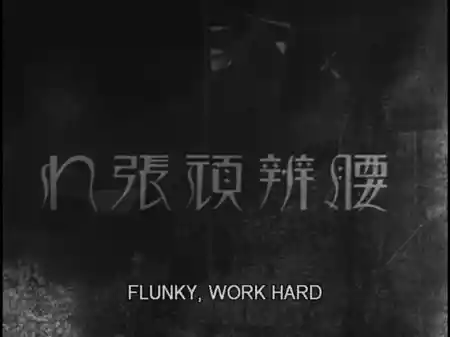
The title 'Flunky, Work Hard!' feels like a slap in the face. It's what the world tells people like Okumura every day.

Just keep working. Don't think about how much it sucks. Just work harder.
Is it a masterpiece? Maybe not. It feels like a sketch or a practice run for Naruse’s later, bigger movies.
But there is something so honest about the way it shows the city. The power lines, the narrow alleys, the laundry hanging out to dry.
It captures a specific vibe of 1931 Tokyo that feels very lived-in. It isn't the 'exotic' Japan you see in some old travelogues like Africa (wait, wrong continent, but you get what I mean about travel films).
Anyway, it’s a solid little film. It doesn't try to be more than it is.
It’s a movie about a flunky. And sometimes, we are all flunkies.
Check it out if you want a dose of reality that’s nearly a century old but still feels like last Tuesday.
IMDb 5.7
1930
Community
Log in to comment.