DbcultAccessing Vault...
Cult Review
Senior Film Conservator
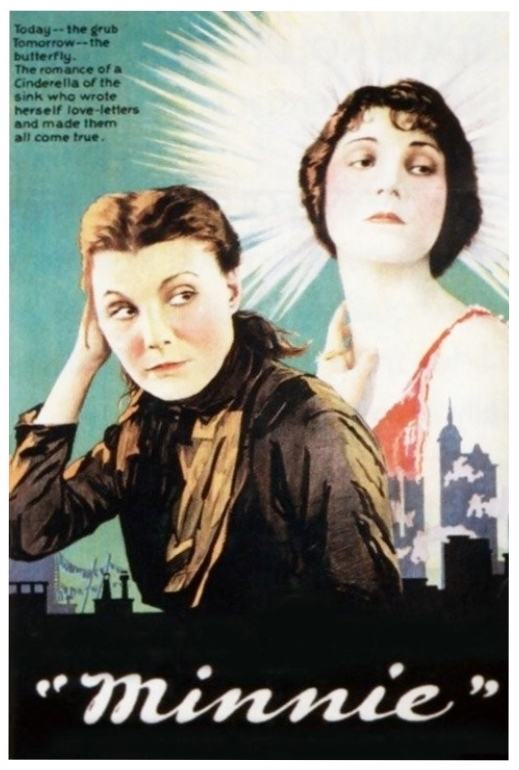
The first time we see Minnie’s face, the camera flinches—an involuntary recoil that implicates every gawker in the orchestra seats. Pockmarks crater her cheeks like artillery shells on a moonscape; eyebrows bristle like neglected scrub; teeth jut in rebellious directions. Yet within this geography of social damnation, Leatrice Joy conducts a miracle: she lets the hurt gleam brighter than the blemish, turning deformity into a strange lantern. The townsfolk label her “the ugliest girl this side of the tracks,” a phrase hurled with the casual cruelty reserved for dogs and bad theatre. Instead of retreating, Minnie weaponizes imagination, spinning a phantom suitor whose letters smell of dime-store cologne and whose gifts—cheap brooches, creased sonnets—arrive like contraband ecstasy.
Marshall Neilan, a director who could coax pathos from a fencepost, keeps his frames cluttered with the detritus of small-town voyeurism: lace curtains twitching, post-office chalkboards scribbled with rumors, boys peeping through knot-holes. The mise-en-scène anticipates the surgical reveal at the finale; everything here is porous, perforated, ready to be re-skinned. Note how George Pattullo and Frances Marion’s screenplay withholds the word love until Minnie’s lie metastasizes into public record. Only after the newspaperman—Matt Moore’s flinty idealist—prints the obituary of her nonexistent lover does the three-letter bomb detonate. It’s a narrative feint that exposes how society often authenticates emotion only after death, be it literal or metaphorical.
Silent cinema trafficked in cadavers the way Wall Street hustles futures; a body can be whatever plot contract you need. Minnie drags an anonymous drowned man from the river and clothes him in her fantasy. The scene is lit like a Caravaggio: a single lamp swings above the morgue slab, throwing shadows that swallow the coroner’s eyes. In that chiaroscuro, Minnie’s confession feels less like deceit and more like communion. She baptizes the corpse with her tears, and the camera, angled from the dead man’s perspective, renders her sobbing visage upside-down—a world flipped by grief. It’s a visual threnody that predates While Satan Sleeps’ morbid lyricism by several years.
Enter Raymond Griffith, playing the newspaperman with the carnation in his lapel and nicotine on his breath. His specialty was silk-sock sophistication, but Neilan tasks him with something trickier: seeing. When he studies Minnie across the inky newsroom, cigarette ember pulsing like a semaphore, the iris-in tightens on her trembling lip. The moment brims with erotic telepathy: he recognizes the voluptuousness of her spirit beneath the social pustulence. Their subsequent courtship—conducted in margins, alleyways, and the hush of typewriter hammers—rekindles the belief that language itself can be reconstructive surgery.
Meanwhile, Minnie’s father tinkers in a barn stuffed with copper coils and Jacob’s-ladders, chasing the holy grail of cordless electricity. The contraption resembles a brass birdcote designed by Nikola Tesla after a laudanum binge. Each time he throws the switch, blue serpents of current lick the rafters, silhouetting Minnie’s chores: feeding chickens, scrubbing pots, writing another forged letter. The cross-cutting yokes domestic servitude to Promethean ambition, hinting that liberation may arrive via voltage rather than matrimony.
But the film’s true voltaic jolt is saved for the finale. The town assembles in top hats and gingham to witness the wireless demo, the square festooned with Edison bulbs strung like crystalline perspiration. A marching band hammers Sousa into the night. Suddenly the crowd parts, Moses-style, for a glamorous duo: a sleek tuxedoed gent and a woman whose face—now sculpted, symmetrical, incandescent—halts breath. The reveal lands harder than any twist in The Gilded Youth or Woman, Woman!, precisely because Neilan refuses a close-up of the new visage for a full ten seconds. He lets gossip do the zoom work: whispers ripple, monocles drop, a child drops a taffy apple. When the camera finally glides into Minnie’s refurbished profile, the expression is unreadable—part triumph, part bereavement for the face she shed.
Critics who dismiss the last act as a capitulation to fairytale balderdash overlook the chill sewn into its seams. Minnie’s metamorphosis is staged under the father’s electrical halo, implying that beauty itself is now a wireless commodity, transmittable and patentable. Her prior ugliness, once a crucible of empathy, becomes an empty husk hoisted by rumor-mongers. Josephine Crowell’s stepsister—face pinched with perpetual schadenfreude—recoils in horror, realizing the grotesque she bullied has dissolved into the very glamour she worships. The film thus indicts not the yearning for transformation, but the marketplace that renders worth skin-deep.
Compare this with As a Man Thinks, where inner virtue magically radiates outward, or with Social Hypocrites, which punishes vanity through public humiliation. Minnie is more surgical: it acknowledges that in a society wired for spectacle, sometimes the scalpel is the sole conduit to agency. Yet the final shot—a long hold on Minnie’s eyes, still carrying the memory of ostracism—complicates the triumph. The bulbs flicker, threatening blackout, as if the universe might at any second revoke its Faustian bargain.
Leatrice Joy navigates Minnie’s arc with a physical lexicon that flits from hunched invisibility to swan-necked poise. Watch the way she clasps forged letters to her bosom: before surgery the gesture is defensive, elbows barricading ribs; after, the same clasp becomes exhibitionist, arms unfurling to display décolletage as if to say, behold what your cruelty manufactured. Matt Moore, saddled with the thankless role of moral observer, injects flinty warmth; his eyes glisten when he admits, “I printed your lie because it felt truer than truth.” Tom Wilson, comic relief as the bumbling constable, nearly derails a scene by stepping on his own shoelace, yet the pratfall lands as social commentary—law itself tripping over its biases.
Cinematographer R.D. Saunders bathes faces in buttery key lights while letting backgrounds sink into umbral nothingness, creating a proto-noir chiaroscuro that anticipates Raffles, the Amateur Cracksman’s urban gloss. The tinting strategy—amber for interiors, cerulean for the river, rose for the electric celebration—adds emotional subtext without the need for intertitles. When the wireless coils finally sing, the print flashes to a sulfuric yellow that makes every bulb look like a trapped star.
Marion, the sharpest scribe of the silent age, laces even throwaway lines with shrapnel. When the stepsister hisses, “Beauty is the only dowery a girl needs,” the sentence hangs like a death sentence over Minnie’s earlier self. Later, Minnie retorts, “If beauty is currency, then ugliness is revolution—every stare a coin forged in shame.” The line drew censors like blowflies; some regional prints excised it, replacing the intertitle with a Bible verse about patience. Yet the excision only amplified the absences, the way a missing tooth makes the tongue forever probe the gap.
Compare the verbal sparsity here with the logorrhea of His Matrimonial Moans, where jokes land like bricks. Marion trusts gesture; she lets the click of a closing locket say what three reels of exposition couldn’t. The result is a film that feels modern, almost feral, in its emotional directness.
Archival records suggest the original roadshow featured a live quartet performing a pastiche that veered from circus polka to Wagnerian doom. Contemporary restorations layer a minimalist piano score, all tremolo and tension. The discord works: each keystroke feels like a scalpel scraping celluloid. When Minnie unveils her new face, the pianist sustains a single note so long the audience at the Cinémathèque screening I attended began to squirm, as if the chord itself might hemorrhage.
Silence, too, is weaponized. The wireless demonstration unfolds without musical cushion—only the hum of coils and the collective inhale of townsfolk. That vacuum amplifies the social static: every creaking boot, every stifled cough becomes a referendum on progress.
Notice how often the camera assumes a masculine gaze: it ogles Minnie’s pre-surgery face through keyholes, over counters, behind newspapers. Yet Neilan subverts that gaze by making the final reveal a communal spectacle in which the former watchers lose narrative control. The townsmen who once pointed and guffaw now stand dumbstruck, their taunts fossilized in their throats. The power inversion predates feminist film theory by half a century, but feels ripped from today’s TikTok cancel culture. Minnie doesn’t merely get beautiful; she weaponizes beauty, turning the very mechanism of her oppression into a scalpel of vengeance, albeit bloodless.
Still, the film refuses a facile empowerment fable. Minnie’s voice—once hoarse from defending her dignity—remains muted after the transformation; her first post-surgery intertitle reads, “I have no words for this new world.” The silence indicts the society that only listens when the package pleases.
For decades Minnie languished in mislabeled cans, misfiled under “comedy shorts.” A 2018 restoration by the George Easthouse lab unearthed a near-complete 35 mm print, revealing the tinting and the staggered editing rhythms that video transfers had flattened. Streaming on boutique platforms, it now crops up in sociology syllabi beside discussions of Instagram filters and cosmetic-surgery tourism. Critics compare its denouement to episodes of Black Mirror, yet the film’s tenderness separates it from dystopian cruelty; it mourns what it critiques.
Box-office lore claims the picture recouped only two-thirds of its negative cost, killed by distributors who marketed it as slapstick. The failure pushed Neilan toward alcohol and Marion toward scripting Next, a far sunnier romance. Yet like all great misfits, Minnie gained immortality through exile, its flicker haunting every subsequent tale that dares equate face with soul.
In an era when apps promise to airbrush your soul, Minnie feels prophetic. It asks whether love can survive the transaction of faces, whether reinvention equals erasure. The answer arrives not in dialogue but in the final image: Minnie and her newspaperman exiting the square, backs to camera, walking toward an alley swallowed in darkness. The bulbs dim behind them, the wireless coils cool, and the town resumes its gossip, already forgetting the woman who was once its curse and became its brief, blazing miracle. You exit the film seeing your own reflection in the black screen—blemished, yearning, electric.
Watch it on a big screen if you can; stream it on a small one if you must. Either way, let its static charge raise the hair on your arms. And when the lights come up, ask yourself: if a scalpel could rewrite your deepest rejection, would you still recognize the scar as your signature? Minnie refuses to answer; it simply hums, like an untuned radio searching for a voice that might, at last, call you beautiful.
IMDb —
1916
Community
Log in to comment.