DbcultAccessing Vault...
2.8/10
Senior Film Conservator
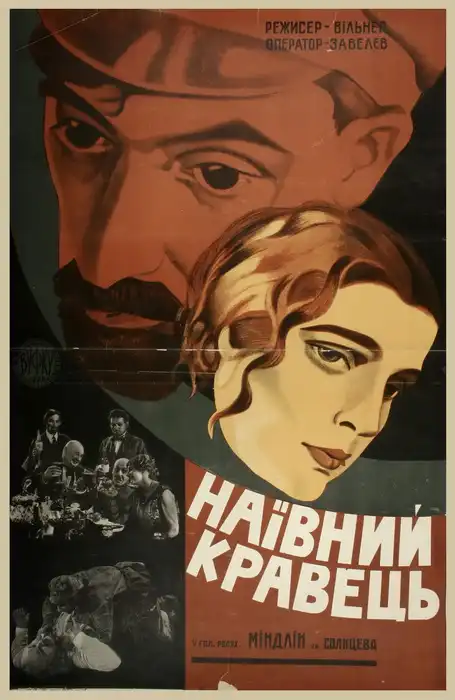
A definitive 2.8/10 rating for a film that redefined the boundaries of cult cinema. Motele the Weaver remains a cornerstone of transgressive art.
If you’re the type of person who needs an explosion every ten minutes to stay awake, Motele the Weaver is definitely not for you. This is a movie for people who like to watch dust settle in black and white.
Is it worth watching today? Honestly, yeah, but only if you have a soft spot for the 1920s and the way people used to move in front of a camera. It’s slow, it’s quiet, and it’s very, very earnest. 📽️
The story follows Motele, who is a weaver, surprisingly enough. He’s played by Leonid Dobrovolsky, and the man looks like he hasn't slept since the 19th century.
He spends a lot of time at his loom. The movie really wants you to understand how much he hates that loom, but also how much he is the loom.
There’s a specific shot where the thread breaks. It’s treated like a tragedy.
The camera lingers on his fingers trying to tie it back together, and you can see the dirt under his fingernails. It's almost gross but in a real way.
It’s that kind of detail that makes these old silent films feel so heavy. It’s not just a story; it’s like a piece of someone’s actual life was trapped on the reel.
You can tell the director really cared about the workers. It has that same revolutionary vibe you get in Mother.
Though, it isn't quite as polished as some of the big Soviet classics. Sometimes the editing feels like someone was learning how to use scissors for the first time.
There’s a scene in a tavern where everyone is shouting silently. It goes on for about three minutes too long.
You get the point after thirty seconds, but they just keep shaking their fists. ✊ It becomes kind of funny if you watch it for too long.
I found myself looking at the background extras more than the main actors. There’s a guy in the back of the workshop who looks genuinely confused about why there’s a camera there.
The lighting is actually pretty decent for 1928. There are these long shadows on the floor of the factory that reminded me a bit of the visual style in Greed.
It makes the whole place feel like a prison. Which, I guess, was the point the filmmakers were making.
Yuliya Solntseva is in this too. She’s great, obviously. She has this way of looking at the camera that makes you feel like she’s judging your life choices.
She doesn’t have much to do, but when she’s on screen, the movie feels a bit more alive. It stops being a museum piece and feels like a drama.
I think the best part is when Motele finally decides he’s had enough. It isn’t a big Hollywood moment with a speech.
It’s just a look on his face. He looks tired. So, so tired.
It’s a bit like The Man Who Forgot in that way. Just a human being reaching their limit and snapping in slow motion.
I did get a bit distracted by the subtitles in the version I found. They were a bit flickery and the grammary was... well, it was 1920s style translation work, so it felt stiff.
There’s a very strange cat that walks across a table in one scene. It’s a very skinny cat and it just stares at the actor like it's waiting for a cue.
The film ends in a way that feels a bit like a propaganda poster. It’s all very "onward to the future!" and "victory for the workers!"
It’s a bit much for my taste. But you have to respect the hustle they had back then.
If you’ve seen Salome and thought it was too flashy, this might be a good palate cleanser. It’s the opposite of flashy.
It’s muddy and gray. It feels like you need to wash your hands after watching it.
I wouldn’t say it’s a masterpiece. It’s more like a very interesting postcard from a world that doesn’t exist anymore.
Sometimes the pacing is so slow I thought my player had paused. But then a hand would move or someone would blink and I'd realize it's just the movie being "artistic."
It’s definitely a "watch while drinking tea" kind of movie. Not a "watch while eating Salami" one. 🧶
I liked it, though. It felt honest, even when it was being a bit silly with the revolutionary stuff.
One thing though—the beard on the factory foreman is hilariously fake. You can almost see the glue peeling off in the close-ups if you look closely.
It’s those little mistakes that make me love these old films. They feel like they were made by people, not by a computer or a committee.
The scene where they all walk out of the factory is the highlight. The extras are all bunched up and someone nearly trips over a piece of equipment.
It’s a messy film. But life is messy, so it works.
Anyway, if you find a copy on some dusty corner of the internet, give it a go. Just don't expect any car chases like in The Lady Outlaw.
IMDb 5
1927
Community
Log in to comment.