DbcultAccessing Vault...
Cult Review
Senior Film Conservator
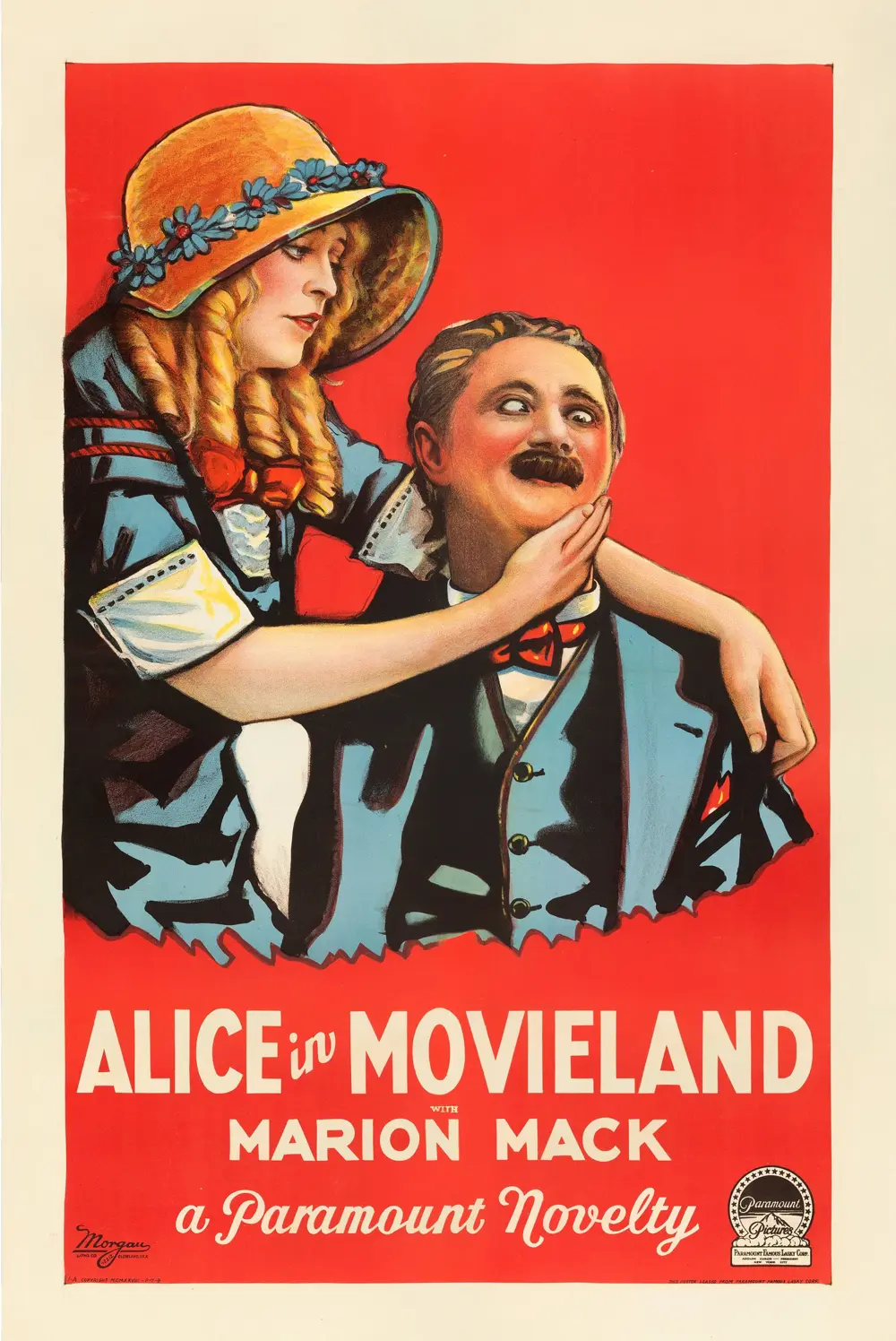
Is 'Alice in Movieland' a silent film worth your precious viewing time in the 21st century? Short answer: yes, but with significant caveats. This peculiar, often ambitious, entry into early cinema offers a fascinating glimpse into the industry's self-awareness, making it a compelling watch for film historians, silent film enthusiasts, and anyone curious about the foundational meta-narratives of the medium.
However, it is decidedly NOT for those seeking polished storytelling, modern pacing, or a straightforward narrative. If your cinematic diet consists solely of contemporary blockbusters or character-driven dramas, 'Alice in Movieland' will likely feel like a bewildering, if charming, artifact.
This film works because of its audacious concept, its playful deconstruction of cinematic tropes, and Marion Mack's vibrant, physical performance. It fails because its ambition often outstrips its execution, resulting in an uneven pace and a narrative that struggles to maintain focus. You should watch it if you appreciate experimental storytelling, the history of cinema, or simply want to see a silent film that dares to be different.
'Alice in Movieland' isn't just a film; it's a commentary on film itself, a remarkably self-aware piece for its era. Released at a time when cinema was still finding its voice, evolving from a novelty into an art form, this picture takes a bold, almost audacious step by turning the camera back on its own mechanisms. It's a meta-narrative long before the term entered common parlance, a cinematic hall of mirrors reflecting the industry's burgeoning identity crisis and its boundless potential.
The film's central conceit, of Alice literally stepping into the movies, is a powerful metaphor. It speaks to the audience's own desire for immersion, for escaping reality into the darkened theater. Marion Mack, known for her energetic screen presence, particularly in 'The General', brings a vivacity to Alice that is both endearing and essential. Her wide-eyed wonder and subsequent bewilderment anchor the film's more abstract explorations.
Directorially, the film often feels like a series of sketches stitched together, a common trait in early cinema, but here it feels intentional. Each 'movie world' Alice enters is distinct, showcasing different styles of acting, editing, and set design prevalent at the time. We see the exaggerated gestures of melodrama, the rapid-fire cuts of slapstick, and the grand, often static, tableau of historical epics. It’s a crash course in silent film grammar, presented through the eyes of a participant.
One particularly effective sequence, for instance, sees Alice entangled in a frenetic chase scene, reminiscent of the Keystone Kops, where the absurdity of the situation is heightened by Mack's frantic, yet graceful, physical comedy. The transition from one genre to another, often jarring, serves to highlight the artificiality of these constructed realities, a point the film seems keen to make.
Marion Mack's performance as Alice is the undeniable heart of 'Alice in Movieland'. While her fame is largely cemented by her iconic role opposite Buster Keaton, this film offers a different, perhaps more personal, canvas for her talents. Here, she's not just a damsel in distress or a comedic foil; she's an active participant, a guide through a world of illusions.
Mack's physicality is, as always, a joy to behold. She conveys Alice's initial awe with expressive eyes and open body language, then transitions to a more weary, knowing demeanor as she experiences the repetitive tropes and inherent silliness of the cinematic worlds. Her ability to shift between these emotional states, often without the aid of elaborate intertitles, is a testament to the power of silent acting.
It’s a performance that doesn’t demand deep psychological introspection, but rather a keen understanding of cinematic language. Mack understands that Alice is an archetype, a stand-in for every audience member who has ever wished to step into the screen. Her reactions are our reactions, amplified for the silent medium. This allows the film to explore its broader themes without getting bogged down in complex character arcs, though some might argue this sacrifices emotional depth for intellectual curiosity.
The direction in 'Alice in Movieland' is less about a singular vision and more about an experimental spirit. The film revels in its own artifice, often breaking the fourth wall (or, more accurately, the 'first wall' of the screen) to remind us that we are watching a constructed reality. This meta-awareness is its greatest strength, setting it apart from many of its contemporaries.
There's a scene where Alice observes a film being shot, and the camera deliberately shows the crew and equipment, a bold move that pulls back the curtain on the magic. This self-reflexivity is remarkably modern and speaks to a burgeoning understanding of cinema's unique power—and its limitations. It works. But it’s flawed. The transitions between these stylistic shifts can be abrupt, sometimes feeling less like intentional artistic choices and more like a lack of cohesive editing.
The pacing of 'Alice in Movieland' is, to put it mildly, inconsistent. It’s a film that mirrors the erratic energy of early cinema itself. One moment, you’re in a slow, ponderous melodrama, the next you’re swept into a breakneck chase sequence. This can be jarring for modern viewers accustomed to more consistent narrative rhythms. However, this inconsistency is also part of its charm, reflecting the varied experiences of early movie-going, where a single program might feature a serious drama, a newsreel, and a slapstick comedy.
For example, a segment where Alice encounters a 'villain' from a serial, only to find him a polite actor off-screen, shifts from suspense to gentle humor, then to a quiet reflection on the nature of performance. This kind of tonal dexterity, while sometimes clunky, is genuinely impressive for a film of its age.
What truly sets 'Alice in Movieland' apart is its unconventional approach to storytelling. It's a film about films, a love letter and a critique rolled into one. It dares to ask fundamental questions about the nature of illusion, the power of storytelling, and the relationship between the audience and the screen, questions that filmmakers continue to explore today.
My surprising observation is that despite its age and technical limitations, 'Alice in Movieland' feels more relevant now than many contemporary films that attempt meta-commentary. Its simplicity in execution, born of necessity, allows its core ideas to shine through with a clarity that can sometimes be lost in overly complex modern productions. It’s a raw, unfiltered look at cinema looking at itself.
The film’s greatest weakness, however, might also be its greatest strength: its lack of a tightly constructed plot. While it allows for creative freedom and thematic exploration, it can leave viewers feeling adrift, longing for a stronger narrative through-line. It's a film that thrives on ideas more than traditional story beats.
'Alice in Movieland' is a fascinating, if imperfect, relic of early cinema. Its ambition to deconstruct and celebrate the burgeoning film industry from within is a testament to the creative ferment of the silent era. Marion Mack’s performance is a delightful anchor, guiding us through a landscape of cinematic tropes and illusions with charm and energy. While its narrative can be sprawling and its pacing uneven, these very flaws contribute to its unique character, making it feel less like a polished product and more like a vibrant, living document of a medium finding its voice.
It’s not a film for everyone, nor is it a 'masterpiece' in the traditional sense. But for those willing to engage with its playful experimentation and historical context, 'Alice in Movieland' offers a rewarding, thought-provoking experience. It’s a film that asks you to think about what you’re watching, and in doing so, reveals as much about the viewer as it does about the movies themselves. Give it a chance, and you might just find yourself charmed by its audacious, meta-cinematic heart.
IMDb —
1933
Community
Log in to comment.