DbcultAccessing Vault...
Cult Review
Senior Film Conservator
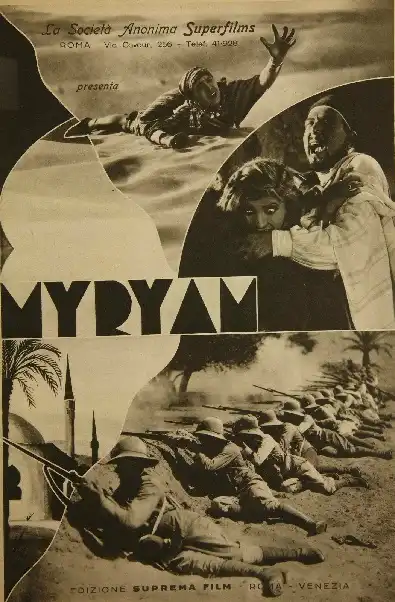
You should probably only watch this if you are a silent film completionist or if you really like looking at old footage of deserts.
Most people will find it incredibly slow. But if you’re into the history of Italian cinema, it’s a weird little find that feels like opening a time capsule.
The story is about a girl named Miryam who was raised by a Bedouin tribe. She doesn't know she’s actually European, which is a plot we have seen a million times by now.
I watched this late at night and honestly, the silence made the wind scenes feel much louder than they probably were. It's got that grainy, shaky quality that makes everything feel a bit like a dream.
Isa Pola is the standout here. Even when the plot wanders off into the dunes and stays there for too long, she keeps your attention.
Her eyes are doing a lot of work. Like, a scary amount of work. She has this way of looking at the camera that makes you feel like she's judging you for having a refrigerator and air conditioning.
The director, Enrico Guazzoni, seems obsessed with how shadows fall on tents. There are so many shots of just... shadows. It's like he forgot he was supposed to be telling a story and got distracted by the lighting.
It reminded me a bit of Die Prinzessin vom Nil but with a smaller budget. Or maybe just less interest in actually being fun.
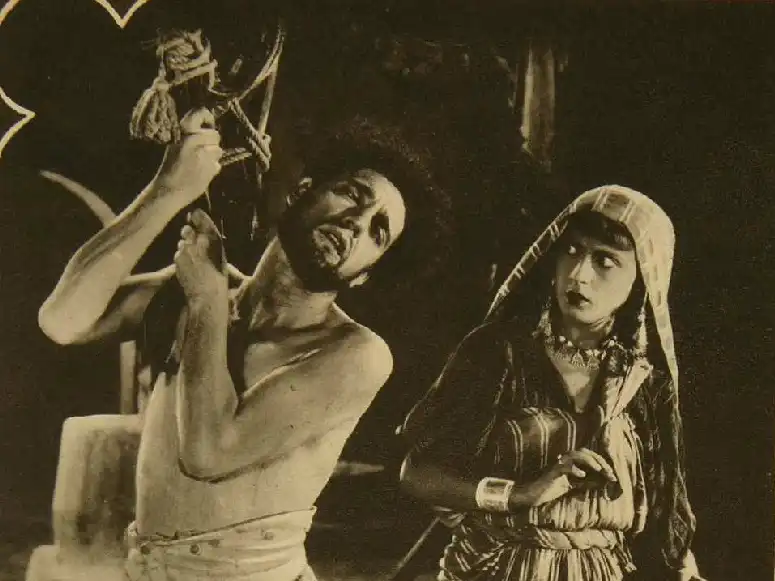
There is this one guy, Aristide Garbini, who plays a character that seems perpetually confused. He looks like he wandered onto the set looking for a bathroom and they just handed him a robe and told him to start acting.
I noticed that in one scene, a horse in the background is clearly trying to leave the frame. I don't blame it; the sun looks brutal in this movie.
The costumes are surprisingly heavy looking for a place that’s supposed to be boiling hot. Everyone looks like they are sweating for real, which adds a bit of gritty realism I didn't expect.
It’s not quite as action-packed as something like The Mysterious Rider. It’s more of a 'sit and think about your heritage' kind of movie.
One thing that really got me was the tinting. The blue scenes meant to represent night time are so dark you can barely see who is supposed to be talking.
Well, nobody is actually talking, obviously. You know what I mean. The physical acting has to be huge because you can't see their faces half the time.
The title cards are a bit dramatic. They use about ten words when two would do. It’s very 1920s Italy—everything is a huge deal.
Is it a masterpiece? No way. Not even close.
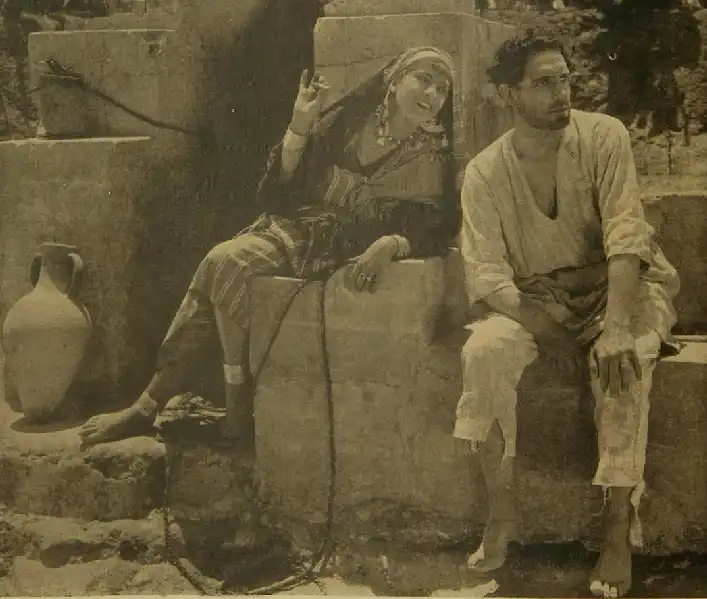
But it has this dusty, antique charm that you just can’t get from modern stuff. It feels like finding an old, faded postcard in a basement that smells like damp paper.
You can tell they really struggled with the outdoor lighting. Some shots are totally washed out by the sun and others are pitch black. It gives the movie a very uneven rhythm.
I think the movie gets better once you stop trying to follow the 'mystery' and just look at the weird vibes. The way the extras stand around in the background is fascinatingly awkward.
It’s a bit of a slog near the middle. I actually checked my phone twice to see how much time was left.
But the ending has this weirdly emotional beat that actually worked on me. I wasn’t expecting to care about the big reunion, but the music (in the version I saw) really sold it.
If you’ve seen Rose of the Tenements, you know how these old melodramas go. They really try to pull at those heartstrings with big gestures and crying.
Overall, Miryam is a dusty relic. It’s imperfect and the pacing is all over the place. 🌵
Watch it if you want to see how they did 'The Desert' back in the day. Skip it if you need a plot that moves faster than a tired camel.
IMDb —
1924
Community
Log in to comment.