DbcultAccessing Vault...
4.8/10
Senior Film Conservator
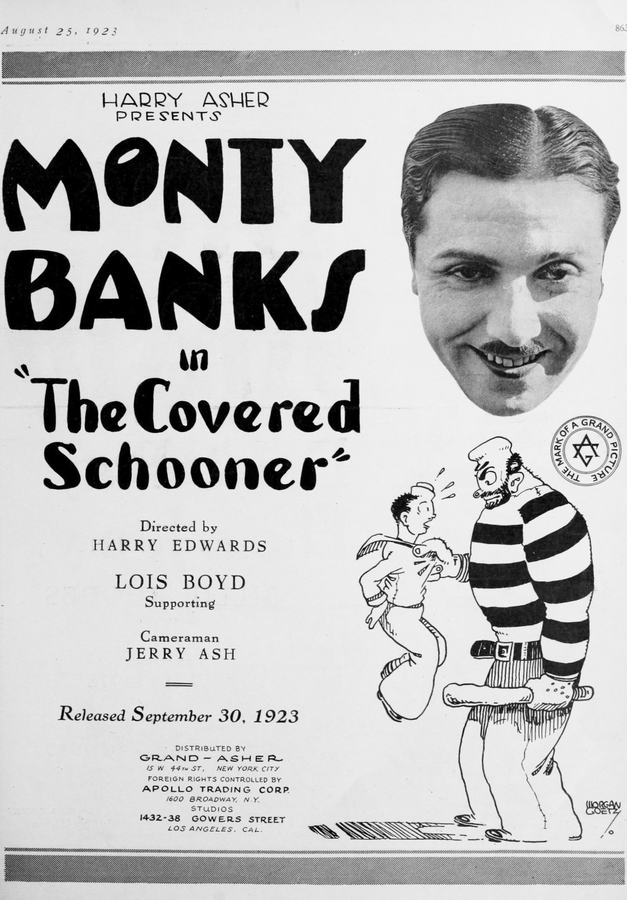
A definitive 4.8/10 rating for a film that redefined the boundaries of cult cinema. The Covered Schooner remains a cornerstone of transgressive art.
The Covered Schooner, a 1925 silent romp directed by the enigmatic Milton J. Fahrney, arrives on the screen like a weather‑worn vessel battered by waves of slapstick, romance, and surreal spectacle. From the opening frames, the film establishes a tone that feels simultaneously earnest and farcical, a duality that invites the viewer into a world where the ordinary collides with the outlandish.
At its core, the story follows Monty (played with earnest bewilderment by Monty Banks), a modest fellow whose heart is ensnared by a beguiling damsel, portrayed with a coquettish spark by Lois Boyd. The damsel’s hand, however, is also the prize of a brash sea captain—an archetype of masculine dominance rendered with swagger by William Blaisdell. The captain’s scheme to abduct Monty and consign him to forced service aboard his vessel is the catalyst that propels the narrative into its most inventive territory.
Once shanghaied, Monty encounters a grotesquely theatrical figure: a fake gorilla, a costume‑clad creature that straddles the line between menace and comedy. This absurd companion, performed with physical precision, becomes Monty’s confidant and co‑conspirator. Their alliance is the film’s engine, driving a series of clever sabotages against the captain’s crew—each gag meticulously timed, each pratfall calibrated for maximum visual punch.
Monty Banks brings a kinetic energy to his eponymous role, his expressive eyebrows and exaggerated gestures communicating longing, panic, and triumph without a single spoken word. Lois Boyd’s performance, while constrained by the silent medium, radiates a luminous charm; her eyes flicker with mischief, hinting at agency beneath the damsel’s conventional veneer. William Blaisdell’s captain is a study in flamboyant villainy—his swagger is punctuated by exaggerated gestures that border on the theatrical, a choice that underscores the film’s self‑aware humor.
The fake gorilla, an embodiment of early cinema’s love for spectacle, is a marvel of physical comedy. Its movements are deliberately lumbering, yet the actor injects a surprising grace that transforms the creature into a comedic foil rather than a mere obstacle. The chemistry between Banks and the gorilla is palpable; their synchronized pratfalls and shared glances create a rhythm that feels improvisational yet impeccably choreographed.
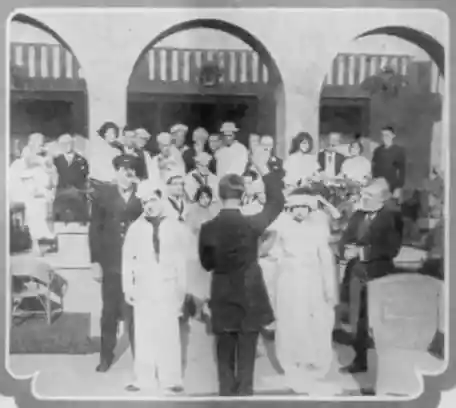
Cinematographer Milton J. Fahrney employs a chiaroscuro aesthetic that accentuates the film’s nautical setting. The black‑lettered backdrop of the open sea is rendered in stark contrasts, allowing the white‑clad actors to pop against the darkness. The occasional use of tinted frames—subtle washes of sea‑blue (#0E7490) during storm sequences—adds a visual cue that heightens tension without breaking the silent narrative flow.
The film’s set design is a testament to resourceful ingenuity. The schooner’s deck is a cramped tableau of wooden planks, rope ladders, and makeshift rigging, each element serving as a prop for slapstick set‑pieces. When Monty and the gorilla conspire to sabotage the captain’s rig, the camera captures the chaotic ballet of swinging ropes, tumbling barrels, and flailing sailors with a kinetic vigor that feels ahead of its time.
The Covered Schooner shares thematic resonance with other silent comedies that blend romance and maritime mischief, such as The Love Pirate. Both films employ the sea as a metaphorical stage where courtship and conflict intertwine. However, while The Love Pirate leans heavily on swashbuckling heroics, The Covered Schooner distinguishes itself through its absurdist partnership between a human protagonist and a costumed animal, a device reminiscent of the surreal humor found in The Punch of the Irish.
In terms of narrative structure, the film echoes the misadventure motif of A Bashful Bigamist, wherein a hapless hero navigates a labyrinth of romantic entanglements. Yet The Covered Schooner pushes the envelope by introducing the “Lochinvarian” archetype—Monty’s sudden, chivalrous dash to claim the bride—infusing the climax with a daring, almost mythic bravado.
Beyond its surface-level comedy, the film subtly interrogates notions of agency. The damsel, though initially presented as an object of desire, ultimately becomes a catalyst for Monty’s transformation. Her willingness to defy the captain’s expectations hints at an early feminist undercurrent, aligning her with the assertive heroines of later silent dramas.
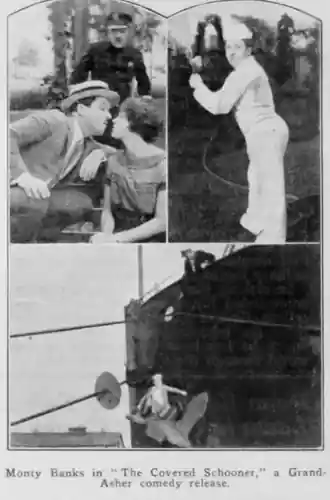
The fake gorilla, meanwhile, functions as a symbol of performative identity. Its masquerade as a ferocious beast, only to reveal a collaborative ally, mirrors the film’s broader commentary on appearances versus reality—a motif that resonates in modern cinema’s exploration of disguise and authenticity.
Although silent, the film’s original exhibition would have been accompanied by a live piano score, likely punctuated by jaunty ragtime motifs that echo the film’s brisk pacing. The rhythmic accompaniment would have accentuated the timing of physical gags, reinforcing the audience’s emotional response without spoken dialogue.
Modern screenings often pair the film with newly commissioned scores that blend period‑appropriate instrumentation with contemporary electronic textures, creating a hybrid auditory experience that bridges past and present.
The Covered Schooner survives in a partially restored print housed at the National Film Archive. Its preservation status underscores the importance of safeguarding early comedic works, which frequently suffer from neglect due to perceived “light‑hearted” content. Scholars now recognize the film’s contribution to the evolution of slapstick choreography and its influence on later comedic duos, such as the iconic pairings of Laurel and Hardy.
The film’s daring blend of romance, maritime adventure, and absurdist animal comedy foreshadows the genre‑blurring experiments of the 1930s, making it a pivotal, though often overlooked, artifact in the silent era’s canon.
The Covered Schooner remains a testament to the boundless imagination of early 20th‑century filmmakers. Its narrative daring, visual inventiveness, and layered performances coalesce into a work that rewards repeated viewings. For aficionados of silent cinema, the film offers a rich tapestry of humor, pathos, and subversive commentary—an enduring reminder that even in the absence of spoken word, storytelling can soar to astonishing heights.
IMDb 7.7
1923
Community
Log in to comment.