DbcultAccessing Vault...
Cult Review
Senior Film Conservator
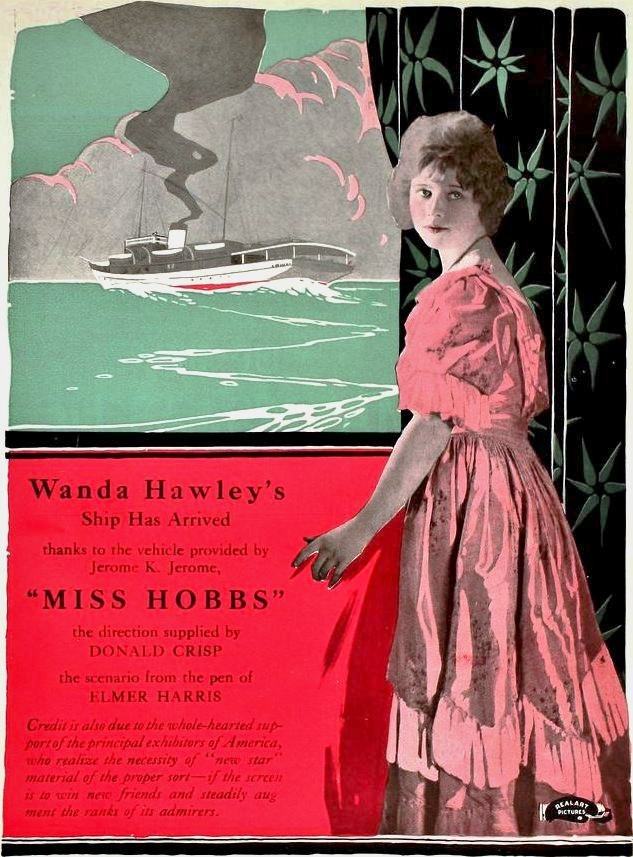
Ah, the roaring twenties! A decade of flappers, jazz, and a seismic shift in societal norms. Yet, even amidst this whirlwind of change, some ideas remained stubbornly entrenched, particularly concerning the role of women. Enter Miss Hobbs, a cinematic curiosity from this vibrant era, which, even in its summarized form, promises a fascinating, if somewhat problematic, glimpse into the anxieties and aspirations of a society grappling with female independence. This isn't merely a film; it's a social artifact, a time capsule reflecting the nascent stirrings of modern feminism against the backdrop of deeply ingrained patriarchal expectations.
The premise alone is a goldmine for critical dissection: a woman so ahead of her time, her contemporaries might as well have been living in the previous century. Her disdain for men, her embrace of avant-garde artistic expressions—barefoot dancing and futurist art, no less—paint a vivid picture of a character designed to challenge, to provoke. But then, the inevitable happens: a young man, seemingly embodying the very societal norms she rejects, takes it upon himself to 'tame' her. The narrative arc, spanning five reels of 'enlivened action,' is a potent cocktail of romantic comedy and social commentary, urging us to consider the timeless battle between convention and individuality, and whether love truly conquers all, or merely reconfigures the battleground.
Frances Raymond, in the titular role, must have had a field day with Miss Hobbs. Imagine the challenge of portraying a character described as '50 years ahead of her time' in a medium that relied so heavily on exaggerated gestures and expressive facial contortions. Miss Hobbs isn't just modern; she's a radical. Her ideas, her lifestyle, her very being are a direct affront to the demure, domestic ideal of womanhood that still held sway for many. Her hatred of men, viewing them as 'brutes,' isn't just a quirky character trait; it's a philosophical stance, a reaction to a world that likely afforded women little agency or respect. This isn't just personal antipathy; it's a nascent, albeit perhaps unarticulated, feminist critique of patriarchal power structures.
Her chosen artistic expressions further underscore her rebellious spirit. Barefoot dancing, at the time, was a symbol of liberation, a rejection of corsets and restrictive societal dress codes. It harked back to a more 'natural' state, often associated with figures like Isadora Duncan, who championed freedom of movement and expression. Futurism, on the other hand, was a cutting-edge artistic movement, embracing technology, speed, and a break from tradition. For Miss Hobbs to be engaged in both suggests a mind that is not only unconventional but actively seeking to dismantle and rebuild existing frameworks, both personal and artistic. How Raymond conveyed this internal landscape—the intellectual rigor behind the disdain, the passion behind the art—through silent acting would have been a masterclass in subtlety and overt expression.
This character, as conceived by writers Elmer Harris and Jerome K. Jerome, is a fascinating precursor to later, more explicitly feminist characters in cinema. She embodies a tension that many women of the 1920s likely felt: the desire for personal freedom clashing with the entrenched expectations of marriage and domesticity. One can almost see her, with an air of sophisticated disdain, dismissing suitors who fail to grasp the depth of her convictions. Her journey, therefore, is not just a romantic one, but a symbolic struggle for self-determination in a world not quite ready for her.
Then, we have the young man. Though unnamed in the plot synopsis, his role is pivotal. He is the catalyst, the antagonist, and ultimately, the romantic lead. Portrayed by the esteemed silent screen luminary Harrison Ford (the one from the early 20th century, not the Star Wars icon), this character's motivation is ripe for interpretation. Is he a benevolent suitor genuinely smitten by Miss Hobbs's unique charm, albeit misguided in his approach? Or is he a product of his time, representing the patriarchal desire to assert control over a woman who dares to defy convention? The term 'tame her' is, undoubtedly, loaded with problematic implications from a modern perspective. It suggests a wild, unruly creature needing to be brought to heel, rather than an individual with agency and valid beliefs.
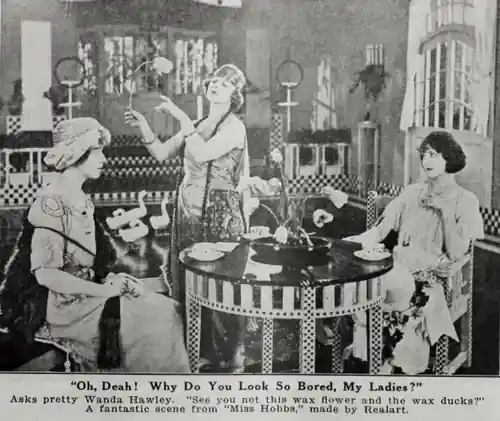
Ford's portrayal would have been crucial in shaping audience perception. Did he play the character with a roguish charm, making his 'taming' efforts seem more like a playful challenge than an oppressive act? Or was there an undercurrent of genuine respect, perhaps even admiration, beneath his attempts to mold her into a 'regular girl'? The success of this narrative hinge—the audience's willingness to root for the couple despite the potentially uncomfortable premise—rests heavily on Ford's ability to imbue his character with nuance. He couldn't merely be a brute, for that would make Miss Hobbs's initial assessment too accurate and the eventual romantic resolution unbelievable. Instead, he likely had to embody a blend of conventional masculinity with a surprising capacity for understanding, or at least a powerful enough charisma to make Miss Hobbs reconsider her hardened stance.
This dynamic echoes some of the romantic comedies of the era, where strong-willed women were often paired with equally determined men. Think of films where a man might try to win over a woman through a series of elaborate schemes, though perhaps rarely with such an explicit goal of 'taming.' The underlying tension is always whether the woman will truly change, or if the man will learn to appreciate her for who she is. In the context of Miss Hobbs, the question looms: does she truly become 'regular,' or does love simply broaden her perspectives without extinguishing her unique spirit? Ford's performance would have been key to navigating this delicate balance, transforming a potentially misogynistic premise into a palatable, even endearing, romantic journey for contemporary audiences.
At its core, Miss Hobbs is a fascinating exploration of conflicting ideologies. On one side, we have the burgeoning spirit of female autonomy, represented by Miss Hobbs's radical ideas and artistic pursuits. On the other, the enduring societal pressure for women to conform to established roles, epitomized by the young man's mission to 'tame' her. The film's central thesis, 'love has a way of smashing such an idea,' suggests that romantic love possesses a transformative power capable of dissolving even the most entrenched convictions. This is a classic romantic trope, but in the context of Miss Hobbs's specific 'ideas'—her misandry and artistic freedom—it gains a deeper, more complex resonance.
Does love, in this instance, act as a liberating force, allowing Miss Hobbs to see beyond her generalizations about men, or does it serve as a subtle form of coercion, gently nudging her towards conventionality? The film's answer, told in 'five reels of enlivened action,' would have been pivotal in shaping its message. If Miss Hobbs completely abandons her artistic endeavors and her independent spirit, the film risks becoming a cautionary tale against female rebellion. However, if the young man learns to appreciate her unique qualities, and their union is one of mutual respect and broadened horizons, then the film offers a more progressive, albeit still framed within a 'taming' narrative, vision of love.
The very act of 'taming' is a thematic minefield. It evokes images of nature subdued, of spirit broken. Yet, in the context of early 20th-century romantic comedies, it often served as a playful metaphor for the challenges of courtship and the compromises inherent in a relationship. The film’s success hinges on whether this 'taming' is portrayed as a genuine evolution of Miss Hobbs's character, or merely a capitulation. Perhaps she realizes that her misandry was a defense mechanism, and that true individuality doesn't necessitate complete isolation from romantic connection. Or perhaps the young man, in his attempts to 'tame' her, is himself 'tamed' by her fierce independence, learning to value her unique qualities rather than seeking to erase them.
This exploration of gender roles and the power of love finds parallels in other films of the era. One might consider The Winning of Beatrice, where the narrative similarly explores a man's pursuit of a woman, albeit perhaps with less overt 'taming' language. Or perhaps even Almost a Husband, which might have dealt with unconventional pairings and the societal pressures surrounding marriage. The core tension in Miss Hobbs, however, seems to be the explicit clash between a woman's radical self-definition and the societal expectation for her to conform. The film, therefore, acts as a historical document, showing us how these complex ideas were grappled with in a nascent cinematic language.
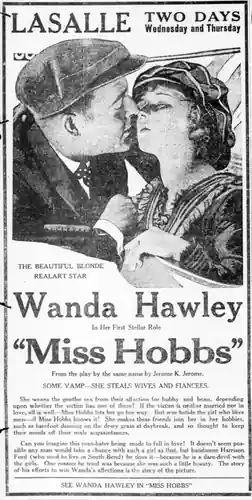
The promise of 'five reels of enlivened action' suggests a dynamic and engaging cinematic experience. Silent films, often underestimated by modern viewers, were masters of visual storytelling. Without dialogue, every gesture, every facial expression, every set design choice had to convey meaning. For a film centered on a character like Miss Hobbs, this visual language would have been paramount. How would barefoot dancing be depicted? Likely with sweeping, graceful movements, perhaps against a backdrop that emphasizes naturalism or artistic freedom, contrasting sharply with more rigid, formal settings. The 'futurist art' could have been showcased through innovative set pieces, abstract backdrops, or even avant-garde costumes, offering a visual feast for audiences accustomed to more traditional aesthetics.
The direction, whether by Elmer Harris (one of the writers) or another filmmaker, would have needed to balance the comedic elements of the 'taming' with the underlying thematic seriousness. Intertitles, the textual explanations interspersed throughout silent films, would have been crucial in conveying Miss Hobbs's radical ideas and the young man's determined pursuit. These weren't just plot points; they were often poetic or witty commentaries, guiding the audience's understanding and emotional response. The pacing, indicated by 'enlivened action,' suggests a film that avoids languid introspection, opting instead for a brisk progression of events, conflicts, and resolutions, culminating in the inevitable romantic denouement.
The visual contrast between Miss Hobbs's unconventional world and the more traditional environment the young man might represent would have been a rich source of humor and drama. Imagine scenes where her artistic friends, perhaps equally eccentric, clash with his more conventional acquaintances. The film's ability to create a vivid world, populated by distinct characters and driven by a clear narrative, all without spoken word, is a testament to the artistry of silent cinema. The very nature of this medium, where emotions are writ large on the screen, lends itself well to the dramatic clash of personalities and ideas at the heart of Miss Hobbs.
While Frances Raymond and Harrison Ford undoubtedly anchored the film, the supporting cast would have been vital in fleshing out the world of Miss Hobbs. Julanne Johnston, Helen Jerome Eddy, Walter Hiers, Emily Chichester, Jack Mulhall, and Wanda Hawley—these names represent a roster of talented silent film actors, each bringing their own distinct energy to the screen. In a film centered on such a strong personality as Miss Hobbs, these secondary characters would likely have served various functions: comedic foils, sympathetic confidantes, or perhaps even additional obstacles to the central romance.
Walter Hiers, often known for his comedic roles, might have played a bumbling friend or a rival suitor, adding levity to the proceedings. Helen Jerome Eddy or Emily Chichester could have portrayed more conventional female figures, highlighting Miss Hobbs's radicalism by contrast, or perhaps even offering a nuanced perspective on the changing roles of women. Julanne Johnston, known for her exotic beauty and dancing skills, might have been a fellow artist or a more traditional romantic interest, adding another layer to the narrative. Each actor, through their nuanced pantomime and characterizations, would have contributed to the film's texture, making Miss Hobbs's world feel rich and believable despite its somewhat fantastical premise.
The success of silent film often lay in the collective strength of its ensemble, where every gesture and reaction contributed to the overall narrative. Without spoken dialogue, the reactions of supporting characters to the leads' dramatic arcs could amplify emotions, drive plot points, and provide crucial exposition. Their performances would have helped to ground the more avant-garde elements of Miss Hobbs's character in a relatable human context, making her journey of 'taming' or transformation more impactful for the audience.
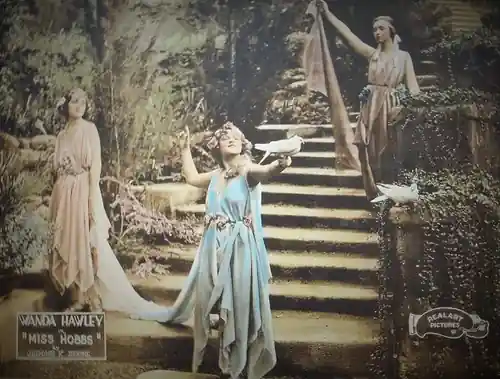
The screenplay, penned by Elmer Harris and Jerome K. Jerome, is another layer of intrigue. Jerome K. Jerome, of course, is the celebrated English humorist, best known for 'Three Men in a Boat.' His involvement suggests a narrative infused with wit, observational humor, and perhaps a touch of gentle satire. This background would have been invaluable in crafting the character of Miss Hobbs, ensuring her 'radical' ideas were presented with an engaging charm rather than mere stridency. Harris, a prolific screenwriter of the era, would have brought the structural prowess necessary to translate Jerome's literary sensibilities into a dynamic five-reel cinematic experience.
Their collaboration likely resulted in sharp intertitles and well-constructed comedic scenarios that would have resonated with audiences. The balance between Miss Hobbs's serious convictions and the comedic potential of her 'taming' would have been meticulously crafted. Jerome's touch would have ensured that even when dealing with potentially controversial themes, the film maintained an entertaining and accessible tone. This blend of humor and social commentary is a hallmark of intelligent storytelling, elevating Miss Hobbs beyond a simple romantic comedy into a more thought-provoking piece of cinema.
From a contemporary vantage point, the concept of a man undertaking to 'tame' a woman is, frankly, disquieting. It smacks of paternalism, of a desire to impose conformity rather than celebrate individuality. Yet, to fully appreciate Miss Hobbs, we must view it through the lens of its historical context. The 1920s, while a period of liberation for some women, was also a time of significant backlash against changing gender roles. The 'New Woman' was often portrayed with suspicion, her independence seen as a threat to traditional family structures and societal order. Films like The District Attorney or even Ignorance might have explored societal judgments or moral dilemmas related to women stepping outside traditional boundaries, albeit in different genres.
The 'taming' narrative, therefore, might have served as a reassuring fantasy for audiences grappling with these changes—a way to affirm that, ultimately, love and traditional relationships would prevail, even for the most unconventional of women. It's a trope that appears in various forms throughout cinematic history, sometimes more benignly than others. The genius of Miss Hobbs, if it truly succeeds, lies in its ability to complicate this trope, perhaps by showing the young man's own growth, or by allowing Miss Hobbs to retain aspects of her unique spirit even within the confines of a relationship. It's a reflection of a society trying to reconcile the irresistible push for female independence with deeply ingrained cultural expectations.
This film, therefore, acts as a crucial document for understanding the evolving discourse around gender and relationships in early 20th-century America. It's not just a story of romance; it's a commentary on societal anxieties, a snapshot of a moment when the very definition of 'womanhood' was undergoing a radical re-evaluation. The 'enlivened action' isn't just about physical comedy or dramatic chases; it's about the lively, often contentious, debate unfolding in drawing rooms and dance halls across the nation.
What, then, is the enduring legacy of Miss Hobbs? Beyond its entertainment value as a silent romantic comedy, it stands as a poignant reminder of the continuous struggle for female autonomy. It presents a character who, despite her eventual 'taming,' embodies a spirit of independence that was genuinely revolutionary for her time. The film invites us to reflect on how far society has come in accepting diverse female identities, and perhaps, how some of the underlying tensions surrounding women's roles persist even today.
While the premise might seem dated, the core themes of individuality versus conformity, and the transformative power of love, remain timeless. It's a film that, when viewed with a critical eye, offers more than just a quaint story; it provides a window into the past, allowing us to witness the early cinematic attempts to grapple with complex social issues. Miss Hobbs, the character, is a fascinating figure—a rebel, an artist, a woman ahead of her time—and her story, even if it culminates in a problematic 'taming,' is a testament to the enduring allure of those who dare to defy convention. It encourages us to celebrate the Miss Hobbses of every era, those who push boundaries and challenge the status quo, even if the world around them isn't quite ready for their vision.
IMDb —
1930
Community
Log in to comment.