DbcultAccessing Vault...
Cult Review
Senior Film Conservator
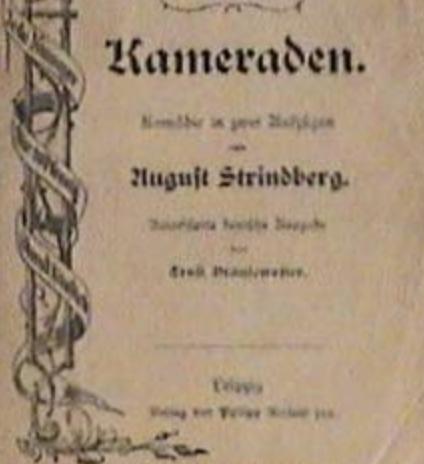
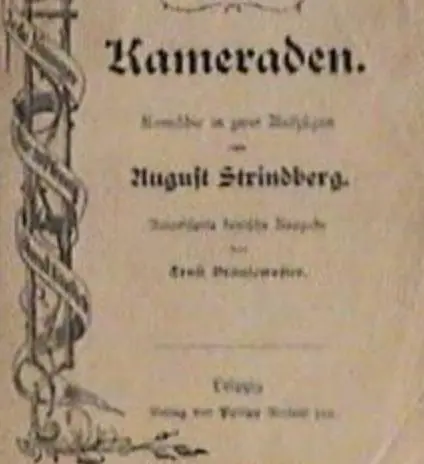
Stepping into the world of Kameraden (1915) is akin to unearthing a forgotten manifesto, a cinematic declaration from an era grappling with seismic shifts in societal norms. This isn't merely a film; it's a meticulously crafted psychological study, a daring exploration of gender roles, artistic freedom, and the volatile alchemy of human relationships, all filtered through the visionary, often tumultuous, lens of August Strindberg's original play. Directed with a keen eye for the underlying currents of its source material, the film plunges us headfirst into the lives of Axel and Bertha, a pair of artists residing in the bohemian heart of Paris, whose existence utterly defies the conventional expectations of early 20th-century matrimony.
The very premise of Kameraden is a radical one, even by today's standards. We are introduced to Axel, portrayed with nuanced vulnerability by Alfred Abel, a character who subverts the archetypal masculine figure. His vanity, his delicate sensibilities, and what the narrative describes as an 'effeminate' quality, paint a portrait of a man unmoored from traditional patriarchal expectations. This isn't a simple caricature; it's an intricate dissection of a male ego that, while perhaps not overtly fragile, certainly operates outside the rigid confines of its time. Abel’s performance, even in the silent era’s often broad strokes, manages to convey a complex inner world, hinting at the self-absorption and artistic temperament that defines Axel.
Then there is Bertha, brought to vivid life by Eva Everth, a woman who is not just ahead of her time, but actively carving out a new one. Bertha is the embodiment of the burgeoning feminist spirit, a financially independent artist who wields her autonomy like a finely honed tool. Her membership in the 'Married's Women's right of ownership' association is not a mere plot point; it's a profound statement of her belief in economic self-sufficiency and the inherent right of women to control their own destinies, even within the confines of marriage. This detail alone positions Kameraden as a pivotal cinematic text for understanding early feminist movements and their intersections with personal liberty. Bertha’s artistic practice further solidifies her trailblazing nature: her use of male nude models is a powerful reversal of the male gaze, a provocative act that challenges centuries of artistic tradition and societal expectations. It’s a deliberate reclaiming of agency, transforming the male body into an object of aesthetic contemplation under a female hand, a gesture that must have sent ripples of discomfort through contemporary audiences.
The intellectual lineage of Kameraden, stemming from August Strindberg, Adolf Paul, and Harriet Bosse, is palpable in every frame. Strindberg, a playwright notorious for his searing portrayals of marital conflict and the battle of the sexes, infuses the film with a psychological intensity that transcends the limitations of silent cinema. The film, much like Strindberg’s other works, delves into the power dynamics within intimate relationships, dissecting the subtle manipulations, the unspoken resentments, and the constant striving for dominance that can plague even the most ostensibly 'modern' unions. The dynamic between Axel and Bertha is less a harmonious partnership and more a complex, often fraught, negotiation of individual identities within the shared space of marriage and artistic pursuit.
What makes their relationship particularly compelling is this constant push and pull. Axel's vanity, perhaps a shield against the perceived strength of his wife, clashes with Bertha's unwavering self-possession. One can imagine the subtle glances, the charged silences, and the dramatic confrontations that would have played out on screen, even without spoken dialogue. The film, in essence, becomes a canvas for exploring how two strong, albeit differently oriented, artistic egos attempt to coexist without consuming each other. It’s a delicate balance, and the narrative, by all accounts, does not shy away from the inherent difficulties of such a progressive arrangement.
Considering its place in early cinema, Kameraden likely relied heavily on visual storytelling, expressive acting, and perhaps innovative intertitles to convey its complex themes. The choice of Paris as the setting is crucial; the city of lights, synonymous with artistic ferment and bohemian liberation, provides the perfect backdrop for a couple challenging social conventions. One can envision carefully composed shots of their studio, perhaps bathed in the soft, natural light favored by artists, contrasting with the more formal, perhaps even austere, environments of the women's association meetings. The visual language would have been paramount in conveying Axel's 'feminine and vain' nature – perhaps through his posture, his meticulous grooming, or his reactions to Bertha’s more assertive actions. Similarly, Bertha's independence would have been telegraphed through her confident demeanor, her direct gaze, and her purposeful movements.
The silent era, often underestimated in its narrative sophistication, frequently employed symbolic imagery. The male nude models, for instance, would not just be props but powerful symbols of Bertha's defiance and the shifting artistic landscape. The camera's gaze upon these figures, mediated by Bertha's artistic intent, would have been a profoundly subversive act. The performances of the supporting cast, including M. Reimann, Hermine Straßmann-Witt, Hans Walden, Ernst Laskowski, M. Lee, Willy Schröder, Harriet Bosse, and Lotte Stein, would have been crucial in building the world around Axel and Bertha, providing the societal mirror against which their unconventional lives were reflected. Harriet Bosse's involvement as a writer is particularly noteworthy, given her own history as Strindberg's third wife; her unique perspective undoubtedly enriched the screenplay's psychological depth and authenticity regarding marital dynamics.
To fully appreciate Kameraden, it’s beneficial to consider it within the larger tapestry of early 20th-century cinema, particularly films that dared to explore complex human relationships or societal critiques. While many films of the era, such as Chimmie Fadden Out West or The Scarlet Drop, focused on more straightforward adventure or melodrama, Kameraden stands out for its intellectual ambition. It shares a thematic kinship with films that probed the intricacies of the human heart, like Jalousiens Magt (The Power of Jealousy), which, as its title suggests, likely delved into the destructive nature of possessiveness. One can imagine that the 'feminine and vain' Axel might be prone to jealousy regarding Bertha's independence or her artistic choices, creating a fertile ground for dramatic tension akin to the psychological battles depicted in such films.
The concept of an independent woman, central to Bertha's character, was a nascent but powerful theme in early cinema. While Molly of the Follies might have showcased a woman in an unconventional profession, Bertha's independence is rooted in intellectual and economic autonomy, a more profound challenge to the status quo. Similarly, films like Komtesse Doddy might have explored aristocratic women navigating societal expectations, but Bertha's fight is more explicitly about fundamental rights and artistic freedom. The film's exploration of unconventional partnerships could also be contrasted with the more traditional romantic narratives found in films like The Marble Heart or Zwei Menschen, which likely adhered to more conventional gender roles and romantic arcs.
The inversion of power dynamics, with Bertha’s financial independence and her use of male models, finds a fascinating counterpoint in films that explore the struggles of women in a male-dominated world, or even the challenges faced by men in unconventional roles. While not a direct comparison in plot, the underlying tension of societal expectations clashing with individual desires resonates with the psychological intensity often found in films like The Vortex, which, though a later work, explores the emotional maelstrom of modern life. Kameraden, in its nuanced portrayal, avoids simplistic villainy or heroism, instead presenting a complex interplay of human frailties and strengths. It's a testament to the film's progressive vision that it dares to explore a male character who is 'feminine and vain' without necessarily condemning him, just as it celebrates a woman's assertiveness without reducing her to a mere symbol.
The lasting impact of Kameraden lies in its audacious willingness to tackle themes that remain profoundly relevant today. The film serves as a historical document, offering a glimpse into the early struggles for women's rights, particularly the right to property and financial autonomy, which were radical concepts at the turn of the century. Bertha's membership in the 'Married's Women's right of ownership' association underscores a crucial chapter in the fight for gender equality, highlighting that personal liberation is inextricably linked to economic freedom. This aspect alone makes the film invaluable for students of social history and feminist theory.
Furthermore, the film's exploration of gender fluidity and the subversion of traditional masculinity in Axel’s character is remarkably prescient. In an age where discussions around gender identity and expression are more open than ever, Kameraden provides an early, albeit perhaps unintentional, cinematic precedent for portraying complex male identities that defy rigid categorization. Axel is not simply a weak man; he is a man whose identity is shaped by his artistic temperament and perhaps a societal shift that challenges the very definition of what it means to be 'manly.' This makes the film a fascinating artifact for contemporary audiences, inviting reflection on how far, or perhaps how little, our understanding of gender roles has evolved.
The film's artistic courage, in showcasing a female artist who employs male nude models, is another aspect that resonates powerfully. It speaks to the perennial struggle of artists to break free from convention, to challenge the gaze, and to redefine beauty and power. This thematic thread connects Kameraden to a long tradition of avant-garde art that seeks to provoke and enlighten. It reminds us that cinema, even in its infancy, was a potent medium for social commentary and artistic experimentation. The very act of portraying such a dynamic on screen would have been a bold statement, reflecting the progressive, albeit often controversial, artistic currents flowing through European capitals like Paris.
Ultimately, Kameraden is more than just a historical curiosity; it is a vibrant, challenging piece of early cinema that continues to provoke thought and discussion. Its characters, Axel and Bertha, are not static figures but complex individuals caught in the crosscurrents of societal change and personal ambition. Their story is a timeless exploration of love, power, and the eternal quest for self-definition within the confines – or liberation – of a relationship. It beckons us to reflect on the nature of companionship, the meaning of equality, and the enduring power of art to both reflect and reshape the world around us. A truly remarkable cinematic endeavor that deserves a prominent place in the pantheon of culturally significant films.

IMDb 6.8
1927
Community
Log in to comment.