DbcultAccessing Vault...
6.8/10
Senior Film Conservator
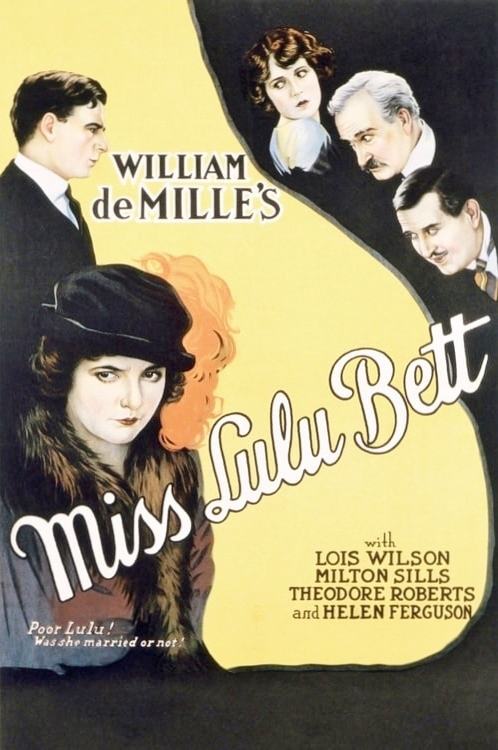
A definitive 6.8/10 rating for a film that redefined the boundaries of cult cinema. Miss Lulu Bett remains a cornerstone of transgressive art.
In the pantheon of early American cinema, William C. deMille has often been overshadowed by the grandiloquent spectacles of his brother Cecil. Yet, in Miss Lulu Bett (1921), we find a precision of psychological observation that renders the domestic sphere as fraught and dangerous as any battlefield. The film opens not with a flourish, but with the rhythmic, soul-crushing monotony of a household that thrives on the unacknowledged labor of its most vulnerable member. Lois Wilson, in a performance of startling interiority, portrays Lulu not as a caricature of the 'old maid,' but as a woman whose spirit has been systematically anesthetized by the weight of expectations. Unlike the kinetic, exuberant personas found in contemporary works like His Picture in the Papers, Lulu moves with a heavy, deliberate caution, as if the very air of the Deacon living room were composed of leaden weights.
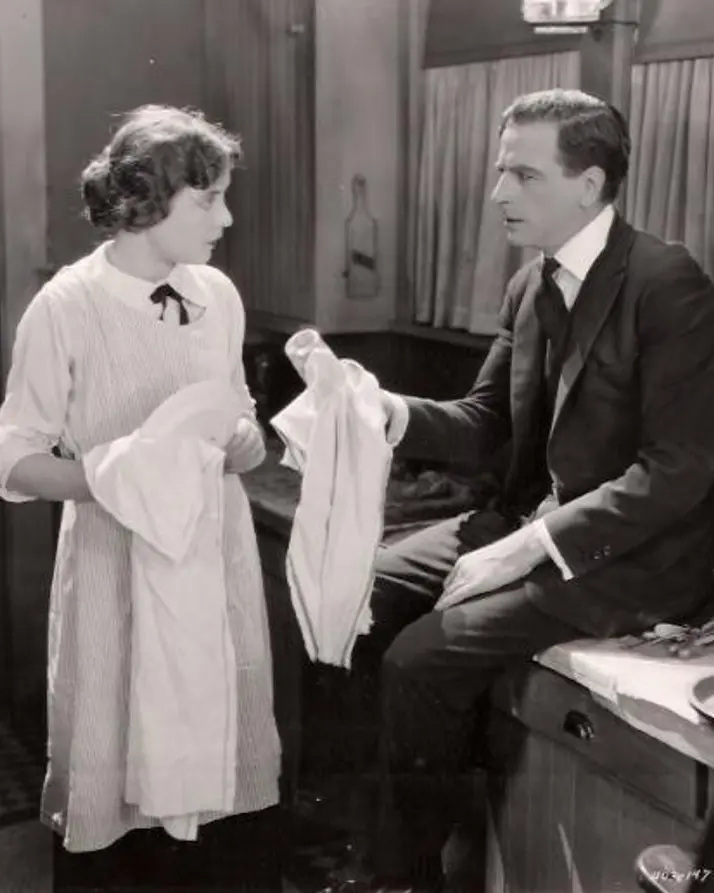
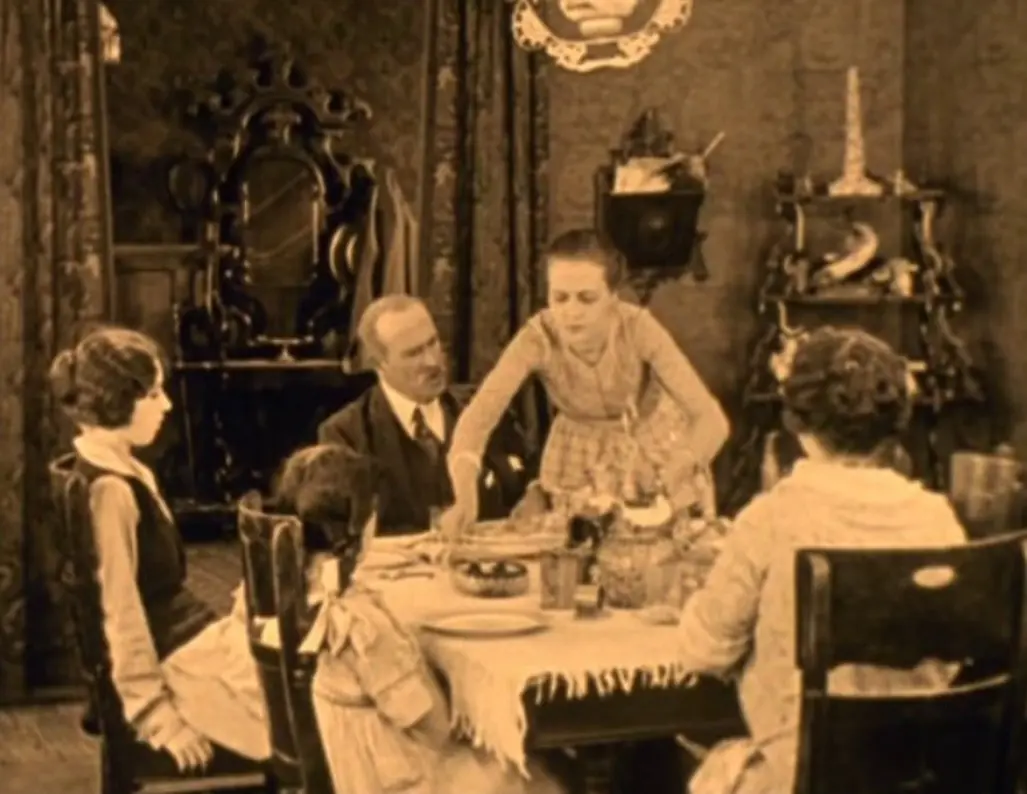
The setting is a masterclass in atmospheric oppression. The Deacon home is a labyrinth of lace doilies and heavy mahogany, a Victorian hangover that persists in a world beginning to flirt with modernity. Here, Dwight Deacon (Theodore Roberts) reigns as a small-town autocrat, his every platitude a mandate, his every whim a law. The cinematography captures this suffocating intimacy with a clarity that feels almost intrusive. We see the grease on the dinner plates, the exhaustion in Lulu’s eyes, and the vapid cruelty of her sister Ina (Mabel Van Buren). While films like The Three Musketeers sought to expand the horizon toward adventure, deMille turns the lens inward, proving that the most harrowing conflicts are often fought over a shared meal.

The arrival of Ninian Deacon (Milton Sills) functions as a narrative rupture. Ninian is the antithesis of his brother Dwight; he is a wanderer, a man of the world whose presence introduces a scent of ozone into the stagnant air of the household. The courtship between Ninian and Lulu is depicted with a fragile, hesitant beauty that stands in stark contrast to the transactional nature of the other relationships in the film. When they marry—a sudden, almost accidental union born of a dinner-table jest—it feels less like a romantic climax and more like a desperate leap into the unknown. This shift in tone momentarily mirrors the escapism of Flying Colors, yet deMille is too grounded a realist to allow the fantasy to persist.
"The genius of Clara Beranger’s adaptation lies in its refusal to treat Lulu’s bigamous marriage as a tragedy of virtue, but rather as the necessary destruction of her old, subservient self."
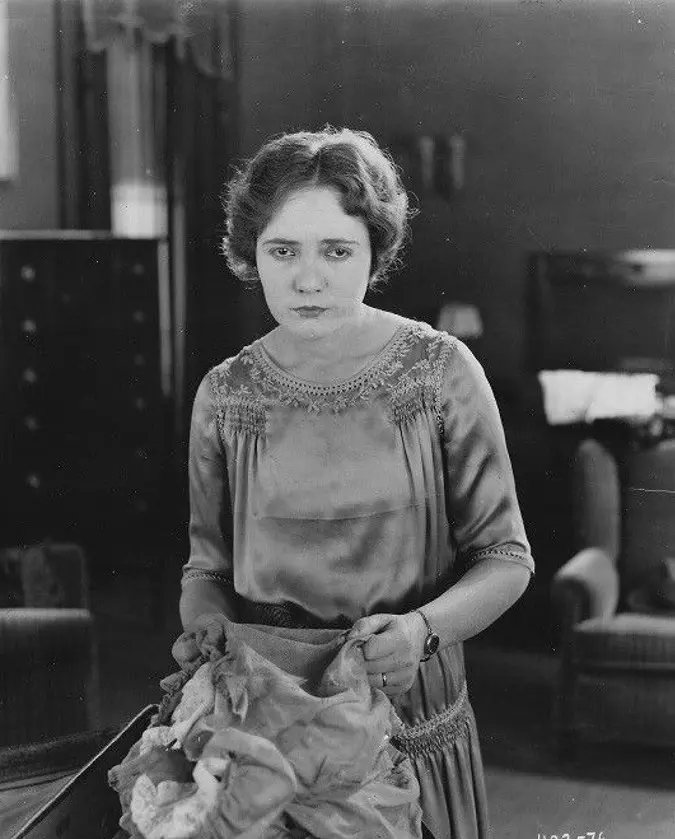
The revelation that Ninian is already married—a plot point that could easily have descended into the histrionics of a melodrama like Her Maternal Right—is handled with a devastating, quiet dignity. Lulu’s return to her family is the film's true turning point. The Deacons, concerned only with the social optics of a 'fallen woman' in their midst, expect her to resume her role as the invisible drudge, now burdened with the additional weight of shame. But something has shifted. The Lulu who returns is not the Lulu who left. She has seen the world beyond the parlor; she has been loved, however briefly, and she has tasted the terrifying sweetness of autonomy.

Technically, Miss Lulu Bett is a revelation of subtle lighting and character-driven editing. While the industry was often preoccupied with the rugged landscapes of Desert Gold or the moral binaries of The Darkening Trail, deMille focuses on the micro-expressions of his cast. The way Mabel Van Buren’s face tightens with envy, or the way Charles Ogle conveys the bumbling but genuine affection of Neil Cornish, adds layers of sociological depth to the narrative. The film understands that the domestic space is a political space. The kitchen is a site of labor, the dining room a site of performance, and the porch a site of longing.
The screenplay by Clara Beranger, based on Zona Gale’s Pulitzer Prize-winning play and novel, retains the sharp, satirical edge of its source material. It critiques the institution of marriage not by attacking it directly, but by showing the grotesque forms it takes when fueled by vanity and cowardice. In many ways, the film shares a thematic kinship with the European explorations of social constraints, such as Das Recht der freien Liebe, though it remains distinctly American in its focus on the 'small-town' psyche. The pacing is deliberate, eschewing the frantic energy of Oh Boy! or the slapstick rhythms of Swat the Crook, allowing the tension to simmer until the final, cathartic confrontation.
What makes Miss Lulu Bett resonate a century later is its refusal to grant Lulu a traditional 'happy ending' predicated solely on a new marriage. While Neil Cornish offers a path toward a conventional union, the film’s triumph is Lulu’s internal liberation. She stands up to Dwight Deacon, exposing his hypocrisy with a calm, searing logic that leaves him sputtering. This is not the explosive heroism of Sudden Jim; it is the far more difficult heroism of a woman claiming her right to exist on her own terms. The film avoids the sentimental pitfalls of The Fairy and the Waif, opting instead for a gritty, earned resilience.
The supporting cast provides a rich tapestry of human fallibility. Ethel Wales as Grandma Bett is a particular standout, offering a chaotic, senile truth-telling that punctures the family's pretensions. Her presence reminds us that the cycle of domestic misery is generational, a theme explored with different tonal colors in The Gray Horizon. Even the minor characters, like the town gossips, are rendered with a specificity that suggests a lived-in world beyond the frame. This is a film that values the 'small' story, recognizing that within the mundane lies the universal. It lacks the imperial scale of Britain Prepared, yet its stakes feel infinitely higher because they are so deeply personal.
As the final iris closes on Lulu, we are left with a sense of profound transformation. She has moved from the shadows of the kitchen to the sunlight of the street. William C. deMille’s direction is invisible in the best sense; he allows the performances and the environment to speak, avoiding the flamboyant stylistic flourishes of Le diamant noir. The film stands as a testament to the power of silent cinema to convey complex social critiques through the simple interplay of light, shadow, and human expression. It is as essential as The Cook of Canyon Camp in its depiction of the dignity of the working individual, yet it transcends its era by speaking to the perennial struggle for self-definition.
Ultimately, Miss Lulu Bett is a masterwork of restraint. It doesn't shout its themes; it whispers them through the clatter of silverware and the rustle of a Sunday dress. In the landscape of 1921, it was a radical document of feminist awakening, and today, it remains a poignant reminder that the most significant revolutions are often those that take place within the four walls of a home. It is a film that demands to be seen, not just as a historical curiosity, but as a living, breathing piece of art that continues to challenge our perceptions of duty, family, and the enduring strength of the human spirit.
IMDb 4.8
1932
Community
Log in to comment.