DbcultAccessing Vault...
Cult Review
Senior Film Conservator
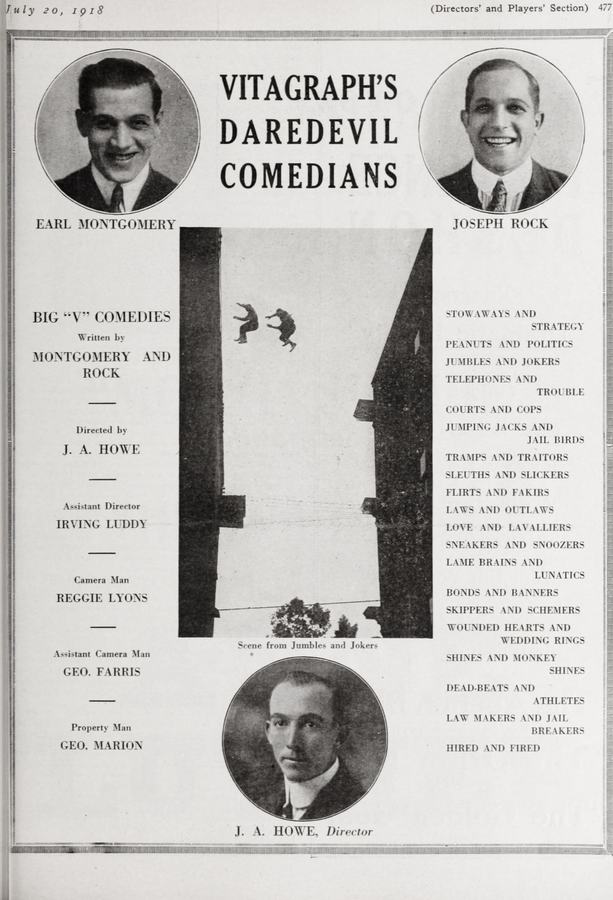
From its opening sequence—a manic close-up of peanuts cascading like shrapnel across a laboratory floor—Peanuts and Politics establishes itself as a silent-era tour de force where gastronomy becomes geopolitical strategy. Director Joe Rock weaponizes pantry staples with the precision of a satirical marksman, transforming Earl Montgomery's riotous screenplay into a visual manifesto against warmongering absurdity. The genius lies in how Montgomery (pulling double duty as co-writer and star) frames international conflict through the lens of domestic farce—embassies become kitchens, spies become sous-chefs, and Armageddon is averted not by treaties but by strategically sabotaged snack bowls.
Rock and Montgomery perform a balletic demolition derby of pratfalls and panic, their rubber-limbed physicality evoking Chaplin's grace filtered through a cement mixer. Watch Montgomery's Cecil attempt seduction-by-peanut-dispenser—a sequence where his trembling hands juggle explosive legumes while wooing the Professor's daughter (a delightfully deadpan Mabel Van Buren). Each fumbled nut becomes a ticking clock, the actors' widening eyes telegraphing catastrophe with seismic comedic timing. Their synergy recalls the combustible chemistry in The Busy Inn, yet elevated by wartime stakes.
Montgomery's screenplay ingeniously mirrors Europe's powder-keg diplomacy through pantry politics. When Prussian emissary Von Strudel (a gloriously pompous William Hauber) demands the peanut formula, his waxed mustache quivers with jingoistic fervor—a microcosm of post-Versailles territorial hunger. The film's central thesis crystallizes in a bravura sequence where Bertram and Cecil replace embassy caviar with volatile nuts. As aristocrats pop hors d'oeuvres like artillery shells, the ensuing gastrointestinal fireworks become a grotesque ballet of diplomatic collapse. Rock lenses these explosions with surreal beauty—slow-motion debris of monocles and wig powder floating through smoke like malevolent snow.
Beneath the nutty anarchy simmers potent anti-war commentary. Professor Finch's laboratory—crammed with smoking beakers and half-dismantled toasters—satirizes military-industrial overreach, his pacifist muttering (“Great Caesar’s Ghost! They’ll ban peanuts at ballgames!”) drowned out by generals salivating over destruction. The film weaponizes food’s cultural symbolism: peanuts—America’s humble snack—become literal instruments of imperialism. This culinary warfare eerily foreshadows the toxic propaganda in Damaged Goods, though Rock swaps moralizing for mayhem.
Cinematographer Robert Doran composes chaos with mathematical precision. His high-angle shots of diplomats scrambling from exploding buffets resemble panicked ants, while close-ups of Rock’s sweat-beaded forehead during a cross-dressing infiltration (a riff on Zaza’s gender farces) magnify terror into opera. Doran’s pièce de résistance: a hall-of-mirrors chase through a funhouse, where distorted reflections of panicking spies fragment nationalism into cubist absurdity.
The film’s secret weapon is Eleanor Finch (Van Buren), whose suffrage pamphlets clutter every surface like unexploded ordnance. While Bertram and Cecil bumble through macho espionage, Eleanor coolly disarms villains by critiquing their patriarchal rhetoric—disarming a bomb while debating wage equality. Van Buren’s raised eyebrow becomes a lethal weapon, her subtlety contrasting the boys’ hurricane antics. In a revolutionary third-act twist, she reprograms the peanut detonator to shower warmongers with harmless buttered popcorn—a pacifist deus ex machina that outmaneuvers The Lion's Claws’ jingoism.
Montgomery’s script juxtaposes romance and revolution through tactile symbolism. Cecil’s courtship bouquet—concealing stolen blueprints—wilts as Eleanor lectures him on equal partnership. Their love story crescendos during a climactic embassy gala where waltzing couples unknowingly kick explosive peanuts like lethal hacky sacks. The dance floor becomes a minefield, ballgowns billowing around detonations as Rock cross-cuts between slapstick and splendor—a tonal tightrope walk unmatched until Out of the Night’s suspense-operas.
Contemporary critics dismissed the film as “culinary anarchy,” blind to its genius for weaponizing mundane objects—a tradition later embraced by Tex Avery and Jacques Tati. Rock’s peanuts predate Hitchcock’s bomb-under-the-table theory by decades, proving suspense thrives when audiences know exactly which snack will explode. The film’s anti-authoritarian DNA surfaces in everything from Vivo ou Morto’s rebel ballads to Dr. Strangelove’s doomsday buffoonery.
Modern viewers might wince at the broad ethnic stereotypes of foreign emissaries—though Montgomery mocks all nationalism equally, rendering French and Prussian envoys identically pompous fools. The true target remains institutional insanity: generals salivating over peanut casualties, politicians ignoring combustion risks for wartime profit. In today’s drone-strike era, the sight of ambassadors fleeing buttered shrapnel feels less like farce and more like prophecy.
Rock harnesses silence as a comedic pressure cooker. Without dialogue, every rattling peanut in a diplomat’s pocket becomes suspenseful. The film’s loudest moment is a title card reading “...!” as Von Strudel’s posterior detonates a sofa cushion. This auditory restraint heightens physical acting: witness Rock’s trembling fingers miming “bomb” by puffing his cheeks then flinging arms skyward—a gesture later echoed in Rowan Atkinson’s Mr. Bean.
The editing rhythm feels astonishingly modern. Montages compress complex sabotage sequences into rhythmic poetry: peanuts rolling down chutes intercut with Cecil’s panicked watch-tapping, then Eleanor calmly adjusting her hatpin—a silent symphony of escalating panic. This kineticism influenced later chase classics like L'argent qui tue, though none matched Rock’s balance of clarity and chaos.
Peanuts and Politics endures not as a relic, but as a shrapnel-sharp satire where every pratfall critiques militarism. Its brilliance lies in duality—exploding nuts symbolize both war’s trivial catalysts and catastrophic ends. Rock and Montgomery craft a universe where heroism means replacing explosives with popcorn, where love blossoms amidst shrapnel, and where world peace hinges on keeping snacks away from warmongers. In an era of global tension, its message detonates with renewed urgency: sometimes, saving humanity requires making your enemies laugh until they choke.
Amidst 1924’s melodramas like Her Temptation and patriotic epics like For sit Lands Ære, this nutty masterpiece dared to suggest that world leaders—like poorly stored peanuts—are just one spark away from catastrophic combustion. Its final image—a single unscathed peanut resting on a smoldering treaty—remains cinema’s most deliciously subversive punchline.
IMDb —
1927
Community
Log in to comment.