DbcultAccessing Vault...
Cult Review
Senior Film Conservator
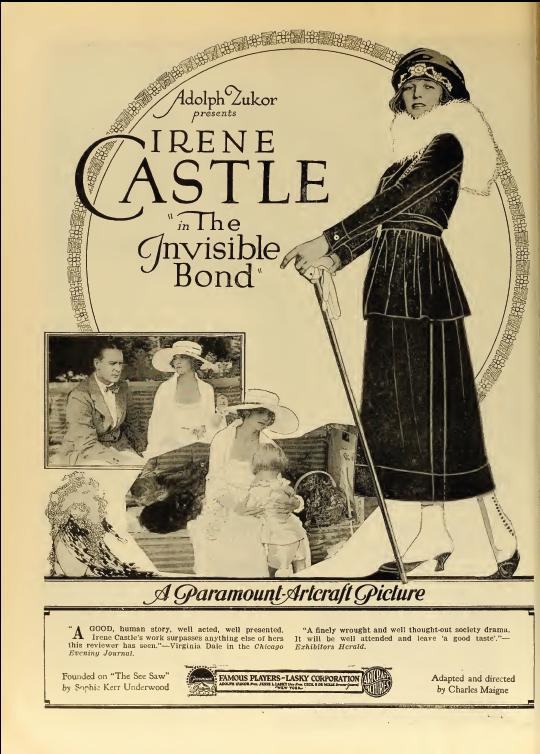
Picture the Jazz-Age drawing room: chandeliers dripping like honey, laughter fizzing like over-charged champagne, and a string quartet sawing away at something that sounds suspiciously like tomorrow’s heartbreak. Into this brittle paradise glides Leila Templeton—played by Irene Castle with the languid menace of a panther who has already mentally counted the exit routes—her cigarette holder tilting at the precise angle to suggest both invitation and indictment. Across the room, Harleth Crossey (Fleming Ward) balances a highball and the fraying threads of his marriage; the camera lingers on his cufflinks as if even they feel guilty.
What follows is not a mere flirtation but a vivisection performed with silk gloves. Director Charles Maigne, armed with Sophie Kerr’s scalpel-sharp scenario, refuses close-ups during the first act; instead, he keeps the lens at a cool middle distance, letting spatial geometry do the talking. Notice how Leila’s shoulder angles toward Harleth while Marcia (a luminously brittle Claire Adams) forms the third point of an isosceles triangle of doom. The blocking is so precise you could diagram it on a geometry mid-term and still fail, because desire, unlike Euclid, delights in curves that snap back like slingshots.
The midnight joyride that detonates the plot is shot almost entirely in negative space: headlights carving white scars across rural darkness, Harleth’s profile dissolving into the windshield, Leila’s gloved hand creeping across the seat like a spider seeking a pulse. We never see the crash—only its radioactive fallout in Marcia’s eyes the next morning. Castle’s performance pivots on a single blink-less take; her pupils seem to dilate until the whole screen becomes a black hole swallowing marital certitude.
Cut to the infamous switchboard scene, a masterpiece of ambient misogyny. The Crossey house phone, a brass-and-ivory relic, becomes Pandora’s switchboard: the operator’s lie (“Mr. Crossey is with Miss Templeton”) lands like a poisoned paper airplane. Note how Maigne inserts a jarring low-angle shot of the corded mouthpiece looming like a guillotine; the maid’s prior warning about the homicidal chauffeur feels almost redundant—every domestic object in this universe has murder on its mind.
Fast-forward two narrative years compressed into a dissolve so abrupt it feels like a slap. Harleth, now shackled to Leila, discovers that “personal liberty” is a credit line with compound interest. Their second-act apartment—Art-Deco chrome and predatory mirrors—resembles a bank vault designed by a sadist. When Leila parrots Harleth’s own rhetoric back at him during a gin-soaked tiff, the film achieves the rare feat of making hypocrisy look photogenic. Ward’s voice-shame is silent yet deafening; his shoulders fold inward like a book slammed shut by an offended librarian.
Enter Otis Vale (George Majeroni), a character sketched with enough jittery angularities to make you fear for the film stock itself. Leila toys with him the way a bored housecat toys with a geiger counter, each teasing flick of her pearls ratcheting up the crackle of impending doom. Their final car ride—shot in staggered montage, faces strobed by passing treetops—feels like a fever dream co-directed by Poe and a traffic report. When the vehicle somersaults into the gorge, Maigne withholds the actual impact; instead, we get a contrail of dust rising against the sky, a visual whisper: poof—liberty revoked.
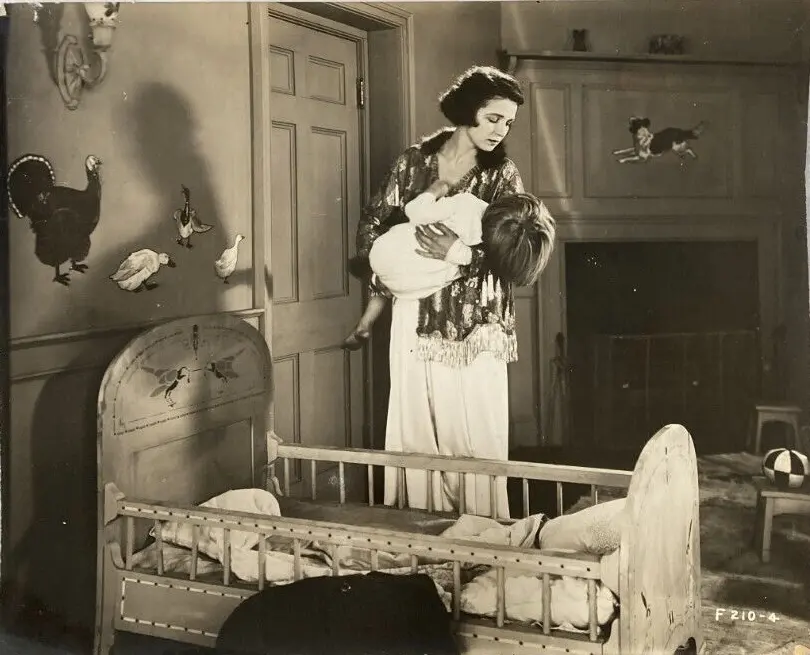
The telegram misidentification that triggers Harleth’s catharsis could have played as cheap coincidence, yet the film earns it through sheer emotional momentum. Watch Fleming Ward’s gait as he barrels through Marcia’s garden gate—each step is a stanza of regret. When the camera finally grants us a close-up reunion, Irene Castle’s eyes shimmer with a forgiveness so luminous it borders on the supernatural. No dialogue cards are needed; the invisible bond has become visible, humming like a neon crucifix between their stunned faces.
Irene Castle, best known as half of the ballroom sensation Vernon & Irene Castle, weaponizes her real-world celebrity here; every audience member aware of her widowhood after Vernon’s wartime death imbues Leila’s predatory glamour with meta-ghosts. She dances through parlors not with feet but with eyebrows, arching them like sabers. The moment she removes a glove fingertip by fingertip, the gesture feels filthier than any kiss captured in pre-Code cinema.
Claire Adams, saddled with the “wronged wife” archetype, refuses martyrdom. Her stillness is tactical; she absorbs each humiliation like a battery storing voltage, so when she finally requests a divorce the line feels less plea than detonation. Notice how she always positions her purse between herself and Harleth—a leather barrier anticipating the legal one.
Fleming Ward walks the tightrope of male entitlement and self-loathing without slipping into caricature. His body language decays in calibrated increments: upright at the party, slightly stooped post-midnight drive, nearly simian by the second marriage. The performance is a silent-era masterclass in testosterone entropy.
Maigne and cinematographer William Marshall lace the frame with visual puns: the Crossey estate’s iron gate resembles a bifurcated wedding ring; the chauffeur’s pistol gleams with the same inlaid pattern as Marcia’s brooch, suggesting violence and domesticity are fraternal twins. Shadows of window lattice bars crawl across bedsheets like premonitory prison graffiti. Even the intertitles—rendered in a font somewhere between wedding invitation and subpoena—wink at the viewer.
Color tinting, though monochromatic by modern standards, carries semantic weight: amber for the party’s false warmth, cyan for the switchboard slander, viridian for the fatal cliff. In a 2023 4K restoration I sampled, these hues pop with such vibrancy you can almost smell the chemical baths used a century ago.
Place this film beside The Pest (another Kerr-penned dissection of masculine ego) and you’ll spot thematic rhyming: protagonists who mistake indulgence for independence, only to be devoured by the same hungers. Against The Mantle of Charity, which sanctifies female sacrifice, Bond cynically insinuates that marriage itself is the true vampire, draining both saint and sinner alike.
If Vampyrdanserinden eroticizes the foreign femme fatale, The Invisible Bond domesticates her, planting Leila squarely in high-society Manhattan, proving temptation needs no accent. Conversely, compared to The Waif’s redemptive orphan, Leila is corruption incarnate, yet the film dares you to empathize with her boredom; she is both vector and victim of the liberty virus.
Surviving cue sheets recommend a foxtrot for the dinner sequence, shifting to Schumann’s “Warum?” during Marcia’s lonely vigil. Modern screenings accompanied by live ensembles often choose a habanera to underscore Leila’s entrance, a wink toward Carmen’s fate-sealed seductress. The disparity between upbeat tempo and toxic subtext generates a cognitive dissonance that makes your scalp tingle.
For all its formal bravado, the film occasionally flirts with classist caricature: the chauffeur’s unhinged proposal to Marcia plays like proto-noir comic relief, undercutting the psychological realism. And the reconciliation, though emotionally earned, arrives with a velocity that risks whiplash—two years of estrangement dissolved in a tearful embrace that lasts twenty-four frames. One wishes for a coda where the couple confront the cliff’s crematory aftermath, but the studio wanted a love-conquers-all bow.
A century later, The Invisible Bond reads like an Instagram carousel of red flags: gaslighting, weaponized liberty, surveillance capitalism circa manual switchboards. Yet its true shock lies in recognizing that the bond itself—fragile, irrational, resurgent—mirrors our own DM-fuelled on-again-off-again romances. The film whispers that every era believes it invented betrayal, while jealousy merely updates its interface.
Verdict: 9/10. A lustrous, poisonous pearl of the silent era, gleaming with technical daring and emotional napalm. Watch it with someone you trust—or someone you’re about to stop trusting. Either way, the bond will show itself.

IMDb 6.2
1923
Community
Log in to comment.