DbcultAccessing Vault...
Cult Review
Senior Film Conservator
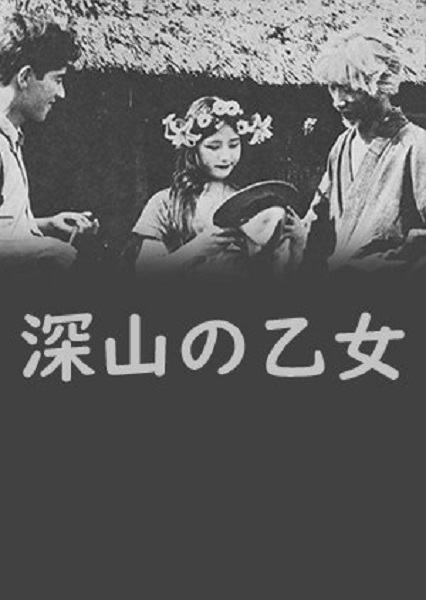
Stepping back into the nascent years of Japanese cinema, one encounters a cinematic landscape often shrouded in the mists of time, where many treasures have been irrevocably lost to the ravages of history. Among the fragments that offer glimpses into this formative era stands Miyama no Otome (The Girl of the Mountains), a 1918 production that, even through its spectral presence, speaks volumes about the burgeoning artistry of early Japanese filmmaking. Directed by Norimasa Kaeriyama, a pivotal figure often credited with introducing modern cinematic techniques to Japan, and featuring a cast including Iyokichi Kondô, Harumi Hanayagi, Minoru Murata, and Sugisaku Aoyama, this film represents a crucial juncture in the nation’s cinematic evolution. It is a work that, even a century later, invites profound contemplation on themes that remain timeless, echoing the very struggles of humanity against the relentless tide of change.
The narrative, as it is pieced together through historical whispers and critical inference, revolves around Hana, a young woman whose existence is inextricably interwoven with the pristine, sacred environment of Mount Futago. Her life is a testament to an ancient, harmonious rhythm, untouched by the accelerating pace of industrialization gripping the lowlands. She is the quiet custodian of a secluded shrine, a living embodiment of tradition and spiritual purity. This idyllic world, however, is destined for disruption. Ryota, a surveyor from the bustling city, arrives with blueprints for a logging venture, his presence a stark harbinger of modernity’s inexorable advance. The initial chasm between Hana’s serene, nature-bound grace and Ryota’s urban ambition is palpable. Yet, in the silent grandeur of the mountains, an unexpected connection begins to unfurl, a delicate understanding forged between two souls from vastly different realms. This burgeoning affection, however, is cast under a shadow by the malevolent presence of Jiro, a local landowner whose avarice knows no bounds. Jiro perceives Hana as a mere acquisition and the mountain’s resources as ripe for exploitation, embodying the very essence of corruption that threatens to engulf Hana’s world. His machinations are a stark counterpoint to the nascent purity of Hana and Ryota’s bond, setting the stage for a dramatic conflict where the fate of a mountain, a tradition, and a love hang precariously in the balance.
At its core, Miyama no Otome is a profound exploration of contrasts: tradition versus modernity, nature versus industry, spiritual purity versus material greed. Hana, as the eponymous 'Girl of the Mountains,' serves as an archetypal figure, a personification of Japan’s ancient soul grappling with the transformative forces of the Taishō era. This period, following the Meiji Restoration, was characterized by rapid Westernization and industrial growth, creating immense societal pressures and cultural shifts. Hana’s struggle to preserve her ancestral home and way of life is not merely a personal battle but a microcosm of a nation wrestling with its identity. The mountain itself becomes a character, a silent, majestic entity whose fate is intertwined with Hana’s own, symbolizing the irreplaceable value of natural heritage and spiritual sanctity against the relentless march of progress. This thematic richness elevates the film beyond a simple melodrama, positioning it as a potent commentary on the socio-economic upheavals of its time.
The role of Ryota is equally compelling. He is not merely an antagonist, but a complex figure caught between two worlds. His initial mission, driven by urban imperatives, gradually gives way to an awakening, a growing appreciation for Hana’s world and the inherent value of the mountain. This internal conflict makes him a bridge character, representing the possibility of reconciliation between progress and preservation, or perhaps the tragic impossibility of it. His arc, from a detached surveyor to a man emotionally invested in the fate of the mountain and its guardian, is crucial to the film’s emotional resonance. Jiro, on the other hand, embodies unbridled capitalism and a lack of reverence, serving as the clear antagonist whose actions precipitate the crisis. His portrayal, even if broadly sketched as typical of early cinematic villains, would have resonated deeply with audiences witnessing the rapid changes and often exploitative practices accompanying industrial expansion.
Norimasa Kaeriyama’s directorial approach for Miyama no Otome would have been groundbreaking for its era. Kaeriyama was a vocal advocate for cinematic realism and psychological depth, pushing against the theatrical conventions that dominated early Japanese cinema, particularly the reliance on benshi (live narrators) who often dictated the emotional tone and narrative interpretation. His insistence on naturalistic acting, the use of actresses instead of oyama (male actors playing female roles), and a more sophisticated integration of camera work and editing aimed to create a purely cinematic experience. While much of the film is lost, one can infer that Kaeriyama would have leveraged the majestic mountain setting to its fullest, employing wide shots to emphasize Hana’s solitary existence and the overwhelming power of nature, contrasting them with closer shots to capture the nuanced emotions of his characters. The visual storytelling, characteristic of silent cinema, would have been paramount, allowing the grandeur of the landscape to speak volumes about the stakes involved.
The performances by Iyokichi Kondô, Harumi Hanayagi, Minoru Murata, and Sugisaku Aoyama, under Kaeriyama’s guidance, would have been instrumental in conveying the film’s intricate emotional tapestry. Harumi Hanayagi, a pioneering actress, would have brought a much-needed authenticity and vulnerability to Hana, moving beyond the stylized portrayals typical of the stage. Her portrayal of a woman torn between duty, love, and the preservation of her heritage would have been central to the film’s emotional core. Minoru Murata, later to become a significant director himself, likely brought a nuanced portrayal to Ryota, showcasing his internal conflict. The dynamic between these performers, especially in the context of Kaeriyama’s innovative direction, would have set a new standard for dramatic realism in Japanese film.
In the absence of spoken dialogue, the power of Miyama no Otome would have resided in its visual poetry, the carefully choreographed movements of its actors, and the emotional resonance of its musical accompaniment (though the original score is also lost). Intertitles, meticulously crafted by writers Norimasa Kaeriyama and Takehiko Mizusawa, would have served not merely as expositional tools but as lyrical bridges, conveying inner thoughts and profound thematic statements. Imagine intertitles that speak of the mountain’s ancient spirit, of Hana’s unwavering resolve, or Ryota’s growing moral dilemma. These textual interventions, combined with the expressive faces and gestures of the actors, would have painted a vivid picture of the internal and external conflicts.
The visual language of the film would have been crucial for building tension and conveying the escalating threat. Close-ups of Jiro’s avaricious gaze, juxtaposed with wide shots of the serene mountain being scarred by logging machinery, would have created a visceral sense of impending loss. The climax, where the forces of nature, tradition, and modernity collide, would have been a masterclass in visual storytelling. Perhaps a storm, a landslide, or a desperate act of resistance by Hana, all depicted through dynamic camera work and rapid editing, would have brought the narrative to its poignant resolution. This reliance on purely visual and non-verbal cues is a hallmark of silent cinema, and a film like Miyama no Otome, with its strong thematic undercurrents, would have been an ideal vehicle for exploring the full potential of this art form.
While specific plot comparisons are challenging due to the film's unique narrative and the general scarcity of early film plots, the thematic concerns of Miyama no Otome resonate with broader trends in early 20th-century global cinema. The portrayal of a woman's struggle against societal or external forces, for instance, finds parallels in films like Her Maternal Right (1916) or The Shackles of Truth (1919), which often depicted women navigating complex moral landscapes or fighting for justice in a patriarchal society. While the specific context of a mountain girl versus industrialization is distinct, the underlying theme of an individual’s resilience against overwhelming odds is universal. Similarly, the melodrama inherent in the love triangle and the conflict between good and evil finds echoes in many films of the era, from the more dramatic narratives to the subtler character studies.
The tension between rural purity and urban corruption is a recurring motif in cinematic history, from early European films to American Westerns. Miyama no Otome brings a distinctly Japanese sensibility to this trope, embedding it within the spiritual reverence for nature and the specific socio-political climate of the Taishō period. The film's implicit critique of unchecked industrial expansion and its impact on traditional ways of life is a theme that continues to resonate today, making it remarkably prescient. One can draw a line to later environmentalist narratives, seeing Miyama no Otome as an early cinematic voice advocating for a harmonious relationship with nature, a theme that perhaps even contemporary films like The Great Leap: Until Death Do Us Part, despite its different narrative, could be seen as addressing in the context of grand societal shifts and personal sacrifice.
Despite its partial or complete loss, the very existence of Miyama no Otome remains a significant marker in film history. It speaks to the ambition and vision of pioneers like Norimasa Kaeriyama, who strove to elevate cinema from a mere novelty to a sophisticated art form capable of profound emotional and social commentary. The film’s themes, even in their hypothetical reconstruction, reflect a deep engagement with the pressing issues of early 20th-century Japan. It is a testament to the enduring power of storytelling that even a film largely lost to time can continue to inspire critical discussion and imagination.
The challenges faced by Hana in Miyama no Otome — the struggle to preserve heritage, the conflict between love and duty, the fight against an encroaching, destructive force — are universal human experiences. This universality is what allows a film from 1918, even one existing mostly in fragmented memory, to maintain its relevance. It encourages us to reflect on our own relationship with nature, with progress, and with the delicate balance required to sustain both human society and the environment that nurtures it. The film, in essence, serves as a poignant reminder of what was and what could have been, urging us to consider the stories that are lost and the lessons they might still impart. It’s a phantom masterpiece, perhaps, but one whose spectral presence continues to illuminate the path of cinematic evolution.
The creative contributions of writers Norimasa Kaeriyama and Takehiko Mizusawa are evident in the narrative's structural integrity and thematic depth. Their collaboration in crafting such a compelling story, one that intertwines personal drama with broader societal concerns, underscores the sophisticated storytelling emerging in this period. The film, even in its absence, paints a picture of a burgeoning industry capable of tackling complex issues with artistry and sensitivity. It’s a film that demands imaginative engagement from its audience, inviting us to fill in the visual gaps with our understanding of human emotion and historical context, much like how one might reconstruct a faded fresco. And in that act of imaginative reconstruction, Miyama no Otome truly lives on, an enduring echo from the mountains of cinematic history.
Ultimately, Miyama no Otome stands as a monumental, if largely unseen, work in the canon of Japanese cinema. Its innovative direction, compelling performances, and profound thematic resonance mark it as a film that pushed the boundaries of its time. It’s a film that, even in its ethereal form, compels us to consider the intricate dance between human aspiration and environmental stewardship, between the relentless march of progress and the enduring spirit of tradition. Its legacy is not just in what it was, but in what it represents: a courageous step forward in storytelling, a poignant reflection on a changing world, and a timeless testament to the power of the cinematic art form.
The narrative’s culmination, where Hana is forced to confront the full implications of Jiro’s greed and Ryota’s conflicted loyalties, would have been a powerful emotional crucible. Whether she chooses a path of desperate resistance, a heartbreaking sacrifice, or a fragile compromise, the resolution would undoubtedly leave a lasting impression. This dramatic tension, built on the clashing ideologies and personal stakes, is a hallmark of compelling storytelling, and Miyama no Otome would have delivered it with a visual and emotional intensity befitting Kaeriyama’s artistic ambitions. The film, thus, is not merely a historical artifact but a vivid demonstration of early cinema’s capacity for profound narrative and social commentary.
Reflecting on the film’s potential impact, it is clear that Miyama no Otome aimed to provoke thought and stir emotion, much like any great work of art. It challenged its audience to consider the irreversible consequences of unchecked development and the erosion of cultural and spiritual heritage. The film’s title itself, ‘The Girl of the Mountains,’ evokes a sense of purity and a deep connection to the land, which would have been central to its message. This connection, threatened by external forces, forms the core of its dramatic appeal and its lasting intellectual legacy. It is a film that, even in its absence, speaks volumes about the early aspirations of Japanese cinema to create meaningful and impactful narratives that resonated deeply with the contemporary societal concerns.

IMDb —
1921
Community
Log in to comment.