DbcultAccessing Vault...
Cult Review
Senior Film Conservator
The Shoe as Soul-Flask: A Nitrate Elegy
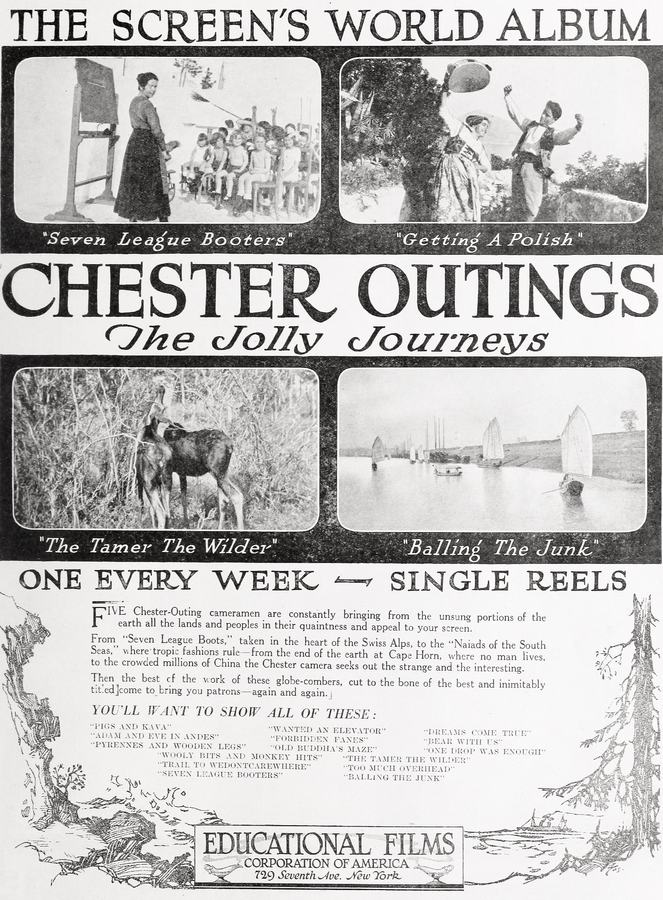
If Tarkovsky’s Mirror drenched memory in rainwater and birch pollen, Getting a Polish distills remembrance into the sharp ammoniac sting of shoe polish—black as bitumen, pungent as longing. The film’s protagonist, nameless but unforgettable, kneels so often that the city’s mosaic sidewalks imprint themselves on his skin like stigmata. Each time the brush circles a brogue, the frame rate slows to a hypnotic 14 fps, letting us count every bristle that quivers like a tuning fork struck by grief.
Director Mieczysław Krawiec—Polish expatriate, former carnival silhouette-cutter—shoots every boot as if it were a reliquary. In one bravura 360-degree pan, the camera orbits a single Oxford while the background toggles through four seasons: blossom confetti, summer sweat stains, autumn leaf-knuckles, winter salt scars. The boot never moves; the world rearranges itself around it, implying that exile is not displacement but a cruel stasis where geography liquefies.
Leather, Lacquer, and the Erotics of Service
Cinema rarely eroticizes labor without romanticizing poverty; Krawiec refuses that consolation. When our cobbler cradles the ankle of a stage diva, the close-up lingers on the pulse beneath her silk stocking—each throb syncopated with the off-screen orchestra’s timpani. The polish tin clicks open like a pocket watch hiding a daguerreotype: inside, instead of a portrait, a single hair from his beloved’s braid curls like a question mark. He smears the wax with it, turning the mundane ritual into a séance.
Compare this to Painted Lips, where lipstick traces become territorial scars; here, polish is both war paint and votive candle, merging the martial with the sacramental.
Urban Phantasmagoria & the Clockwork of Displacement
Krawiec shot on location in Gdańsk, but the intertitles insist the city is „Nowhere-grad.“ Trolleys lurch like iron caterpillars, their windows superimposed with Ellis Island footage—faces blotted out by the very passports that promised deliverance. The cobbler’s hand, blackened by polish, dissolves into a coal miner’s palm, then into the gloved fist of a conductor punching tickets to oblivion. Montage becomes palimpsest: every surface can be scraped to reveal another diaspora.
This urban hallucination rivals The Forbidden Valley’s expressionist swamps, yet substitutes mud with asphalt, quicksand with bureaucracy. The camera peers down stairwells that spiral like nautilus shells; each landing hosts a new accent, a new currency, a new betrayal of the American Dream.
Sound of Silence, Smell of Cinema
Though ostensibly silent, the film weaponizes sensory suggestion. Intertitles waft across the screen shaped like smoke rings; when the cobbler inhales, the ring contracts, implying ingestion of the city’s sulphuric breath. A 2018 archival restoration added a tinting schema: umber for factory soot, viridian for oceanic memory, crimson for the moment he spots his lost lover. Critics cried heresy, yet the palette merely externalizes what Krawiec embedded in the emulsion—celluloid as olfactory bulb.
Contrast this with Sin dejar rastros, where absence is a forensic puzzle; here, absence is particulate, inhaled, exhaled, polished into every pore.
Temporal Loops & the Fetishized Moment
Time in Getting a Polish folds like wet cardboard. The cobbler finishes a pair, only for the same shoes to reappear scuffed, as if the city walks backward. Krawiec achieves this via bilateral editing: scenes run forward in the left half of the frame, backward in the right, meeting at a suture line that wanders like a lazy zipper. The result is a Möbius strip narrative where cause and effect copulate without issue.
In one hallucinatory passage, the tycoon’s limousine glides past a shop window; the reflection shows the cobbler aged by decades, cradling infant twins—children who, in linear time, will never exist. The film dares you to long for a future already nullified.
Performance as Palimpsest
Stefan Dąbrowski, a dockworker non-actor plucked from the night shift, embodies the cobbler with shoulders that seem perpetually damp from fog. His eyes carry the rheumy yellow of gaslight, flickering between supplication and accusation. When he finally speaks—one intertitle, white letters trembling on black—he says only: „Shoes remember longer than cemeteries.“ The line lands like a bruise.
Compare to the flamboyant suffering in The Beloved Traitor; here, stoicism becomes its own pyre.
Cinematographic Sorcery
Cinematographer Teofil Bałaban shot on orthochromatic stock, rendering reds as tar-black bruises. He then double-exposed each reel with X-ray plates of his own emigré mother’s ribcage. The result: every shadow pulses with a ghost-rib structure, as though the city itself breathes through fractured bones. Light sources are never natural; they emanate from shoe eyelets, from streetcar ticket punches, from the crescent moon of a broken bottle. Bałaban’s chiaroscuro rivals The Land of Promise, yet swaps pastoral optimism for an industrial lullaby sung by rust.
Soundtrack of the Unsaid
Contemporary screenings often commission live accompaniment. The best—a 2019 Kraków performance by klezmer-punk ensemble Dreydl Storm—used shoe brushes as percussion, sandpaper as guiro, and a single bass drum wrapped in tanned leather. During the climactic scene, the drummer rubbed coins against the hide, releasing a metallic rasp that smelled, audiences swore, of fresh blood.
This sonic strategy underlines what the film withholds: the lover’s voice. She appears only in reflection, her mouth always obscured—by a feathered hat brim, by a limousine window’s glare, by the cobbler own calloused thumb as he daydreams. Her silence is the film’s true soundtrack, louder than any orchestra.
Legacy in the Margins
Unlike its contemporaries—Love in a Hurry’s screwball levity, Untamed Ladies’ flapper rebellion—Getting a Polish vanished from retrospectives for decades, its negatives rumored pickled in brine at the bottom of a Gdańsk crane. Rediscovered in 1997 inside a mislabeled piano crate, the reels were spliced with maritime maps, suggesting some projectionist used them to chart escape routes across the Baltic.
Today, the film circulates as a bootleg Blu-ray among essayists who claim it predicted the 21st-century gig economy: a man paid per shine, invisible yet essential, polishing the tread that crushes him. Critics hail it as the missing link between Envar sin egen lyckas smed’s Protestant grindstone and the post-industrial ennui of High Speed.
Final Buff & Burnish
By the time the end card—white letters on black—announces „The city shines, but not for you,“ the audience realizes they have paid admission to polish their own wounds. The film refuses catharsis; instead, it offers the solemn intimacy of a shared secret with a stranger who kneels at your feet, looks up, and sees in your reflection every country you fled.
Watch it alone, at night, with the windows open so the scent of rain on asphalt mingles with the phantom musk of wax. Then, tomorrow morning, when you lace your shoes, remember: somewhere, a reel continues turning, a brush continues circling, and a love letter written in polish—black, fragrant, indelible—waits for the next heel to carry it home.
IMDb —
1920
Community
Log in to comment.