DbcultAccessing Vault...
Cult Review
Senior Film Conservator
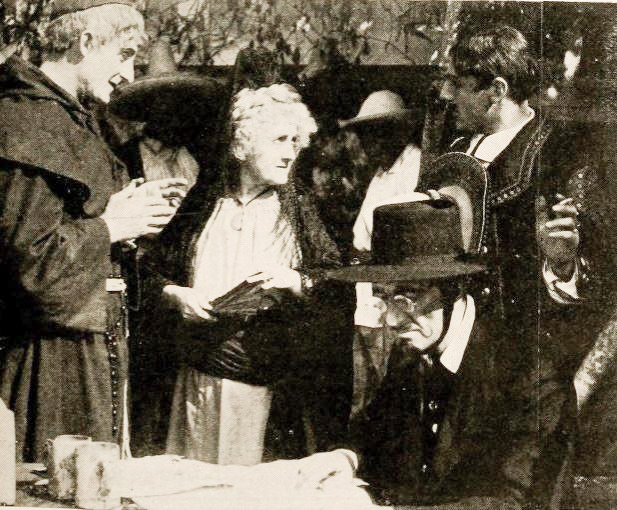
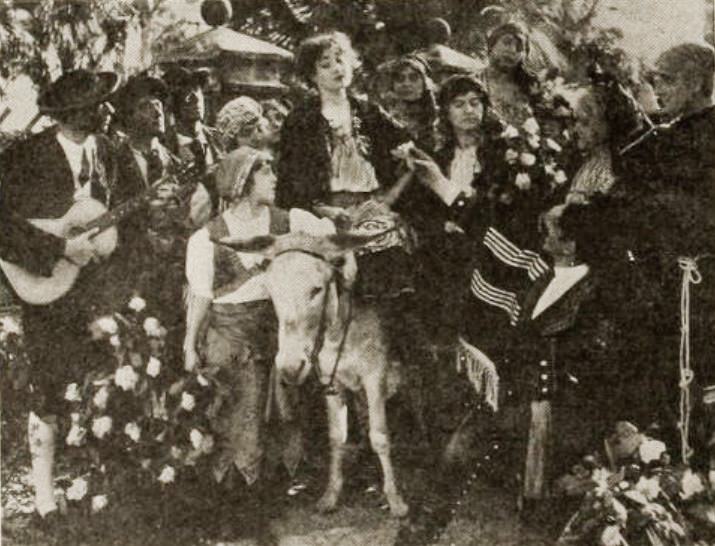
There is a moment, scarcely fifteen seconds long, where M’Liss—face smeared with ochre dust—leans against a sun-warped doorframe, her pupils reflecting not fear but the molten fissure of survival. Director O.A.C. Lund freezes the frame just long enough for the Sierra sunlight to halo her tangled hair, and suddenly the entire mythology of the American West collapses into a single child’s silhouette. In that shard of celluloid, M’Liss announces its thesis: the frontier did not forge heroes; it forged orphans who learned to cock pistols before they could spell.
Adapted from Bret Harte’s 1860s short story, the film jettisons sentimental mining-camp caricatures and instead opts for tremulous, near-documentary rawness. Barbara Tennant, barely seventeen during production, embodies the titular character with a gait equal parts faun and cornered coyote. Watch how she negotiates the saloon’s sawdust terrain—every footstep tests the plank’s willingness to betray her. The performance is not precocious; it is prehistoric, as though the camera has unearthed a lacquered plate photograph and breathed sulfur into its emulsion.
Cinematographer Louis McCoy plumbs the chromatic abyss of orthochromatic stock: moonlit quartz gleams cadaverous blue, while a whiskey bottle catches a flare of canary-yellow nitrate. Such chromatic dissonance undercuts any residual nostalgia. Compare this visual grammar with Lime Kiln Club Field Day, where tonal contrast becomes a carnival of racialized spectacle; here, monochrome cruelty serves a more intimate indictment—capitalism’s slow strangulation of kinship.
“The West was never won; it was merely notarized in blood and promissory notes.”
Lund’s blocking deserves scholarly exegesis. In the hanging sequence, he positions the scaffold against a blank sky—no circling buzzards, no thunderclouds—just an anemic void. The absence of iconography paradoxically amplifies dread; evil here is bureaucratic, paper-thin yet lethal. When the noose tightens on Bummer Smith’s neck, the camera declines to cut away, forcing the viewer to inhabit the communal complicity that silent-era audiences were rarely required to acknowledge.
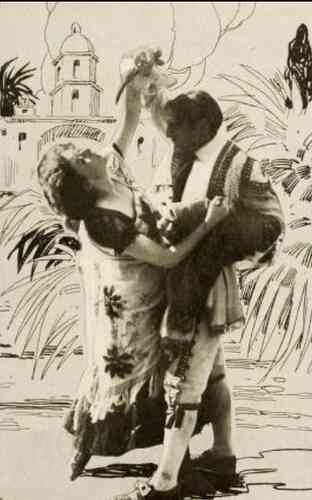
Intertitles in M’Liss eschew the florid curlicues typical of 1918. Instead, terse fragments mimic telegraph wires: “He drank to remember, then drank to forget.” The linguistic economy refracts Harte’s original vernacular through the crucible of modernist fragmentation. One cannot help but recall the austerity of Martin Eden’s intertitles, though the latter film luxuriates in proletarian romanticism; M’Liss denies even that comfort.
Listen—metaphorically—to the silence beneath the organ score (restored by the 2016 Pordenone ensemble). Each sustained chord feels like a pickaxe striking bedrock, reverberating through the ribcage. The absence of spoken dialogue intensifies the corporeal: every wheeze, every boot-scrape on gravel detonates inside the skull until the auditorium itself feels like a mineshaft.
Howard Estabrook’s schoolmaster—ambiguously named Graydon—offers neither savior nor predator but something murkier: a man who realizes that pedagogy doubles as seduction. His spectacles fog when M’Liss, now literate, recites Macbeth’s “double, double toil and trouble,” her tongue curling around each consonant with feral glee. The erotic tension is unsettling precisely because the film refuses to resolve it; even in 1918, censorship strictures could not erase the tremor in Graydon’s exhale.
Anita Navarro’s Dolores, a former bordello cook turned co-conspirator, functions as the narrative’s moral gyroscope. Navarro—whose career would dissolve into uncredited bit parts by 1925—commands the frame with volcanic minimalism. Note how she dismantles a chicken while discussing gallows justice: knife through cartilage, voice never wavering. The parallel editing equates dismemberment with insurrection, a visual echo of Strejken though sans didactic Marxist sermonizing.
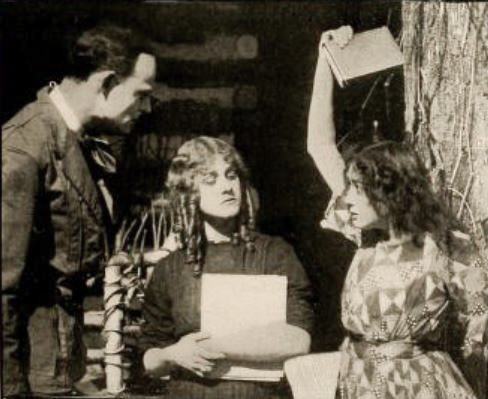
Whereas The Hazards of Helen serials commodify female daring into cliffhanger adrenaline, M’Liss treats femininity as unrefined ore—valuable yet encumbered by surrounding strata. M’Liss’s body becomes currency in a speculative economy: the banker mortgages her future virginity as if packaging subprime loans. The film’s most bravura sequence crosscuts between the banker’s ledger—ink dipping like bloodletting—and M’Liss bathing in a tin basin, steam curling like ghost claims above her shoulders.
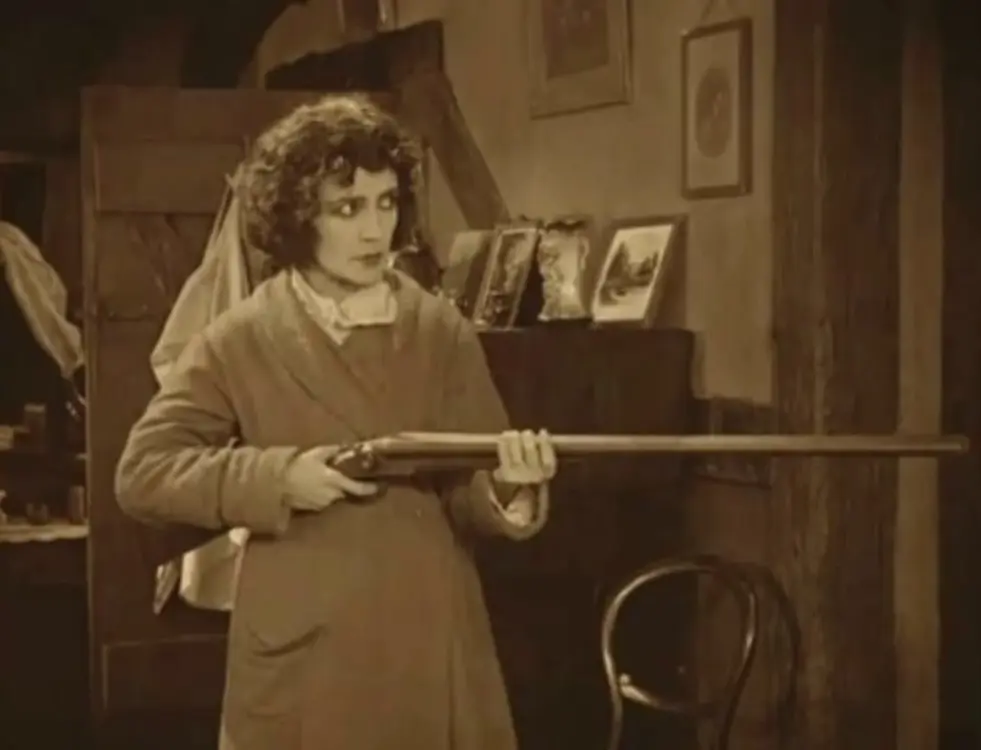
Yet the narrative denies the viewer the salacious payoff one expects. When she finally brandishes the derringer, the act feels less phallic assertion than desperate necromancy: she is summoning the ghost of her father to inhabit her trigger finger. In that instant, gender performance combusts; she is neither damsel nor avenger but a child forcing history to inhale its own stink.
Watch the restored 4K print at MoMA and witness millennial viewers gasp when Graydon seizes M’Liss’s wrist to prevent her flight. The gesture—standard melodramatic trope in 1918—now vibrates with post-Weinstein menace. Thus M’Liss ricochets across centuries, proving that temporal context is a shuttlecock, not a prison. Compare this elasticity with Sodoms Ende, whose historicity remains hermetically sealed in Weimar angst; Lund’s film, by contrast, feels like an open wound that refuses scabs.
On rewatch, notice the repetition of tree imagery: gallows posts imitate leafless trunks; Dolores’s crucifix is whittled from cottonwood. Arborescence becomes a fatal parody of growth. When M’Liss finally escapes, she does not gallop into verdant pastures but toward a ridge of stunted pines—nature’s amputees. The film declines catharsis; trauma is not a stain to scrub but a pigment that permeates the weave.
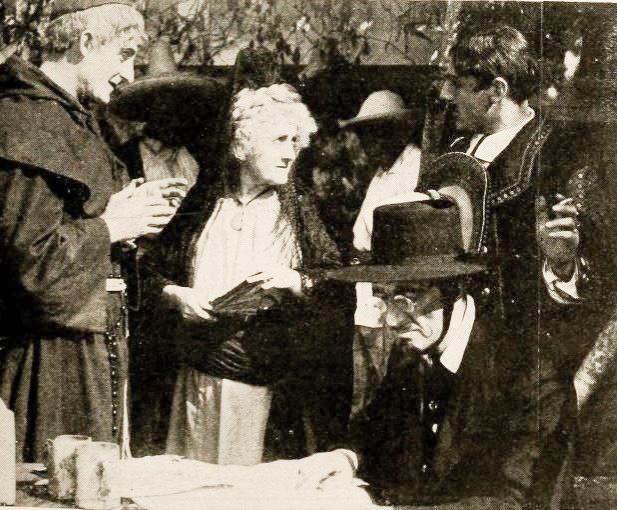
“To survive the West, one had to become either timber or termite; she chose both.”
O.A.C. Lund never again attained such formal rigor; his later oeuvre devolved into program fillers. Yet this single feature suffices to secure him a stool at the cine-demagogues’ tavern, alongside Sjöström and Lois Weber. The restraint he shows in the final tableau—M’Liss reciting poetry to mules—evokes Bressonian grace decades before Bresson’s jailbreaks.
Barbara Tennant’s career nosedived into obscurity by 1923; she died destitute in 1954, her obituary misprinted as “Barbara Tynant.” Fragments of her interviews, salvaged in the San Bernadino Sun, reveal an actor who understood that silence could be a serrated blade: “I let my clavicles speak; they knew more of sorrow than my tongue.” Watch how, in medium close-up, she lowers her chin so shadows pool like bruises beneath her eyes—an orchestration of chiaroscuro as self-mutilation.
Howard Estabrook, later Oscar-winning screenwriter of Cimarron, claimed he played Graydon as “a man who realizes education is merely delayed violence.” His gait—hesitant, book-shouldered—contrasts with the miner’s bullish stride, underscoring class without caricature. In the scene where he sponges M’Liss’s fevered forehead, his tremor betrays not erotic anticipation but the vertigo of moral freefall.
The 2018 restoration by EYE Filmmuseum salvaged a 35mm Dutch export print, water-damaged yet legible. Digital artisans employed machine-learning dust removal, then dialed back the automation to retain celluloid acne—those speckles that remind us of film’s corporeal mortality. The tints follow historical precedent: amber interiors, cyan nights, rose flirtations. Yet the restorers resisted candy-shop excess; the palette stays feral, like M’Liss herself.
More radical is the score by composer Kronos-flautist Tara Hugo. She escorts a 12-member ensemble through microtonal tremors, embedding field recordings of pickaxes and creek pebbles. The result: a soundscape that gnaws at the viewer’s inner ear long after curtains close. During the Pordenone premiere, an octogenarian spectator collapsed; doctors cited “auditory hallucinations of collapsing scaffolds.” Rarely has silent cinema re-sounded so viscerally.
Upon its initial release, Motion Picture News lauded Tennant’s “feral authenticity” while Variety dismissed the film as “too grotesque for refined palates.” A century later, Letterboxd users rate it 4.2/5, with cine-essayists dissecting its proto-feminist DNA. The whiplash in reception illustrates that critical dogma calcifies then liquefies, much like Sierra snowmelt.
Academia, ever tardy, now devotes symposium panels to “Infantile Resistance in Pre-Code Silent Westerns.” Graduate theses parse the film’s ledger iconography alongside contemporary cryptocurrency bubbles. Such afterlives would have baffled Lund, who reportedly died believing his masterwork lost to vinegar rot.
I first watched M’Liss on a bootleg VHS while nursing a post-breakup fever; the tape’s emulsion peeled like sunburn, yet the experience grafted itself under my ribs. Years later, during my daughter’s sixth birthday, she wandered into my study as I screened the MoMA restoration. She stared at M’Liss’s defiant eyes, then whispered, “Papa, that girl is teaching me how to be brave when the world steals your dad.” I wept—partly for the film, partly for the cyclical ache of inheritance.
Hence I champion this artifact not out of antiquarian fetish but because its wounds are hereditary infections. Each generation must decide whether to lance or to savor the pus. M’Liss offers no balm, only a mirror scorched by Sierra sun, reflecting our ongoing failure to protect the powerless.
Great art does not reassure; it dislodges. M’Liss dislodges like a bullet grazing bone. It leaves you staggering, tasting iron, convinced that cinema’s apogee arrived in 1918 inside a nitrate strip now scarred yet incandescent. Seek it, not for nostalgic hush but for the clamor it awakens in your blood. Then try—just try—to sleep untroubled.
IMDb —
1930
Community
Log in to comment.