DbcultAccessing Vault...
Cult Review
Senior Film Conservator
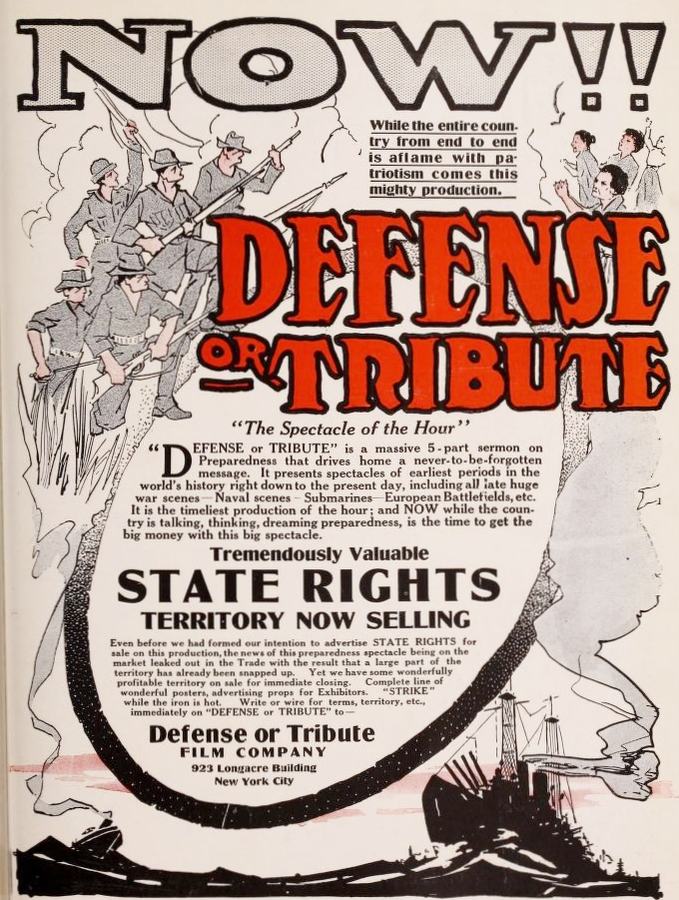
Stepping into the world of Defense or Tribute? is akin to unearthing a time capsule, a cinematic artifact pulsating with the anxieties and aspirations of a nation teetering on the brink of global conflict. This isn't merely a film; it's a meticulously crafted polemic, a passionate visual argument for American preparedness in the shadow of World War I, delivered with a gravitas that feels both timely for its era and eerily resonant today. Oscar I. Lamberger, the visionary writer behind this monumental endeavor, doesn't just present a story; he constructs a persuasive, multi-layered discourse on the necessity of vigilance, a theme he explores with remarkable depth and a surprising tenderness.
The film's most striking feature is its audacious scope, unfurling a breathtaking panorama of war scenes spanning millennia. From ancient skirmishes to more contemporary clashes, Defense or Tribute? meticulously reconstructs these historical conflicts, not for mere spectacle, but to build an irrefutable case for military readiness. Each battle, whether depicting Roman legions clashing or medieval knights charging, serves as a poignant reminder of humanity's perennial struggle with violence and the timeless imperative of a strong defense. Lamberger's script, brought to life through what must have been an immense production effort for its time, uses these historical vignettes as didactic tools, illustrating the consistent thread of conflict woven through the fabric of human civilization. The visual language is potent, even by modern standards, demonstrating a sophisticated understanding of how to use cinematic imagery to convey a powerful, often unsettling, message. Unlike the more fantastical escapades of films like The Great Diamond Robbery, which sought to entertain through elaborate capers, Defense or Tribute? aims for something far more profound: a fundamental shift in public perception regarding national security. It’s a stark contrast to the lightheartedness found in many contemporary productions, signaling a serious intent to engage with the pressing issues of its day.
The strategic interweaving of these historical sequences with impassioned speeches further cements the film's argumentative backbone. These oratorical segments, delivered with fervent conviction, articulate the rationale behind the visual evidence, creating a symbiotic relationship between what is seen and what is advocated. It’s a masterful technique, ensuring that the audience doesn't just passively observe but actively engages with the film's central thesis. The sheer ambition in depicting such a vast sweep of history, all for a singular, pointed purpose, sets Defense or Tribute? apart from many of its contemporaries, establishing it not just as entertainment, but as a significant piece of social commentary and political persuasion. One can almost feel the urgency of the moment in every meticulously choreographed sequence, every impassioned plea for vigilance.
Yet, for all its grand historical sweep and urgent political messaging, Defense or Tribute? never loses sight of the human element. Indeed, it is in its quieter, more intimate moments that the film truly finds its emotional core. Interspersed amongst the thunder of battle and the rhetoric of statesmen are delicate, heart-wrenching vignettes focusing on the average civilian. This narrative choice prevents the film from becoming a dry, academic treatise, instead grounding its powerful message in universal human experience. The most prominent of these threads follows the agonizing vigil of a wife, portrayed with exquisite sensitivity by Eve Lynn, as she waits for the return of her husband from the front. Her silent suffering, her moments of hope, and her profound despair are rendered with a stark realism that cuts through the historical pageantry, reminding us of the immense personal cost of war.
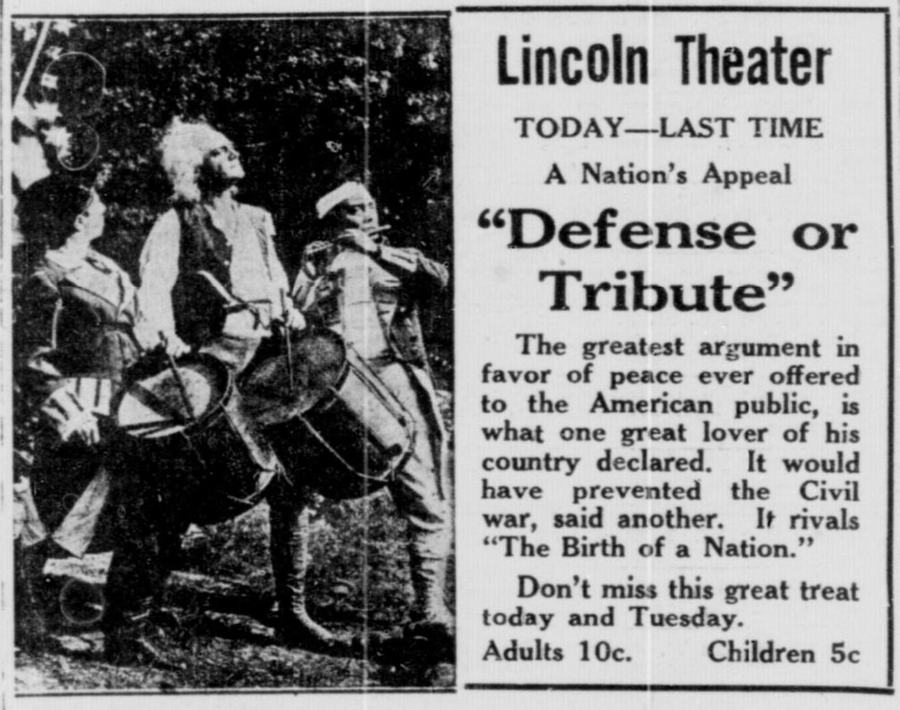
Eve Lynn's performance is nothing short of captivating. Her portrayal of quiet fortitude and palpable anxiety is a masterclass in understated emotion, anchoring the film's sprawling narrative with a deeply personal resonance. She embodies the countless individuals left behind, their lives suspended in a cruel limbo, tethered to the fate of loved ones in distant lands. Her scenes, often devoid of dialogue, communicate volumes through subtle gestures, lingering gazes, and the sheer weight of her presence. This portrayal offers a stark, necessary counterpoint to the grand, often impersonal, depiction of war, ensuring that the audience understands the profound impact of conflict not just on nations, but on individual souls. It’s a testament to Lamberger’s writing and Lynn’s talent that these domestic scenes feel as monumental, if not more so, than the epic battle sequences. The quiet desperation of her character offers a poignant parallel to the more direct appeals for peace found in films like A béke útja, though Defense or Tribute? approaches its subject from a different, albeit equally valid, perspective.
Beyond Eve Lynn's stellar contribution, the ensemble cast delivers performances that are both earnest and impactful. Frank Coyne, likely cast in a role that embodies the archetype of the dutiful soldier or perhaps a compelling orator, projects an image of steadfast resolve. His presence undoubtedly contributes to the film's persuasive power, lending credibility and a sense of heroic purpose to the arguments for preparedness. Whether he is seen on the battlefield, embodying the courage of the American fighting man, or delivering impassioned speeches about the nation's duty, Coyne's performance is crucial to the film's ability to connect with its audience on an intellectual and emotional level. His gravitas complements the more delicate emotional tenor provided by Lynn.
Helen Haskell, too, adds another layer to the civilian narrative, perhaps as a friend, sister, or mother figure, broadening the scope of the domestic impact of war. Her portrayal, though perhaps less central than Lynn's, helps to paint a more complete picture of the community affected by conflict, demonstrating that the ripples of war extend far beyond the immediate families of soldiers. The collective strength of these performances ensures that the film's message, while grand in its historical sweep, remains deeply rooted in human experience. The actors, under the clear guidance of Lamberger's script, serve not just as characters but as conduits for the film's overarching thesis, making the abstract concept of national defense tangible through their personal sacrifices and emotional journeys. This focus on believable characterization, even within a largely propagandistic framework, elevates Defense or Tribute? beyond mere rhetoric, giving it a soul that resonates with the audience.
Oscar I. Lamberger's achievement as the writer of Defense or Tribute? cannot be overstated. His script is a masterclass in narrative construction for a specific purpose. He skillfully balances the vast, impersonal sweep of historical warfare with the intimate, profoundly personal struggles of those left behind. This dual approach ensures that the film appeals to both the intellect and the heart, making its argument for preparedness exceptionally compelling. Lamberger understands that a purely historical or statistical presentation would lack the emotional punch necessary to galvanize public opinion. Thus, he weaves the harrowing experiences of the civilian into the broader tapestry of war, creating a narrative that is both informative and deeply moving. His ability to craft dialogue that is both stirring in its calls to action and tender in its depiction of human vulnerability is a testament to his profound understanding of the human condition and the power of storytelling. The depth of his research into historical conflicts is evident, yet it never overshadows the deeply human core of the narrative. This thoughtful juxtaposition is what gives Defense or Tribute? its lasting power, setting it apart from more simplistic or one-dimensional cinematic efforts of the era, such as perhaps The Soul Master, which might have focused purely on individual moral dilemmas without the broader societal context.
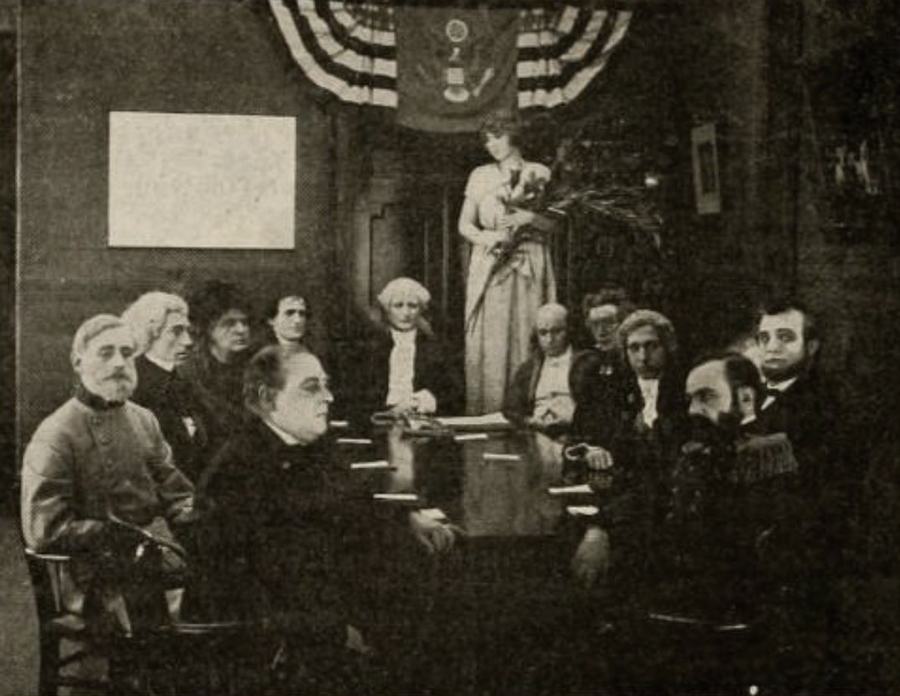
In an era brimming with cinematic experimentation and diverse storytelling, Defense or Tribute? stands out for its unabashedly didactic purpose. While many films of the period, like The Silent Woman or A Law Unto Herself, explored themes of individual agency, moral complexity, or social intrigue, Lamberger's work boldly positions itself as a direct appeal to national consciousness. It’s less about individual character arcs in the traditional sense and more about a collective awakening, a call for societal introspection. This isn't to say it lacks character, as Eve Lynn’s performance firmly attests, but rather that its characters serve a larger, more urgent ideological function. The film's unique blend of historical reenactment, political argumentation, and poignant domestic drama offers a different kind of cinematic experience than, for instance, the more straightforward narrative thrust of The Boss, which might focus on power dynamics within a singular setting. Instead, Defense or Tribute? leverages the full power of the burgeoning medium to shape public discourse on a matter of national survival.
The stark contrast between its polemical intent and the more escapist fare prevalent at the time is noteworthy. While films like The Ghost of Rosy Taylor offered delightful diversions, Defense or Tribute? demanded engagement, reflection, and a confrontation with uncomfortable truths. It shares a certain thematic weight with international productions like Die Prinzessin von Neutralien, which likely grappled with the complexities of neutrality amidst conflict, but Defense or Tribute? makes a much more pointed argument for intervention through preparation. This willingness to directly tackle a politically charged subject, using the full arsenal of cinematic techniques available, marks it as a significant, even daring, production for its time. Its approach to illustrating the 'why' behind preparedness, through historical example and emotional appeal, is a sophisticated form of advocacy that transcends mere propaganda, offering a layered view of causality and consequence.
The film's aesthetic choices, particularly its use of montage to juxtapose historical atrocities with contemporary civilian anxieties, are remarkably effective. The visual language is direct, yet nuanced, employing powerful imagery to evoke both fear and resolve. The recurring motif of the waiting wife, often framed in stark domestic settings, provides a powerful visual metaphor for the home front's vulnerability and resilience. This deliberate visual storytelling, coupled with the impassioned speeches, creates a cohesive and compelling argument that resonates deeply. The cinematography, while perhaps technically limited by the era's capabilities, is masterful in its composition and its ability to convey emotion and scale. Each frame seems to contribute to the overall message, a testament to the meticulous planning and execution behind Lamberger's vision. The film's enduring message about the cost of complacency and the necessity of foresight remains strikingly relevant, even in our modern, complex world. It serves as a potent reminder that while the battlefields may change, the human drama of war—its causes, its consequences, and its impact on the individual—remains tragically constant.
Ultimately, Defense or Tribute? is more than just a historical curiosity; it is a profound cinematic statement. It captures a specific moment in American history with remarkable clarity and foresight, articulating a powerful argument that would soon be borne out by events. Its blend of epic historical reenactment and intimate human drama ensures its place as a significant work, not only for its historical context but for its enduring artistic merit and its timeless message. The film serves as a potent reminder that vigilance, empathy, and an understanding of history are crucial components of national well-being. It compels us to consider the echoes of past conflicts in our present realities, urging a thoughtful contemplation of the delicate balance between peace and preparedness. It’s a film that leaves an indelible mark, prompting reflection long after the final frame fades to black.
IMDb 6.3
1935
Community
Log in to comment.