DbcultAccessing Vault...
Cult Review
Senior Film Conservator
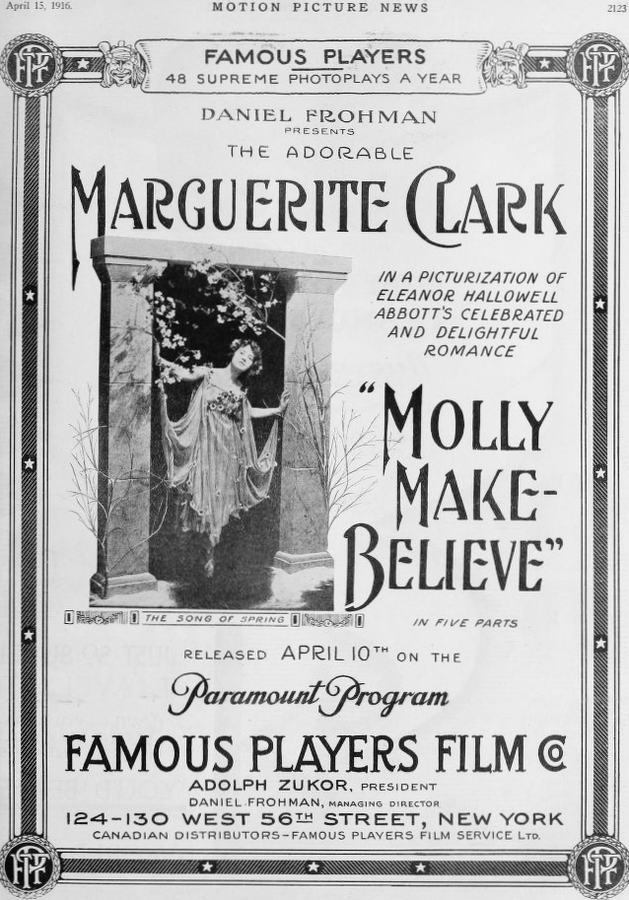
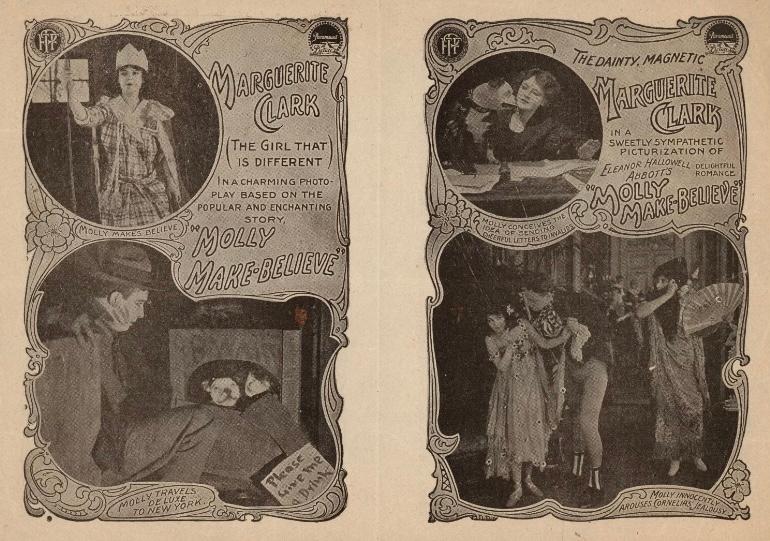
Step into the shimmering sepia-toned world of early cinema, where narratives often bloomed from the simplest seeds of human experience, yet blossomed into tales of profound emotional resonance. Among these cinematic wildflowers, Hugh Ford’s 1916 silent feature, Molly Make-Believe, emerges as a particularly enchanting specimen. Based on Eleanor Hallowell Abbott’s whimsical novel, this film, with its delicate balance of hardship and heartwarming ingenuity, offers a window into a bygone era’s understanding of resilience, compassion, and the serendipitous nature of love. It’s a narrative that, despite its century-old vintage, still speaks volumes about the enduring human spirit.
At its core, Molly Make-Believe is a testament to the transformative power of a resourceful heart. Our protagonist, Molly, portrayed with an effervescent charm by the luminous Marguerite Clark, is not merely a character; she is an embodiment of unyielding optimism in the face of daunting adversity. Her journey begins not amidst urban glamor, but on a grandmother’s farm, an idyllic setting threatened by the harsh realities of impending financial destitution. This initial predicament immediately grounds Molly’s character in a relatable struggle, painting her as a young woman whose vivaciousness is tempered by a clear-eyed understanding of life’s exigencies. The film wastes no time in establishing her predicament, quickly propelling her from the pastoral quietude into the bustling, unforgiving labyrinth of the city, a place where anonymity can be both a shield and a burden.
Upon her arrival in the metropolis, Molly confronts the sobering truth that securing conventional employment is a formidable challenge, particularly for a young woman of her background. The doors to respectable positions remain stubbornly shut, forcing her to confront the very real specter of poverty she had sought to escape. It is in this crucible of necessity that Molly’s singular genius truly ignites. Rather than succumbing to despair, she conceives an utterly unique and profoundly compassionate scheme: she will become an epistolary therapist, writing letters to invalids with the sole purpose of cheering them along the arduous path to recovery. This isn't merely a means to an end; it's an act of profound empathy, a recognition of the emotional desolation that often accompanies physical ailment. It’s a 'make-believe' endeavor, perhaps, in its constructed reality, yet utterly genuine in its intent and impact.
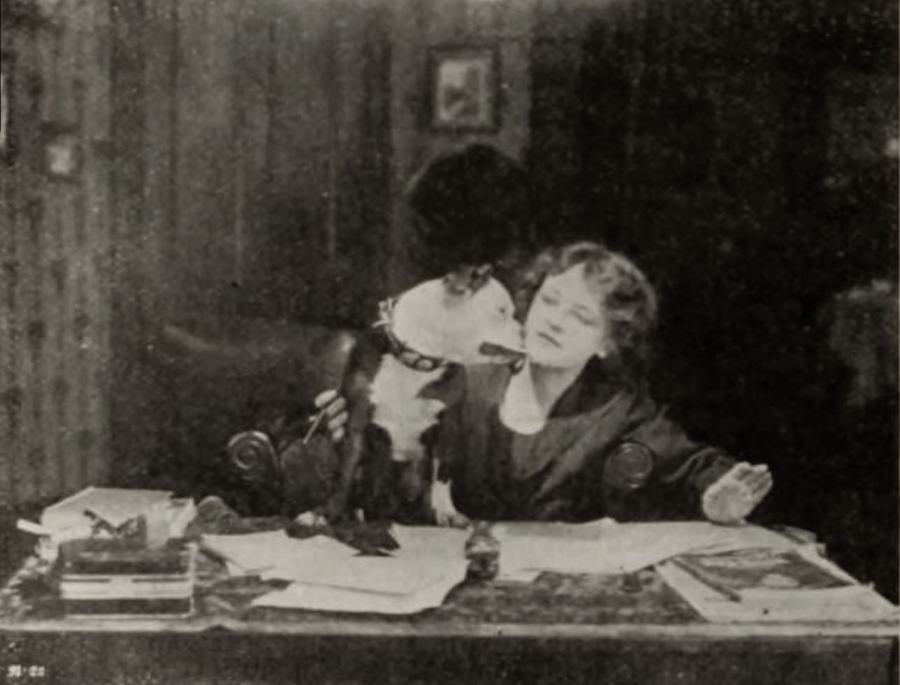
This ingenious enterprise forms the narrative spine of the film, setting in motion a series of events that are both charmingly improbable and deeply human. Molly's letters are not generic platitudes; they are imbued with her vibrant personality, her imaginative flair, and her innate ability to connect with the unseen suffering of others. They are, in essence, extensions of her own buoyant spirit, designed to inject a much-needed dose of hope and joy into the lives of those confined by illness. The script, penned by Doty Hobart and Eleanor Hallowell Abbott, masterfully navigates the delicate balance between the pragmatic need for income and the altruistic impulse that drives Molly’s venture, ensuring her actions never feel mercenary, but rather born of a genuine desire to alleviate suffering.
The true heart of the story beats in the unexpected connection forged between Molly and her sole subscriber, Carl Stanton. Portrayed with a nuanced vulnerability by Mahlon Hamilton, Carl is an invalid, presumably confined by his condition, and thus a prime candidate for Molly’s unique brand of cheer. What begins as a professional arrangement quickly transcends its initial boundaries, evolving into a poignant, emotionally charged correspondence. Molly, already having taken a 'violent interest' in Carl, pours her heart and soul into these letters, inadvertently weaving a tapestry of intimacy with a man she knows only through his affliction and the briefest of prior encounters. Carl, in turn, finds in these anonymous missives a lifeline, a source of solace and inspiration that slowly but surely begins to mend not just his spirit, but perhaps even aid his physical recovery.
The dramatic irony inherent in this situation is exquisitely handled. Carl remains blissfully ignorant of his correspondent's identity, entirely unaware that the vivacious young woman who has captivated his imagination is also the author of the comforting words that grace his bedside. This provides the film with its central mystery and its most potent emotional engine. The audience is privy to Molly’s secret, creating a delicious tension as we watch their relationship deepen, knowing that a revelation is inevitable and, indeed, desired. This dynamic is reminiscent of other narratives where hidden identities fuel romantic intrigue, though Molly Make-Believe distinguishes itself through the sheer altruism driving Molly’s deception.
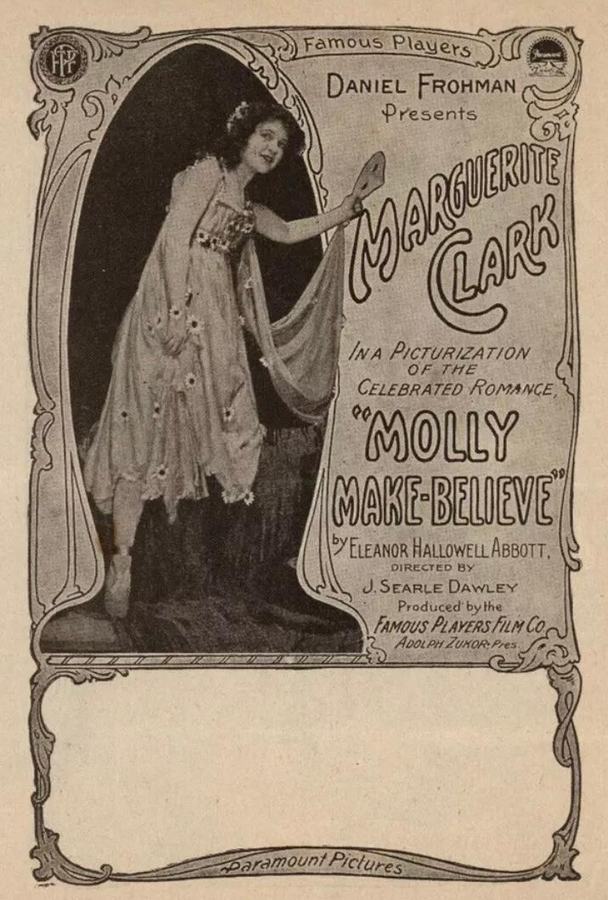
Marguerite Clark as Molly is, without hyperbole, the beating pulse of this film. Her performance is a masterclass in silent film acting, conveying a vast spectrum of emotions through expressive gestures, nuanced facial expressions, and an undeniable screen presence. She imbues Molly with an irrepressible spirit, a mischievous glint in her eye, and a deep well of compassion that makes her character utterly endearing. Clark’s Molly is not just a pretty face; she is intelligent, resourceful, and possesses a moral compass that guides her through challenging circumstances. Her portrayal elevates the film from a simple romantic comedy to a thoughtful exploration of human resilience.
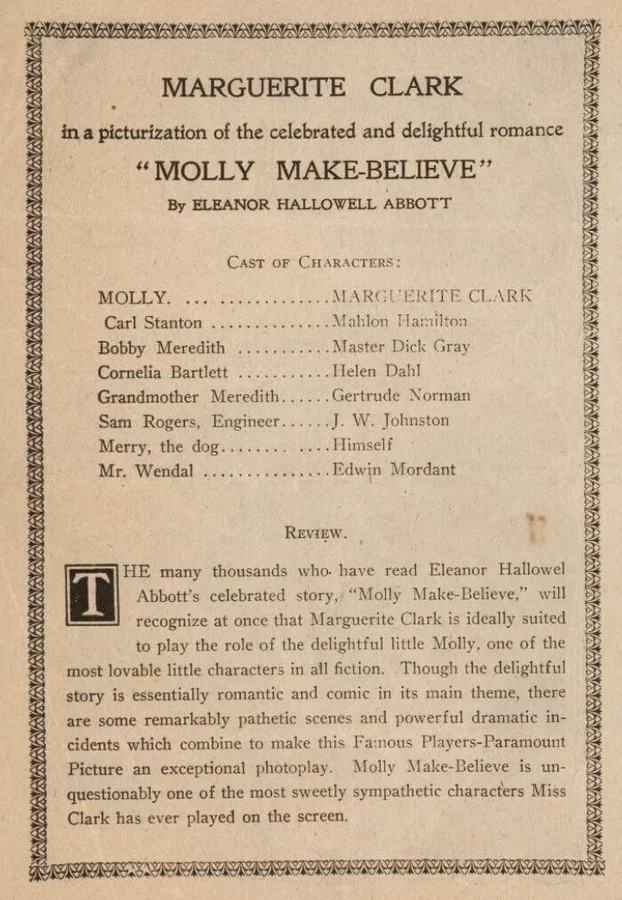
Mahlon Hamilton, as Carl Stanton, provides an excellent foil to Clark’s exuberance. His performance, while necessarily more restrained due to his character's invalid state, is no less impactful. He skillfully conveys Carl’s initial despondency, the gradual rekindling of hope through Molly’s letters, and the burgeoning affection he develops for his unknown benefactor. The chemistry between Clark and Hamilton, even when mediated by the written word, is palpable, building a convincing foundation for their eventual romantic entanglement. The supporting cast, including Edwin Mordant, Jack W. Johnston, Helen Dahl, Kate Lester, Dick Gray, and Gertrude Norman, each contribute to the film’s rich tapestry, providing moments of humor, concern, and familial warmth that flesh out Molly’s world.
Beyond the delightful romance, Molly Make-Believe is a rich thematic landscape. It is, first and foremost, a powerful ode to resilience. Molly’s unwavering determination to overcome her family’s financial woes, and her refusal to be defeated by the city’s indifference, serves as an inspiring example. This theme resonates strongly, placing the film alongside other narratives of the era that celebrated individual fortitude in the face of societal pressures, perhaps even more optimistically than something like A Wife on Trial, which often delved into more dire social dilemmas.
The film also champions the profound power of empathy and altruism. Molly’s scheme is not about personal gain, but about alleviating the suffering of others. Her letters are acts of pure kindness, demonstrating how a simple gesture, an imaginative word, can have a monumental impact on another person’s well-being. This focus on the therapeutic nature of human connection and the written word sets it apart, offering a surprisingly modern perspective on mental and emotional health within a historical context. It subtly suggests that sometimes, the greatest medicine is not found in a bottle, but in a heartfelt message.
Moreover, the narrative cleverly explores the concept of hidden identities and the romantic intrigue they generate. The trope of an unknown admirer or benefactor is a classic one, but here it is imbued with a unique sweetness. The 'make-believe' aspect allows Molly to express herself more freely, perhaps, than she would in person, creating an idealized version of herself for Carl, which eventually must reconcile with her real-world persona. This playful tension between illusion and reality is a driving force, offering both comedic moments and genuine emotional depth. It reminds us of the power of imagination, not just for the recipient, but also for the giver, allowing Molly to find purpose and connection even in her own struggles.
Hugh Ford’s direction of Molly Make-Believe showcases a confident command of silent film aesthetics. The pacing is deliberate yet engaging, allowing the emotional beats of the story to fully land. Ford understands the necessity of visual storytelling in an era without synchronized sound, relying on clear blocking, expressive performances, and well-placed intertitles to convey narrative information and character motivations. The cinematography, while typical for the period, effectively captures the contrast between the rustic farm and the bustling city, enhancing the sense of Molly’s displacement and her subsequent adaptation.
The screenplay by Doty Hobart and Eleanor Hallowell Abbott, adapting Abbott's novel, is a strong foundation for Ford’s direction. It crafts a compelling plot with a clear arc, developing Molly’s character from a desperate young woman to a confident, beloved figure. The dialogue, conveyed through intertitles, is often witty and poignant, driving the narrative forward without being overly expository. The writers deftly manage the slow burn of Carl’s recovery and the gradual deepening of his emotional dependence on his unknown correspondent, building towards a climax that feels earned and genuinely heartwarming. The story, in its charming simplicity, avoids the melodramatic excesses often found in films of the period, opting instead for a more grounded, character-driven approach, not unlike the more introspective narratives of films such as Inspiration, which also relied heavily on character internalities.
Silent film conventions are utilized to their full effect. The exaggerated yet sincere acting styles, the reliance on symbolic gestures, and the evocative power of a well-placed close-up all contribute to the film's immersive quality. One can almost hear the accompanying piano or orchestral score, guiding the audience through moments of sadness, hope, and burgeoning romance. It is a testament to the artistry of silent filmmakers that they could evoke such a rich emotional landscape without the benefit of spoken dialogue, relying instead on the universal language of human expression. The film’s narrative ingenuity, centered on the power of the written word, feels particularly apt for a medium that itself relied on text (intertitles) to communicate crucial elements of its story.
Molly Make-Believe, while perhaps not as widely known today as some other silent era masterpieces, holds a significant place in the tapestry of early American cinema. It represents a particular kind of storytelling – optimistic, character-focused, and deeply humane – that resonated strongly with audiences of its time. Its exploration of female agency, even within the confines of societal expectations, gives Molly a timeless appeal. She is a woman who, through her own wit and compassion, carves out a place for herself and brings joy to others, demonstrating a proactive spirit that distinguishes her from more passive heroines. Her ingenuity might even draw comparisons to the clever schemes seen in films like One Thousand Dollars, where protagonists navigate challenges through unconventional means.
The film’s central premise – the healing power of connection and kindness – remains as relevant today as it was over a century ago. In an increasingly complex world, the simple, heartfelt message of Molly Make-Believe serves as a gentle reminder of our shared humanity and the profound impact one individual can have on another’s life. It stands as a charming example of how early cinema, often dismissed as primitive, was capable of delivering sophisticated emotional narratives with enduring resonance. It is a film that, much like Molly’s letters, aims to cheer, to uplift, and to remind us of the beauty in unexpected connections.
In conclusion, Molly Make-Believe is far more than a historical curiosity; it is a delightful and poignant cinematic experience. Marguerite Clark’s captivating performance, Hugh Ford’s sensitive direction, and a story brimming with heart make this a silent film worthy of rediscovery. It is a testament to the fact that genuine emotion and compelling storytelling transcend the technological limitations of any era, proving that sometimes, the most profound truths are found in the most charming of make-believe scenarios. It's a film that leaves you with a warm glow, much like a heartfelt letter from a kind, anonymous friend.
IMDb —
1925
Community
Log in to comment.