DbcultAccessing Vault...
Cult Review
Senior Film Conservator
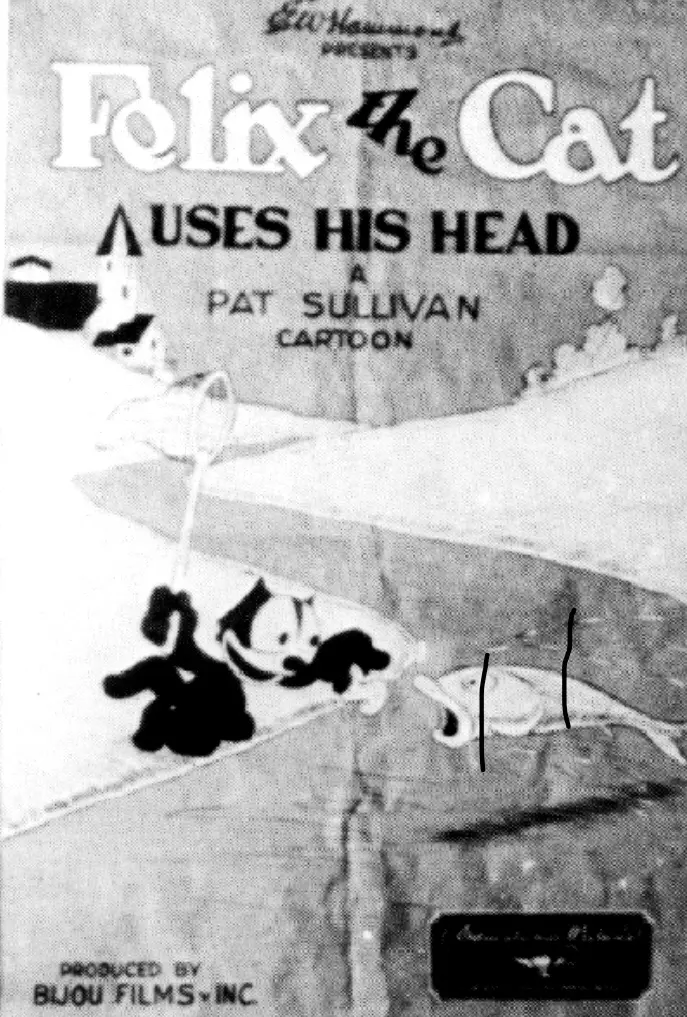
Is Felix the Cat Uses His Head still worth watching today? Short answer: yes, but with a significant caveat. This silent animated short is a fascinating historical artifact, offering a clear window into the nascent ingenuity of cartoon storytelling, yet it demands an appreciation for its era rather than expecting modern narrative complexity.
This film is absolutely for animation historians, cinephiles interested in the roots of visual comedy, and anyone curious about how character and plot were conveyed without dialogue in the early 20th century. It is decidedly not for viewers seeking rapid-fire contemporary humor, intricate plot twists, or cutting-edge animation techniques. Its charm lies in its simplicity and its historical context.
This film works because of its pure, unadulterated visual ingenuity and Felix's iconic, adaptable character design. It's a masterclass in silent film comedic timing and object manipulation.
This film fails because its narrative, while clever for its time, is incredibly simplistic and may feel glacially paced to modern audiences accustomed to decades of animated evolution.
You should watch it if you appreciate the foundational artistry of animation and want to see how early filmmakers crafted engaging stories with limited tools, particularly if you have an interest in the pre-Disney era of cartoons.
In the vast, often overlooked archive of early cinema, Felix the Cat Uses His Head stands as a charming, if brief, testament to the inventiveness of its era. Released in 1924, a full four years before Mickey Mouse’s debut in Steamboat Willie (though Felix himself predates Mickey), this particular short encapsulates much of what made Felix the Cat a global phenomenon. It’s a showcase of visual problem-solving, both by its protagonist and its animator, Otto Messmer.
The premise is delightfully straightforward, almost primal: Felix is hungry, and he needs to eat. This fundamental drive provides the engine for a series of escalating comedic misfortunes and, ultimately, a triumph of wit. From the moment Felix discovers a quarter, his trajectory is set, albeit with numerous, amusing detours.
Messmer’s direction, though uncredited in the traditional sense for many early shorts, is palpable in every frame. His understanding of Felix’s character – an impish, resourceful, and eternally optimistic cat – shines through. The animation style is deceptively simple, yet remarkably expressive. Felix's rubber-hose limbs and his iconic, oversized head allow for a fluidity of motion that was revolutionary for its time, enabling a wide range of physical comedy.
Consider the opening sequence: Felix finds a quarter. This isn't just a plot device; it's an immediate character beat. His eyes widen, his tail wags with a distinct, almost rhythmic joy. The way he pockets the coin, with a flourish that suggests a seasoned street hustler, immediately tells us who he is without a single word of dialogue. This economy of storytelling is a hallmark of the era, and Messmer executes it with precision.
The core of Felix the Cat Uses His Head lies in its succession of visual gags, each building upon Felix’s escalating hunger and frustration. The initial attempt to procure food at the kosher deli, only to find it closed for St. Patrick's Day, is a subtle touch of cultural irony that would have resonated with audiences of the time. It’s a clever subversion of expectation, setting the tone for Felix’s subsequent misadventures.
His purchase of a can of live fish, a desperate alternative, leads to one of the short’s most iconic moments. The fish, animated with surprising vivacity, leap from the can and make a frantic escape, leaving Felix with nothing but an empty tin and a look of bewildered exasperation. This particular gag exemplifies the kinetic energy that Messmer injected into his creations. The fish aren't just props; they are active, almost sentient antagonists in Felix's quest for a meal.
The sequence with the chicken dinner is where Felix truly begins to “use his head.” His initial, almost instinctual reaction is to lasso the meal. This move, a classic Felix maneuver, showcases his quick thinking and his ability to adapt his environment to his needs. However, the subsequent loss of the chicken dinner, again due to circumstance and a touch of slapstick, pushes Felix to a new level of strategic planning.
It’s here that the film transcends simple gag-comedy and enters the realm of clever problem-solving. Felix doesn't just try harder; he thinks differently. The introduction of the nearby hen as a tool, or rather, an accomplice, in his scheme to recover the chicken dinner is a stroke of genius. It's a testament to the character's ingenuity and Messmer's ability to craft a narrative arc, however small, within the confines of a silent short.
The pacing of Felix the Cat Uses His Head is deliberate, characteristic of its era. Gags are allowed to breathe, and Felix’s reactions, though exaggerated, feel earned. There’s a rhythm to the animation that draws the viewer in, building anticipation for each new setback and solution. While some modern viewers might find it slow, this steady tempo allows for a deeper appreciation of the visual storytelling at play.
The tone is lighthearted and mischievous. Felix is never truly defeated, merely inconvenienced. His persistence is endearing, and his eventual triumph, achieved through cunning rather than brute force, is satisfying. This establishes a core tenet of Felix’s enduring appeal: he's a lovable rogue, always one step ahead, even when he appears to be two steps behind.
Felix’s charisma is undeniable, even without spoken dialogue. His expressions, conveyed through simple changes in his eyes and mouth, are remarkably effective. His iconic walk, a jaunty, confident stride, communicates his personality more effectively than any monologue could. It’s a testament to the power of character design and animation performance, particularly from an era where “acting” in animation was purely visual.
Otto Messmer, the primary animator, essentially “performs” Felix. Every gesture, every reaction, every thought bubble that appears above Felix's head is a direct extension of Messmer's creative will. This unique form of performance, where the animator is the actor, is a crucial element in understanding the magic of early cartoons like this. It’s a different kind of star power, but potent nonetheless.
What’s genuinely surprising about Felix the Cat Uses His Head, and indeed many early Felix shorts, is a subtle, almost subversive undercurrent. Felix isn't always the morally upright hero. Here, he resorts to outright theft, not once, but twice. His ultimate solution involves manipulating a
IMDb —
1930
Community
Log in to comment.