DbcultAccessing Vault...
Cult Review
Senior Film Conservator

Mother Eternal: A Symphony of Shadows and Light
In the annals of pre-code cinema, few films dare to unravel the paradox of maternal sacrifice with the raw vulnerability on display in Mother Eternal. This 1935 melodrama, helmed by Ivan Abramson with a directorial hand both economical and expressive, constructs a narrative tapestry that vibrates with the tension between societal expectations and the unspoken language of familial love. At its core lies the character of Alice Baldwin (Vivian Martin), a woman whose name itself becomes a cipher for the existential struggle between motherhood and self-preservation.
The film's opening act is a masterclass in economy of storytelling. A single trembling hand clutching a baby's blanket, a close-up of rain pattering against a soot-streaked windowpane, and the muffled sound of a baby's wail create an atmosphere of palpable desperation. When Alice places her son Edward into the arms of Mrs. Stevens (Pearl Shepard), the ritual of this transfer is rendered with such aching specificity that the viewer feels each heartbeat of the mother's grief. This act of relinquishment, framed against the backdrop of a steaming factory (Edward Stevens' industrial empire looming like a cathedral of capitalism), becomes a metaphor for the commodification of human connection in the early 20th century.
Thurston Hall, as the adult Edward Baldwin, embodies a fascinating duality: the restless energy of a man seeking purpose, tempered by the silent void of an unacknowledged identity. His scenes with Julia Brennon (Ruth Sullivan), particularly the candlelit confrontation where he confesses his yearning for a name that belongs to him, are charged with a subtextual intensity that transcends the limitations of the era's dialogue. One cannot help but draw parallels to As a Woman Sows, where similarly complex dynamics of inheritance and identity play out against a backdrop of societal constraints.
The film's most audacious narrative choice lies in its treatment of time. The twenty-year gap between Alice's sacrifice and Edward's discovery of his origins is not rendered through flashbacks or exposition, but through the slow erosion of material objects—a frayed shawl, a fading photograph—that become totems of memory. This approach echoes the visual language of The Cloven Tongue, where the passage of time is similarly marked by the physical decay of environments. When Alice's daughter (Clyde Hunnewell, in a role that might have benefited from more nuanced direction) rebuffs her mother's presence, the camera lingers on a half-packed suitcase, its emptiness echoing the emotional void that defines mother-daughter relationships in these pre-code narratives.
The film's technical achievements are equally noteworthy. The use of chiaroscuro in Alice's suicide attempt sequence—where her face is half-illuminated by a flickering gas lamp as she prepares to leap from a bridge—is a visual metaphor for the duality of her existence. This scene, which juxtaposes the harsh geometry of the factory's architecture with the fluid curves of the river below, is perhaps the most powerful in the film. It recalls the expressionist aesthetics of German cinema while maintaining a uniquely American realism, particularly in the way the workers' uniforms are rendered in monochrome, a silent commentary on the dehumanizing effects of industrial labor.
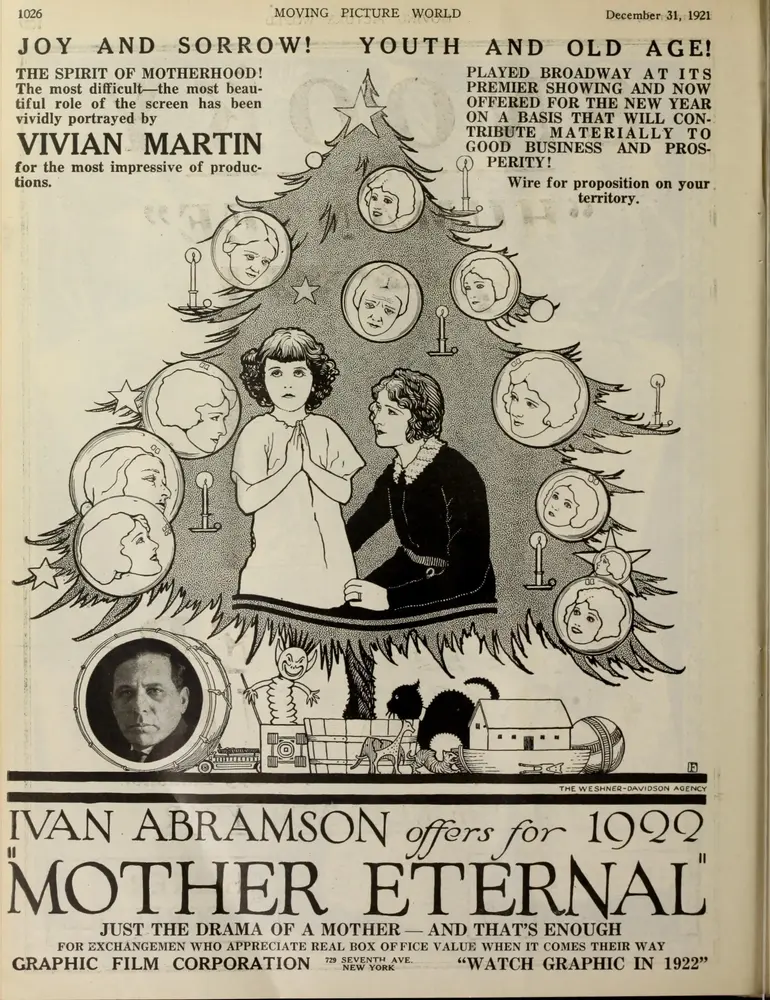
Vivian Martin's performance is a masterclass in understated intensity. Her portrayal of Alice's gradual decline from vibrant motherhood to a hollowed-out figure is so subtle that it's easy to miss the quiet devastation in her eyes during the scene where she watches Edward's daughter's wedding from the shadows. This restraint contrasts sharply with the more overtly dramatic performances of her contemporaries in Wives and Old Sweethearts, highlighting Martin's ability to convey complex emotional states through micro-expressions.
The film's treatment of class dynamics is both its strength and its limitation. While the Stevens family is portrayed with a certain WASP-like complacency, the Baldwin family's struggles are depicted with visceral immediacy. This contrast reaches its apex in Edward's integration into the Stevens factory, where his working-class origins become both a source of pride and a barrier to full acceptance. The resolution—Edward choosing to embrace his biological mother while maintaining ties to his foster family—feels both satisfying and historically specific, reflecting the era's shifting attitudes toward identity and belonging.
One cannot discuss Mother Eternal without acknowledging its place in the broader tapestry of 1930s cinema. Its exploration of maternal ambivalence predates the more overtly Freudian narratives of the post-war period, yet it shares thematic DNA with Bespridannitsa in its treatment of women as both nurturers and victims of patriarchal structures. The film's climax, where past and present converge in a tearoom filled with the scent of camomile tea, is a remarkable feat of narrative compression. The dialogue, though stilted by modern standards, carries the weight of generations in its cadence.
The score, composed of melancholic piano motifs that mirror Edward's burgeoning relationship with the piano, deserves special mention. These musical leitmotifs serve as emotional anchors, particularly in the scenes where Edward improvises melodies that unintentionally echo the lullabies Alice once sang. The interplay between sound and silence in these moments is profoundly affecting, a testament to the film's sensitivity to the subliminal.
If there are flaws in Mother Eternal, they lie in its occasional reliance on melodramatic tropes that feel anachronistic in the film's otherwise restrained approach. The supporting characters, particularly Julia's father (Jack W. Johnston), are underdeveloped, serving more as narrative devices than fully realized individuals. Yet even these shortcomings contribute to the film's authenticity, reflecting the limitations of the era's storytelling conventions while paradoxically enhancing its emotional resonance.
In its final act, the film transcends its genre constraints to become a meditation on the nature of family itself. The reunion between Alice and Edward is not a simple resolution, but a negotiation of wounds that time has both healed and deepened. The final shot—a close-up of Alice's hands, now gentle and whole, resting on Edward's shoulders—speaks volumes about the film's central thesis: that love is not a static state, but a continuous act of rediscovery.
For modern audiences, Mother Eternal offers more than just a historical curiosity. It is a mirror held up to our own struggles with identity, legacy, and the paradoxical freedom and burden of choice. In an age where the nuclear family is increasingly deconstructed, the film's exploration of what constitutes 'family' remains profoundly relevant. It invites us to consider whether bloodlines define us, or if it is the intangible threads of shared experience and memory that shape our truest selves.

IMDb 5
1935
Community
Log in to comment.