DbcultAccessing Vault...
Cult Review
Senior Film Conservator
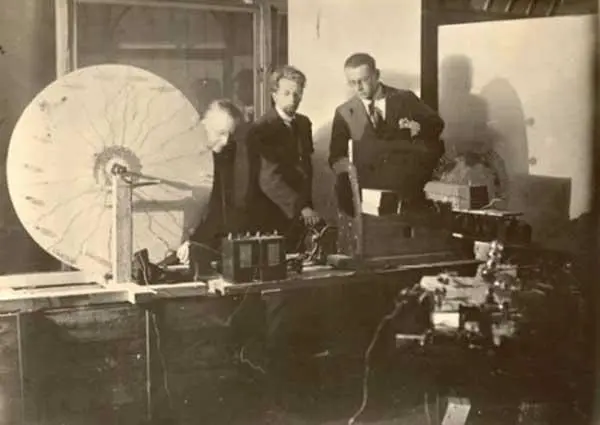
To gaze upon the "Moving Silhouette Images Broadcast" is to peer into the very crucible of modern media, to witness the primordial soup from which an entire global consciousness would eventually emerge. It is not a film in the traditional sense, nor a piece of cinematic art designed for narrative immersion. Instead, it is a raw, unvarnished document of a pivotal moment in human ingenuity, a flickering testament to one man's relentless pursuit of an impossible dream: the transmission of moving images across distance. John Logie Baird, a figure whose name should resonate with the same reverence as Edison or Marconi, stands at the epicenter of this monumental achievement, not merely as an inventor, but as the inaugural 'broadcaster,' a visionary who dared to conjure visuals from the unseen waves of the electromagnetic spectrum.
The year is 1925, and the world is still largely tethered to print and radio for mass communication. Cinema, though burgeoning, required physical projection. The notion of instantaneous visual transmission, of seeing events unfold miles away, was the stuff of science fiction. Yet, in his modest laboratory, Baird, leveraging the principles of the Nipkow disk and a rudimentary scanning apparatus, managed to achieve just that. What he transmitted were not finely detailed pictures, but rather the stark, almost ghost-like moving silhouettes of human forms. These were the first true television images, a groundbreaking feat that forever altered the trajectory of human interaction and information dissemination. It was a whisper of the future, a faint, ethereal promise of the vibrant, high-definition world we inhabit today.
The sheer audacity of Baird's endeavor cannot be overstated. While early filmmakers like the Lumière brothers and Georges Méliès were perfecting the art of capturing and projecting light onto a screen, Baird was grappling with a far more complex challenge: dissecting light into electrical signals, transmitting those signals, and then reassembling them into a coherent, moving image. This was not about storytelling, as captivating as an early Chaplin short might be, nor about theatrical spectacle. This was about the fundamental act of transmission itself. The 'content' of the broadcast – a simple, shifting silhouette – was secondary to the profound 'act' of its existence. It was the proof of concept, the definitive answer to a question that had baffled scientists and dreamers for decades: can we truly see at a distance?
The technical hurdles Baird overcame were formidable. His apparatus was crude, built from scavenged materials and sheer force of will. Rotating disks, selenium cells, and neon lamps combined in a delicate, often temperamental dance to achieve the magic. The resulting images were low-resolution, monochrome, and often indistinct, yet their very motion was revolutionary. Imagine the awe, the sheer disbelief, of those first few witnesses, seeing a human hand or face move on a screen, not from a film projector, but live, transmitted from another room. It was a sensation akin to witnessing the first successful flight or hearing the human voice carried across oceans. It was a moment where the impossible became demonstrably, demonstrably real.
Comparing this broadcast to the cinematic offerings of the era provides a crucial lens through which to appreciate its unique significance. While films like The Essanay-Chaplin Revue of 1916 were already showcasing sophisticated comedic timing and narrative structure, and dramas like The Witching Hour explored complex human emotions through the nascent language of film, Baird's broadcast operated on an entirely different plane. Cinema was evolving as an art form and an entertainment medium, meticulously crafted and then projected. Television, in its embryonic state, was about raw, unmediated presence. It wasn't about telling a story; it was about demonstrating a phenomenon. The purpose diverged sharply: one perfected the presentation of pre-recorded visual narratives, the other forged the very pathway for live visual communication.
The legacy of this broadcast is, quite simply, incalculable. It laid the groundwork for every subsequent development in television technology. From those rudimentary silhouettes, we can trace a direct line to the glorious Technicolor spectacles of the mid-20th century, to the live satellite feeds that beam global events into our homes, and ultimately to the high-definition, interactive digital screens that dominate our lives today. Baird’s invention wasn’t just a new gadget; it was a fundamental shift in how humanity would perceive its world, consume information, and engage with culture. It catalyzed the transformation from a world of localized experiences to a globally interconnected visual village.
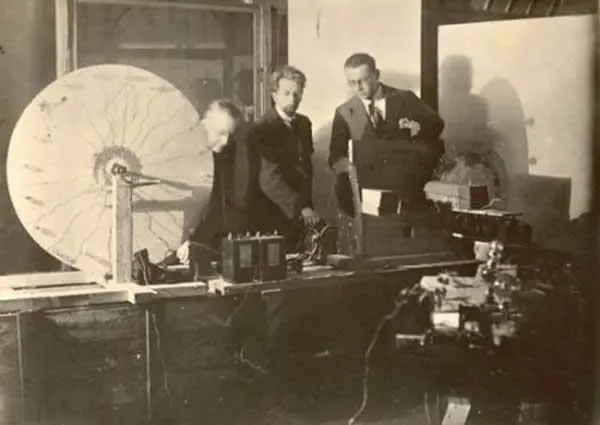
Think of the profound societal implications. The ability to transmit live images meant that news could be delivered not just through sound, but with visual corroboration. Entertainment could transcend the confines of the theater. Political discourse could take on a new immediacy. While the immediate impact of the 1925 broadcast was limited to a handful of observers, its theoretical and practical implications were boundless. It was the first ripple in a pond that would eventually become an ocean of visual data, influencing everything from advertising to education, from sport to warfare. Its quiet revolution was more far-reaching than any single cinematic masterpiece, as it created the very canvas upon which countless future masterpieces would be painted, and countless prosaic moments would be shared.
The "Moving Silhouette Images Broadcast" is a stark reminder that true innovation often begins with the simplest, most fundamental demonstrations. It wasn't flashy; it wasn't glamorous. It was a technical triumph, a testament to the power of perseverance and scientific curiosity. It showcased the bare minimum required to prove a concept, yet that minimum was enough to ignite a revolution. In an era where films like God's Law and Man's explored moral dilemmas through narrative, Baird was exploring the very fabric of reality and perception through technology. His 'film' was not about plot or character development, but about the development of an entirely new sensory experience for humanity.
Indeed, the very act of calling it a 'film' feels almost anachronistic, yet it is through the lens of early moving pictures that we can best understand its revolutionary nature. While early cinema was focused on perfecting the illusion of movement on a screen for an audience gathered in one place, Baird's work was about breaking that geographical tether. It was about creating a synchronous, shared visual experience across distances, a concept that even the most advanced cinematic productions of the time could not achieve. The silent films, for all their expressive power, remained geographically bound. Television promised liberation from this constraint.
One might even draw parallels to the very first cave paintings – rudimentary, yet profoundly significant expressions of the human desire to capture and share visual information. Baird's silhouettes, though technologically sophisticated, share that primordial essence. They are fundamental, essential records of movement, transmitted, not merely preserved. The journey from a static image to a projected moving image, and then to a transmitted moving image, represents a series of escalating triumphs over the limitations of time and space. Each step, from the daguerreotype to the kinetoscope, and then to Baird's televisor, built upon the last, pushing the boundaries of what was thought possible.
The very crudeness of the moving silhouettes serves to underscore the magnitude of the achievement. It wasn't polished. It wasn't perfect. But it worked. It demonstrated, unequivocally, that the dream of television was attainable. This single broadcast, witnessed by a privileged few, was the genesis of a medium that would go on to shape political landscapes, create global celebrities, and define entire generations. It allowed humanity to collectively witness historical moments as they unfolded, from moon landings to royal weddings, from sporting triumphs to devastating tragedies. None of this would have been possible without Baird's initial, groundbreaking success.
In retrospect, the "Moving Silhouette Images Broadcast" transcends its technical specifications to become a symbol of human aspiration. It represents the relentless curiosity that drives us to understand, to innovate, and to connect. It is a foundational text in the visual lexicon of the 20th century and beyond, a quiet opening act to a drama that continues to unfold globally, every single second of every single day. John Logie Baird, through this unassuming yet epoch-making broadcast, didn't just invent a machine; he helped to invent the modern world, one flickering silhouette at a time. His work is not just history; it is the very bedrock upon which our interconnected, visually saturated existence is built. To ignore it is to misunderstand the very genesis of our contemporary media landscape.

IMDb 6.5
1919
Community
Log in to comment.