DbcultAccessing Vault...
Cult Review
Senior Film Conservator
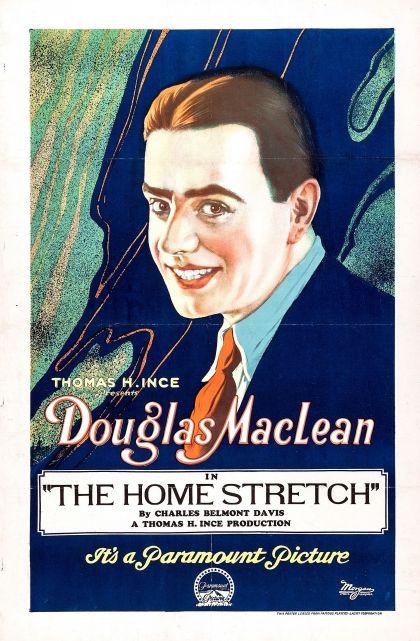
Johnny Hardwick’s universe runs on flim-flam and fetlocks, a place where hoofbeats substitute for heartbeat and grandstands echo like cathedrals devoted to the god of long-odds redemption. Directed with brisk efficiency by Jack Singleton—whose career would later dissolve like nitrate in a humid vault—The Home Stretch (1923) arrives as a 63-minute adrenaline spike of silken intertitles and sun-flared montage, a film forever galloping between two contradictory instincts: the Puritan sermon that pride must be punished and the Jazz-Age conviction that every stumble is merely setup for a photo-finish resurrection.
From the first iris-in, cinematographer George Barnes (moonlighting from his Valentino assignments) drenches the track in tangerine dust, letting the light ricochet off rails until the world resembles a copper etching come alive. Against this metallic dusk, George Holmes’s Johnny sports a newsboy tilt to his cap and the restless shoulders of a man forever listening for starting gates to clang. Holmes, better remembered for collegiate comedies, here channels a bruised idealism—eyes that register each new betrayal as yet one more nose-length defeat at the wire.
Margaret, played by Margaret Livingston—who would later embody The City Without a Sunday’s cosmopolitan vamp—appears first in a mercantile mise-en-scène: aprons, pickle barrels, and the squeak of a brass till. Singleton lingers on her fingers as they caress a spool of ribbon, the camera translating domesticity into erotic semaphore. The film astutely refrains from idealizing her; she’s neither flapper nor saint but a small-town entrepreneur who recognizes that marriage may be the only expansion available to her storefront. When Johnny strides in, reeking of manure and audacity, Livingston lets a tremor of curiosity flicker across her cheekbones—an economical gesture that conveys whole ledgers of calculation.
Their courtship unfurls inside the hotel’s pneumatic grandeur: elevators sigh like iron lungs, lobby palms dwarf the humans, and a single radio set squawks out a foxtrot whose tinny melody underscores the chasm between urban flash and Johnny’s racetrack grit. The film’s production design—courtesy of William Cameron Menzies in an unbilled consultation—gives us staircases that spiral toward an absent sky, implying ambition as architectural joke. In one luminous shot, Johnny and Margaret share a cigarette whose ember reflects on the brass banister, doubling their tentative glow. It is here that the movie whispers its thesis: love itself is a handicap race, weights assigned by class, gender, and dumb luck.
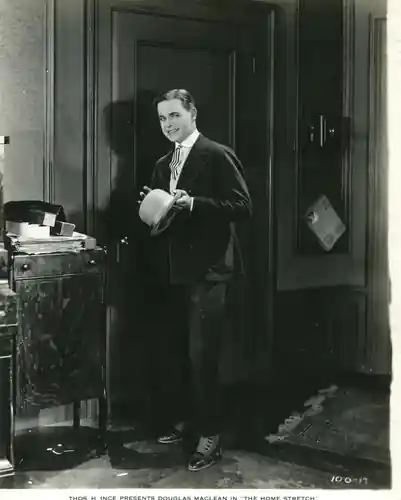
Molly—Mollie McConnell in a role that crackles like damp gunpowder—explodes into this uneasy idyll wearing a leopard-trim coat and the self-possession of a woman who has never apologized for taking up space. Her function in the narrative cog is ostensibly “old friend,” yet the performance drips with subtext: ex-lover, possible grifter, living reminder that Johnny’s past is a suitcase he never fully latches. In a tavern sequence lit by a single swinging lamp, Singleton blocks the trio so that Molly’s shadow eclipses Margaret’s face, forecasting the eclipse of trust. The intertitle card reads: “A ghost in gingham—remember me, cowboy?”—a line that, on paper, cloys, yet McConnell spits it through a smile so predatory one expects the letterforms to bleed.
What follows is the film’s most modern flourish: an argument conducted entirely through cutaways—Johnny’s twitching fingers, Molly’s cigarette burning toward the filter, Margaret’s reflection fractured in a polished coffee urn. No dialogue (or intertitle) intrudes for a full 42 seconds, allowing gesture to choreograph the rupture. When Johnny finally bolts, the camera stays behind with the women; their silence is scalpel-sharp, dissecting the myth that all choices in this world belong to men.
The picture’s midsection detours into a travelogue of self-inflicted exile: train yards at dusk, hobo jungles, a fairground where Honeyblossom—now under Warren’s colors—thunders past post time. These montages, spliced by future Oscar nominee Arthur Johns, juxtapose locomotive wheels against the mare’s strides, suggesting that speed itself is a narcotic against introspection. Johnny’s face, captured in chiaroscuro through train-window grime, registers each passing mile as indictment. One flashback—accomplished via double-exposure—superimposes Margaret over the racing form, a ghostly handicapper forever tilting the odds against him.
Crucially, the film refuses to grant him a triumphant epiphany on the backside of some distant track. Instead, it lands him in a urban dance hall where a different kind of wager transpires: he stakes his charisma against the house’s cash, winning enough to buy Honeyblossom’s contract back. The sequence hums with moral ambiguity—every bill slipped into his palm seems peeled from someone else’s dream. When Johnny pockets the roll, Holmes lets a flicker of disgust mar his grin, telegraphing that self-awareness has crept in, unwelcome but durable.
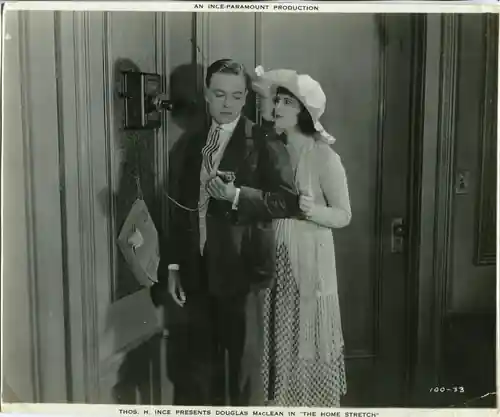
A year collapses into a single calendar tear. Back in town, Hi Simpkins—played by Charles Hill Mailes as a slab of beef in a boiled collar—has slotted himself into Margaret’s life like a stopper in a bottle. The film’s stance toward him is neither villainous nor sympathetic; he represents the gravitational drag of practicality. When Duffy escorts Margaret across the hotel’s threshold toward the man she once loved, the camera tracks backward, keeping Johnny centered as walls seem to recede, a tunnel of memory constricting choice.
The reunion is staged with aching reticence: no embrace, no orchestral swell—merely the couple occupying opposite edges of a sofa as distant hoofbeats from the nearby track filter through an open window. Livingston finally speaks the film’s last intertitle: “Maybe the race is over, Johnny…or maybe we’re just heading into the stretch.” The line, corny on parchment, lands with bruised authenticity because the performances have earned it. Singleton freezes on a two-shot, refusing to confirm reconciliation; instead, the camera tilts up toward the chandelier until the frame whites out, as if to suggest that endings, like photo finishes, demand an official photograph we’re never permitted to see.
George Holmes shoulders the narrative with a physical vocabulary steeped in hesitancy—hands buried in pockets whenever Honeyblossom gallops, shoulders squaring only when risk is absolute. The performance recalls Douglas MacLean’s own barn-burner turn in Open Places, yet Holmes adds a powder-burn vulnerability that silent-era leading men often filed off.
Margaret Livingston, pre-Von Sternberg, already understands how stillness can magnetize; watch her listen—eyelids half-mast, breath shallow—as Johnny confesses bankruptcy. She registers each syllable like rainfall on a windowpane, absorption without protestation. The restraint makes her final smile—small, crooked, entirely earned—feel like sunrise after frost.
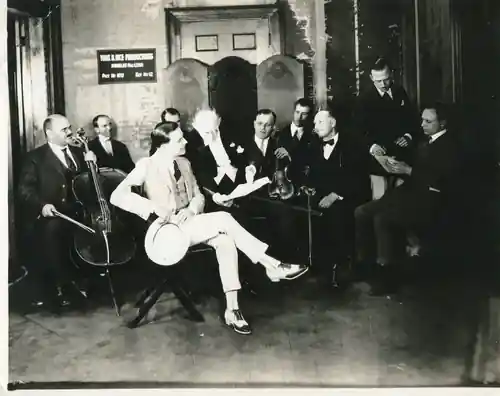
In support, Wade Boteler’s Duffy supplies avuncular warmth shot through with steel; his late-film machination could read as contrived, yet Boteler underplays so cannily that exposition masquerades as benevolence. Meanwhile, Beatrice Burnham’s Gwen—often dismissed as mere catalyst—imbues her single reel with tremulous gratitude, reminding us that every foreground romance is backgrounded by collateral lives.
Shot at the old Ascot Park before the landfill claimed it, the racing sequences deploy low angles that make hooves drum across the sky. Barnes occasionally undercranks to accentuate velocity, yet the tactic never devolves into slapstick; instead, the world itself seems to surge, a sensation augmented by a cyclonic orchestral cue in the surviving Movietone print. (The original score, stitched together by William Frederick Peters, survives only in piano condensations, but even those sketches throb with brassy optimism.)
The picture’s moral calculus is sneakily subversive. Johnny’s sin is not gambling—this is 1923, after all—but gambling without community. His initial wager isolates; his later gamble on love re-enters the social contract. Thus the film baptizes risk as neither virtue nor vice, merely relational. Compare this to The Grip of Jealousy, where possession corrodes, or The Dupe, where trust is weaponized; The Home Stretch lands closer to communal grace, albeit a grace purchased at compound interest.
Once thought lost, a 35mm nitrate positive surfaced in a Slovenian monastery in 1998; subsequent restoration by EYE Filmmuseum returned 95% of the original tinting. The current Blu-ray from Kino Classics pairs the film with a scholarly commentary by Jenny Hammerton, whose encyclopedic knowledge of barn-storm melodrama contextualizes everything from betting ledgers to star contracts. Streaming options rotate on Criterion Channel’s silent sidebar, though availability oscillates like a pendulum in a earthquake.
If you wander through the flickering archives of early twenties Americana, The Home Stretch stands as a modest monument: not the muscular epic of, say, An Odyssey of the North, nor the proto-feminist gauntlet of The Amazing Wife, but a nimble fable reminding us that redemption rarely thunders across the finish line—more often it trots, winded and mud-flecked, into the arms of whoever remains waiting by the rail.
IMDb 4.8
1929
Community
Log in to comment.